

Sequel Lucerne Seeds
Botanical Name: Medicago sativa
Variety: Sequel
Winter Activity: Highly winter active – Dormancy 9
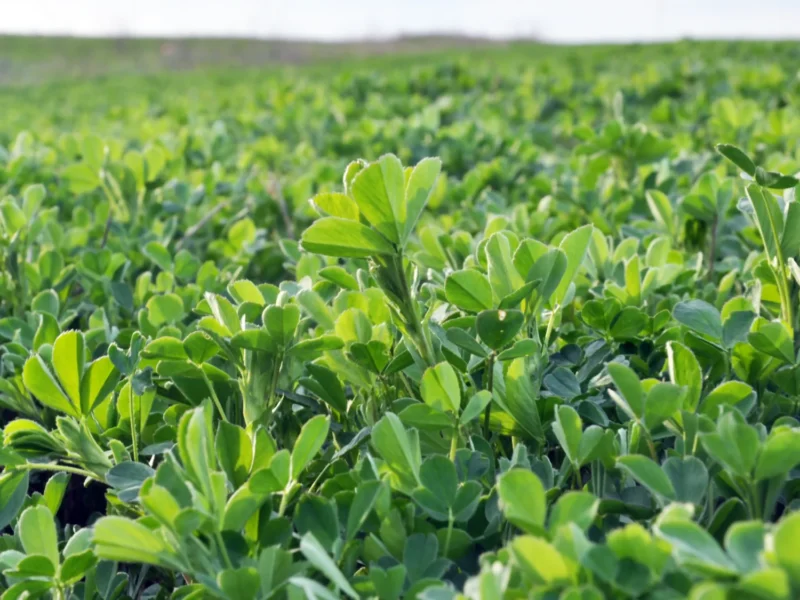
Sequel Lucerne is a highly winter-active lucerne variety suited to hay production, silage, grazing, pasture improvement and soil-building applications. Its strong winter growth and erect growth habit make it particularly useful where high forage production and rapid regrowth are required.
As a deep-rooted perennial legume, lucerne can access moisture and nutrients from deeper in the soil profile while producing high-quality forage above ground. When effectively nodulated with the appropriate rhizobium inoculant, it also fixes atmospheric nitrogen and can contribute to soil fertility.
Sequel is an established Australian lucerne variety with good winter activity and resistance to important pests and diseases.
- Highly winter-active Dormancy 9 lucerne variety.
- Strong winter growth and rapid regrowth.
- Erect growth habit particularly suited to hay and silage production.
- High-quality perennial forage for livestock.
- Deep-rooted and able to access subsoil moisture.
- Fixes nitrogen when effectively nodulated with the correct inoculant.
- Suitable for pasture improvement, grazing and cropping rotations.
- Good resistance to important lucerne pests and diseases.
Plant Details
- Plant Type: Deep-rooted perennial forage legume
- Botanical Name: Medicago sativa
- Variety: Sequel
- Dormancy Rating: 9 – highly winter active
- Growth Habit: Erect, vigorous growth
- Root System: Deep taproot
- Best Position: Full sun
- Soil Preference: Deep, fertile and well-drained soils
- Waterlogging Tolerance: Low; avoid poorly drained sites
- Growth: Strong cool-season activity with rapid regrowth following cutting under suitable conditions
Best Uses
- Hay production
- Silage
- High-quality forage
- Rotational grazing
- Pasture improvement
- Nitrogen fixation
- Green manure and soil building
- Short to medium-term pasture phases
- Crop and pasture rotations
Why Grow Sequel Lucerne?
Sequel is a highly winter-active lucerne, making it particularly useful where continued forage production during the cooler months is important. Its erect growth habit lends itself well to cutting for hay and silage, while vigorous regrowth allows repeated production under appropriate management.
Lucerne also develops an extensive, deep root system. Once established, this allows plants to access moisture deeper in the soil profile than many shallow-rooted pasture species.
As a legume, successfully nodulated lucerne fixes atmospheric nitrogen through its association with rhizobia. This makes it valuable not only as a forage crop but also as a component of pasture and cropping rotations.
Sowing Information
- Best Sowing Time: Autumn or spring, depending on climate and local conditions
- Sowing Depth: Approximately 5–15 mm; avoid deep sowing
- Position: Full sun
- Soil Type: Deep, fertile and well-drained soils
- Soil pH: Performs best in soils that are not strongly acidic
- Moisture: Maintain adequate moisture during germination and establishment
- Inoculation: Use Group AL Lucerne inoculant where required for effective nodulation and nitrogen fixation.
Sowing Rate and Coverage
Sowing rates are a guide only. Actual rates should be adjusted for rainfall, irrigation, seedbed preparation, germination, sowing method and intended use.
When to Sow Sequel Lucerne in Australia
How to Sow Lucerne Seeds
- Select a sunny site with deep, well-drained soil.
- Control existing weeds before planting.
- Prepare a fine, firm seedbed.
- Apply Group AL Lucerne inoculant where required.
- Broadcast evenly or sow using a suitable seed drill.
- Cover seed lightly; lucerne should not be planted deeply.
- Roll or press the seedbed lightly to ensure good seed-to-soil contact.
- Maintain adequate soil moisture until seedlings are established.
Hay and Silage Production
Sequel’s erect growth habit and strong winter activity make it particularly suited to forage production. Established stands can produce repeated cuts when fertility, moisture and cutting management are appropriate.
Avoid cutting plants excessively low. Maintaining sufficient residual growth helps plants recover and supports persistence between cuts.
For hay production, timing should balance forage quality with yield. Earlier cutting generally produces leafier, higher-quality forage, while later cutting increases bulk but may reduce feed quality.
Grazing
Sequel can be grazed, although its erect growth habit means it is better suited to controlled rotational grazing than continuous heavy grazing.
Young lucerne plants should be allowed to establish a strong root and crown system before grazing. Once established, avoid grazing plants excessively close to ground level and provide sufficient recovery time between grazing periods.
As with other lucerne pastures, appropriate livestock management is required because lush lucerne can present a bloat risk to grazing animals.
Soil Benefits
Lucerne’s deep taproot can penetrate well below the rooting depth of many annual pasture species, helping utilise moisture and nutrients from deeper layers of the soil profile.
When effectively nodulated, lucerne fixes atmospheric nitrogen. Root turnover and plant residues also return organic matter to the soil, making lucerne useful in pasture phases and crop rotations as well as for forage production.
Management
- Maintain good weed control during establishment.
- Avoid waterlogged or poorly drained sites.
- Do not sow seed too deeply.
- Use Group AL inoculant where required for effective nitrogen fixation.
- Allow seedlings to establish before grazing or cutting.
- Use rotational rather than continuous heavy grazing.
- Avoid repeatedly cutting or grazing plants excessively low.
- Allow adequate recovery between grazing or cutting cycles.
Important Notes
- Sequel is a highly winter-active Dormancy 9 lucerne.
- Particularly suited to hay, silage and productive forage systems.
- Requires well-drained soil and does not tolerate prolonged waterlogging.
- Lucerne establishes best in a fine, firm seedbed with shallow seed placement.
- Use Group AL Lucerne inoculant where inoculation is required.
- Manage grazing carefully to protect plant crowns and stand persistence.
- Lucerne can cause bloat in grazing livestock; appropriate grazing management is required.
Reviews
There are no reviews yet.