

Cabbage Red Acre Vegetable Seeds
Botanical Name: Brassica oleracea var. capitata
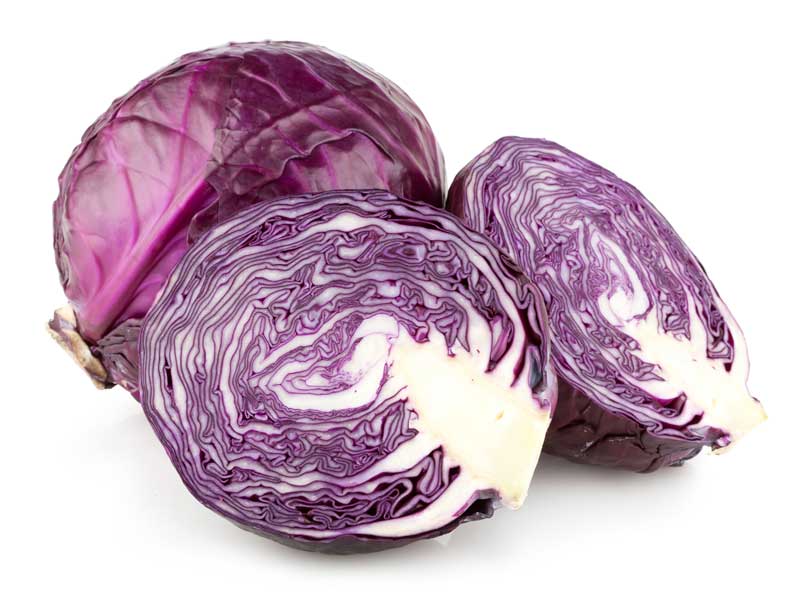
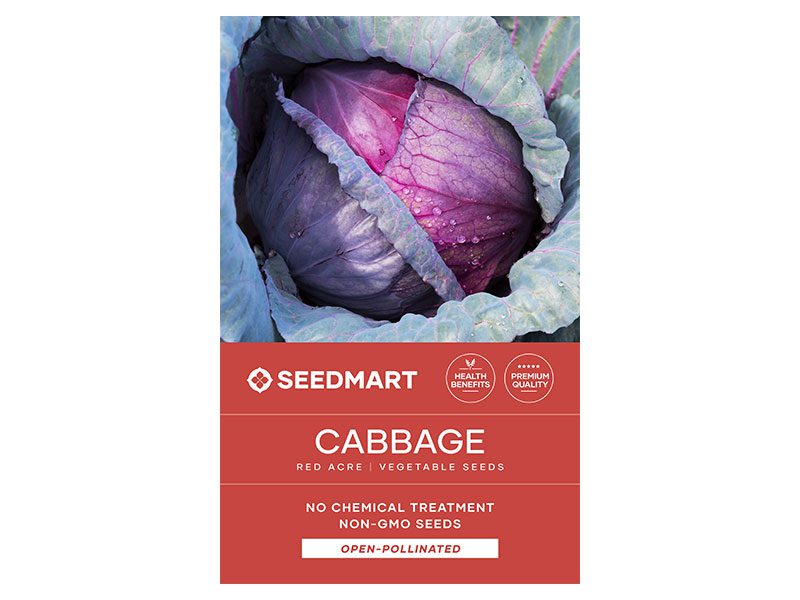
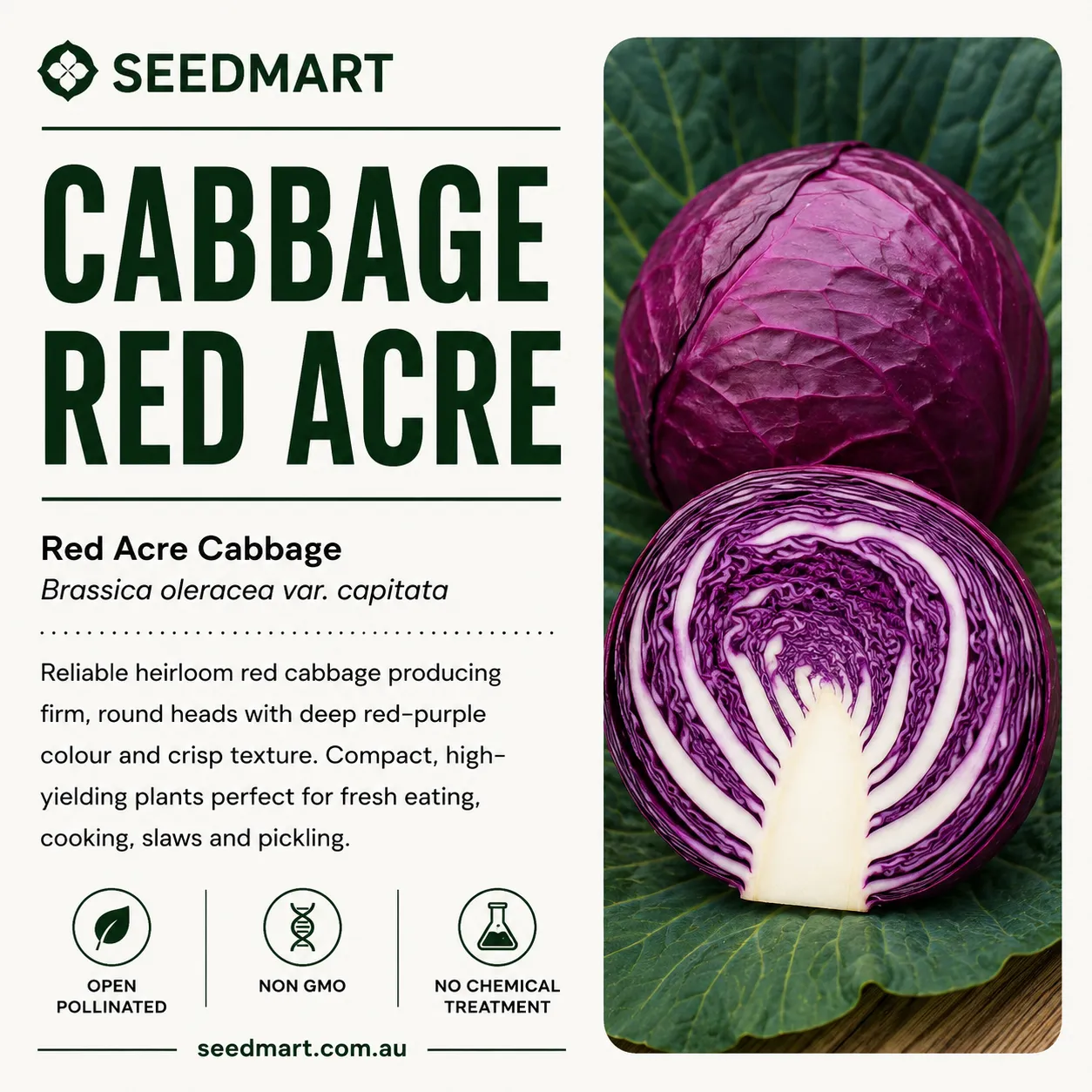
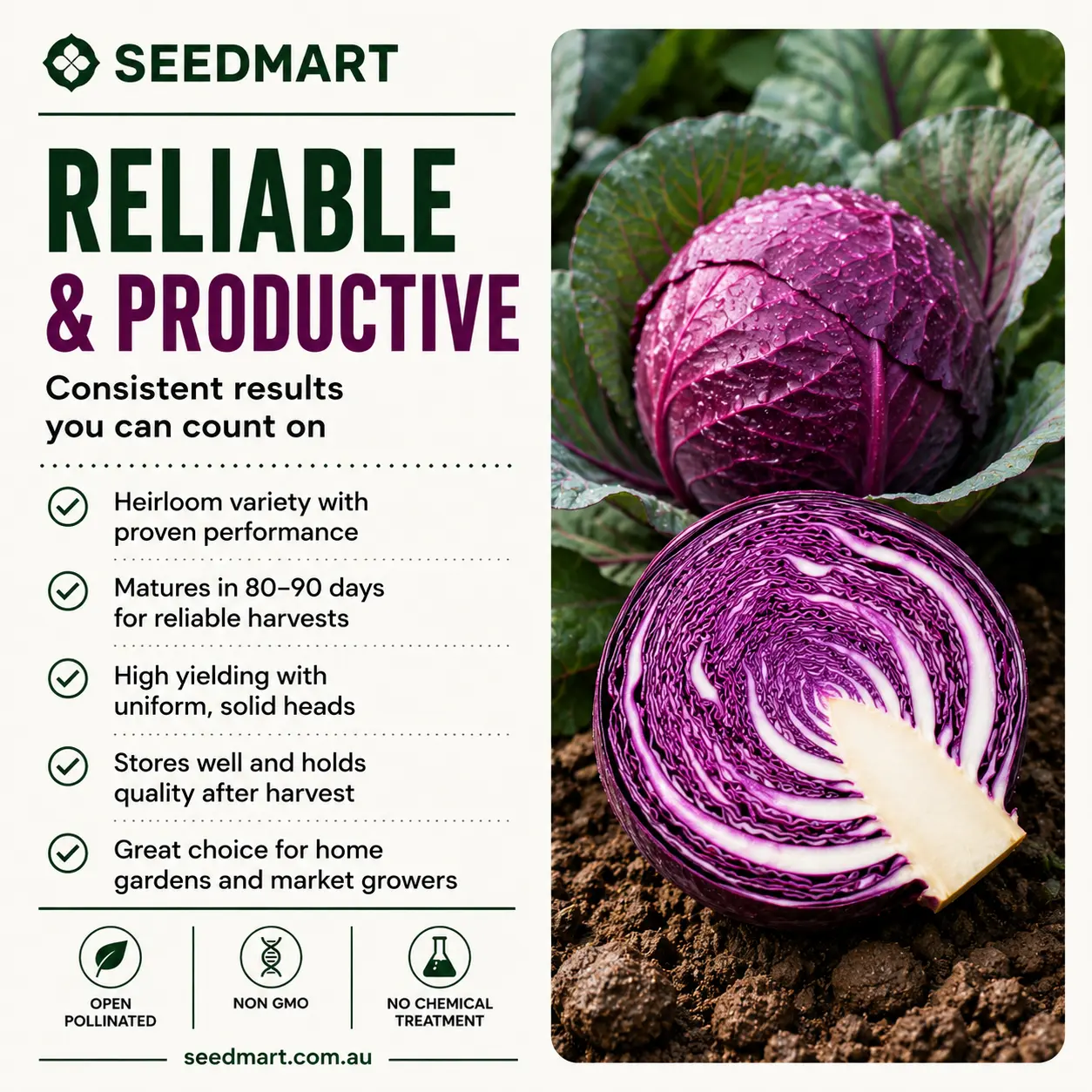
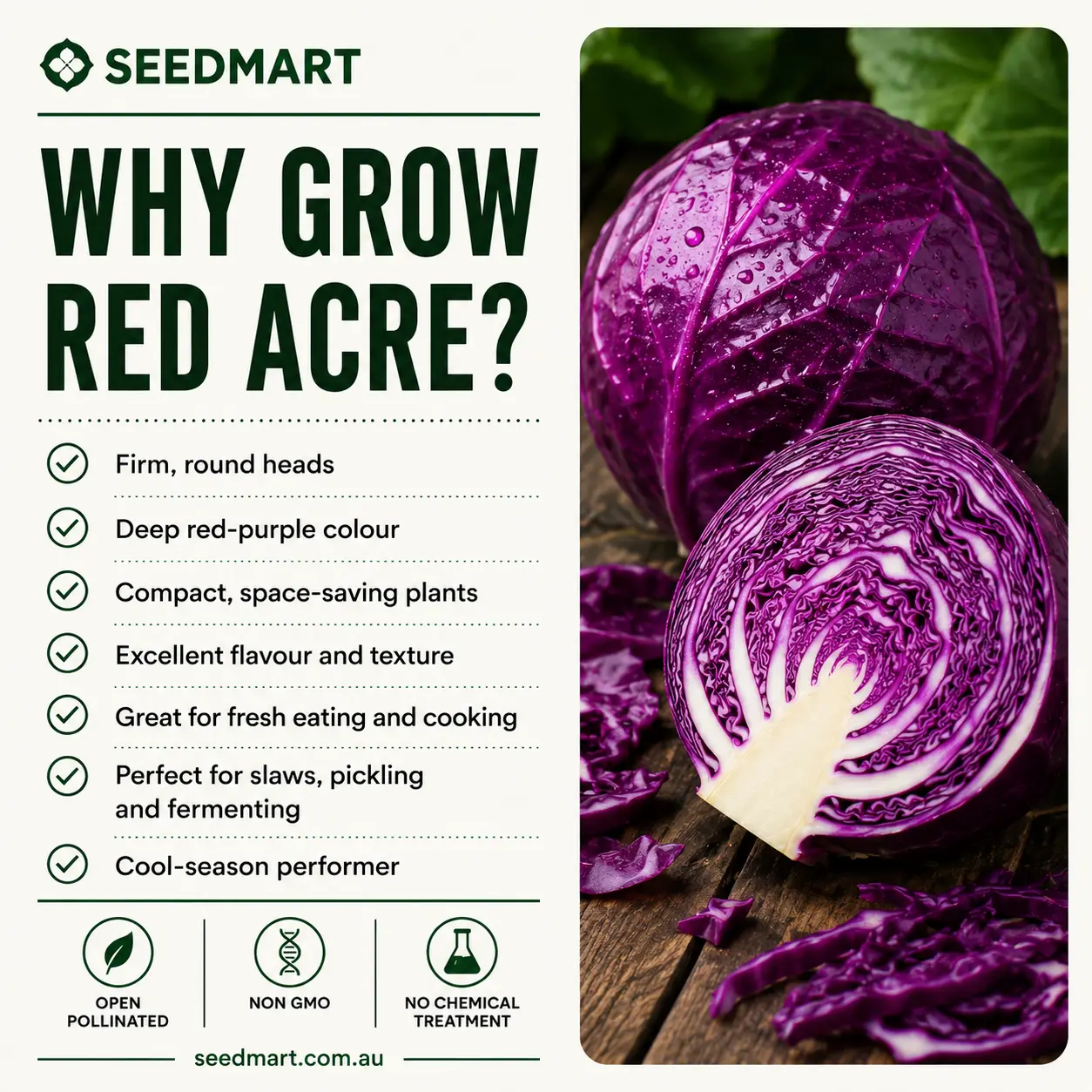
Red Acre is a compact, open-pollinated red cabbage variety prized for its firm round heads, deep purple-red colour and excellent flavour. A reliable cool-season crop for home gardens, raised beds and market growers.
Key Attributes
Open-Pollinated VarietyReliable red cabbage suitable for traditional seed saving. |
Deep Red-Purple HeadsProduces attractive, colourful heads for fresh eating and cooking. |
Compact GrowthIdeal for smaller gardens, raised beds and closer plantings. |
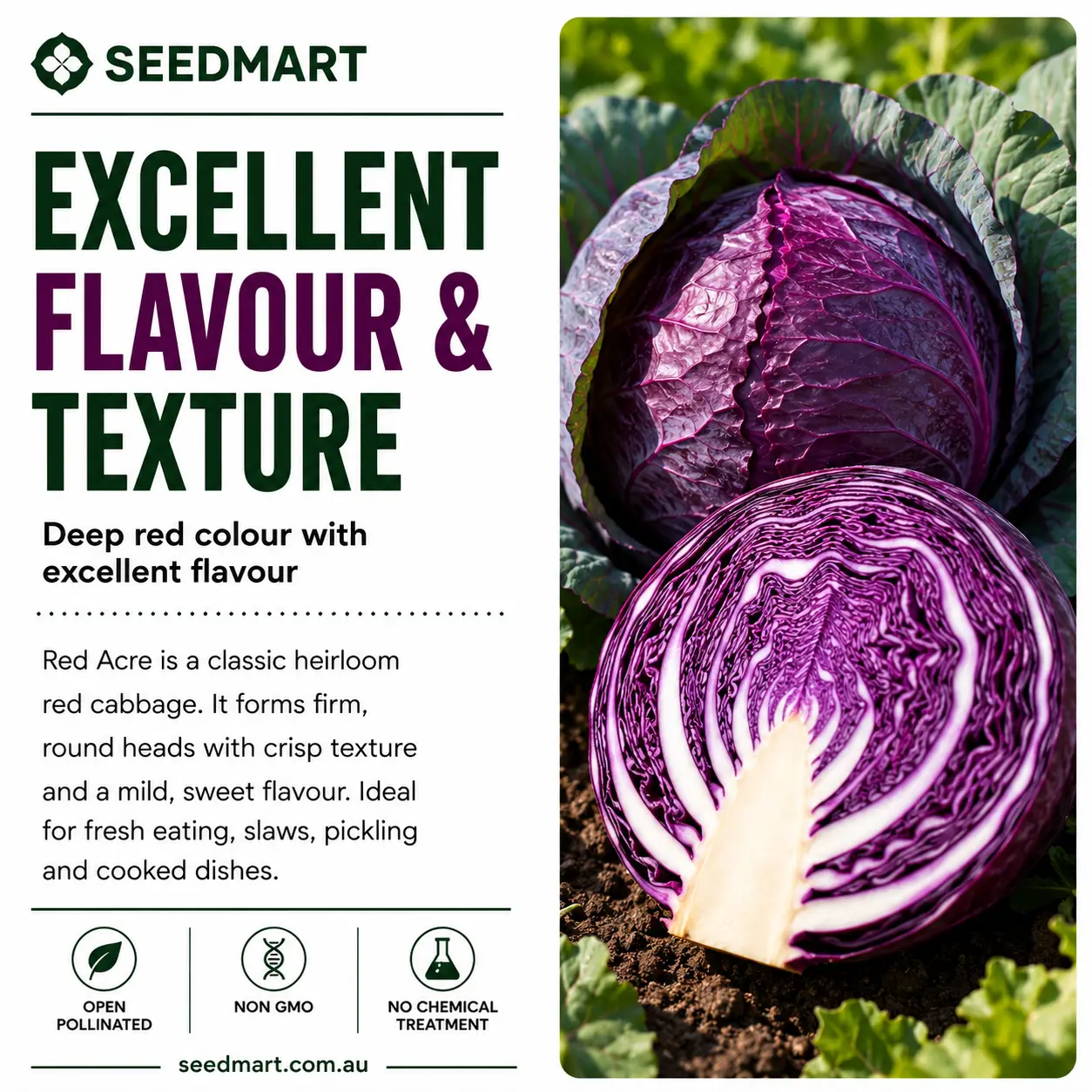
Firm Round HeadsForms dense heads with crisp texture and excellent eating quality. |
Cool-Season PerformerBest grown through autumn, winter and early spring. |
Excellent Kitchen VarietyPerfect for salads, slaws, pickling, fermenting and cooked dishes. |
Product Description
Red Acre Cabbage is a popular open-pollinated red cabbage variety known for its compact plants, firm round heads and rich purple-red colour. It is a dependable choice for gardeners wanting a productive and attractive cool-season vegetable.
The heads are dense, crisp and flavourful, making Red Acre ideal for coleslaw, salads, stir-fries, pickling and sauerkraut. Its compact growth habit makes it especially useful for smaller vegetable gardens, raised beds and intensive planting systems.
Red Acre performs best in fertile, well-drained soil with consistent moisture. Like most cabbages, it prefers cooler growing conditions and steady growth for the best head formation and flavour.
Why Grow Red Acre Cabbage?
- Produces firm, round, deep red-purple heads.
- Compact plants are ideal for smaller garden spaces.
- Excellent flavour and crisp texture.
- Suitable for fresh salads, slaws, pickling and cooking.
- Reliable cool-season vegetable for Australian gardens.
- Open-pollinated variety suitable for seed saving.
Plant Details
| Plant Type | Cool-season annual vegetable |
| Growth Habit | Compact heading cabbage |
| Plant Height | 30–45 cm |
| Head Type | Firm, round, red-purple heads |
| Days to Harvest | 75–90 days |
Sowing Information
| Sowing Method | Raise seedlings or direct sow |
| Sowing Depth | 5–10 mm |
| Germination | 5–10 days |
| Soil Temperature | 10–25°C |
| Plant Spacing | 40–50 cm |
| Row Spacing | 60–75 cm |
| Position | Full Sun |
When to Sow Red Acre Cabbage in Australia
| Climate Zone | Best Planting Time | Growing Notes |
|---|---|---|
| Cool | September – March | Sow from spring to late summer for cool-season harvests. |
| Temperate | February – May | Best grown through autumn and winter for firm heads. |
| Subtropical | March – June | Avoid peak summer heat and protect young seedlings from pests. |
| Tropical | April – July | Grow during the cooler dry season with good airflow. |
| Arid | February – May | Use mulch and regular irrigation to prevent moisture stress. |
How to Grow Red Acre Cabbage
Sow seeds into seedling trays or directly into prepared garden beds. Transplant seedlings when they are strong enough to handle and have developed several true leaves.
Plant into fertile, well-drained soil enriched with compost or aged manure. Cabbage is a hungry crop and benefits from steady nutrition, even moisture and minimal competition from weeds.
Keep plants consistently watered during establishment and head formation. Mulch around plants to help retain soil moisture, protect shallow roots and reduce weed pressure.
Protect seedlings from cabbage moth, aphids and slugs. Fine insect netting can help reduce pest damage and improve the quality of harvested heads.
Harvest
Harvest Red Acre cabbage when the heads are firm, well coloured and fully formed. Cut the head cleanly at the base with a sharp knife. For best flavour and texture, harvest before heads become overly mature or begin to split.
Perfect For
- Home vegetable gardens
- Raised beds and compact garden spaces
- Cool-season planting
- Market gardens and small-scale growers
- Fresh salads and coleslaw
- Pickling, fermenting and sauerkraut
- Open-pollinated seed saving
Frequently Asked Questions
How long does Red Acre Cabbage take to harvest?
Red Acre Cabbage usually takes around 75–90 days to harvest, depending on climate, sowing time and growing conditions.
Is Red Acre Cabbage open-pollinated?
Yes. Red Acre is an open-pollinated cabbage variety suitable for traditional seed saving.
When should I sow Red Acre Cabbage?
Red Acre is best sown for cool-season growing. In many Australian regions, it is planted from late summer through autumn.
Can Red Acre Cabbage be grown in containers?
Yes. Use a large container, fertile potting mix and consistent watering for best results.
What is Red Acre Cabbage best used for?
Red Acre is excellent for coleslaw, salads, pickling, fermenting, sauerkraut and cooked cabbage dishes.