

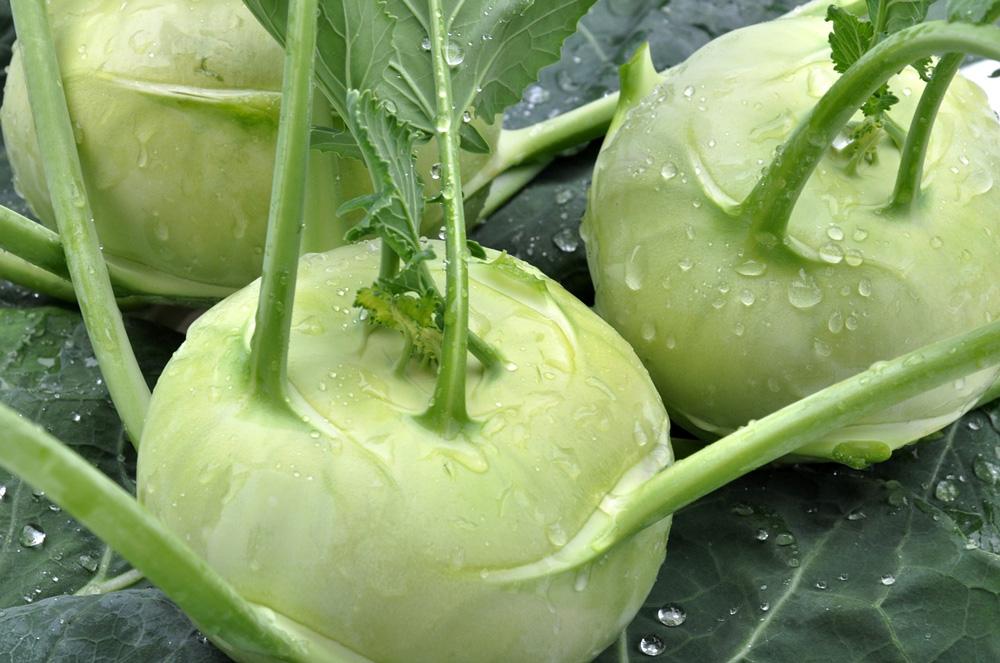

Kohlrabi White Vienna Vegetable Seeds
Botanical Name: Brassica oleracea var. gongylodes
White Vienna Kohlrabi is a classic cool-season vegetable producing smooth, pale green to greenish-white swollen stems with crisp, tender flesh and a mild, slightly sweet brassica flavour. Sometimes known as German Turnip, kohlrabi is grown for its distinctive rounded stem, which develops above the soil surface and can be eaten raw or cooked.
White Vienna is an excellent choice for home vegetable gardens, raised beds, market gardens and container growing. The rounded stems are best harvested while young and tender, before they become oversized or woody. The edible leaves can also be harvested and cooked in a similar way to kale or other brassica greens.
Fast growing and relatively compact, White Vienna Kohlrabi is particularly useful for autumn, winter and spring vegetable gardens in many parts of Australia.
Key Attributes
Classic White Vienna VarietyProduces attractive pale green to greenish-white rounded stems with crisp, tender flesh and a mild flavour. |
Crisp & Mild FlavourYoung stems have a crisp texture and mild, slightly sweet brassica flavour suitable for eating raw or cooked. |
Fast-Growing Cool-Season CropA relatively quick vegetable that is well suited to successive sowings through suitable cool to mild growing conditions. |
Compact Garden VegetableRequires less space than many larger brassica crops, making it useful for raised beds, smaller vegetable gardens and containers. |
Edible Stems & LeavesThe swollen stem is the principal crop, while healthy young leaves are also edible and can be cooked as leafy greens. |
Versatile in the KitchenExcellent raw in salads and slaws or cooked by roasting, steaming, sautéing, stir-frying or adding to soups and stews. |
Product Description
White Vienna Kohlrabi is a traditional kohlrabi variety valued for its smooth, rounded pale green stems, tender texture and mild flavour. Botanically classified as Brassica oleracea var. gongylodes, kohlrabi belongs to the same species as cabbage, broccoli, cauliflower, kale and Brussels sprouts.
Despite sometimes being called German Turnip, kohlrabi is not a true turnip. The edible rounded portion is a swollen stem that develops above ground, rather than an underground root.
White Vienna plants initially produce an upright cluster of leaves. As the plants develop, the lower portion of the stem expands into a distinctive rounded globe. Leaves emerge from around the swollen stem, giving mature plants their characteristic appearance.
The swollen stems are best harvested while relatively young, commonly at approximately 5–8 cm in diameter. At this stage, the flesh is generally crisp, juicy and tender. Allowing stems to become excessively large can result in a tougher or more fibrous texture.
The flavour is mild and slightly sweet, with characteristics reminiscent of broccoli stems, cabbage and turnip. Young White Vienna Kohlrabi can be peeled and eaten raw or prepared using a wide range of cooking methods.
White Vienna is particularly useful for gardeners wanting a relatively fast, space-efficient brassica crop. Its compact growth habit allows closer spacing than crops such as cabbage or broccoli, while successive sowings can provide an extended harvest.
Why Grow White Vienna Kohlrabi?
- Classic pale green to greenish-white kohlrabi variety.
- Produces smooth, rounded swollen stems above ground.
- Crisp, tender flesh when harvested young.
- Mild, slightly sweet brassica flavour.
- Excellent for raw and cooked dishes.
- Relatively fast-growing cool-season vegetable.
- Compact growth habit.
- Suitable for smaller vegetable gardens.
- Excellent for raised garden beds.
- Suitable for sufficiently deep containers.
- Useful for successive sowings.
- Edible leaves as well as stems.
- Suitable for salads and slaws.
- Excellent roasted, steamed or sautéed.
- Useful in soups, stews and stir-fries.
- Suitable for home and market garden production.
Plant Details
| Plant Type | Cool-season vegetable |
| Variety | White Vienna Kohlrabi |
| Botanical Name | Brassica oleracea var. gongylodes |
| Family | Brassicaceae |
| Growth Habit | Compact, upright plant forming an enlarged above-ground stem |
| Stem Colour | Pale green to greenish-white |
| Harvest Size | Best harvested young, commonly around 5–8 cm diameter |
| Flavour | Mild, slightly sweet brassica flavour |
| Edible Parts | Swollen stem and leaves |
| Position | Full sun to light partial shade |
| Life Cycle | Biennial, generally grown as an annual vegetable |
Sowing Information
| Sowing Method | Direct sow or raise seedlings for transplanting |
| Sowing Depth | Approximately 5–10 mm |
| Germination | Usually approximately 5–10 days under suitable conditions |
| Preferred Germination Temperature | Approximately 10–25°C |
| Plant Spacing | Approximately 15–25 cm |
| Row Spacing | Approximately 30–45 cm |
| Position | Full sun; light partial shade can be useful in warmer conditions |
| Soil | Fertile, moisture-retentive and well drained |
| Days to Harvest | Approximately 55–65 days under suitable growing conditions |
When to Sow White Vienna Kohlrabi in Australia
| Climate Zone | Suggested Sowing Time | Growing Notes |
|---|---|---|
| Cool | Spring – autumn | Excellent cool-season crop. Avoid periods when young plants are likely to experience prolonged severe frost. |
| Temperate | Late summer – spring | Successive sowings through cool and mild weather can provide an extended harvest. |
| Subtropical | Autumn – winter | Best grown through the cooler months. Avoid establishing crops during extreme summer heat. |
| Tropical | Coolest, driest months | Grow during the mildest part of the year with good airflow, drainage and reliable moisture. |
| Arid | Autumn – early spring | Avoid extreme heat and provide regular irrigation for even stem development. |
These sowing periods are general guides. Local frost dates, temperature, elevation, rainfall and water availability should also be considered.
How to Grow White Vienna Kohlrabi
Choose a position receiving full sun during cool weather. In warmer districts, light afternoon shade can help reduce heat stress.
Prepare fertile, well-drained soil with good moisture-holding capacity. Incorporate well-decomposed compost or another appropriate organic soil amendment before sowing where required.
Sow White Vienna Kohlrabi seeds approximately 5–10 mm deep.
Seeds may be sown directly where the plants will mature or started in seedling trays and transplanted while young.
Maintain consistent moisture during germination. Seedlings generally emerge within approximately 5–10 days under favourable conditions.
Thin or transplant seedlings to approximately 15–25 cm apart, with around 30–45 cm between rows.
Kohlrabi develops best when growth remains steady. Avoid allowing plants to experience prolonged drought, severe nutrient deficiency or other growth checks while the stems are enlarging.
Keep the area relatively weed free so young plants do not have to compete heavily for moisture and nutrients.
How Kohlrabi Grows
Kohlrabi has one of the most distinctive growth habits among common vegetables.
The rounded portion that is harvested is not a root or bulb. It is an enlarged section of stem that forms above the soil surface.
As the plant develops, this stem gradually expands into a rounded globe, with leaf stems emerging from its sides and upper surface.
Because the edible stem develops above ground, do not mound soil over the developing globe as you might with some root vegetables.
Allow the stem to develop naturally above the soil while maintaining consistent moisture around the plant’s root system.
Growing Kohlrabi in Australian Conditions
White Vienna Kohlrabi prefers cool to mild temperatures and is best treated as a cool-season vegetable through much of Australia.
In cool districts, it can be grown over an extended period from spring through autumn.
In temperate regions, crops can generally be established from late summer through autumn and again through winter into spring, depending on local frost conditions.
In subtropical areas such as South East Queensland, autumn and winter provide particularly favourable growing conditions.
Tropical gardeners should concentrate production into the coolest and driest part of the year.
High temperatures can reduce crop quality and encourage rapid maturation. For the best texture, aim to produce steady growth under mild conditions and harvest before stems become oversized.
Watering Kohlrabi
Consistent soil moisture is important for developing smooth, tender stems.
Irregular watering or prolonged dry conditions can slow growth and contribute to tougher stems.
The most important watering periods include:
- Seed germination
- Seedling establishment
- After transplanting
- During rapid leaf growth
- While the swollen stem is developing
Water deeply enough to moisten the root zone.
Mulching around established plants can help conserve moisture, suppress weeds and moderate soil temperature.
Avoid keeping the soil permanently saturated. Kohlrabi requires good drainage as well as consistent moisture.
Feeding Kohlrabi
White Vienna Kohlrabi performs best in fertile soil.
Incorporate well-decomposed compost or an appropriate soil amendment before planting.
A suitable balanced vegetable fertiliser can be used according to soil conditions and product directions.
Avoid excessive nitrogen fertilisation. While adequate nitrogen supports healthy foliage and growth, excessive nitrogen can encourage disproportionate leafy growth.
The objective is steady, balanced development of both the foliage and swollen stem.
Harvesting White Vienna Kohlrabi
Harvest timing has a major influence on kohlrabi eating quality.
White Vienna is best harvested while the swollen stems are still relatively young and tender, commonly at approximately 5–8 cm in diameter.
Do not assume that a larger kohlrabi will necessarily provide a better harvest. Oversized stems can become coarse, fibrous or woody.
To harvest:
- Check developing stems regularly as they approach useful size.
- Harvest while the skin remains relatively smooth and the stem feels firm.
- Cut the plant at or just below the base of the swollen stem.
- Remove the leaves if the stem is being stored.
- Retain fresh healthy leaves if they will also be used for cooking.
Harvest promptly once the stems reach the preferred size.
What Does White Vienna Kohlrabi Taste Like?
White Vienna Kohlrabi has a mild, fresh brassica flavour.
The taste is often compared with a combination of:
- Broccoli stems
- Cabbage
- Turnip
- Radish without the strong heat
Young stems have a crisp, juicy texture and mild sweetness that makes them particularly suitable for eating raw.
Cooking softens the flesh and produces a mild vegetable flavour that works well with a wide range of seasonings.
Eating Kohlrabi Raw
Young White Vienna Kohlrabi is excellent eaten raw.
Remove the leaves and peel the outer skin, particularly if it has become firm.
The crisp inner flesh can then be:
- Sliced into sticks for fresh eating
- Grated into salads
- Shredded into coleslaw
- Thinly sliced for fresh vegetable platters
- Added to sandwiches and wraps
- Combined with apple, carrot or cabbage in fresh salads
Harvesting while the stems are young provides the best texture for raw use.
Cooking White Vienna Kohlrabi
Kohlrabi is highly versatile in cooked dishes.
The swollen stem can be:
- Roasted
- Steamed
- Boiled
- Sautéed
- Stir-fried
- Mashed
- Added to soups
- Added to stews
- Used in vegetable bakes
- Combined with potatoes and other root-style vegetables
Peel mature stems before cooking if the outer layer has become fibrous.
The leaves are also edible and can be cooked similarly to kale, collard greens or other brassica leaves.
Are Kohlrabi Leaves Edible?
Yes. The leaves of White Vienna Kohlrabi are edible.
Young tender leaves can be cooked whole or chopped, while larger leaves may benefit from having thick stems or ribs removed.
Use the leaves in:
- Stir-fries
- Soups
- Stews
- Sautéed greens
- Mixed vegetable dishes
Using both the swollen stem and healthy leaves makes kohlrabi a particularly versatile garden vegetable.
Growing Kohlrabi in Pots
White Vienna’s compact growth habit makes it suitable for container growing.
Choose a container with good drainage and sufficient depth and width for normal root development.
Fill with good-quality vegetable potting mix and position in full sun during cool weather.
Allow approximately 15–25 cm between plants, depending on container size and the desired harvest size.
Container-grown plants require particularly consistent watering because potting mix can dry more quickly than garden soil.
Maintain adequate fertility throughout growth.
Harvest the stems while young rather than allowing plants to become oversized and crowded.
Successive Sowing
White Vienna Kohlrabi is well suited to successive planting.
Rather than sowing the entire quantity at once, plant smaller batches at intervals of approximately two to three weeks during suitable weather.
Successive sowing can:
- Extend the harvest period.
- Reduce the number of stems reaching maturity simultaneously.
- Provide a regular supply of young kohlrabi.
- Make better use of limited garden space.
Stop successive sowings early enough for the final crop to mature before unsuitable seasonal heat or severe cold.
Why Does Kohlrabi Become Woody?
Kohlrabi is most tender when harvested relatively young.
Stems can become tougher or woody when:
- They are allowed to become excessively large.
- Plants experience prolonged moisture stress.
- Growth is interrupted by unfavourable conditions.
- Plants remain in the ground well beyond their preferred harvest stage.
For consistently tender White Vienna Kohlrabi, maintain steady growth and harvest at approximately 5–8 cm diameter rather than waiting for the largest possible stem.
Common Kohlrabi Pests
Kohlrabi belongs to the brassica family and can be affected by many of the same pests as cabbage, broccoli and cauliflower.
Potential pests include:
- Cabbage white butterfly caterpillars
- Cabbage moth caterpillars
- Aphids
- Flea beetles
- Slugs and snails
Inspect plants regularly, particularly while they are young.
Fine insect exclusion netting can help prevent adult cabbage butterflies and moths from laying eggs on the plants where installed securely before pest pressure develops.
Maintain good garden hygiene and remove badly damaged plant material where required.
Crop Rotation
White Vienna Kohlrabi belongs to the Brassicaceae family.
For crop-rotation purposes, treat it as belonging to the same group as:
- Cabbage
- Broccoli
- Cauliflower
- Kale
- Brussels sprouts
Avoid repeatedly growing brassica crops in the same soil where practical.
Rotating with unrelated crops can help reduce the accumulation of certain soil-borne pests and diseases.
Saving Kohlrabi Seed
Kohlrabi is botanically biennial and normally produces its edible swollen stem during the first growing season.
Plants retained for seed production must be allowed to continue beyond the normal harvest stage and experience the seasonal conditions required to initiate flowering.
The plants subsequently produce tall flowering stems bearing yellow brassica flowers.
After pollination, elongated seed pods develop.
Allow the pods to mature and dry, then harvest before they split and release their seed naturally.
Finish drying harvested seed stalks in a dry, well-ventilated location if required.
Thresh the dry pods and separate the seed from plant debris.
Kohlrabi can cross-pollinate with compatible forms of Brassica oleracea, including some cabbages, kale, broccoli, cauliflower and Brussels sprouts. Appropriate isolation is therefore required where varietal purity is important.
White Vienna Kohlrabi vs Purple Kohlrabi
White and purple kohlrabi are grown in much the same way and have similar culinary uses.
White Vienna Kohlrabi
- Pale green to greenish-white exterior.
- White to pale interior flesh.
- Mild, crisp flavour.
- Classic traditional kohlrabi appearance.
Purple Kohlrabi
- Purple-coloured outer skin.
- Pale interior flesh.
- Similar mild brassica flavour.
- Provides contrasting colour in the vegetable garden.
The main visible difference is exterior colour rather than a fundamental difference in how the crop is grown or used.
Perfect For
- Home vegetable gardens
- Autumn and winter gardens
- Cool-season vegetable production
- Raised garden beds
- Smaller vegetable gardens
- Container growing
- Market gardens
- Successive sowings
- Fresh salads
- Coleslaw and slaws
- Fresh vegetable platters
- Roasting and steaming
- Stir-fries
- Soups and stews
- Edible brassica leaves
- Growers wanting a fast, compact brassica crop
Frequently Asked Questions
What is White Vienna Kohlrabi?
White Vienna is a traditional kohlrabi variety producing rounded pale green to greenish-white swollen stems with crisp, mild flesh.
What is the botanical name of White Vienna Kohlrabi?
The botanical name is Brassica oleracea var. gongylodes.
Is White Vienna Kohlrabi a turnip?
No. Although kohlrabi is sometimes called German Turnip, it is a form of Brassica oleracea and is more closely related to cabbage, kale and broccoli than to true turnips.
Does kohlrabi grow underground?
No. The rounded edible portion is an enlarged stem that develops above the soil surface. It is not an underground root.
What does White Vienna Kohlrabi taste like?
It has a mild, slightly sweet brassica flavour often compared with tender broccoli stems, cabbage and mild turnip.
Can White Vienna Kohlrabi be eaten raw?
Yes. Young kohlrabi is excellent raw because the flesh is crisp and mild. Peel and slice, grate or shred it for salads, slaws and fresh vegetable platters.
Can Kohlrabi be cooked?
Yes. Kohlrabi can be roasted, steamed, sautéed, stir-fried, boiled, mashed or added to soups, stews and vegetable bakes.
Are Kohlrabi leaves edible?
Yes. Healthy kohlrabi leaves are edible and can be cooked similarly to kale and other brassica greens.
When should I sow White Vienna Kohlrabi in Australia?
White Vienna is primarily a cool-season crop. In many Australian regions it is best sown from late summer through autumn, winter or spring, depending on local climate.
Can White Vienna Kohlrabi be grown in Brisbane?
Yes. In Brisbane and South East Queensland, White Vienna Kohlrabi is particularly well suited to autumn and winter growing when temperatures are milder.
Can Kohlrabi grow in tropical Australia?
Yes, but production should generally be concentrated into the coolest part of the year. Persistent heat is less favourable for producing tender, high-quality stems.
Does Kohlrabi tolerate frost?
Established kohlrabi tolerates cool conditions and light frost, although severe cold can damage young plants or interrupt growth.
Does Kohlrabi need full sun?
Full sun is preferable during cool weather. Light partial shade can be useful in warmer conditions.
How deep should White Vienna Kohlrabi seeds be planted?
Sow the seeds approximately 5–10 mm deep and maintain consistent moisture during germination.
How long do Kohlrabi seeds take to germinate?
Seed commonly germinates within approximately 5–10 days under suitable moisture and temperature conditions.
What temperature is suitable for germinating Kohlrabi?
Approximately 10–25°C is suitable for germination, with cool to moderate temperatures generally supporting good establishment.
Can Kohlrabi be direct sown?
Yes. White Vienna can be direct sown where it will grow or raised as seedlings and transplanted while young.
How far apart should Kohlrabi plants be?
Approximately 15–25 cm between plants is suitable for White Vienna, with around 30–45 cm between rows.
How long does White Vienna Kohlrabi take to mature?
White Vienna commonly reaches harvest size in approximately 55–65 days under favourable conditions. Actual timing varies with temperature, soil fertility, moisture and planting season.
How large should White Vienna Kohlrabi be when harvested?
For tender eating quality, harvest the swollen stems while relatively young, commonly at around 5–8 cm in diameter.
Can Kohlrabi get too big?
Yes. Allowing kohlrabi to become excessively large can result in tougher, more fibrous or woody flesh.
Why is my Kohlrabi woody?
Woody stems are commonly associated with over-maturity, excessive size, moisture stress or interrupted growth. Harvest while young and maintain consistent growing conditions.
Why isn’t my Kohlrabi forming a bulb?
The edible portion is actually a swollen stem rather than a bulb. Poor stem development can result from overcrowding, unsuitable temperatures, insufficient light, nutrient imbalance or other growth stress.
Should I cover the Kohlrabi bulb with soil?
No. The swollen stem naturally develops above ground and should not be buried or earthed up.
Can White Vienna Kohlrabi grow in pots?
Yes. Its compact habit makes it suitable for containers. Use a good-quality potting mix, provide adequate drainage and allow enough space between plants.
How often should Kohlrabi be watered?
Maintain even soil moisture throughout active growth. Avoid prolonged drought, particularly while the swollen stem is developing.
Does Kohlrabi need fertiliser?
Kohlrabi performs best in fertile soil. Compost and an appropriate balanced vegetable fertiliser can support steady development where soil fertility is inadequate.
Can I plant Kohlrabi successively?
Yes. Sow small batches every two to three weeks during suitable weather to extend the harvest period.
What pests attack Kohlrabi?
Kohlrabi can be affected by common brassica pests including cabbage white butterfly caterpillars, cabbage moth caterpillars, aphids, flea beetles, slugs and snails.
Can I use insect netting over Kohlrabi?
Yes. Fine insect exclusion netting can help prevent cabbage butterflies and moths from laying eggs on the foliage when fitted securely.
Can Kohlrabi be planted near cabbage and broccoli?
Yes, but kohlrabi, cabbage and broccoli are closely related brassicas and share many pests and diseases. They should be treated as the same crop family when planning crop rotations.
Is White Vienna Kohlrabi an annual?
Kohlrabi is botanically biennial but is normally grown as an annual vegetable because the swollen stem is harvested during its first growing season.
Can I save seed from White Vienna Kohlrabi?
Seed can be saved from an open-pollinated White Vienna crop, but plants must be retained through flowering and seed production. Kohlrabi can cross-pollinate with compatible Brassica oleracea crops, so appropriate isolation is required for varietal purity.
What is the difference between White Vienna and Purple Kohlrabi?
The most obvious difference is the colour of the outer skin. White Vienna has a pale green to greenish-white exterior, while purple varieties develop purple skin. Both generally have pale flesh and similar culinary uses.
Is Kohlrabi suitable for small gardens?
Yes. Kohlrabi is relatively compact compared with cabbage, broccoli and cauliflower, making it useful for raised beds, smaller vegetable plots and containers.
What can I make with White Vienna Kohlrabi?
White Vienna can be shredded into slaw, sliced into salads, eaten as raw vegetable sticks, roasted, steamed, sautéed, stir-fried or added to soups and stews.
Is White Vienna Kohlrabi suitable for market gardens?
Yes. Its relatively rapid maturity, compact spacing and distinctive appearance make White Vienna suitable for fresh-market vegetable production and successive plantings.
david mcpartlan –
every thing is great good products thanks