
Everlasting Daisy White Seeds
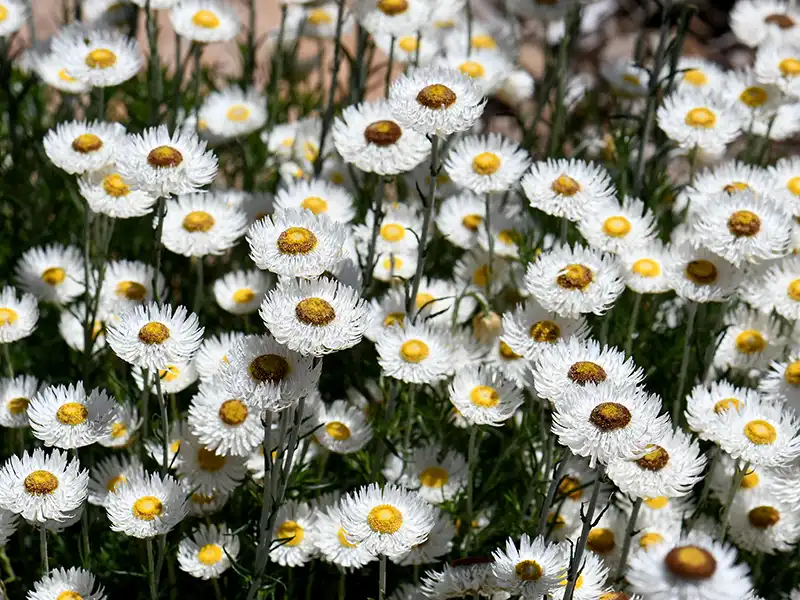
Grow a beautiful display of Australian native paper daisies with crisp white papery flowers and contrasting golden centres. White Everlasting Daisy (Rhodanthe chlorocephala subsp. rosea) is a fast-growing annual wildflower suited to garden beds, mass plantings, native gardens, cottage gardens and cut-flower displays.
The papery white flower heads are carried above slender grey-green foliage, creating an impressive display when planted in groups. Their clean white petals and bright golden centres make them particularly effective in mass plantings and when combined with other Australian wildflowers.
Native to southern Western Australia and extending into South Australia, Rhodanthe chlorocephala subsp. rosea is particularly well suited to sunny positions with free-draining soil. Its long-lasting papery flowers can also be harvested and dried for everlasting arrangements.
Everlasting Daisy White Seed Details
| Botanical name | Rhodanthe chlorocephala subsp. rosea |
|---|---|
| Common names | White Everlasting Daisy, White Paper Daisy, Everlasting Daisy |
| Family | Asteraceae |
| Plant type | Australian native annual wildflower |
| Approximate height | Approximately 20–60 cm |
| Flower colour | White papery flowers with contrasting golden-yellow centres |
| Position | Full sun to light or dappled shade |
| Soil | Well-drained soil; sandy and lighter soils are particularly suitable |
| Sowing depth | Surface sow or cover very lightly |
| Typical germination | Approximately 7–21 days under suitable conditions |
| Approximate flowering | Approximately 10–12 weeks after germination under favourable conditions |
| Uses | Native gardens, mass plantings, wildflower gardens, cottage gardens, cut flowers and dried arrangements |
Why Grow White Everlasting Daisies?
- Beautiful Australian native annual wildflower with crisp white papery flowers.
- Bright golden-yellow centres contrast strongly against the white flower heads.
- Fast-growing and particularly effective when planted in groups.
- Excellent for native, cottage and wildflower-style gardens.
- Ideal for creating large seasonal displays of Australian wildflowers.
- Flowers can be cut and dried for everlasting arrangements.
- Suitable for direct sowing or raising in propagation trays.
- Performs best in sunny positions with good drainage.
How to Grow White Everlasting Daisies from Seed
White Everlasting Daisies are relatively straightforward to grow from seed. Unlike many hard-coated Australian native seeds, they do not generally require hot-water treatment or scarification before sowing.
- Choose a sunny position.
Select an open position receiving plenty of sunlight. Plants grown in heavy shade may become stretched and produce fewer flowers. - Prepare the soil.
Remove weeds and loosen the upper soil surface. The site should drain freely, as Everlasting Daisies perform particularly well in sandy or light soils. - Sow the seeds shallowly.
Scatter the fine seed across the prepared soil or sow into propagation trays. Press gently into the surface or cover with only a very light layer of fine soil or seed-raising mix. - Water gently.
Use a fine spray or gentle watering method so the small seeds are not displaced. Keep the surface consistently moist while germination occurs. - Allow seedlings to establish.
Seedlings may begin emerging in approximately 7–21 days under suitable conditions. Continue to provide moisture without keeping the soil persistently saturated. - Thin crowded seedlings.
Where plants emerge very densely, thin them to improve airflow and provide enough room for branching and flower production. - Pinch for additional branching if desired.
Pinching out the growing tips of established young plants can encourage branching and potentially produce more flowering stems. - Maintain moisture through establishment and flowering.
Water according to soil type and weather conditions. Plants growing in light sandy soils may require more frequent watering than those in moisture-retentive soils.
White Paper Daisy Flowers with Golden Centres
The distinctive flowers are the main attraction of White Everlasting Daisy.
Each flower head is surrounded by crisp white, papery bracts with a contrasting golden-yellow centre. The papery texture gives the flowers their characteristic everlasting appearance and allows them to retain their shape when dried.
The clean white colouring works particularly well in mass plantings, where hundreds of flowers can create a bright carpet of white and gold above the grey-green foliage.
White Everlastings can also be combined with pink everlastings and other compatible Australian wildflowers to create mixed seasonal displays.
Growing White Everlastings in Mass Plantings
White Everlasting Daisies are particularly effective when grown in groups rather than as isolated individual plants. Broad plantings can produce a striking carpet of white, golden-centred flowers during the main flowering period.
- Native wildflower gardens: combine with other compatible Australian annual wildflowers.
- Garden beds: create broad drifts rather than isolated plants for greater visual impact.
- Cottage gardens: combine with informal flowering annuals and perennials.
- Feature displays: use larger sowings to create an impressive seasonal display of white flowers.
- Cut-flower gardens: grow dedicated rows or blocks for harvesting fresh and dried flowers.
When Do White Everlasting Daisies Flower?
In their natural range, Rhodanthe chlorocephala subsp. rosea generally flowers from approximately August through November. Exact timing varies according to rainfall, temperature, sowing date and local climate.
Under favourable garden conditions, plants may begin flowering approximately 10–12 weeks after germination.
The flowering period can continue for several weeks where plants receive suitable moisture and temperatures.
For a strong spring display, time sowing so plants can establish before their main flowering period.
What Soil Is Best for White Everlasting Daisies?
White Everlasting Daisies perform particularly well in well-drained sandy and lighter soils. Good drainage is more important than highly fertile soil.
They can grow in heavier soils, although plants may remain smaller and poor drainage can make establishment more difficult.
Where garden soil is heavy or compacted, improving drainage and soil structure before sowing can help.
Plants respond to regular watering and suitable garden fertiliser, but excessive fertilising is generally unnecessary.
Do White Everlasting Daisies Need Full Sun?
Full sun is generally the best position for compact growth and strong flowering.
Plants can tolerate light or dappled shade, but insufficient light can cause stems to become elongated and may reduce flowering.
For a dense mass-flowering display, choose an open position with good access to sunlight and airflow.
White Everlastings as Cut and Dried Flowers
The papery flowers of White Everlasting Daisy are naturally long-lasting and particularly well suited to dried arrangements.
For drying, harvest flowering stems while the blooms are in good condition and before they become weather-damaged or over-mature.
Tie small bunches together and hang them upside down in a dry, shaded and well-ventilated position.
Once thoroughly dry, the white papery bracts retain much of their structure and appearance, making them useful for dried bouquets, wreaths and other floral arrangements.
Where to Grow White Everlasting Daisies
These compact Australian annual wildflowers are useful anywhere seasonal colour is wanted in a sunny, well-drained position.
- Australian native gardens.
- Wildflower and meadow-style plantings.
- Cottage gardens.
- Garden borders.
- Mass flowering displays.
- Cut-flower gardens.
- Dried-flower production.
- Large pots and containers with good drainage.
Tips for Growing White Everlasting Daisies Successfully
- Choose an open, sunny position for the strongest flowering display.
- Prepare a well-drained seedbed before sowing.
- Surface sow or cover the fine seeds only lightly.
- Water gently so newly sown seed is not washed away.
- Keep the soil moist during germination and early establishment.
- Thin excessively crowded seedlings to improve airflow.
- Pinching young plants can encourage additional branching.
- Protect young seedlings from heavy frost where necessary.
- Harvest healthy blooms before they deteriorate if growing them for dried flowers.
Frequently Asked Questions
What is White Everlasting Daisy?
White Everlasting Daisy is a white-flowering form of the Australian native annual paper daisy Rhodanthe chlorocephala subsp. rosea. It produces distinctive papery white flower heads with contrasting golden centres.
Is White Everlasting Daisy native to Australia?
Yes. Rhodanthe chlorocephala subsp. rosea is an Australian native wildflower associated particularly with southern Western Australia and extending into South Australia.
Is White Everlasting Daisy annual or perennial?
It is an annual wildflower. Plants germinate, grow, flower and produce seed within their seasonal life cycle.
How tall do White Everlasting Daisies grow?
Plants generally grow approximately 20–60 cm high, depending on soil, moisture, sunlight and growing conditions.
What colour are White Everlasting Daisy flowers?
This selection produces white papery flower heads with contrasting golden-yellow centres.
How long do White Everlasting Daisy seeds take to germinate?
Seeds commonly germinate in approximately 7–21 days under suitable conditions. Temperature, moisture and sowing depth can affect germination time.
Do White Everlasting Daisy seeds need to be soaked?
No special hot-water treatment or scarification is generally required. Sow the fine seed directly onto prepared soil or seed-raising mix and cover only very lightly.
How deep should White Everlasting Daisy seeds be planted?
The seed should be surface sown or covered only very lightly. Deep sowing can make emergence more difficult for these small seeds.
When do White Everlasting Daisies flower?
In their natural range, flowering generally occurs from approximately August to November. Under suitable garden conditions, flowering may begin approximately 10–12 weeks after germination.
Do White Everlasting Daisies need full sun?
Full sun is preferred for compact, floriferous growth, although plants can tolerate light or dappled shade.
Can White Everlasting Daisies grow in pots?
Yes. They can be grown in sufficiently large containers provided the growing medium drains freely and the plants receive adequate sunlight.
Can White Everlasting Daisies be used as cut flowers?
Yes. Their long-lasting papery flowers can be used fresh and are particularly well suited to dried flower arrangements.
Are White Everlasting Daisies good for mass planting?
Yes. They are particularly attractive when grown in larger groups, where the white flowers and golden centres can create an impressive seasonal wildflower display.
Can White Everlasting Daisies tolerate frost?
Young seedlings can be damaged by heavy frost. In colder areas, time sowing so vulnerable seedlings are not exposed to severe frost, or provide protection during establishment.
Can White Everlasting Daisies be grown with other native wildflowers?
Yes. Their white flowers combine particularly well with pink everlastings and other compatible Australian annual wildflowers suited to similar sunny, well-drained conditions.
Grow White Australian Everlasting Daisies from Seed
With their crisp white papery flowers, golden centres and attractive grey-green foliage, White Everlasting Daisies are an excellent Australian native annual for spring displays, wildflower gardens and dried flower production.
For best results, sow shallowly into well-drained soil, provide plenty of sunlight and maintain consistent moisture while seedlings establish.
Plant in groups for an impressive seasonal display of white and gold Australian paper daisies.
Reviews
There are no reviews yet.