

Moringa is a fast-growing, nutrient-dense tree prized for its edible leaves, young pods, flowers and seeds. Also known as the Drumstick Tree, Miracle Tree and Horseradish Tree, moringa is grown in warm climates as a vegetable, herb, small tree and productive backyard food plant. This guide explains what moringa is, how to grow moringa from seed in Australia, how to care for a moringa tree, when to harvest it, and how to use the leaves, pods, flowers and seeds.
Botanical Name: Moringa oleifera
Common Names: Moringa, Drumstick Tree, Miracle Tree, Horseradish Tree, Ben Oil Tree.
Table of Contents
- What is Moringa?
- Can You Grow Moringa in Australia?
- History and Cultural Significance
- Key Benefits & Nutritional Profile
- Botanical Features
- How to Grow Moringa from Seed
- Care & Maintenance
- Harvesting & Storage
- Culinary Uses — Vegetable & Herb
- Traditional Uses & Safety
- Environmental & Gardening Benefits
- Pests, Problems & Tips
- Buying Moringa Seeds in Australia
- Moringa FAQs
What is Moringa?
Moringa oleifera is a fast-growing, drought-tolerant tree native to northern India and now cultivated throughout tropical and subtropical regions of the world. It is commonly called the Drumstick Tree because of its long, slender edible pods, and the Miracle Tree because of its many traditional food, gardening and household uses.
Every part of the moringa tree has a use. Young leaves and shoots are harvested as a leafy green vegetable, immature pods are cooked as drumsticks, flowers can be eaten or brewed into tea, and seeds can be pressed for oil or used in traditional water purification. The bark and roots have also been used traditionally, although they are potent and are not commonly consumed as everyday foods.
Moringa establishes quickly in warm climates, tolerates dry conditions once established, and responds well to pruning. This makes it suitable for home gardens, edible landscapes, permaculture systems, food forests and warm-climate backyard growing.

Can You Grow Moringa in Australia?
Yes, moringa can be grown in many parts of Australia, especially in warm, frost-free, tropical, subtropical and dry inland regions. It grows best in full sun, free-draining soil and warm temperatures. In cooler areas, moringa is usually best grown in a large pot so it can be moved or protected during winter.
Gardeners in Queensland, northern New South Wales, Western Australia and the Northern Territory generally have the best conditions for growing moringa outdoors. In temperate parts of Australia, start moringa seeds indoors in spring and move plants outside only once the weather has warmed and the risk of frost has passed.
Moringa is frost-sensitive. Young plants are especially vulnerable to cold, wet soil and chilly nights. If you are growing moringa in southern Australia, choose a warm, sheltered position, use a free-draining potting mix, and avoid overwatering during cool weather.
History and Cultural Significance
Moringa has been cultivated for thousands of years. In India, it is a long-standing part of traditional cuisine and plant-based health practices. Its use extends across Africa, Southeast Asia, the Caribbean and other warm regions where the tree is valued for food, shade, fodder and household uses.
Historically, moringa leaves have been used as a nutrient-rich green vegetable, while the pods are widely used in soups, curries and stews. Seeds have also been used traditionally in water purification because of their coagulating properties. This history helps explain why moringa is regarded as a highly useful and multifunctional tree.
Key Benefits & Nutritional Profile
Moringa is often described as a nutrient-dense food plant because its leaves, pods, flowers and seeds contain a wide range of vitamins, minerals and plant compounds.
- Leaves contain vitamin A, vitamin C, calcium, potassium, iron and protein.
- Young pods, often called drumsticks, are eaten as a vegetable and provide fibre and micronutrients.
- Seeds contain oil and have been studied for traditional water purification uses.
- Flowers are edible and can be cooked, fried or brewed into tea.
- The plant grows quickly in warm conditions, allowing repeated harvests of leaves.
For gardeners, moringa is useful because it can provide fresh leaves, edible pods, flowers and seeds from a relatively small growing space. It is especially appealing in warm climates where fast-growing, drought-tolerant food plants are valuable.
Botanical Features
Moringa is typically a slender, open-branched tree that can reach 10–12 metres in favourable conditions, although it is often pruned to 2–3 metres for easier harvesting. Regular pruning keeps the plant bushier and encourages tender new leaf growth.
- Leaves: Soft, edible, bipinnate leaves made up of many small oval leaflets.
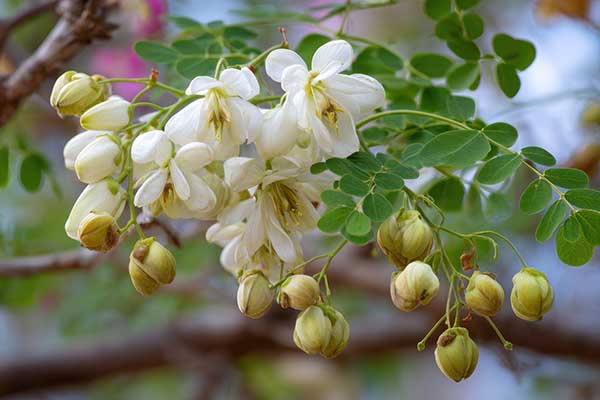
- Flowers: Creamy-white, fragrant flowers that can attract bees and other pollinators.
- Pods: Long, slender green pods, commonly called drumsticks, harvested young for cooking.
- Seeds: Round seeds contained inside mature pods; used for sowing, oil and traditional water treatment.
- Roots and Bark: The deep root system helps with drought tolerance, but roots and bark are potent and should be treated cautiously.
The combination of edible leaves, pods, flowers and seeds makes moringa a versatile tree for warm-climate gardens.
How to Grow Moringa from Seed
Seed Preparation and Sowing
Moringa seeds usually germinate within 7–14 days in warm conditions. For best results, sow seeds 1–2 cm deep in a free-draining seed raising mix or directly into warm garden soil. Moringa dislikes waterlogging, so drainage is very important.
Fresh moringa seed generally gives the best germination. Older seed may still grow, but germination rates can decline over time, especially if seed has been exposed to heat or humidity. If using older seed, some growers lightly nick or scarify the seed coat before sowing.
When to Plant Moringa Seeds in Australia
In most parts of Australia, moringa seeds are best sown in spring or early summer once temperatures are consistently warm. In tropical and subtropical climates, moringa can be sown for a longer season, provided soil temperatures are warm and young plants are protected from heavy rain or waterlogged soil.
Choosing the Right Location
- Choose a full sun position with at least 6–8 hours of direct sunlight.
- Use sandy, loamy or free-draining soil.
- Avoid heavy clay or areas that stay wet after rain.
- Use raised beds or large containers where drainage is poor.
- Protect young plants from frost and cold wind.
Moringa is drought-tolerant once established, but young seedlings need regular watering while they develop roots. Water deeply, then allow the soil surface to begin drying before watering again.
Care & Maintenance
Watering
Keep seedlings lightly moist until established. Once the tree is growing strongly, water deeply but less frequently. Overwatering is one of the most common causes of problems, especially in pots or poorly drained soil.
Pruning & Training
Pruning is important if you want a productive, easy-to-harvest moringa tree. Tip-prune young plants to encourage branching, then continue pruning regularly to maintain a manageable height and stimulate fresh leaf growth.
Fertilisation
Moringa is not usually a heavy feeder, but it benefits from compost, aged manure or a light balanced fertiliser. Mulching around the base helps conserve moisture, suppress weeds and improve soil organic matter.
Protection from Cold
Moringa is frost-sensitive. In temperate regions, grow moringa in pots so plants can be moved to a protected position during winter. In warmer Australian climates, established plants may grow year-round with minimal protection.

Harvesting & Storage
Moringa leaves can be harvested when young and tender. Frequent harvesting encourages new growth and keeps the plant compact. Young pods should be picked while still tender and flexible. Older pods are usually left to mature for seed collection.
Leaves can be eaten fresh, added to stir-fries, cooked like spinach, used in soups, or dried for later use. Dry leaves at low temperatures and store them in an airtight container away from light and moisture. Flowers can be eaten fresh, fried or brewed as tea. Mature seeds can be collected from dry pods for future sowing.
How to Use Moringa — Vegetable & Herb
Moringa is unusual because it can be used as both a vegetable and a herb. The leaves, pods and flowers are all used in cooking.
As a Vegetable
- Young pods, known as drumsticks, are commonly used in soups, curries and stews.
- Leaves can be cooked like spinach or added to omelettes, stir-fries and savoury dishes.
- Fresh leaves have a mild, earthy, green flavour.
As an Herb or Dried Leaf
- Fresh leaves can be chopped and used as a green herb.
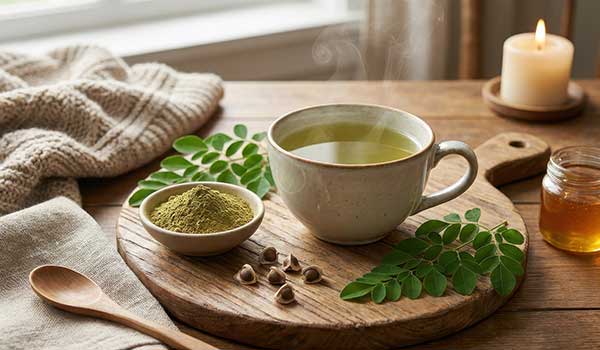
- Dried leaves can be stored and added to soups, sauces, teas or smoothies.
- Powdered moringa leaf is commonly used as a nutritional green powder.
Flowers can be lightly battered and fried, added to dishes, or brewed as a fragrant tea. The best use depends on the age of the plant, the season and the part being harvested.
Traditional Uses & Safety
Moringa has a long history of traditional use in food and herbal systems. The leaves are widely valued as a nutrient-rich green, while the pods, flowers and seeds have also been used in traditional diets and household practices.
- Leaves are commonly eaten as a nutritious leafy vegetable.
- Flowers and young pods are used in traditional cooking.
- Seeds have been studied for water purification and antibacterial properties.
Moringa should not be used as a replacement for medical treatment. Seeds, roots and bark contain compounds that may be potent if used incorrectly. Pregnant or breastfeeding women, people taking medication, and anyone with a medical condition should seek professional advice before using moringa medicinally. Pets should not consume moringa seeds or root extracts.
Environmental & Gardening Benefits
Moringa is not only a food plant. It can also provide practical benefits in warm-climate gardens and edible landscapes.
- Fast-growing and useful for shade or light wind protection.
- Drought-tolerant once established.
- Responds well to pruning and repeated leaf harvest.
- Leaf fall can contribute organic matter to the soil.
- Flowers can attract bees and other pollinators.
- Suitable for food forests, permaculture gardens and warm backyard growing systems.
Its adaptability makes moringa useful for gardeners who want a productive, low-maintenance tree in suitable climates.
Pests, Problems & Tips
- Pests: Caterpillars, aphids and scale insects may occasionally affect foliage. Check plants regularly and manage early.
- Diseases: Root rot is the main issue in poorly drained soil or overwatered pots.
- Cold damage: Frost can damage or kill young plants. Grow in pots in cooler areas.
- Slow growth: Usually caused by cold weather, low light, poor drainage or insufficient warmth.
- Tip: Prune regularly and harvest leaves often to encourage bushier growth.
Although moringa is generally low-maintenance in the right climate, good drainage, warmth, sunlight and pruning make a major difference to plant health and yield.
Buying Moringa Seeds in Australia
Moringa seeds can be difficult to source in Australia because supply is seasonal and seed quality can vary. For best results, choose clean, viable moringa seed from a reputable supplier and store unused seed in a cool, dry place away from heat, humidity and direct sunlight.
If you are growing moringa from seed, fresh seed is preferred where possible. Older seed may still germinate, but germination rates can decline over time, particularly if seed has been stored in warm or humid conditions.
When moringa seed is available, it is worth planning ahead. Demand can be high during the warmer growing season, especially from gardeners in Queensland, northern New South Wales and other warm regions where moringa is easier to grow outdoors.
Moringa FAQs
How long do moringa seeds take to germinate?
Moringa seeds usually germinate in 7–14 days when sown in warm, free-draining conditions.
Can moringa grow in pots?
Yes. Moringa can be grown in large pots, especially in cooler areas where plants need winter protection. Use a deep container and a free-draining potting mix.
Is moringa frost tolerant?
No. Moringa is sensitive to frost. Young plants should be protected from cold weather, cold wind and waterlogged soil.
When should I plant moringa seeds in Australia?
In most areas, moringa seeds are best sown in spring or early summer when temperatures are warm and the risk of frost has passed.
Are moringa leaves edible?
Yes. Moringa leaves are edible and can be used fresh, cooked like spinach, dried, or powdered.
How tall does a moringa tree grow?
Moringa can grow into a tall tree in warm climates, but it is often pruned to 2–3 metres so the leaves, flowers and pods are easier to harvest.
Why are my moringa seeds not germinating?
Poor germination is usually caused by old seed, cool temperatures, excessive moisture, heavy soil or seed that has been stored in hot or humid conditions.
Food Safety & Regulatory Disclaimer — Australia, Queensland & New Zealand
This article is provided for general gardening and educational information only. Moringa seeds sold by Seedmart are supplied as seeds for planting and growing, not as a ready-to-eat food, sprouting seed for human consumption, therapeutic product, medicine, supplement, or food safety-approved ingredient.
If you grow moringa and choose to harvest the leaves, flowers, pods or seeds for personal use, you are responsible for preparing and consuming them safely. Always correctly identify the plant, use clean growing and harvesting practices, wash edible plant parts thoroughly, and seek professional advice if you are pregnant, breastfeeding, taking medication, have a medical condition, or are preparing food for vulnerable people.
Queensland notice: In Queensland, businesses that prepare, handle, process, package, store, transport or sell food may need to comply with the Food Act, the Australia New Zealand Food Standards Code, local council requirements and any applicable food business licensing obligations. Seedmart does not represent this product as a licensed food product or as suitable for commercial food production without the buyer making their own regulatory checks.
New Zealand notice: New Zealand customers are responsible for checking MPI, Biosecurity New Zealand, Food Act 2014, import, growing, food safety and local council requirements before importing, growing, selling or using moringa as food. Approval to import or grow seed does not automatically mean the harvested plant material may be sold as food without meeting applicable New Zealand food safety obligations.
Regulations can change and may depend on how the product is imported, labelled, grown, processed, packaged, marketed or sold. Customers should obtain advice from the relevant authority before using moringa in any commercial food, health, therapeutic, supplement, pet food or export context.
Start Growing Moringa
Moringa is a productive and versatile warm-climate tree. With the right conditions, proper sowing, good drainage and regular pruning, you can harvest fresh leaves, flowers and pods from your own garden.
When available, you can buy Moringa Seeds from Seedmart and start growing this useful edible tree at home.
Growing conditions vary considerably throughout Australia.
For detailed advice on your region, read our
state-by-state guide to growing moringa in Australia.