

Moringa Growing Guide
Moringa is a fast-growing, nutrient-dense tree valued for its edible leaves, young pods, flowers and seeds.
Also known as the Drumstick Tree, Miracle Tree and Horseradish Tree, moringa is grown in warm climates as a vegetable, herb, small tree and productive backyard food plant.
This guide explains what moringa is, how to grow moringa from seed in Australia, how to care for a moringa tree, when to harvest it and how the leaves, pods, flowers and seeds are traditionally used.
Moringa oleifera
Tropical, subtropical and warm regions
Full sun
Free-draining
Usually 7–14 days
Frost-sensitive
Moringa, Drumstick Tree, Miracle Tree, Horseradish Tree and Ben Oil Tree.
Table of Contents
- What is Moringa?
- Can You Grow Moringa in Australia?
- History and Cultural Significance
- Key Benefits & Nutritional Profile
- Botanical Features
- How to Grow Moringa from Seed
- Care & Maintenance
- Harvesting & Storage
- Culinary Uses
- Traditional Uses & Safety
- Environmental & Gardening Benefits
- Pests, Problems & Tips
- Buying Moringa Seeds in Australia
- Moringa FAQs
What Is Moringa?
Moringa oleifera is a fast-growing, drought-tolerant tree native to northern India and now cultivated throughout tropical and subtropical regions of the world.
It is commonly called the Drumstick Tree because of its long, slender edible pods and the Miracle Tree because of its many traditional food, gardening and household uses.
Young leaves and shoots are commonly harvested as a leafy green vegetable.
Immature pods, known as drumsticks, are cooked in soups, curries and stews.
Flowers are traditionally eaten cooked or prepared as an infusion.
Mature seeds may be collected for sowing and have traditional household uses.
Although they have a history of traditional use, they contain potent compounds and are not generally treated as ordinary everyday foods.
Moringa establishes quickly in warm climates, tolerates dry conditions once established and responds well to regular pruning.
This makes it suitable for home gardens, edible landscapes, permaculture systems, food forests and warm-climate backyard growing.

Can You Grow Moringa in Australia?
Yes. Moringa can be grown in many parts of Australia, particularly in warm, frost-free, tropical, subtropical and dry inland regions.
It performs best in full sun, free-draining soil and consistently warm temperatures.
Northern Australia
Excellent conditions for outdoor growth where drainage is good and plants are not sitting in saturated soil during wet periods.
Queensland & northern NSW
Well suited to warm conditions. Protect young trees from occasional frost and cold winter weather.
Dry regions with hot summers
Moringa handles heat and dry conditions well once established, provided young plants receive adequate water.
Southern Australia
Start seed under protection in spring and consider growing in a large container that can be moved or protected during winter.
Young plants are particularly vulnerable to cold nights, frost and cold wet soil. In cooler regions, choose a warm sheltered position and prioritise excellent drainage.
History and Cultural Significance
Moringa has been cultivated for thousands of years.
In India, it has a long history in traditional cuisine and plant-based practices. Its use has also spread through Africa, Southeast Asia, the Caribbean and other warm regions.
Food Crop
Leaves have traditionally been eaten as a green vegetable, while immature pods are widely used in soups, curries and stews.
Household Uses
Moringa has also historically been valued for shade, fodder, seed oil and traditional water treatment.
Key Benefits & Nutritional Profile
Moringa is often described as a nutrient-dense food plant because its edible parts contain a range of vitamins, minerals and other plant compounds.
Contain nutrients including vitamin A, vitamin C, calcium, potassium, iron and protein.
Eaten as a vegetable and provide fibre and micronutrients.
Traditionally cooked, fried or prepared as an infusion.
Contain oil and have been studied for traditional water-purification applications.
Warm conditions can support repeated harvests of fresh foliage.
For home gardeners, moringa can provide multiple harvestable plant parts from a relatively small growing space.
This is particularly useful in warm climates where vigorous and drought-tolerant food plants are valuable.
Botanical Features
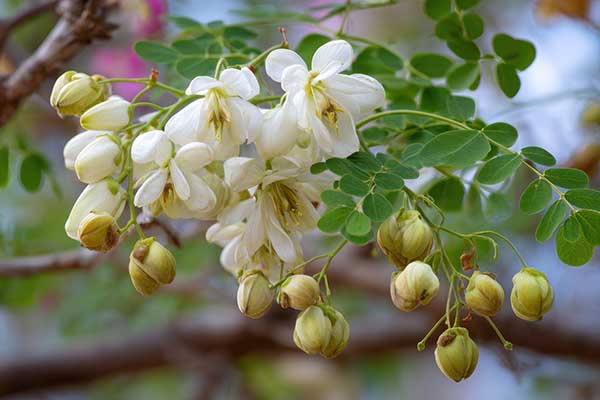
Moringa is typically a slender, open-branched tree that can reach approximately 10–12 metres in favourable conditions.
Moringa is often pruned to around 2–3 metres to make harvesting easier and encourage bushier growth.
Soft bipinnate leaves made up of numerous small oval leaflets.
Creamy-white fragrant flowers that can attract bees and other pollinating insects.
Long slender green pods commonly called drumsticks.
Round seeds develop inside mature pods and can be collected for future sowing.
A substantial root system contributes to the tree’s drought tolerance once established.
How to Grow Moringa from Seed
Moringa seeds establish best when conditions are warm and the growing medium drains freely.
Approximately 1–2 cm
Usually 7–14 days
Spring to early summer
6–8+ hours
Sandy, loamy or free-draining
Cold, wet soil
Step-by-Step Sowing Guide
Choose Fresh Seed
Fresh moringa seed generally provides the most reliable germination.
Use Free-Draining Mix
Fill pots or trays with a seed-raising medium that drains readily and does not remain waterlogged.
Sow 1–2 cm Deep
Plant the seed into warm growing media and cover lightly.
Keep Warm
Germination is most reliable when conditions remain consistently warm.
Water Carefully
Keep seedlings moist while establishing, but do not keep the growing medium saturated.
Move Into Full Sun
Once established, grow moringa in a bright sunny position with good airflow.
Moringa dislikes waterlogged conditions. Poor drainage is one of the most common causes of establishment problems.
Choosing the Right Location
Choose a position receiving approximately 6–8 hours or more of direct sunlight.
Sandy or loamy soils are ideal where water drains readily.
Heavy soil that remains wet after rain can cause root problems.
Useful alternatives where natural drainage is poor.
Protect seedlings from frost and cold winds.
Moringa Care & Maintenance
Watering
Keep young seedlings lightly moist while they establish.
Once plants are growing strongly, water more deeply but less frequently.
Pruning
Tip-prune young plants to encourage branching and continue pruning to maintain a manageable height.
Regular pruning also encourages fresh leaf-producing shoots.
Fertilising
Moringa is not generally a heavy feeder, but compost, aged manure or a light balanced fertiliser can support growth.
Cold Protection
Moringa is frost-sensitive. In cooler regions, container growing allows plants to be moved to a more protected position during winter.
Mulch around the root zone can conserve soil moisture, suppress weeds and gradually contribute organic matter. Keep mulch away from direct contact with the trunk.

Harvesting & Storage
Moringa can provide several different harvests depending on how the plant is managed.
Harvest young tender leaves and shoots. Frequent harvesting can encourage new branching.
Pick while still tender and flexible if using them as drumsticks in cooking.
Flowers may be harvested when fresh for traditional culinary uses.
Allow pods to mature and dry if collecting seed for future sowing.
Fresh Leaves
Use promptly in soups, stir-fries and other cooked dishes.
Dried Leaves
Dry at low temperatures and store in an airtight container away from light and moisture.
How to Use Moringa — Vegetable & Herb
Moringa is unusual because different parts of the same tree can be used in different culinary ways.
As a Vegetable
- Young pods are used in soups, curries and stews.
- Leaves can be cooked similarly to spinach.
- Leaves can be added to omelettes, stir-fries and savoury dishes.
- Fresh leaves have a mild, earthy green flavour.
As an Herb or Dried Leaf
- Fresh leaves can be chopped and used as a green herb.
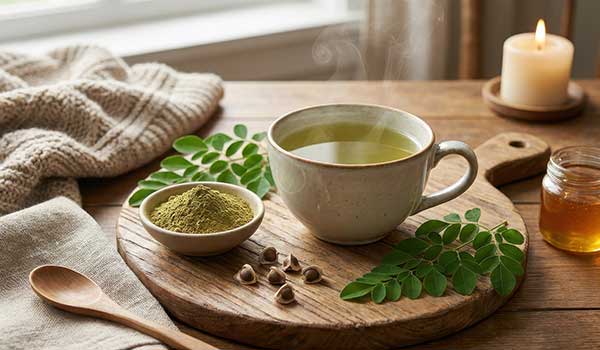
- Dried leaves can be added to soups, sauces or infusions.
- Powdered dried leaf is also commonly used as a green food powder.
Flowers are traditionally cooked, lightly fried or prepared as an infusion.
Traditional Uses & Safety
Moringa has a long history of use in traditional food and herbal systems.
Leaves are widely consumed as a green vegetable, while flowers, young pods and seeds have also featured in traditional diets and household practices.
Commonly eaten as a nutritious leafy vegetable.
Traditionally used as a cooked vegetable.
Used in traditional culinary preparations.
Studied for applications including traditional water purification.
Moringa should not be used as a replacement for medical treatment.
Seeds, roots and bark contain compounds that may be potent if used incorrectly.
Pregnant or breastfeeding women, people taking medication and anyone with a medical condition should seek professional advice before using moringa medicinally.
Environmental & Gardening Benefits
Moringa is not only a food plant. In suitable warm climates, it can also provide practical benefits within productive gardens and edible landscapes.
Establishes quickly when warmth, sunlight and drainage are suitable.
Established trees can tolerate dry conditions better than young seedlings.
Regular cutting encourages branching and fresh harvestable foliage.
Fallen leaves and garden prunings can contribute organic material to the garden system.
Flowers can attract bees and other visiting insects.
Suitable for food forests, permaculture gardens and warm-climate productive landscapes.
Pests, Problems & Growing Tips
Moringa is relatively low-maintenance in a suitable climate, but drainage, warmth and light make a major difference to plant health.
Root Rot
Likely cause: Waterlogged soil or overwatering.
What to do: Improve drainage and allow the soil to begin drying between waterings.
Cold Damage
Likely cause: Frost, cold wind or prolonged low temperatures.
What to do: Protect young trees and grow in containers in colder climates where practical.
Slow Growth
Possible causes: Cold weather, insufficient light, poor drainage or inadequate warmth.
What to do: Check temperature, sunlight and soil conditions before adding fertiliser.
Caterpillars
Inspect foliage regularly and manage feeding pests before significant damage occurs.
Aphids
Check tender new growth and leaf undersides where aphids can gather.
Scale Insects
Monitor stems and branches regularly and manage infestations early.
Prune regularly and harvest leaves frequently rather than allowing the tree to grow as one tall unbranched stem.
Buying Moringa Seeds in Australia
Moringa seed availability in Australia can be seasonal, and germination performance can vary depending on seed age and storage conditions.
Fresh Seed
Fresh moringa seed is preferred where possible because germination may decline as seed ages.
Correct Storage
Keep unused seed in a cool, dry location protected from heat, humidity and direct sunlight.
Demand can be strongest during the warmer growing season, particularly in Queensland, northern New South Wales and other regions where outdoor moringa growing is easier.
Moringa FAQs
How Long Do Moringa Seeds Take to Germinate?
Moringa seeds usually germinate in around 7–14 days when sown in warm, free-draining conditions.
Can Moringa Grow in Pots?
Yes. Moringa can be grown in large pots, particularly in cooler regions where the plant may need winter protection.
Is Moringa Frost Tolerant?
No. Moringa is sensitive to frost, particularly while plants are young.
When Should I Plant Moringa Seeds in Australia?
In most areas, spring to early summer is the best time, once temperatures have warmed and frost risk has passed.
Are Moringa Leaves Edible?
Yes. Moringa leaves are traditionally eaten fresh or cooked and can also be dried for later use.
How Tall Does Moringa Grow?
It can grow into a tall tree in warm climates, but home gardeners commonly prune it to approximately 2–3 metres for easier harvesting.
Why Aren’t My Moringa Seeds Germinating?
Common causes include old seed, cool temperatures, excessive moisture, heavy soil or poor storage conditions.
Food Safety & Regulatory Disclaimer — Australia, Queensland & New Zealand
This article is provided for general gardening and educational information only.
Moringa seeds sold by Seedmart are supplied as seeds for planting and growing, not as a ready-to-eat food, sprouting seed for human consumption, therapeutic product, medicine, supplement or food safety-approved ingredient.
If you grow moringa and choose to harvest the leaves, flowers, pods or seeds for personal use, you are responsible for preparing and consuming them safely. Correctly identify the plant, use clean growing and harvesting practices and wash edible plant parts thoroughly.
Queensland
Businesses that prepare, handle, process, package, store, transport or sell food may need to comply with the Food Act, the Australia New Zealand Food Standards Code, local council requirements and applicable food-business licensing obligations.
Seedmart does not represent moringa seed sold for planting as a licensed food product or as automatically suitable for commercial food production.
New Zealand
New Zealand customers are responsible for checking applicable MPI, Biosecurity New Zealand, Food Act 2014, import, growing, food-safety and local council requirements.
Permission to import or grow seed does not necessarily mean harvested plant material can be commercially sold as food without further compliance.
Start Growing Moringa
Moringa is a productive and versatile warm-climate tree. With suitable warmth, good drainage, correct sowing and regular pruning, it can provide fresh leaves, flowers and pods from the home garden.
Grow Moringa from Seed
When available, start your own Drumstick Tree with Moringa seeds from Seedmart Australia.
For more detailed regional guidance, read our
state-by-state guide to growing moringa in Australia.