
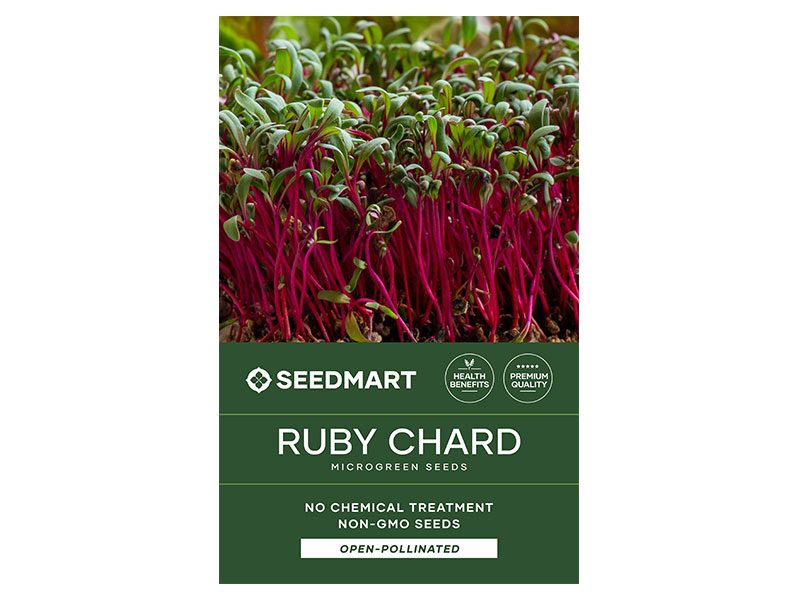
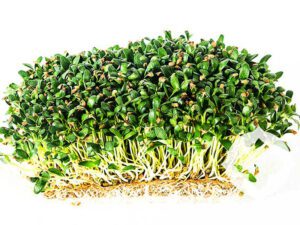
Ruby Chard Microgreen Seeds
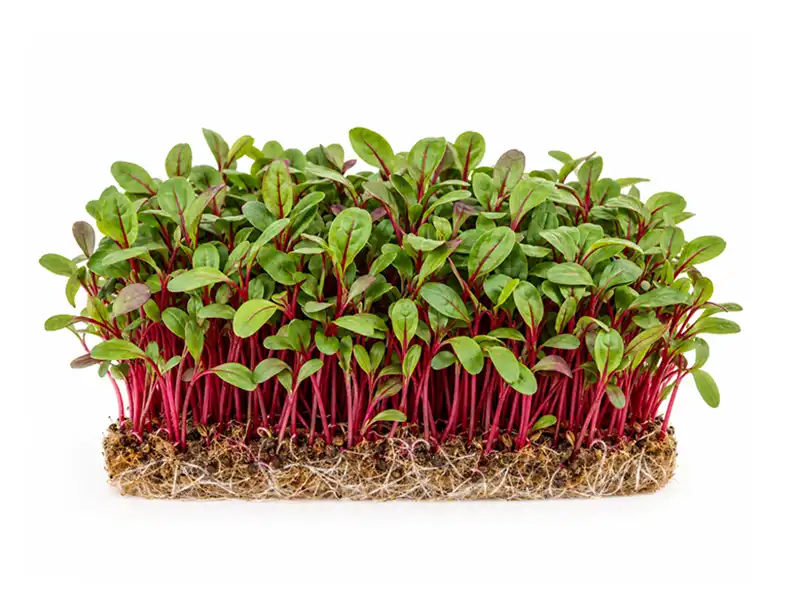
Grow colourful Ruby Chard microgreens at home in approximately 10–14 days. Ruby Chard microgreen seeds produce attractive seedlings with vivid ruby-red stems, fresh green leaves and a mild, earthy flavour. Their striking colour makes them particularly popular for salads, garnishes, restaurant dishes and mixed microgreen trays.
Ruby Chard is a distinctive microgreen variety for home growers, market gardeners and commercial microgreen production. The seedlings develop their characteristic red stems from an early stage and provide excellent visual contrast when grown alone or combined with green microgreens.
Seedmart Ruby Chard microgreen seeds are supplied as untreated seed for growing purposes and are available in packet and bulk quantities for home and commercial growers.
Ruby Chard Microgreen Seed Details
| Botanical name | Beta vulgaris var. cicla |
|---|---|
| Variety | Ruby Chard |
| Seed treatment | Untreated |
| Pre-soak | Approximately 4–8 hours recommended |
| Approximate sowing rate | Approximately 20–30 g per 10 × 20 inch tray |
| Growing medium | Quality soil or suitable microgreen growing mix |
| Germination | Approximately 3–4 days |
| Typical harvest | Approximately 10–14 days |
| Availability | Retail packets and bulk quantities |
Why Grow Ruby Chard Microgreens?
- Distinctive ruby-red stems with attractive fresh green leaves.
- Mild, earthy flavour that works well in salads, wraps and savoury dishes.
- Excellent microgreen for adding colour and contrast to mixed trays.
- Suitable for indoor microgreen production throughout the year with appropriate light and growing conditions.
- Popular for restaurant garnishes, catering and specialty microgreen production.
- Can be harvested as tender young seedlings before mature chard leaves develop.
- Suitable for home growers and commercial microgreen businesses.
- Available in smaller packets and economical bulk quantities.
- Supplied by an Australian-owned seed company.
How to Grow Ruby Chard Microgreens
Ruby Chard microgreens are generally grown in shallow trays using soil or a suitable microgreen growing mix. Chard seed is larger and has a different structure from small brassica seed, and a short pre-soak can help provide consistent moisture before sowing. For a standard 10 × 20 inch microgreen tray, approximately 20–30 grams of seed provides a useful starting sowing rate.
- Pre-soak the Ruby Chard seeds.
Soak the seeds in clean, cool water for approximately 4–8 hours. Drain thoroughly before sowing. - Prepare the growing tray.
Add approximately 3–4 cm of moist soil or quality microgreen growing mix to a shallow tray and gently level the surface. - Sow the Ruby Chard seeds.
Spread the drained seed evenly across the growing surface. Aim for consistent coverage without allowing the seeds to form thick piles. - Press the seed gently into the growing medium.
Lightly press or tamp the seed onto the surface to provide good contact between the seed and moist growing medium. - Cover or stack the tray.
Place another tray over the crop during the initial germination period. Light, even weight can help maintain seed-to-medium contact while the roots establish. - Maintain moisture during germination.
Keep the growing medium evenly moist without allowing it to become waterlogged. Ruby Chard commonly begins germinating within approximately 3–4 days. - Introduce the seedlings to light.
Once the seedlings are established and pushing upward, remove the cover and place the tray under suitable natural or artificial growing light. The stems will develop their characteristic ruby-red colouring as the crop grows. - Harvest the microgreens.
Ruby Chard microgreens are commonly ready for harvest approximately 10–14 days after sowing. Cut the stems cleanly just above the growing medium when they have reached your preferred size and colour.
Ruby Chard Microgreens for Colour and Garnishing
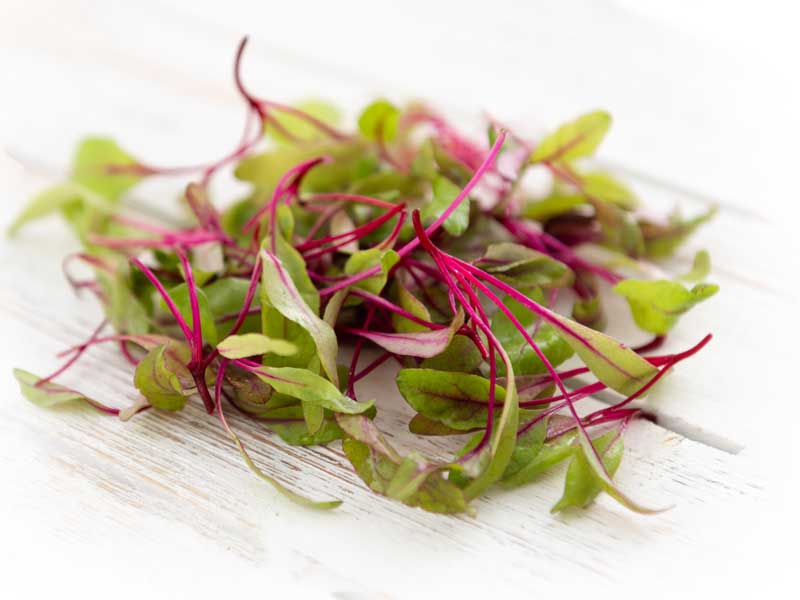
One of the main reasons growers choose Ruby Chard microgreens is their distinctive appearance. The seedlings develop slender red to ruby-coloured stems beneath contrasting green seed leaves, producing a colourful crop that stands out from predominantly green microgreen varieties.
Ruby Chard can be grown as a single-variety crop or combined with other microgreens to create visually varied mixes. Its strong colour contrast makes it particularly useful for chefs, restaurants, caterers and growers producing premium mixed microgreen trays.
What Do Ruby Chard Microgreens Taste Like?
Ruby Chard microgreens have a mild, earthy flavour with a subtle sweetness characteristic of young chard and beet-family seedlings. The flavour is generally gentle rather than strongly spicy, making Ruby Chard easy to combine with other microgreens.
The tender stems and young leaves can be used in salads, sandwiches, wraps, savoury dishes and fresh garnishes. Their vivid red stems are particularly useful when both flavour and presentation are important.
Ruby Chard Microgreens vs Mature Swiss Chard
Ruby Chard microgreens and mature chard are produced from the same type of plant but are harvested at very different growth stages.
| Feature | Ruby Chard Microgreens | Mature Chard |
|---|---|---|
| Harvest stage | Young seedling stage | Developed leafy vegetable |
| Typical harvest | Approximately 10–14 days | Several weeks or longer depending on growing conditions |
| Growing method | Densely sown in shallow trays | Plants spaced individually in garden beds or containers |
| Harvested portion | Young stems and seed leaves | Developed leaves and stalks |
Frequently Asked Questions
How long do Ruby Chard microgreens take to grow?
Ruby Chard microgreens are commonly ready for harvest approximately 10–14 days after sowing. Temperature, light, moisture, seed lot and growing conditions can all influence crop development.
Do Ruby Chard microgreen seeds need to be soaked?
A short pre-soak of approximately 4–8 hours is recommended for Ruby Chard microgreen seeds. Soaking allows the seed to absorb moisture before sowing and can assist with more consistent germination.
How many Ruby Chard seeds should I use in a 10 × 20 tray?
Approximately 20–30 grams of Ruby Chard microgreen seed per standard 10 × 20 inch tray provides a useful starting rate. Commercial growers may adjust this according to their tray system, growing medium, germination percentage and preferred crop density.
What growing medium is best for Ruby Chard microgreens?
Ruby Chard performs well in a quality soil or soil-based microgreen growing medium that holds moisture while still draining effectively. Maintaining consistent moisture is particularly important during germination.
How long do Ruby Chard seeds take to germinate?
Ruby Chard microgreen seeds commonly begin germinating in approximately 3–4 days under suitable growing conditions. Some seedlings may emerge slightly later, so germination can appear less uniform than varieties such as broccoli or radish.
Do Ruby Chard microgreens need light?
The seeds can germinate while covered or stacked. Once the seedlings have established and begun pushing upward, expose the tray to suitable natural or artificial growing light so the leaves can develop and the stems achieve good colour.
When should Ruby Chard microgreens be harvested?
Ruby Chard microgreens are commonly harvested approximately 10–14 days after sowing when the stems are well coloured and the seed leaves have opened. Cut the seedlings just above the growing medium using clean scissors or a suitable harvesting knife.
What do Ruby Chard microgreens taste like?
Ruby Chard microgreens have a mild, earthy flavour with a subtle sweetness. They are less peppery than radish or mustard microgreens and work particularly well in mixed salads and garnishes.
Why are Ruby Chard microgreens red?
Ruby Chard naturally develops red to ruby-coloured stems. This characteristic pigmentation gives the seedlings their distinctive appearance and makes them popular in colourful microgreen mixes and decorative culinary applications.
Can Ruby Chard microgreens be grown indoors?
Yes. Ruby Chard microgreens can be grown indoors throughout the year when provided with suitable growing temperatures, adequate light after germination, consistent moisture and good airflow.
Are Ruby Chard microgreens suitable for commercial growers?
Yes. Ruby Chard is particularly useful for growers producing premium microgreen mixes, restaurant garnishes and colourful specialty crops. It generally has a slightly longer and less uniform growing cycle than fast brassica microgreens, which should be considered when planning production.
Where can I buy Ruby Chard microgreen seeds in Australia?
Seedmart supplies untreated Ruby Chard microgreen seeds in packet and bulk quantities for home growers, market gardeners, restaurants and commercial microgreen businesses throughout Australia.
Need More Help Growing Beetroot & Chard Microgreens?
Growing your own beetroot or chard microgreens? Follow our step-by-step guide to growing beetroot & chard microgreens for advice on soaking, sowing, germination, watering, light and harvesting.

Reviews
There are no reviews yet.