
Onion Chives Seeds
Botanical Name: Allium schoenoprasum
Onion Chives are a versatile perennial culinary herb producing slender, hollow green leaves with a mild onion flavour and attractive mauve-purple flowers. Also known as Common Chives, they are one of the most popular herbs for home gardens, kitchen gardens, pots and commercial herb production.
Easy to grow and highly productive, established chive plants form neat clumps that can be harvested repeatedly throughout the growing season. The fresh leaves are excellent in salads, potatoes, eggs, soups, sauces, dips, vegetables and savoury dishes, while the edible flowers provide attractive colour for salads and garnishes.
Chives are particularly useful for small gardens because they require relatively little space and return year after year in suitable conditions. Their attractive flowers are also visited by bees and other pollinating insects, making chives a valuable addition to herb, vegetable and pollinator-friendly gardens.
Key Attributes
Mild Onion FlavourProduces slender green leaves with a fresh, mild onion flavour ideal for salads, potatoes, eggs, soups, sauces and garnishes. |
Cut & Come AgainEstablished plants can be harvested repeatedly, with fresh leaves regrowing from the base after cutting. |
Perennial Culinary HerbForms productive clumps that can persist for several years in suitable conditions, providing an ongoing supply of fresh chives. |
Edible Purple FlowersProduces attractive rounded mauve-purple flower heads that are edible and can be used to add colour and mild onion flavour to dishes. |
Excellent for PotsCompact clumping growth makes chives particularly suitable for containers, raised beds, balconies and small kitchen gardens. |
Pollinator-Friendly FlowersThe nectar- and pollen-bearing flowers attract bees and other beneficial pollinating insects when plants are allowed to bloom. |
Product Description
Onion Chives, botanically known as Allium schoenoprasum, are a hardy clump-forming perennial herb belonging to the same plant family as onions, garlic, leeks and shallots.
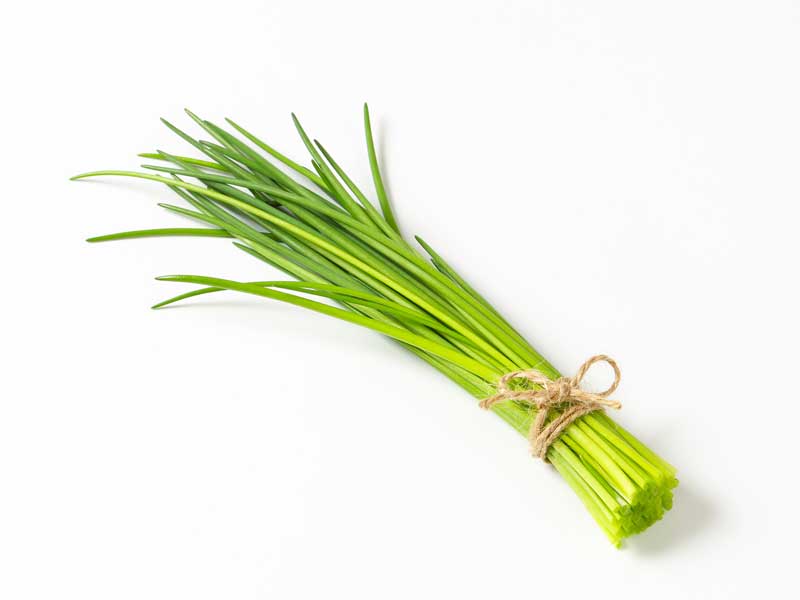
Unlike bulb onions, chives are grown primarily for their slender, hollow green leaves. These leaves have a delicate onion flavour that is considerably milder than most mature bulb onions, making them particularly useful as a fresh culinary herb.
Plants develop dense clumps of fine tubular foliage from small underground bulbs. Established plants can be harvested repeatedly by cutting the leaves above the base, allowing fresh foliage to regrow.
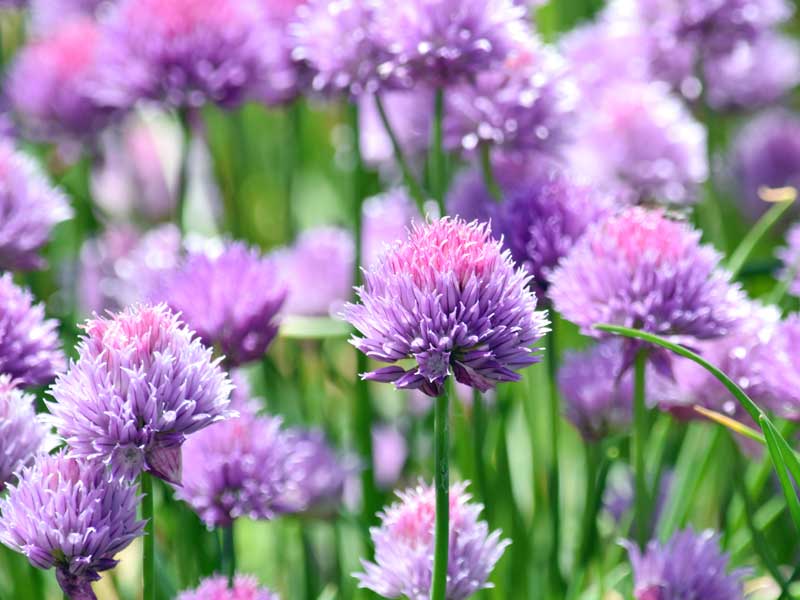
During flowering, chives produce upright stems topped with distinctive rounded clusters of mauve to purple flowers. The flowers are edible and have a mild onion-like flavour, making them useful as an attractive garnish for salads and savoury dishes.
The flowers also provide nectar and pollen for visiting insects. Bees are particularly attracted to flowering chives, giving the plants an additional role in pollinator-friendly herb and vegetable gardens.
Onion Chives are highly versatile in the garden. Their compact growth makes them suitable for traditional herb gardens, vegetable beds, raised gardens, pots, troughs and balcony containers.
Although botanically perennial, growth varies with climate. Plants may remain green for much of the year in mild climates, while in colder districts the foliage can die back during winter before producing fresh growth as conditions warm.
For a continuous supply of tender leaves, harvest regularly and remove older flower stems where seed production is not required.
Why Grow Onion Chives?
- Popular perennial culinary herb.
- Produces slender, hollow green leaves.
- Mild, fresh onion flavour.
- Excellent for fresh culinary use.
- Suitable for repeated cut-and-come-again harvesting.
- Forms productive clumps over time.
- Produces attractive mauve-purple flowers.
- Both leaves and flowers are edible.
- Flowers attract bees and other pollinating insects.
- Excellent for herb gardens and kitchen gardens.
- Well suited to pots and containers.
- Useful in raised vegetable beds.
- Compact growth requires relatively little garden space.
- Suitable for home gardens and commercial herb production.
- Fresh leaves can be harvested as required.
- Established clumps can be divided and replanted.
Plant Details
| Plant Type | Perennial culinary herb |
| Common Names | Onion Chives, Common Chives, Chives |
| Botanical Name | Allium schoenoprasum |
| Family | Amaryllidaceae |
| Growth Habit | Compact, clump-forming herb with slender hollow leaves |
| Approximate Height | Approximately 20–40 cm; flowering stems may extend higher |
| Leaf Type | Fine, hollow, cylindrical green leaves |
| Flavour | Mild onion flavour |
| Flower Colour | Mauve to purple |
| Edible Parts | Leaves and flowers |
| Position | Full sun to light partial shade |
| Life Cycle | Perennial |
Sowing Information
| Sowing Method | Direct sow or raise in seedling trays and transplant |
| Sowing Depth | Approximately 5–10 mm |
| Germination | Usually approximately 7–21 days under suitable conditions |
| Preferred Germination Temperature | Approximately 15–21°C |
| Plant Spacing | Approximately 15–25 cm between established clumps |
| Position | Full sun to light partial shade |
| Soil | Fertile, moisture-retentive and well drained |
| Harvest | Begin light harvesting once plants are well established; mature clumps can be harvested repeatedly |
When to Sow Onion Chives in Australia
| Climate Zone | Suggested Sowing Time | Growing Notes |
|---|---|---|
| Cool | Spring – early autumn | Sow once conditions begin warming. Established plants may become dormant or die back during cold winter weather. |
| Temperate | Spring – autumn | Chives establish readily through mild weather and can remain productive for much of the year with regular moisture. |
| Subtropical | Autumn – spring | Best establishment generally occurs outside the hottest and most humid part of summer. Light afternoon shade can be useful in warmer positions. |
| Tropical | Cooler, drier months | Grow during the mildest period available. Good drainage and airflow are particularly important in humid conditions. |
| Arid | Autumn – spring | Avoid establishing plants during extreme heat and provide consistent irrigation to maintain tender foliage. |
These sowing periods are general guides. Local frost dates, seasonal temperatures, rainfall, elevation and water availability should also be considered.
How to Grow Onion Chives from Seed
Choose a position in full sun to light partial shade with fertile, well-drained soil.
Prepare the growing area by removing weeds and incorporating well-decomposed compost or another suitable organic soil amendment where required.
Sow chive seeds approximately 5–10 mm deep. Seeds can be sown directly where plants will grow or started in seedling trays or small pots for later transplanting.
Chives naturally grow in clumps, so several seeds can be sown together to establish each clump.
Cover the seeds lightly and water gently.
Keep the growing medium consistently moist during germination but avoid waterlogging.
Under suitable conditions, germination generally occurs within approximately 7–21 days.
When seedlings are large enough to handle, transplant or thin them to allow approximately 15–25 cm between mature clumps.
Water regularly while young plants establish.
Avoid heavy harvesting from very young seedlings. Allow plants to develop a strong root system and substantial foliage before beginning repeated cutting.
Once established, harvest leaves as required throughout the productive growing season.
Growing Chives in Australian Conditions
Onion Chives are adaptable to a wide range of Australian climates.
In cool and temperate areas, plants generally grow actively from spring through autumn. In colder locations, foliage may yellow or die back during winter, with fresh shoots emerging again when temperatures increase.
In subtropical areas, chives can grow for much of the year, although establishment and leaf quality are often better outside the hottest summer conditions.
In tropical climates, chives can be more challenging because prolonged heat and humidity are less favourable than mild conditions. Grow during the cooler and drier part of the year and provide excellent drainage.
In hot climates, some afternoon shade may help protect foliage from excessive heat.
Growing Chives in Pots
Chives are particularly well suited to container growing.
Their compact, clumping growth makes them an excellent choice for:
- Balconies
- Patios
- Courtyards
- Small gardens
- Kitchen gardens
- Window-side herb gardens with adequate sunlight
Choose a container with adequate drainage holes and fill it with a good-quality potting mix.
Several seedlings can be grown together to form a productive clump.
Position the container where it receives good sunlight.
Container-grown plants generally require more frequent watering than chives growing in garden soil because potting mix dries more rapidly.
Avoid allowing pots to remain permanently waterlogged.
As the clump expands, it can eventually be divided and replanted into additional containers.
Watering Chives
Consistent moisture encourages tender, productive foliage.
Water newly sown seeds gently and regularly until seedlings become established.
Mature plants tolerate short periods of dry soil, but prolonged moisture stress can reduce leaf production and result in tougher foliage.
The most important periods for reliable moisture include:
- Seed germination
- Seedling establishment
- After transplanting
- Following heavy harvesting
- During periods of active leaf growth
Water according to soil type, temperature, rainfall and growing conditions.
Avoid keeping the root zone continuously saturated.
Feeding Chives
Onion Chives perform best in reasonably fertile soil.
Before planting, incorporate well-decomposed compost where required.
Because the leaves are repeatedly removed during harvesting, established plants benefit from adequate nutrition to support replacement growth.
A suitable balanced fertiliser may be applied according to soil conditions and product directions.
Container-grown chives may require more regular supplementary feeding because nutrients are gradually removed through watering and repeated harvesting.
Avoid excessive fertiliser application. Healthy, steady growth is preferable to overly soft foliage.
Harvesting Onion Chives
Begin harvesting once plants are well established and have developed sufficient foliage.
Use clean scissors or a sharp knife.
Cut leaves several centimetres above soil level rather than pulling them from the plant.
Leaving the basal growing region intact allows new leaves to emerge.
For established clumps, harvest portions regularly rather than repeatedly removing all foliage before the plant has had time to recover.
Young leaves generally provide the most tender texture and mildest flavour.
Harvest shortly before use where possible because fresh chives have their best flavour and texture immediately after cutting.
Cut-and-Come-Again Harvesting
Chives are excellent for repeated harvesting.
Once established, a clump continually produces new leaves from its base.
For regular kitchen use:
- Cut the required amount with clean scissors.
- Leave several centimetres of growth above the base.
- Avoid damaging the crown.
- Maintain adequate moisture after harvesting.
- Allow heavily harvested plants time to regrow before cutting again.
Older leaves can occasionally be cut back to encourage fresh, tender growth.
Established plants generally become increasingly productive as the clumps enlarge.
Chive Flowers
Mature Onion Chives produce attractive spherical flower heads held above the foliage.
The flowers are typically mauve to purple and consist of numerous small individual florets clustered together.
Chive flowers are edible.
Individual florets can be separated from the flower head and scattered over:
- Salads
- Potato dishes
- Egg dishes
- Soups
- Savoury spreads
- Cheese dishes
- Vegetable dishes
The flowers have an onion-like flavour that can be stronger than expected, so use according to taste.
Chives for Bees and Pollinators
Allowing some chive plants to flower adds useful floral diversity to herb and vegetable gardens.
The rounded flower heads contain numerous individual flowers that can provide nectar and pollen to visiting insects.
Bees are commonly attracted to flowering chives.
This makes Onion Chives particularly useful in gardens where herbs, vegetables and flowering plants are being combined to support pollinator activity.
If maximum leaf production is the priority, flower stems can be removed. Alternatively, allow selected plants to flower while keeping others primarily for leaf harvest.
Should Chive Flowers Be Removed?
Flower removal is optional and depends on how the plants are being used.
If you are growing chives primarily for maximum production of tender leaves, removing flower stems directs the plant away from seed production and keeps the clump focused on vegetative growth.
If you want:
- Edible flowers
- Pollinator activity
- Ornamental colour
- Seed production
allow selected flower stems to mature.
A practical approach is to allow some clumps to flower while regularly cutting others for kitchen use.
Dividing Established Chive Clumps
Chives gradually form larger clumps as the plants mature.
After several years, crowded clumps can be divided to maintain vigorous growth and create additional plants.
Lift an established clump carefully and separate it into smaller sections, ensuring each division contains healthy roots and shoots.
Replant the divisions into prepared soil or containers.
Water thoroughly after replanting and keep the soil consistently moist while the divisions re-establish.
Division is also an easy way to rejuvenate an older, congested chive planting.
Using Fresh Onion Chives
Fresh chives are extremely versatile in the kitchen.
Their mild onion flavour is particularly useful where a subtle allium flavour is preferred without the stronger taste and texture of chopped bulb onion.
Use fresh chives in:
- Potato dishes
- Eggs and omelettes
- Salads
- Soups
- Sauces
- Dips
- Soft cheeses
- Savoury spreads
- Sandwiches
- Vegetable dishes
- Fish dishes
- Pasta
- Garnishes
- Herb butters
For maximum fresh flavour, add chopped chives towards the end of cooking or immediately before serving.
Long cooking reduces their delicate flavour.
Storing Fresh Chives
Freshly harvested chives are best used promptly.
If they need to be stored, refrigerate them soon after cutting.
Avoid crushing the delicate leaves.
Wash only when required or dry thoroughly before refrigeration if they have already been washed.
Chives can also be finely chopped and frozen for later use.
Frozen chives lose some of their fresh texture, so they are generally better suited to cooked dishes than fresh garnishes.
Onion Chives vs Garlic Chives
Onion Chives and Garlic Chives are different species with noticeably different foliage and flavour.
Onion Chives – Allium schoenoprasum
- Fine, hollow, cylindrical leaves
- Mild onion flavour
- Mauve to purple flowers
- Compact clumping habit
Garlic Chives – Allium tuberosum
- Flat, strap-like leaves
- Mild garlic-onion flavour
- White flowers
- Generally broader foliage
If you want the familiar fine green chives traditionally served with potatoes, eggs and salads, Onion Chives are the appropriate choice.
Are Chive Flowers Edible?
Yes. Both the green leaves and flowers of Onion Chives are edible.
The individual florets can be pulled apart and scattered over food.
They provide attractive purple colour together with a distinctive onion flavour.
Use flowers from plants that have been grown appropriately for culinary use and have not been treated with unsuitable garden chemicals.
Saving Chive Seeds
Chives can be allowed to flower and produce seed.
Select healthy, vigorous plants and leave some flower heads uncut.
After pollination, the flower heads gradually dry and develop mature black seeds.
Wait until the seed heads have become dry but collect them before substantial seed is naturally shed.
Cut the heads and place them in a dry, well-ventilated location to finish drying if necessary.
Rub or shake the dried heads to release the seed.
Remove as much dry plant material as practical and allow the seed to dry thoroughly before storage.
Store in a labelled container in cool, dry conditions.
Chives are insect pollinated, and maintaining varietal purity requires consideration of compatible flowering chive plants growing nearby.
Common Chive Pests and Problems
Chives are generally straightforward to grow, but plants can occasionally be affected by pests and diseases associated with other allium crops.
Potential problems include:
- Thrips
- Aphids
- Onion-related fungal diseases
- Root and bulb rots in poorly drained soil
Good garden hygiene, adequate airflow and free-draining soil help reduce problems.
Avoid continuously saturated soil around the base of plants.
Inspect foliage periodically and remove severely damaged or diseased material.
Growing Chives Around the Vegetable Garden
Because chives are compact perennial plants, they can be incorporated into mixed herb and vegetable gardens without requiring a large dedicated bed.
They are useful along:
- Garden edges
- Raised-bed borders
- Herb garden paths
- Vegetable bed margins
- Pollinator garden borders
When allowing plants to remain permanently in vegetable beds, remember that established clumps gradually increase in diameter.
Divide overcrowded plants when required.
Perfect For
- Home herb gardens
- Kitchen gardens
- Vegetable gardens
- Raised garden beds
- Pots and containers
- Balconies and courtyards
- Perennial herb gardens
- Cut-and-come-again harvesting
- Fresh culinary herbs
- Potatoes and potato salads
- Egg dishes and omelettes
- Soups and sauces
- Dips and savoury spreads
- Salads and garnishes
- Edible flowers
- Pollinator-friendly gardens
- Bee-friendly herb gardens
- Market garden herb production
Frequently Asked Questions
What are Onion Chives?
Onion Chives are a perennial culinary herb, botanically known as Allium schoenoprasum. They produce fine, hollow green leaves with a mild onion flavour and attractive mauve-purple flowers.
Are Onion Chives the same as Common Chives?
Yes. Onion Chives and Common Chives are common names for Allium schoenoprasum, the familiar culinary chive grown for its fine tubular leaves.
What is the botanical name for Onion Chives?
The botanical name is Allium schoenoprasum.
Are chives perennial?
Yes. Onion Chives are perennial plants. Established clumps can survive for several years in suitable conditions and produce fresh growth seasonally.
Do chives come back every year?
Yes. Healthy established chive plants generally regrow each year. In cold climates the foliage may die back during winter before fresh shoots emerge as conditions warm.
How tall do Onion Chives grow?
The leafy clumps commonly reach approximately 20–40 cm high, with flowering stems sometimes extending above the foliage.
What do Onion Chives taste like?
They have a fresh, mild onion flavour that is generally much more delicate than mature bulb onions.
What is the difference between Onion Chives and Garlic Chives?
Onion Chives have fine, hollow cylindrical leaves, a mild onion flavour and purple flowers. Garlic Chives have flat leaves, a mild garlic-onion flavour and typically produce white flowers.
Are chive flowers edible?
Yes. The mauve-purple flowers are edible and can be separated into individual florets for use in salads, garnishes and savoury dishes.
Do bees like chive flowers?
Yes. Flowering chives are attractive to bees and other pollinating insects because the flower heads provide accessible nectar and pollen.
When should I sow chive seeds in Australia?
Sowing time depends on climate. Spring through autumn is suitable in many cool and temperate areas, while autumn through spring is generally preferable in warmer subtropical regions.
Can I grow Onion Chives in Brisbane?
Yes. Onion Chives can be grown successfully in Brisbane. Establishing plants during the milder months from autumn through spring generally avoids the most stressful summer heat and humidity.
Can chives grow in tropical Australia?
Chives can be grown in tropical areas, but prolonged heat and humidity may make production more difficult. Concentrate growing during the cooler, drier months and provide good drainage and airflow.
Do chives need full sun?
Chives generally perform best in full sun, particularly in mild climates. Light partial shade can be useful in hotter regions.
Can chives grow in shade?
Chives tolerate light partial shade, although excessive shade can produce weaker, less productive plants.
How deep should chive seeds be planted?
Sow seeds approximately 5–10 mm deep and keep the growing medium consistently moist during germination.
How long do chive seeds take to germinate?
Chive seeds commonly germinate in approximately 7–21 days under suitable temperature and moisture conditions.
What temperature is best for germinating chive seeds?
Temperatures around 15–21°C are generally suitable for chive seed germination.
Can chive seeds be direct sown?
Yes. Chive seeds can be sown directly into prepared garden soil or containers.
Can chives be started in seedling trays?
Yes. Starting chives in trays or small pots allows seedlings to establish under controlled conditions before transplanting.
Should chive seeds be sown individually?
They can be, but chives naturally grow as clumps. Several seeds can be sown together to establish a small cluster that develops into a productive clump.
How far apart should chives be planted?
Allow approximately 15–25 cm between established clumps, depending on the growing system and how long the plants will remain in position.
Can chives grow in pots?
Yes. Chives are particularly well suited to pots and containers because of their compact clumping habit.
What size pot do chives need?
Choose a container large enough to provide room for the clump to expand and with adequate drainage holes. Wider containers can accommodate several clumps.
How often should chives be watered?
Water according to soil conditions, rainfall and temperature. The soil should remain reasonably moist during active growth but should not remain permanently waterlogged.
Can chives tolerate dry conditions?
Established plants can tolerate short periods of dryness, but consistent moisture produces more tender and productive foliage.
When can I start harvesting chives?
Begin light harvesting once the plants are well established and have produced substantial foliage. Avoid repeatedly cutting very young seedlings.
How do I harvest chives?
Cut the leaves with clean scissors or a sharp knife several centimetres above the base. Avoid pulling the foliage from the plant.
Do chives regrow after cutting?
Yes. Established chive plants produce new leaves from the base after harvesting, making them an excellent cut-and-come-again herb.
How often can chives be harvested?
Established plants can be harvested regularly during active growth. Allow heavily cut plants sufficient time to produce fresh foliage before harvesting them again.
Should I cut chives back?
Yes. Regular harvesting and occasional cutting back of older foliage can encourage fresh new growth.
Should chive flowers be removed?
It depends on your purpose. Remove flower stems if maximum tender leaf production is the priority. Leave some flowers if you want edible blooms, pollinator activity or seed production.
Can chives be divided?
Yes. Mature clumps can be lifted and divided into smaller sections, then replanted to rejuvenate the planting or produce additional plants.
When should chives be divided?
Established clumps can be divided when they become crowded or less vigorous. Mild growing conditions are preferable so divisions can establish without severe heat or cold stress.
Can I freeze fresh chives?
Yes. Chopped chives can be frozen for later culinary use. Their texture becomes softer after freezing, so they are generally better for cooked dishes than fresh garnishes.
Can chives be dried?
Chives can be dried, although their delicate flavour is generally better preserved through fresh use or freezing.
Can I eat chive leaves raw?
Yes. Fresh chive leaves are commonly eaten raw and are excellent in salads, dips, garnishes and savoury dishes.
Can chive flowers be used in salads?
Yes. Individual chive florets add attractive purple colour and onion flavour to salads.
Why are my chive leaves turning yellow?
Yellowing can result from natural seasonal dieback, excessive or insufficient water, poor drainage, nutrient limitations, overcrowding or other plant stress.
Why aren’t my chives flowering?
Young plants may need time to mature before flowering. Light levels, season, temperature and plant vigour can also affect flower production.
Can chives self-seed?
Yes. Where mature flower heads are left on the plants, viable seed may fall and produce volunteer seedlings under suitable conditions.
Can I save seed from Onion Chives?
Yes. Allow healthy flower heads to mature and dry, then collect the black seeds before they are naturally dispersed.
Are Onion Chives suitable for a pollinator garden?
Yes. Their attractive purple flowers are visited by bees and other pollinating insects and can provide useful floral diversity alongside other flowering herbs and vegetables.
Are chives suitable for beginner gardeners?
Yes. Onion Chives are relatively easy to grow, require little space, tolerate repeated harvesting and can remain productive for several years once established.
Are chives suitable for market gardens?
Yes. Chives are widely grown as a fresh culinary herb and are suitable for repeated bunch harvesting, specialty herb production and direct-market sales.
What can I cook with fresh chives?
Fresh chives are excellent with potatoes, eggs, soups, salads, sauces, dips, fish, pasta, vegetables, soft cheeses and herb butters. Add them near the end of cooking to retain their delicate flavour.
Why grow Onion Chives from seed?
Growing chives from seed is an economical way to establish multiple productive clumps for herb gardens, containers or larger plantings. Once mature, established plants can also be divided to expand the planting.
Click here to download your FREE Seed Raising Guide.


Reviews
There are no reviews yet.