

Sunflower Cover Crop Guide
Sunflowers are more than decorative summer flowers. When grown as a cover crop, they can provide fast biomass, deep rooting, seasonal ground cover and valuable flowers for pollinators.
Their vigorous growth and large root system make them useful in warm-season rotations, while their height and flowering habit can add biodiversity and visual interest to both gardens and larger growing areas.
This guide covers the main benefits of sunflower cover crops, suitable varieties, Australian sowing times, growing requirements, termination and common questions.
Warm season
Full sun
About 2–4 cm
Tall and fast growing
Biomass and soil cover
High while flowering
Warm-season cover cropping, mixed green manure plantings, pollinator strips, garden rotations and areas where a tall biomass crop is useful.
What Is a Sunflower Cover Crop?
A sunflower cover crop is grown primarily to protect and improve the growing area rather than simply for ornamental flowers or seed harvest.
Sunflowers establish rapidly in warm conditions and can provide substantial vertical growth between main crops.
Above Ground
Tall stems and broad leaves create biomass and shade the soil surface as the crop develops.
Below Ground
Deep, vigorous roots explore the soil profile and contribute organic material after the crop is terminated.
Sunflowers can combine soil cover, root activity, biomass production and pollinator value in a single warm-season crop.
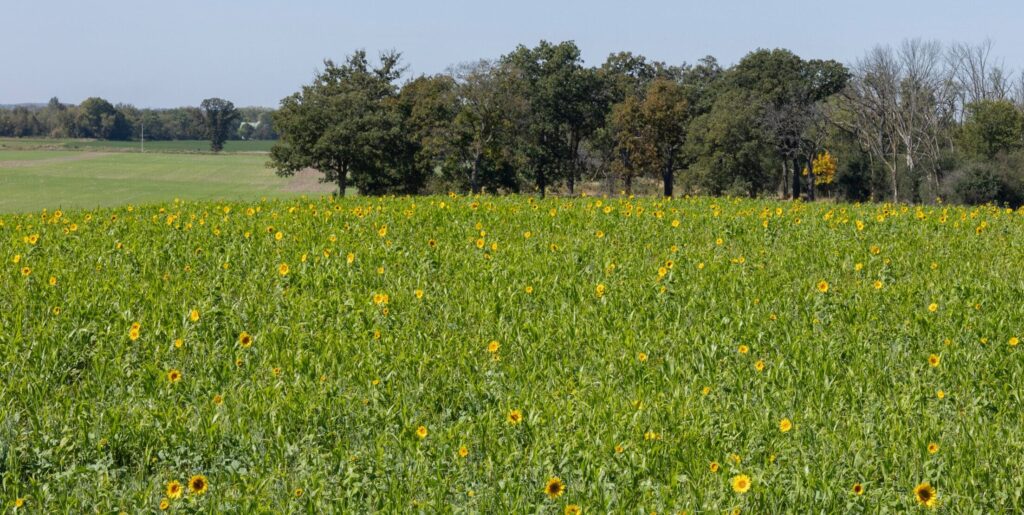
Key Benefits for Soil Health
Sunflowers can contribute to soil improvement through their vigorous root growth and the organic matter produced by stems, leaves and roots.
Roots explore deeper layers of soil and can help create channels through firmer ground.
Leaves, stems and roots add plant residue when returned to the soil.
Growing plants protect the soil surface from direct sun and rainfall impact.
Decaying roots can leave pathways that improve soil structure and water movement.
Sunflowers in Crop Rotation
Adding a different plant family to a rotation can help diversify root systems, residue types and seasonal crop structure.
Break Up the Rotation
Sunflowers introduce a different crop type between vegetable, grain or green-manure plantings.
Add Biodiversity
Different roots, residues and flowering habits increase diversity compared with repeatedly growing the same crop family.
Sunflowers are not automatically disease-breaking for every crop. Consider the crop before and after them, local pest history and how long residues will take to break down.
Weed Suppression and Erosion Control
Fast establishment and a tall canopy can help sunflowers compete for light and space once the crop is well established.
Weed Suppression
A dense stand can shade the ground and reduce the opportunity for some weeds to establish beneath the canopy.
Soil Protection
Plant cover and root systems help protect exposed ground against wind and rainfall erosion.
Pollinator and Beneficial Insect Habitat
One of the biggest advantages of allowing a sunflower cover crop to flower is the highly visible food source it provides to visiting insects.
Why Sunflowers Are Useful in a Mixed Farm or Garden
Visit flowers for pollen and nectar
May visit open flowers while feeding
Flowering areas can support a more diverse insect community
Adds flowering habitat within productive areas
If your priority is maximum biomass before flowering, terminate earlier. If pollinator habitat is also important, allow at least part of the planting to flower before termination.

Can Sunflowers Help with Phytoremediation?
Sunflowers have been studied for their ability to take up certain metals and contaminants under particular conditions.
Phytoremediation depends on the contaminant, concentration, soil chemistry, sunflower variety, growing conditions and management of the harvested biomass. If soil contamination is suspected, laboratory testing and professional advice are appropriate.
Where sunflowers are grown on known contaminated ground, do not simply incorporate contaminated plant material back into the soil without understanding what has been accumulated in the biomass.
Sunflower Seeds: Culinary and Practical Uses
If the crop is allowed to mature fully, sunflower seed has several uses beyond cover cropping.
Suitable edible varieties can be eaten raw or roasted.
Shelled sunflower kernels can be added to breads, cereals and salads.
Oilseed types are grown commercially for sunflower oil.
Mature seed heads and Black Oil Sunflower seed are commonly used for birds.
How to Grow Sunflowers as a Cover Crop
Sunflowers are straightforward to establish in warm soil, but early weed control and reliable moisture during establishment are important.
Choose a Sunny Site
Select an open position receiving at least six hours of direct sunlight.
Prepare the Seedbed
Remove major weeds and loosen the upper soil layer enough to establish good seed-to-soil contact.
Sow the Seed
Sow approximately 2–4 cm deep.
Water for Establishment
Maintain adequate moisture until seedlings are established.
Allow Rapid Growth
Once established, sunflowers tolerate short dry periods better than young seedlings.
Terminate at the Right Stage
Cut before mature seed becomes a volunteer-weed problem if the crop is being used as green manure.
Newly sown sunflower seed and young seedlings may require protection in locations with heavy bird activity.
Best Sunflower Variety for Cover Cropping
Black Oil Sunflower
Black Oil Sunflowers are a practical choice for cover cropping because they establish quickly, grow vigorously and produce substantial above-ground biomass.
Why Choose It?
The seed is relatively small, plants establish rapidly in warm conditions and the crop can provide both biomass and flowering habitat.
Grow Black Sunflowers as a Cover Crop
Explore Black Sunflower seed for warm-season green manure, biomass and pollinator-friendly planting.
Using Sunflowers in Small Urban Gardens
Sunflowers are not limited to broadacre or farm use. Their vertical growth can make them useful where horizontal garden space is limited.
Along Fences
Use the height of sunflowers to create a seasonal screen or vertical feature along sunny boundaries.
In Mixed Beds
Combine with lower-growing herbs, vegetables or cover crops where competition and shading can be managed.
Large Containers
Individual plants can also be grown in substantial containers where adequate soil volume and water are available.
Temporary Summer Cover
Use vacant sunny beds between vegetable crops to produce a short-term warm-season biomass crop.
When to Sow Sunflowers as a Cover Crop in Australia
Sunflowers are warm-season plants, so sowing time depends strongly on frost risk, soil temperature, humidity and the length of your local growing season.
Cairns & Townsville
Best sowing: April–August
The drier part of the year is generally more manageable. Avoid the most humid wet-season conditions where disease and storm pressure are high.
Rockhampton & Mackay
Best sowing: March–September
Autumn through winter can provide suitable warm conditions once the peak wet season has eased.
Brisbane, Toowoomba & Gold Coast
Best sowing: August–March
Spring and summer are the main growing period. Late-winter sowing can also work once soil temperatures are warm enough.
Byron Bay, Lismore & Coffs Harbour
Best sowing: August–March
Sow once frost risk has passed and warm growing conditions are established.
VIC, SA, TAS & coastal southern areas
Best sowing: September–January
Spring through early summer generally provides the strongest growing window.
ACT, southern VIC & Tasmanian highlands
Best sowing: October–December
Wait until frost risk has passed. The usable growing season is considerably shorter.
Local frost dates, rainfall, irrigation and soil temperature can shift the practical sowing window within each region.
Quick Growing Guide for Sunflower Cover Crops
Loose and reasonably well drained
Full sun
2–4 cm
Keep adequately moist
Fast in warm conditions
Before mature seed hardens
From Sowing to Termination
Warm Soil + Moisture
Sow into prepared soil and maintain moisture until seedlings are growing strongly.
Build Biomass
Allow plants to develop strong stems, leaves and roots.
Flower or Terminate?
Decide whether pollinator flowering or earlier biomass termination is more important for your crop plan.
Cut Before Seed Becomes a Problem
Slash or cut the crop and manage residues according to the following crop.
Common Sunflower Cover Crop Questions
Why Are the Leaves Turning Yellow?
Check soil moisture, drainage and nutrient availability. Yellowing can have several causes rather than indicating one specific deficiency.
Why Are My Plants Small?
Compacted soil, low fertility, lack of water, cool conditions or competition can restrict sunflower growth.
What About Pests?
Young seedlings may be vulnerable to birds, snails, slugs and other pests. Monitor the crop closely during establishment.
Do Sunflowers Need Fertiliser?
Fertility requirements depend on the existing soil. Excessive nitrogen is unnecessary for many cover-crop situations.
Sunflowers as a Warm-Season Cover Crop
Sunflowers can be a useful component of warm-season green-manure and cover-crop systems where growers want fast growth, strong roots, substantial biomass and flowering habitat.
They are particularly useful when fitted deliberately into a rotation rather than treated as a universal soil-improvement crop. Match the planting window to your climate, establish the crop well and decide in advance whether your priority is biomass, flowering or mature seed.
In warm soil
For roots and biomass
If pollinator habitat is wanted
Before unwanted mature seed
Grow Black Sunflowers for Green Manure
Use Black Sunflowers as a warm-season cover crop for biomass, flowering and soil-cover applications.