
Hop-bush Seeds
Grow a hardy Australian native shrub suited to native gardens, screening, hedges and locally appropriate revegetation. Hop-bush (Dodonaea viscosa) provides evergreen foliage and attractive papery, winged seed capsules.
The species occurs throughout Australia, with several subspecies adapted to different environments. Choose a form suited to your location and allow space for its mature growth.
Hop-bush Seed Details
| Botanical name | Dodonaea viscosa |
|---|---|
| Common names | Hop-bush, Sticky Hop-bush |
| Family | Sapindaceae |
| Plant type | Australian native evergreen shrub or small tree |
| Growth habit | Upright to spreading and bushy; varies with subspecies |
| Approximate height | Many shrub forms reach approximately 1–4 m; some forms grow taller |
| Foliage | Green, often sticky leaves; leaf shape varies with subspecies |
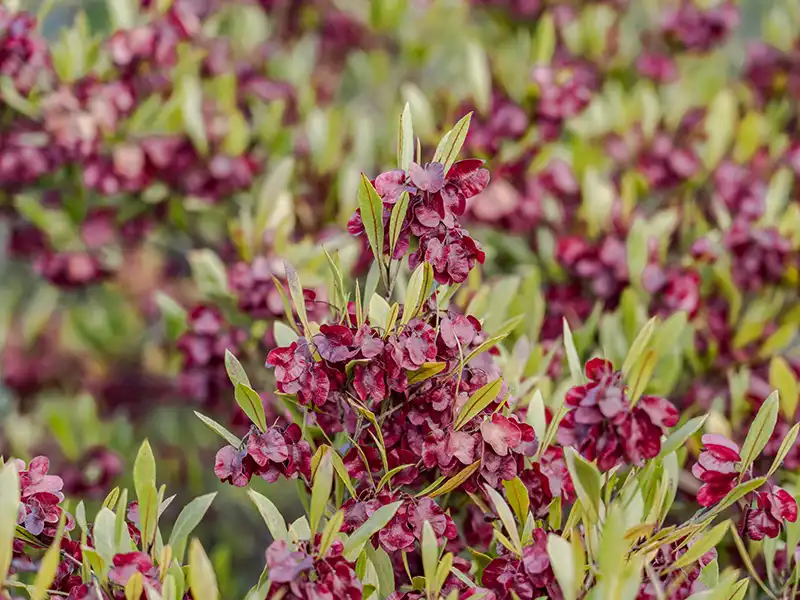
| Flowers and fruit | Small, inconspicuous flowers followed by papery, winged capsules on female plants |
| Position | Full sun to part shade |
| Soil | Well-drained soil suited to the supplied subspecies |
| Uses | Native gardens, informal hedges, screening and suitable revegetation plantings |
Why Grow Hop-bush?
- Evergreen foliage provides permanent garden structure.
- Bushy growth suits informal hedges and screening.
- Female plants develop decorative winged capsules.
- Many forms tolerate dry conditions once established.
- Useful in mixed native plantings where the subspecies is locally appropriate.
How to Grow Hop-bush from Seed
Hop-bush seed has a hard coat, and hot-water pretreatment can improve germination. Use the instructions supplied with your seed where available.
- Pretreat the seed. One established method is to soak seed in near-boiling water for approximately 30 seconds, then cool it rapidly under cold running water. Do not boil the seed.
- Prepare the growing medium. Fill trays, tubes or small pots with clean, free-draining seed-raising mix.
- Sow shallowly. Cover seed with approximately 3–5 mm of fine mix.
- Water gently. Settle the mix without washing seed from its position.
- Maintain suitable conditions. Keep the medium moist and provide a warm, protected position with good light.
- Allow time for emergence. Germination often occurs within 2–4 weeks after suitable treatment, although seed lots and conditions can vary.
- Transplant established seedlings. Gradually harden plants before planting out, and water regularly while their roots establish.
Hop-bush for Landscaping
Use Hop-bush as a specimen shrub, informal hedge or leafy backdrop to smaller native plants. Tip pruning encourages branching and helps develop a fuller screen.
Check the mature dimensions of the supplied form before choosing plant spacing, particularly near paths, buildings and smaller garden beds.
Hop-bush for Revegetation
Include Hop-bush in restoration projects where it belongs to the local vegetation community. Confirm the subspecies and seed provenance before specifying it for ecological plantings.
Prepare the site, control competing weeds and plan follow-up watering. Tolerance of dry conditions in established shrubs does not remove the need for moisture during establishment.
Flowers, Foliage and Winged Capsules
Hop-bush is valued mainly for its foliage and decorative fruit. Its small flowers lack showy petals, while the papery capsules can develop cream, pink or reddish colours.
Male and female flowers usually occur on separate plants. Seed-grown plants may therefore include both sexes, and capsule production should not be expected on every plant.
Where to Grow Hop-bush
- Sunny native garden beds.
- Informal hedges and screening plantings.
- Mixed shrub borders.
- Naturalistic landscapes.
- Revegetation sites suited to the supplied subspecies and provenance.
When to Sow Hop-bush Seeds in Australia
These are general nursery establishment guides. Local conditions and the supplied subspecies should guide sowing decisions.
| Climate Zone | Suitable Sowing Period | Growing Notes |
|---|---|---|
| Cool | Late spring to early summer | Provide warmth and protect emerging seedlings from frost. |
| Temperate | Spring to early summer | Maintain moisture and shelter trays from drying winds. |
| Subtropical | Warm periods with manageable temperatures | Protect propagation trays from excessive heat. |
| Tropical | Suitable periods with controlled nursery conditions | Confirm subspecies suitability and shelter trays from heavy rain. |
| Arid / Semi-arid | Warm, mild periods with reliable irrigation | Use a locally suitable form and prevent the seed mix from drying out. |
Tips for Growing Hop-bush Successfully
- Follow the recommended seed pretreatment.
- Use clean containers and a free-draining growing medium.
- Keep seed trays moist without prolonged saturation.
- Harden seedlings gradually before planting out.
- Keep weeds away from newly planted shrubs.
- Allow enough space for mature growth and access for pruning.
Frequently Asked Questions
What is Hop-bush?
Here, Hop-bush refers to Dodonaea viscosa, an evergreen native shrub or small tree in the Sapindaceae family.
Does Hop-bush seed need treatment?
Hot-water pretreatment is recommended to help overcome the hard seed coat.
Can Hop-bush be grown as a hedge?
Yes. Suitable bushy forms can be maintained as informal hedges with regular tip pruning.
Is Hop-bush drought tolerant?
Many forms tolerate dry conditions after establishment. Young plants still require dependable watering.
Will every plant produce colourful capsules?
No. Male and female flowers usually occur on separate plants, and the capsules develop on female plants.
Is seed-grown Hop-bush guaranteed to have purple foliage?
No. This description does not refer to the purple-leaved cultivar ‘Purpurea’.
Grow Hop-bush from Seed
Bring evergreen structure to your garden with Hop-bush. Pretreat the seed, sow into a free-draining medium and establish seedlings carefully before planting them into a suitable permanent position.
Reviews
There are no reviews yet.