
Tall Sedge Grass Seeds
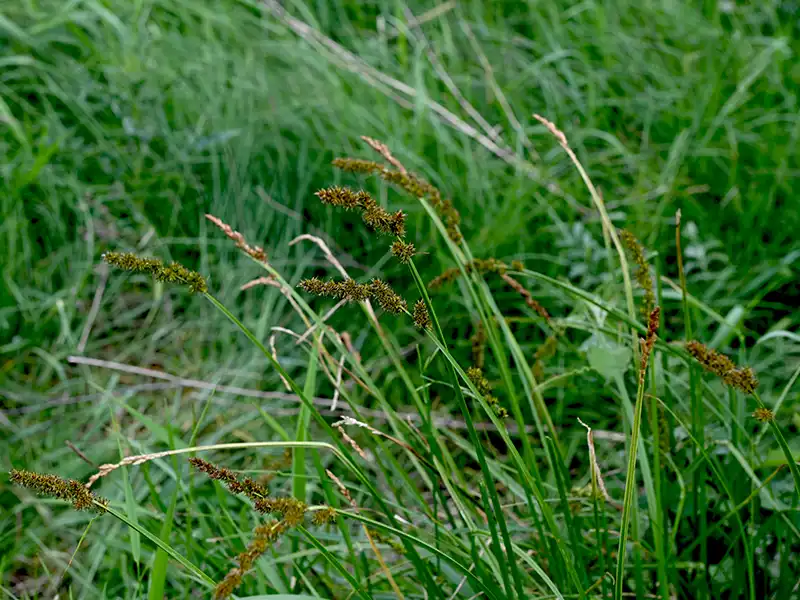
Grow an Australian native perennial sedge suited to moist garden beds, wetland margins and appropriate creek-bank revegetation. Tall Sedge (Carex appressa) forms upright tussocks of green foliage, with arching leaves and dense flower heads carried on angular stems.
This widespread species occurs naturally in damp places across much of Australia. It provides a useful ground-layer component for suitable native plantings, particularly where moisture is available and permanent tussock-forming vegetation is required.
Tall Sedge Seed Details
| Botanical name | Carex appressa |
|---|---|
| Common name | Tall Sedge |
| Family | Cyperaceae |
| Plant type | Australian native perennial sedge |
| Growth habit | Dense, upright tussocks with arching leaves and short rhizomes |
| Approximate height | Commonly approximately 0.4–1.2 m; size varies with site and growing conditions |
| Foliage | Long green blades with a folded midrib and rough leaf edges |
| Flowers | Small flowers in dense, narrow heads with yellow-brown bracts |
| Flowering period | Spring to summer; timing varies with location |
| Position | Open or lightly shaded positions with suitable moisture |
| Soil | Moist to wet soil; naturally found along watercourses, swamp margins and damp depressions |
| Seeds per gram | Approximately 1,771–2,000; varies between seed lots |
| Uses | Moist native gardens, wetland margins, habitat plantings and suitable drainage-line and creek-bank revegetation |
Why Grow Tall Sedge?
- Provides upright foliage and texture in moist landscape settings.
- Forms substantial tussocks suitable for repeated planting.
- Offers shelter for frogs and insects in appropriate habitat plantings.
- Fibrous roots help bind soil in suitable creek-bank plantings.
- Can be raised from seed for garden and restoration projects.
How to Grow Tall Sedge from Seed
Light assists germination of Tall Sedge, so surface sow rather than burying the seed. TreeProject recommends a one-week cold treatment followed by surface sowing and capillary watering.
- Check seed preparation. Follow any instructions supplied with the seed lot. A short cold treatment is recommended in published nursery guidance; hot-water scarification is not the recommended method.
- Prepare the growing medium. Fill clean trays or pots with a fine propagation mix that retains moisture while allowing water movement.
- Surface sow. Spread seed sparingly over the firmed surface and press gently into contact with the mix. Leave exposed to light.
- Maintain moisture. Use gentle watering or a shallow capillary-watering setup to keep the surface moist. Keep the seed above the waterline.
- Protect the containers. Provide good light and shelter from intense heat, drying winds and heavy rain.
- Allow time for emergence. Published nursery guidance gives approximately 2–11 weeks. Germination varies with seed condition and propagation environment.
- Transplant established seedlings. Pot on when seedlings can be handled safely, then gradually acclimatise them before planting outdoors.
Tall Sedge for Landscaping
Tall Sedge can be used as a foliage accent or grouped through larger planting beds. Allow room for mature tussocks and choose a position where moisture can be maintained.
Its rough leaf edges make thoughtful placement useful near paths and frequently used garden areas. Leave enough space for maintenance without brushing through the foliage.
Tall Sedge for Revegetation and Erosion Control
Tall Sedge is useful at suitable bank and water interfaces, where its roots help hold soil and vegetation can slow water movement. It can form part of mixed wetland and drainage-line plantings.
For restoration work, confirm the site’s vegetation community, water regime and seed provenance requirements. Prepare the planting area and manage competing weeds during establishment. Active erosion may require additional measures alongside planting.
Flowers and Foliage
Tall Sedge is grown mainly for its tussock form and foliage. The flowering stems carry numerous small spikes, followed by small nut-like fruits.
The flower heads add seasonal detail to naturalistic plantings without the large, colourful blooms of ornamental flowering plants.
Where to Grow Tall Sedge
- Moist native garden beds.
- Suitable pond and wetland margins.
- Damp depressions and drainage lines.
- Locally appropriate creek-bank plantings.
- Mixed habitat plantings with suitable soil moisture.
When to Sow Tall Sedge Seeds in Australia
TreeProject recommends late spring to summer in its Victorian nursery guidance. The table below provides general planning guidance for other climates. Avoid extreme heat and maintain moisture at the sowing surface.
| Climate Zone | Suitable Sowing Period | Growing Notes |
|---|---|---|
| Cool | Late spring to summer under protected conditions | Maintain surface moisture and shelter seedlings from severe weather. |
| Temperate | Late spring to early summer; summer with heat protection | Avoid excessive tray temperatures and drying winds. |
| Subtropical | Mild to warm periods under managed conditions | Keep seed exposed to light and maintain consistent moisture. |
| Tropical | Milder periods with controlled nursery conditions | Confirm local suitability and protect trays from intense heat and heavy rain. |
| Arid / Semi-arid | Mild periods with dependable irrigation, where suitable | Assess long-term moisture availability before selecting this species. |
Tips for Growing Tall Sedge Successfully
- Follow seed-lot instructions for cold treatment.
- Surface sow and avoid covering seed deeply.
- Maintain moisture without submerging the seed.
- Allow sufficient time for uneven emergence.
- Handle seedlings carefully when potting on.
- Keep competing weeds away from young plants.
- Wear gloves when handling mature foliage.
Frequently Asked Questions
What is the botanical name of Tall Sedge?
The botanical name is Carex appressa.
Is Tall Sedge a grass?
No. It belongs to the sedge family, Cyperaceae, although its foliage has a grass-like appearance.
Should I bury the seed?
Surface sow. Light enhances germination, so avoid a deep covering of propagation mix.
Is Tall Sedge suitable for a dry garden?
Choose a site with suitable moisture. Its natural association with damp places makes it better suited to moist settings than an unirrigated dry garden.
Can it be grown permanently underwater?
Plan it as a marginal or damp-site plant with foliage above the water, rather than a submerged aquatic plant.
How many seeds are there per gram?
The supplier-listed guide is approximately 1,771–2,000 seeds per gram. Actual counts vary between lots.
Grow Tall Sedge from Seed
Raise Tall Sedge in clean propagation containers, keep the sowing surface moist and protect trays from excessive heat. Prepare a suitable planting site before transplanting and provide follow-up care while seedlings establish.
Reviews
There are no reviews yet.