
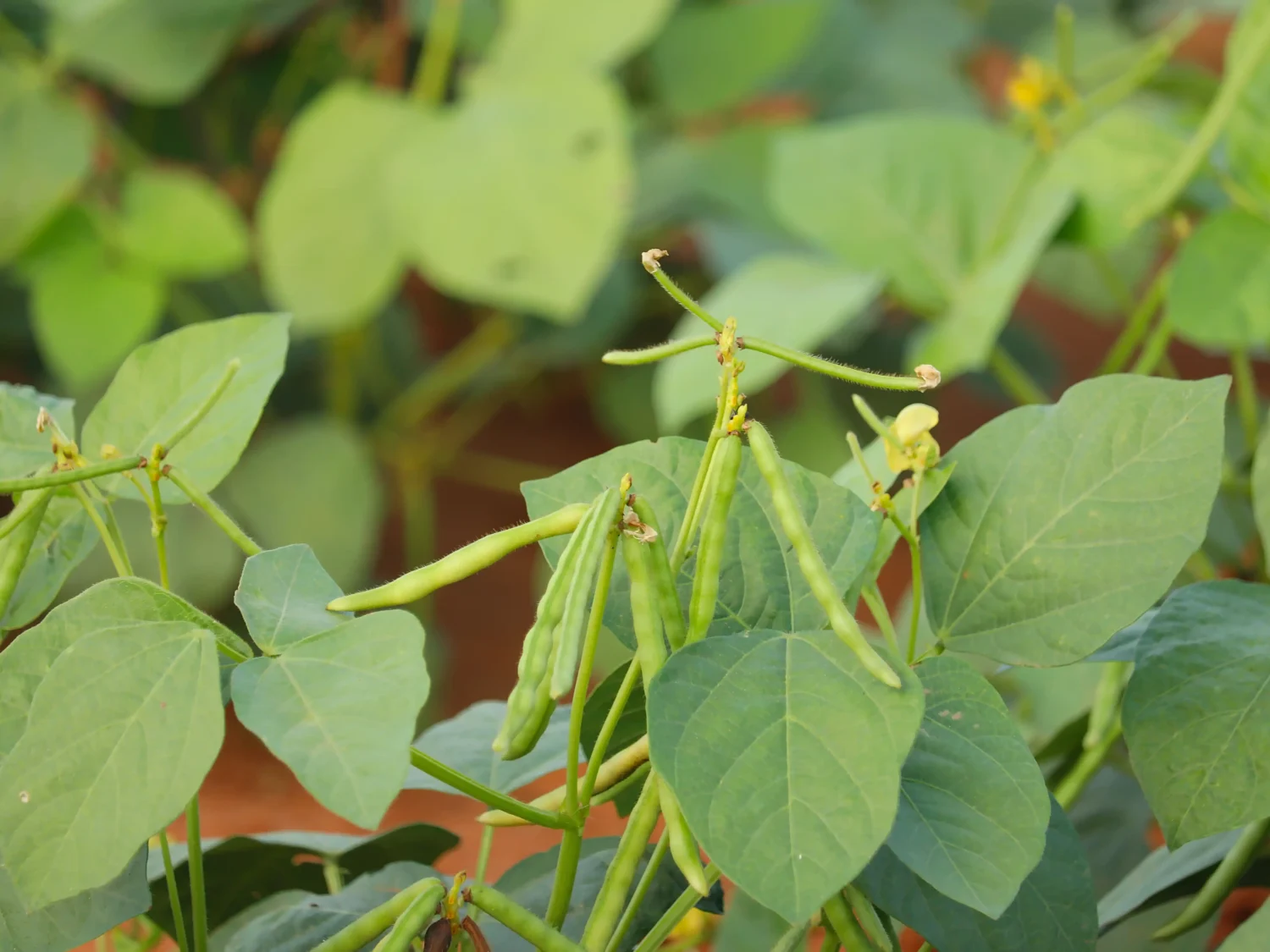

Botanical Name: Vigna radiata
Also Known As: Mungbean, Green Gram, Moong
Mung beans are a warm-season annual legume suitable for green manure, cover cropping and summer soil improvement. Their leafy growth provides seasonal soil cover, while roots and plant residues contribute organic material when the crop is terminated.
For vegetable gardens, market gardens and cropping rotations, mung beans offer a useful way to grow a legume between crops. With effective nodulation, they can fix atmospheric nitrogen, some of which becomes available to following crops as retained plant material decomposes.
- Warm-season legume for green manure and cover cropping.
- Suitable for growing between vegetable crops.
- Returns organic material through roots and leafy residues.
- Can fix nitrogen when effectively nodulated.
- Provides living soil cover during the growing period.
- Can be included in compatible summer cover crop mixtures.
- Best established in warm soil with adequate moisture.
Plant Details
- Plant Type: Annual summer legume
- Botanical Name: Vigna radiata
- Family: Fabaceae
- Growth Habit: Upright to semi-upright; varies with variety
- Foliage: Green leaves with three leaflets
- Flowers: Yellow to greenish-yellow
- Position: Full sun
- Growing Conditions: Warm, frost-free conditions and well-drained soil
Best Uses
- Summer green manure
- Seasonal cover cropping
- Vegetable garden and market garden rotations
- Returning plant residues to the soil
- Legume component in summer cover crop blends
Why Grow Mung Beans?
Mung beans combine seasonal soil cover with the nitrogen-fixing potential of a legume. They can be grown as a green manure and incorporated, or terminated and retained as surface residues.
Keeping residues on site returns plant material to the growing area. The benefit to the following crop depends on growth, nodulation, termination timing and decomposition conditions.
Nitrogen Fixation & Inoculation
Nitrogen fixation occurs through a partnership between the plant and compatible bacteria in its root nodules. For field planting, use Group I mungbean/cowpea inoculant according to the manufacturer’s directions, particularly where mung beans have not been grown recently.
Apply seed inoculant close to sowing and protect inoculated seed from heat and direct sunlight. Effective nodulation is important; simply planting a legume does not guarantee nitrogen fixation.
Sowing Information
- Season: Warm, frost-free growing period
- Soil Temperature: At least 15°C and rising
- Sowing Depth: Approximately 3–5 cm into moist soil
- Soil: Well drained; avoid waterlogging and compacted seedbeds
- Establishment: Control existing weeds before sowing
Sowing Rate & Coverage
Calculate the sowing rate using seed size, germination and expected field establishment. Australian dryland grain-crop guidance targets approximately 20–30 established plants per m²; use this as a starting point when planning a sole-species cover crop, rather than a fixed rate for every seed lot.
The coverage below uses an illustrative rate of 25 kg/ha. Confirm the appropriate rate for your seed lot and sowing conditions; mixed crops need a separate blend calculation.
When to Sow Mung Beans in Australia
In subtropical and temperate areas, sow during the warm spring and summer period once soil temperatures are suitable and frost risk has passed. In cooler districts, allow enough frost-free growing time for useful crop development.
Tropical planting windows vary with rainfall, drainage and regional conditions. Select a period with adequate moisture, avoiding prolonged waterlogging. Use local planting advice rather than assuming the wettest months are always suitable.
How to Sow Mung Bean Seeds
- Select a sunny, well-drained growing area.
- Control weeds and prepare a seedbed with good seed-to-soil contact.
- Calculate seed requirements for the area and seed lot.
- Apply Group I inoculant according to its label.
- Drill seed into moisture at approximately 3–5 cm depth. For smaller areas, sow evenly in shallow furrows and cover.
- Maintain establishment moisture without saturating the soil.
When to Terminate for Green Manure
Aim to terminate around flowering and before mature seed develops. Adjust timing to crop growth, available moisture and the planting date of the following crop.
Chop and incorporate the crop, or terminate it and retain residues on the surface. Check for regrowth after slashing. Allow residues to break down sufficiently before sowing the next crop.
Management
- Manage weeds early; mung beans are relatively poor competitors during establishment.
- Monitor for insects, leaf diseases and uneven growth.
- Plan termination before the cover crop depletes moisture needed by the following crop.
- Prevent mature seed production where volunteer plants would be undesirable.
Green Manure or Pasture?
Mung beans are best described here as a green manure and cover crop legume. They can also be used for forage, but this annual crop does not provide permanent pasture. Where livestock feed is the main objective, choose a crop and management plan suited to the animals and local growing conditions.
Reviews
There are no reviews yet.