
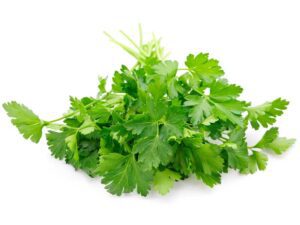
Dill Herb Seeds
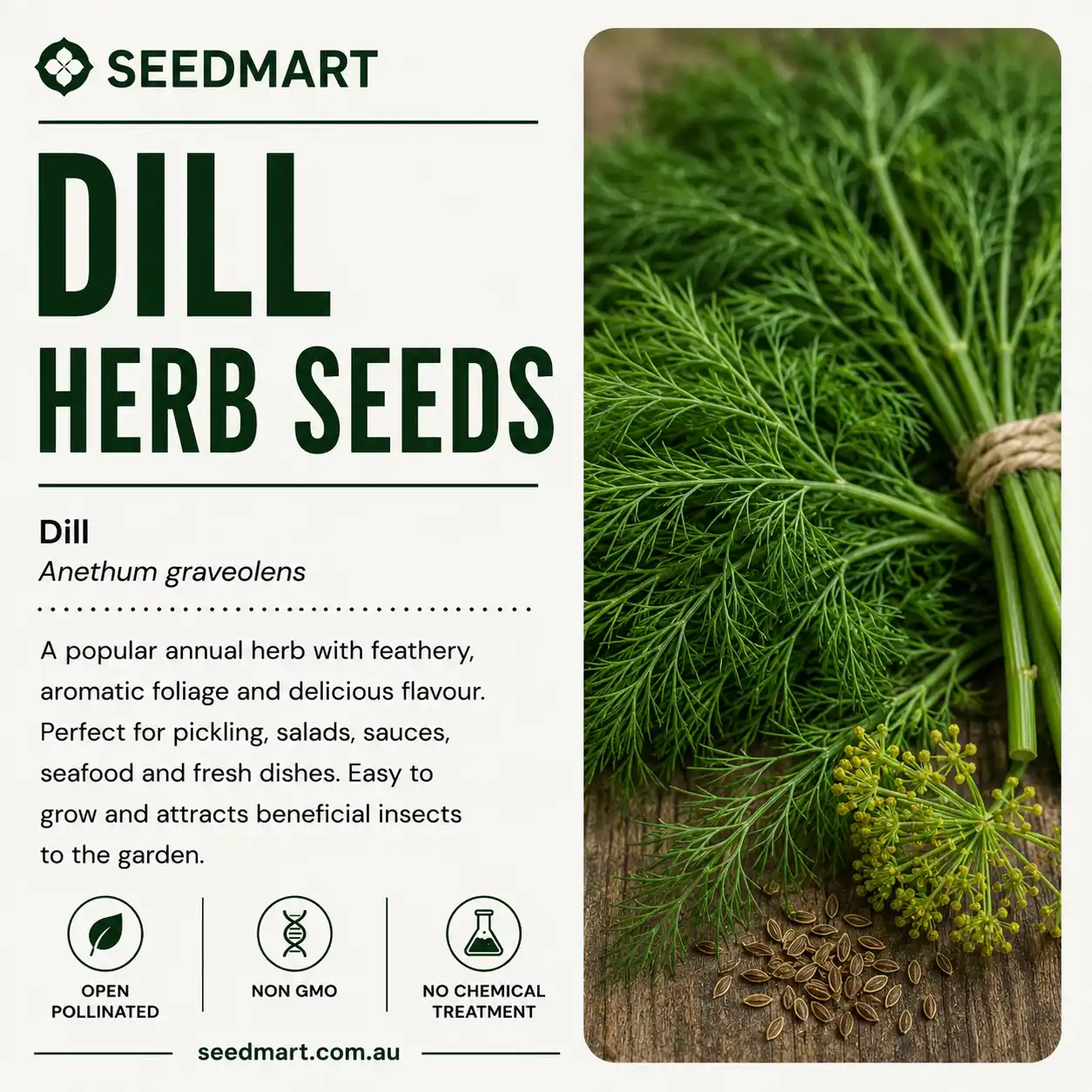
Botanical Name: Anethum graveolens
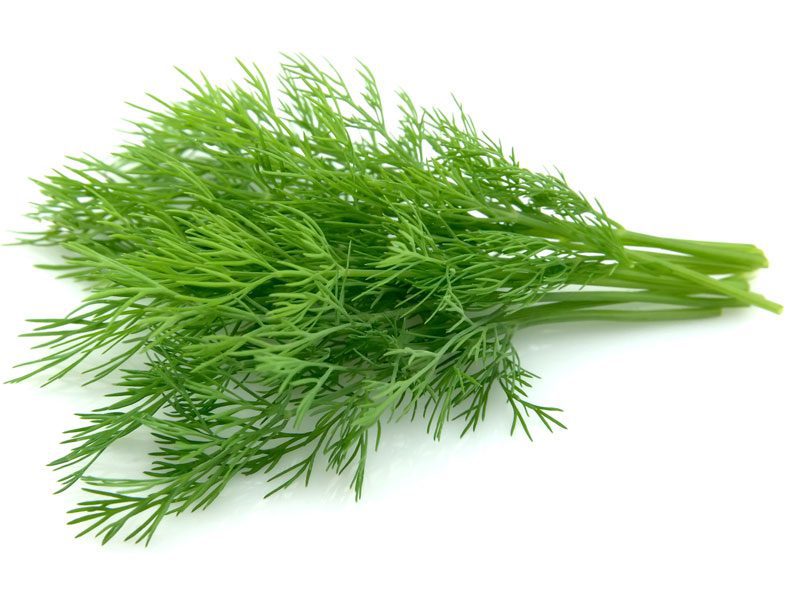
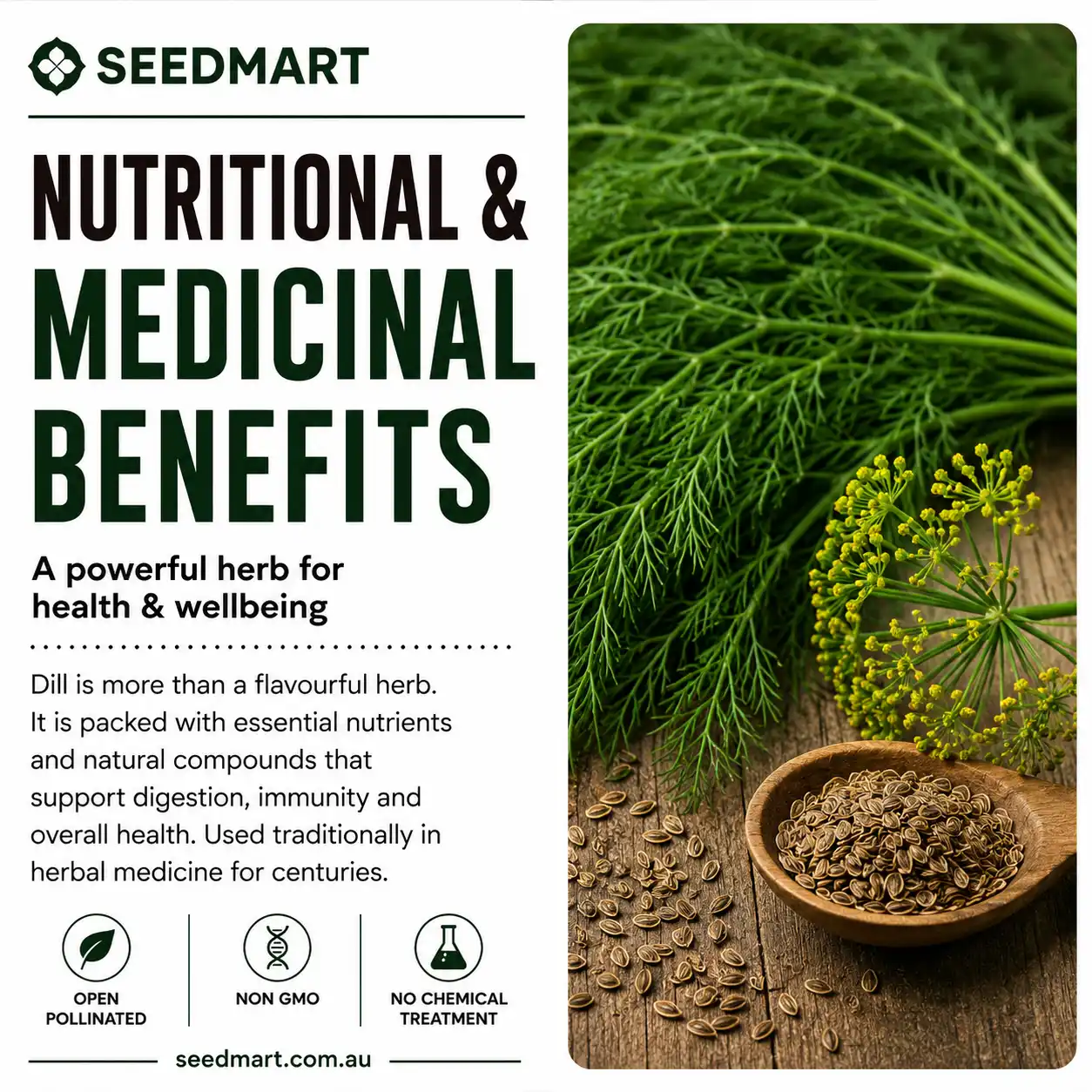
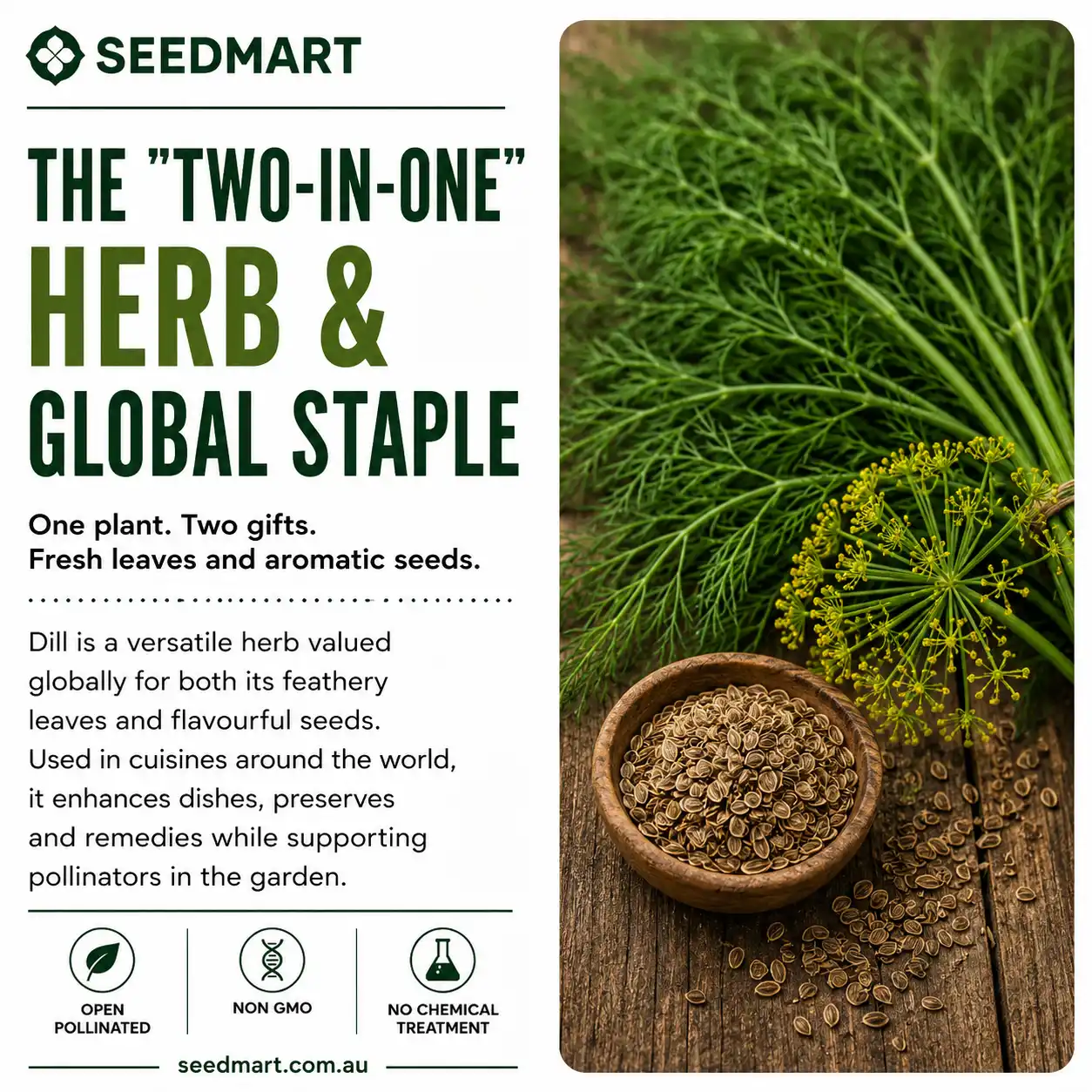
Dill is a popular annual herb prized for its feathery green foliage, aromatic seeds and fresh, distinctive flavour. Easy to grow in garden beds, herb gardens and containers, dill is widely used in pickling, seafood dishes, salads, sauces and homemade preserves.
Key Attributes
Classic Culinary HerbFresh leaves and seeds used in pickling, sauces and savoury dishes. |
Aromatic FoliageFine, feathery leaves with a fresh, distinctive dill flavour. |
Excellent for PicklingTraditional herb for cucumbers, vegetables, relishes and preserves. |
Beneficial Insect FriendlyUmbel flowers attract bees, hoverflies and other helpful garden insects. |
Fast GrowingQuick to establish and suitable for regular leaf harvesting. |
Easy to GrowPerforms well in sunny gardens with well-drained soil. |
Product Description
Dill is a versatile culinary herb grown for both its delicate leaves and aromatic seeds. The fine, fern-like foliage has a fresh, tangy flavour that pairs beautifully with fish, potatoes, eggs, yoghurt, salads, dressings and pickled vegetables.
Plants grow quickly in warm conditions, producing upright stems and soft green foliage before forming attractive yellow flower umbels. The flowers are highly attractive to beneficial insects, making dill a useful addition to herb gardens, vegetable beds and companion planting areas.
Dill is especially valued for pickling, where both the leaves and seeds can be used to flavour cucumbers, vegetables, relishes and preserves. For the best supply of fresh leaves, sow small amounts regularly through the growing season.
Why Grow Dill?
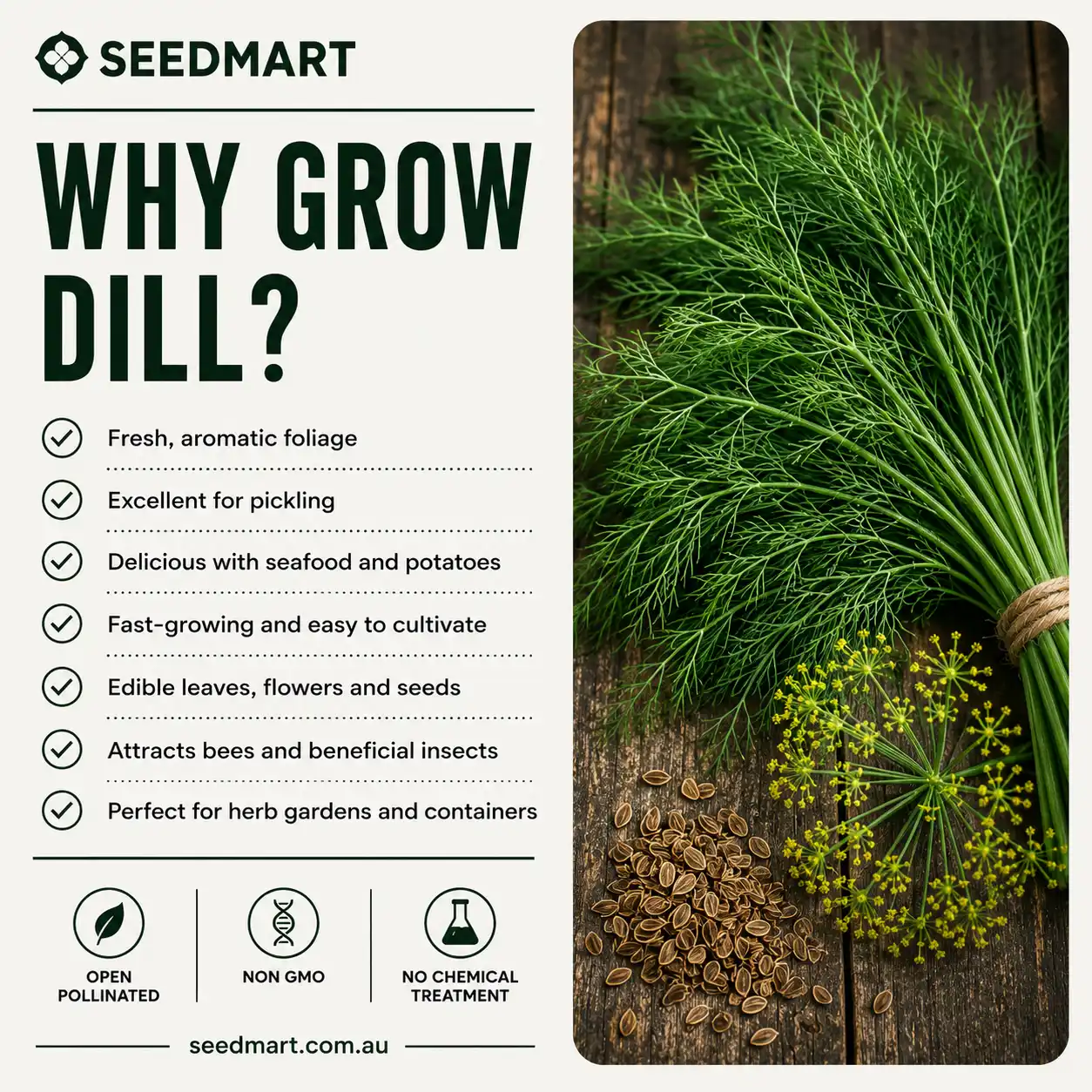
- Fresh, aromatic leaves with classic dill flavour.
- Excellent for pickling, seafood, salads, sauces and potatoes.
- Produces edible seeds for preserving and cooking.
- Fast-growing annual herb for garden beds and containers.
- Attractive yellow flowers support bees and beneficial insects.
- Ideal for herb gardens, kitchen gardens and companion planting.
Plant Details
| Plant Type | Annual culinary herb |
| Growth Habit | Upright, feathery herb |
| Plant Height | 60–100 cm |
| Harvest Type | Fresh leaves, flowers and seeds |
| Days to Harvest | 40–60 days for leaves; longer for seed |
Sowing Information
| Sowing Method | Direct sow recommended |
| Sowing Depth | 3–5 mm |
| Germination | 7–14 days |
| Soil Temperature | 15–25°C |
| Plant Spacing | 20–30 cm |
| Row Spacing | 30–45 cm |
| Position | Full Sun |
When to Sow Dill in Australia
| Climate Zone | Best Planting Time | Growing Notes |
|---|---|---|
| Cool | September – January | Sow after heavy frost has passed and avoid extreme summer heat. |
| Temperate | August – April | Succession sow for a continuous supply of fresh leaves. |
| Subtropical | March – October | Best grown in the cooler months to reduce early bolting. |
| Tropical | April – August | Grow during the dry season with good airflow and drainage. |
| Arid | March – September | Provide regular moisture and some protection from extreme heat. |
How to Grow Dill
Direct sow dill seeds into well-drained soil in a sunny position. Dill develops a taproot and generally performs best when sown directly where it is to grow rather than transplanted.
Keep the soil evenly moist during germination and early growth. Thin seedlings to allow good airflow and reduce crowding. Dill prefers moderate fertility and should not be overfed with nitrogen, as excessive lush growth can reduce flavour and plant strength.
For regular leaf harvests, sow small batches every few weeks during the main growing season. In warm conditions, dill may flower quickly, so succession sowing is the best way to maintain fresh foliage.
Allow some plants to flower if you want to attract beneficial insects or harvest dill seed for cooking and pickling.
Harvest
Begin harvesting leaves once plants are well established and have produced enough foliage for picking. Snip young leaves as needed for the freshest flavour. Harvest flower heads when they are fully open for pickling, or allow seed heads to mature and dry before collecting seeds.
Perfect For
- Home herb gardens
- Kitchen gardens and raised beds
- Pots and containers
- Pickling cucumbers and vegetables
- Seafood, potatoes, eggs and salads
- Homemade sauces, dressings and preserves
- Beneficial insect and pollinator gardens
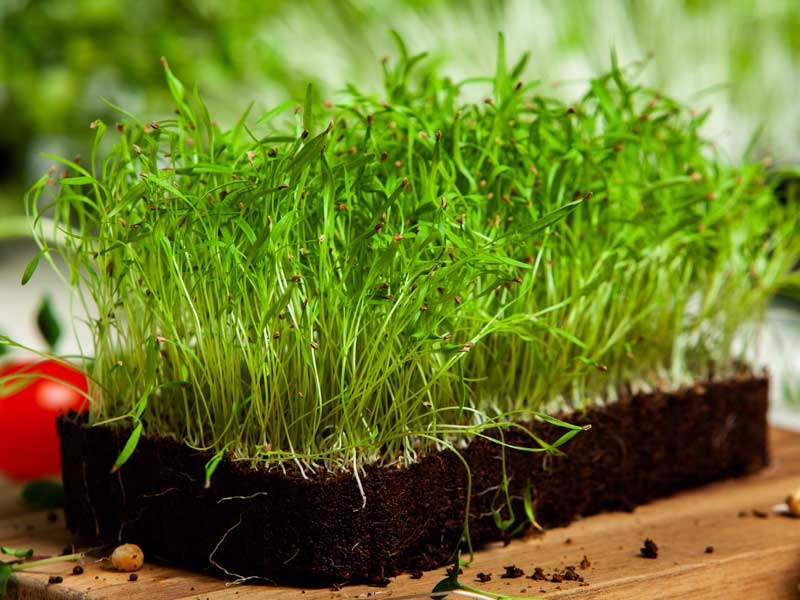
How to Grow Dill as Microgreens
- Delicate, feathery microgreen with a strong aroma and fine texture.
- Germination takes 10–14 days; harvest in 25–30 days.
- Use 5–10 grams of seed per 10 x 20″ tray.
- Use a mist sprayer or bottom watering to avoid damaging young shoots.
- Better suited to experienced growers due to slow, uneven germination.
- Sprouting can also be achieved in about 15 days.
- Grow in mild temperatures; avoid high heat to prevent wilting.
Harvest (Microgreens): Cut 1–2 cm above the soil line after 25–30 days. Use fresh in salads, garnishes, or herb blends.
Frequently Asked Questions
What is dill used for?
Dill is used for pickling, seafood, potatoes, salads, sauces, dressings, eggs and preserves. Both the leaves and seeds are edible.
Can dill be grown in pots?
Yes. Dill can be grown in pots, but use a deep container because plants develop a taproot and need room to grow.
Does dill prefer sun or shade?
Dill grows best in full sun, although light afternoon protection can help in very hot climates.
Is dill easy to grow from seed?
Yes. Dill is easy to grow from seed and is usually best sown directly into the garden or final container.
Can I harvest dill seeds?
Yes. Allow the flower heads to mature and dry on the plant, then collect the seeds for cooking, pickling or future sowing.
Click here to download your FREE Seed Raising Guide.
Stuart Hickson –
A+++