

Borage Herb Seeds
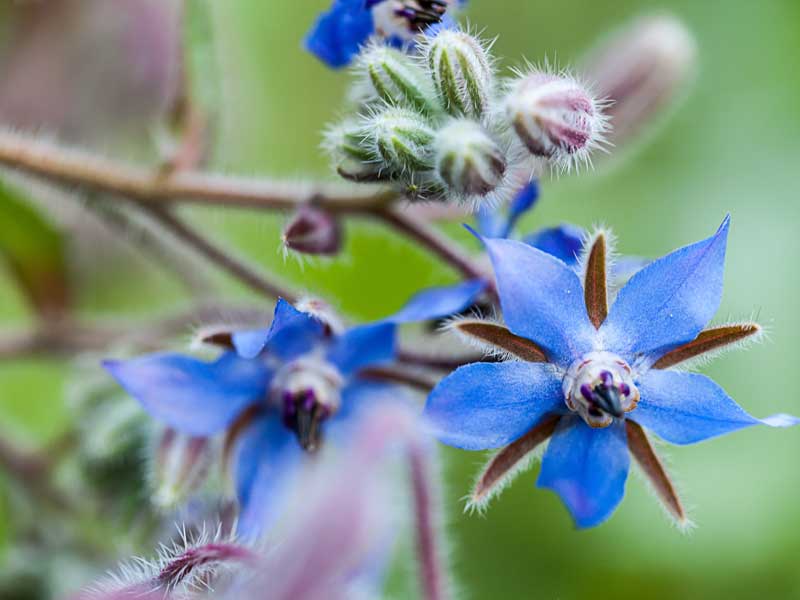
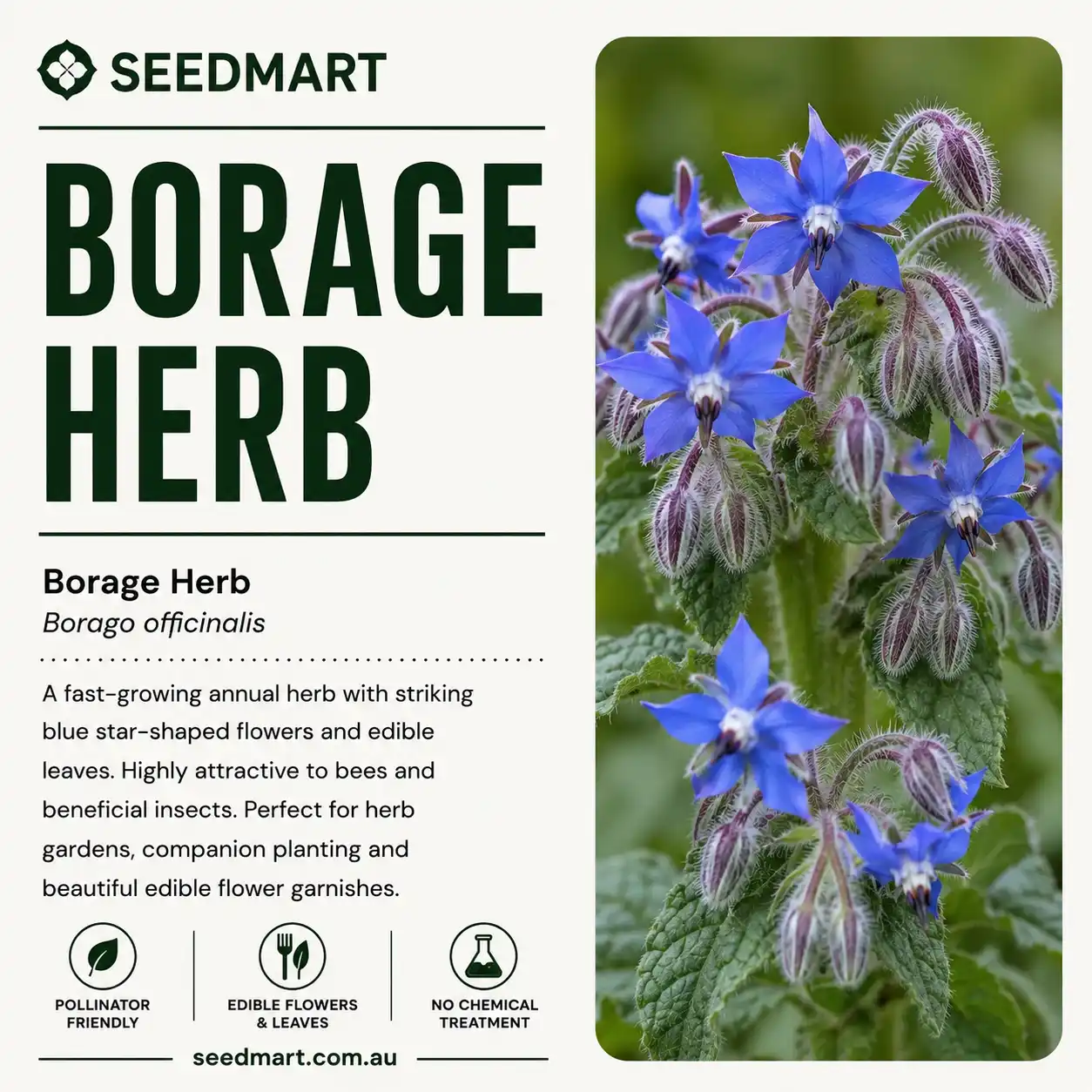
Grow Borage for its distinctive blue star-shaped flowers, edible young leaves and value as a bee-attracting garden plant. Borage (Borago officinalis) is a fast-growing annual herb producing broad, hairy green leaves and clusters of striking blue flowers.
Traditionally grown as both a culinary and ornamental herb, the young leaves and flowers have a mild cucumber-like flavour. The attractive flowers can be used fresh as an edible garnish, while the plant is also valued for attracting bees and other pollinating insects to the garden.
Borage is easy to grow from seed and performs best in a sunny position with well-drained soil. Plants can self-seed readily where conditions are favourable, making borage a useful addition to herb gardens, cottage gardens, vegetable plots and pollinator plantings.
Borage Seed Details
| Botanical name | Borago officinalis |
|---|---|
| Common name | Borage, Starflower |
| Seeds per gram | Approximately 50–60 |
| Plant type | Fast-growing annual herb |
| Plant height | Approximately 60–90 cm |
| Flower colour | Predominantly blue, star-shaped flowers |
| Flavour | Mild, fresh cucumber-like flavour |
| Position | Full sun to light shade |
| Sowing depth | Approximately 10–15 mm |
| Plant spacing | Approximately 30–45 cm |
| Harvest | Young leaves can be harvested as plants establish; flowers are harvested as they open |
Why Grow Borage?
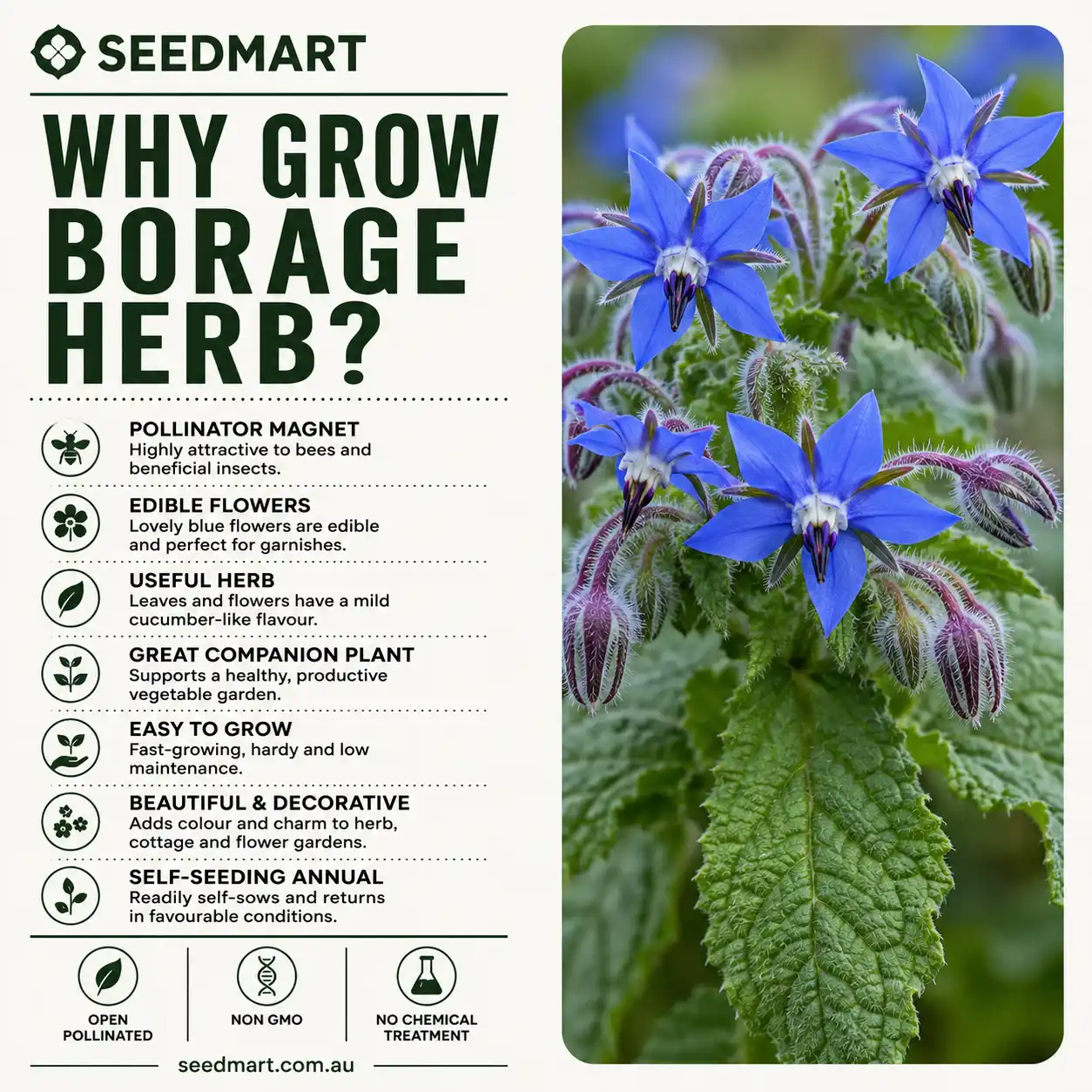
- Produces attractive blue, star-shaped flowers over an extended flowering period.
- Flowers and young leaves have a mild cucumber-like flavour.
- Edible flowers make an attractive garnish for salads, drinks and desserts.
- Highly attractive to bees and other beneficial flower-visiting insects.
- Fast-growing and relatively easy to establish directly from seed.
- Suitable for herb gardens, vegetable gardens, cottage gardens and pollinator plantings.
- Can tolerate relatively dry conditions once established.
- Readily self-seeds where growing conditions are favourable.
How to Grow Borage from Seed
Borage is a vigorous annual herb that is generally straightforward to grow from seed. Because plants develop a substantial taproot and do not always appreciate root disturbance, direct sowing into the final growing position is often the simplest method.
- Choose a sunny position.
Select a position in full sun for strongest growth and flowering. Borage can also tolerate some light shade. - Prepare well-drained soil.
Borage adapts to a range of soil types but performs best in reasonably fertile, free-draining soil. Avoid sites that remain permanently waterlogged. - Sow the seeds.
Sow approximately 10–15 mm deep directly into prepared soil. Cover with soil and water gently after sowing. - Maintain moisture during germination.
Keep the soil reasonably moist while seeds germinate and young seedlings establish, without saturating the soil. - Thin the seedlings.
Once seedlings are established, thin or transplant carefully to approximately 30–45 cm apart. Borage plants become broad and vigorous as they mature. - Water as required.
Established plants have some tolerance of dry conditions, but regular moisture generally supports better leaf growth and flowering. - Harvest young leaves.
Pick young, tender leaves as required. Older leaves become increasingly coarse and hairy. - Harvest the flowers.
Pick freshly opened flowers for culinary use or leave plenty on the plants for bees and other flower-visiting insects.
When to Plant Borage Seeds in Australia
Borage grows most readily during mild to warm weather. The best sowing period varies across Australia, with cooler regions generally favouring spring and summer planting and warmer climates also allowing autumn and winter sowings.
| Climate | General Sowing Guide |
|---|---|
| Tropical | Best sown during the cooler, drier part of the year; avoid establishing plants during extreme heat or prolonged wet conditions |
| Subtropical | Autumn through spring is generally suitable, with planting also possible at other times where conditions are mild |
| Temperate | Sow from spring through early autumn, avoiding periods of severe frost or extreme summer heat |
| Cool / frost-prone | Sow from spring after severe frost risk has eased through summer; autumn sowing may be possible in protected locations |
For best results, adjust planting to local conditions rather than relying solely on calendar dates. Borage generally performs particularly well when plants can establish during mild weather before experiencing prolonged heat.
Are Borage Flowers and Leaves Edible?
Borage has a long history as a culinary herb. The blue flowers and young leaves are used in small quantities for their mild cucumber-like flavour.
Borage flowers: The star-shaped flowers can be used fresh as colourful garnishes for salads, desserts and cold drinks. Their vivid blue colour makes them particularly attractive for decorative culinary use.
Young leaves: Tender young leaves can be finely chopped and used in salads, dips and other dishes. The leaves develop a noticeably hairy texture as they mature, so younger growth is generally preferred for culinary use.
Borage is generally used as a garnish or culinary herb rather than consumed in large quantities. The plant naturally contains pyrrolizidine alkaloids, so frequent or high-volume consumption is not recommended, particularly for people who are pregnant, breastfeeding or have liver disease.
Borage for Bees and Pollinators
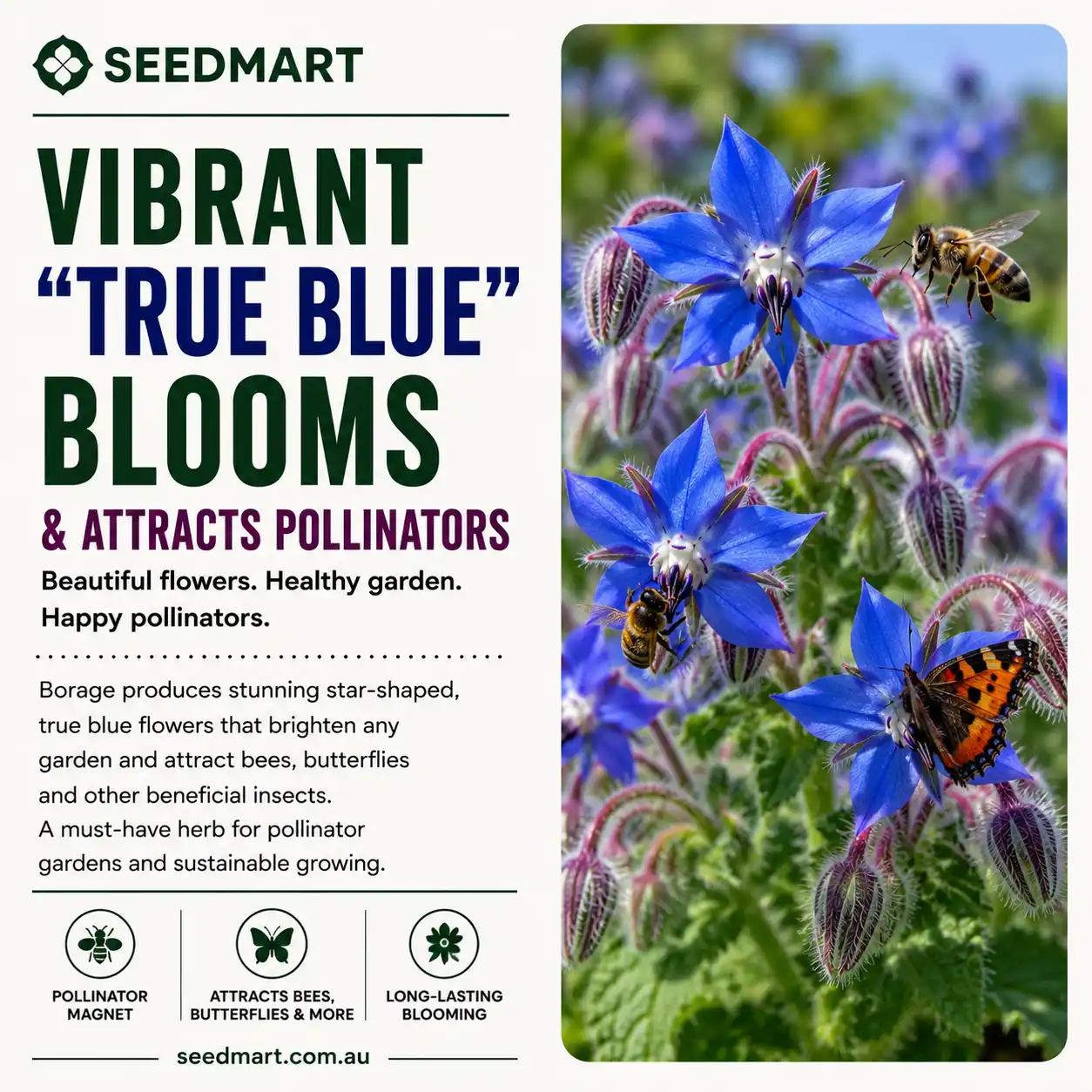
Borage is widely valued as a pollinator-friendly garden plant. Its flowers produce nectar and are frequently visited by bees when plants are in bloom.
The flowering period can extend for many weeks under favourable growing conditions, providing a continuing floral resource while also adding colour to vegetable gardens, herb gardens and mixed flower plantings.
Allowing some plants to flower freely is particularly useful where borage is being grown alongside vegetables, herbs and fruiting plants as part of a pollinator-friendly garden.
Borage can also self-seed readily. If volunteer plants are not wanted in the following season, remove spent flower heads before mature seed is released.
Harvesting Borage
Different parts of the borage plant can be harvested at different stages depending on how the crop is being used.
Young leaves: Harvest tender leaves while they are relatively small. Older foliage becomes larger, coarser and increasingly hairy.
Flowers: Pick freshly opened flowers as required. Handle them carefully because the delicate petals can bruise after harvesting.
For pollinators: Leave plenty of flowers on the plants where attracting bees and other flower visitors is a priority.
For self-seeding: Allow selected flowers to mature naturally. Borage readily drops seed and may reappear in subsequent seasons where conditions are suitable.
Regular flower picking can encourage plants to continue producing new blooms while growing conditions remain favourable.
How to Use Borage
Borage can be grown as a culinary herb, ornamental flower and pollinator plant, making it a versatile addition to mixed gardens.
- Edible flowers: Use the blue star-shaped flowers as a decorative garnish.
- Salads: Young leaves and flowers can add a mild cucumber-like flavour.
- Cold drinks: Fresh flowers make an attractive garnish for chilled beverages.
- Pollinator gardens: Grow flowering plants to provide nectar for visiting bees.
- Herb gardens: Combine with other culinary and flowering herbs.
- Cottage gardens: The blue flowers and informal growth habit suit mixed ornamental plantings.
Growing Borage in Pots
Borage can be grown in containers, although its vigorous growth and taproot mean that reasonably large, deep pots are preferable.
Choose a container with good drainage and fill it with a quality potting mix. Position the container in full sun to light shade and sow directly into the pot where possible to minimise root disturbance.
Container-grown plants generally require more frequent watering than borage growing in open soil. Keep the potting mix reasonably moist during active growth but avoid leaving the container waterlogged.
Because mature borage plants can reach approximately 60–90 cm and develop a broad growth habit, avoid overcrowding multiple plants into small containers.
Frequently Asked Questions
What is Borage?
Borage (Borago officinalis) is a fast-growing annual herb known for its hairy green leaves and distinctive blue, star-shaped flowers. It is grown as a culinary herb, ornamental plant and pollinator-friendly flower.
How tall does Borage grow?
Borage commonly grows approximately 60–90 cm tall, although final size varies according to soil, moisture, climate and growing conditions.
How many Borage seeds are in a gram?
There are approximately 50–60 borage seeds per gram. Actual seed count can vary between seed lots.
Are Borage flowers edible?
Yes. Borage flowers are traditionally used as an edible garnish and have a mild cucumber-like flavour. They are commonly added to salads, desserts and cold drinks.
Are Borage leaves edible?
Young borage leaves are traditionally used as a culinary herb and have a mild cucumber-like flavour. Older leaves become increasingly coarse and hairy. Borage naturally contains pyrrolizidine alkaloids, so it is best used sparingly rather than consumed regularly in large quantities.
Does Borage attract bees?
Yes. Borage flowers are rich in nectar and are highly attractive to bees and other flower-visiting insects.
Does Borage need full sun?
Borage performs best in full sun but can tolerate some light shade, particularly in warmer climates.
How deep should I sow Borage seeds?
Sow borage seeds approximately 10–15 mm deep and keep the soil reasonably moist while germination and establishment take place.
How far apart should Borage plants be?
Allow approximately 30–45 cm between plants. Mature borage can develop into a broad, vigorous plant and benefits from adequate growing space.
Should Borage be direct sown?
Direct sowing is generally recommended because borage develops a substantial taproot and established plants can be more difficult to transplant without disturbing the roots.
Does Borage self-seed?
Yes. Borage can self-seed readily where conditions are favourable. Remove spent flowers before seed matures if volunteer plants are not wanted.
Is Borage an annual or perennial?
Borage is generally grown as an annual, completing its life cycle within one growing season. Self-sown seedlings may appear in subsequent seasons.
Can Borage be grown in pots?
Yes. Use a reasonably large, deep container with good drainage and preferably sow the seed directly into the final pot.
When should I plant Borage seeds in Australia?
In temperate and cool climates, borage is generally sown from spring once severe frost risk has eased. In subtropical and tropical regions, the cooler and milder parts of the year are often more suitable.
Where can I buy Borage seeds in Australia?
Seedmart supplies Borage Herb Seeds for Australian home gardeners and growers. Borage is a versatile annual herb producing edible blue flowers and cucumber-flavoured young leaves while also providing an attractive floral resource for bees.
Michael Shanahan –
Sown as per instruction in full sun, a 4x2mt bed, watered daily; not one seed germinated. Tried 5 seeds in a plant tray, 4 seeds germinated. not sure of problem, over/under water?