

Nasturtium Jewel Mix Flower Seeds
Botanical Name: Tropaeolum minus / compact Jewel-type nasturtium
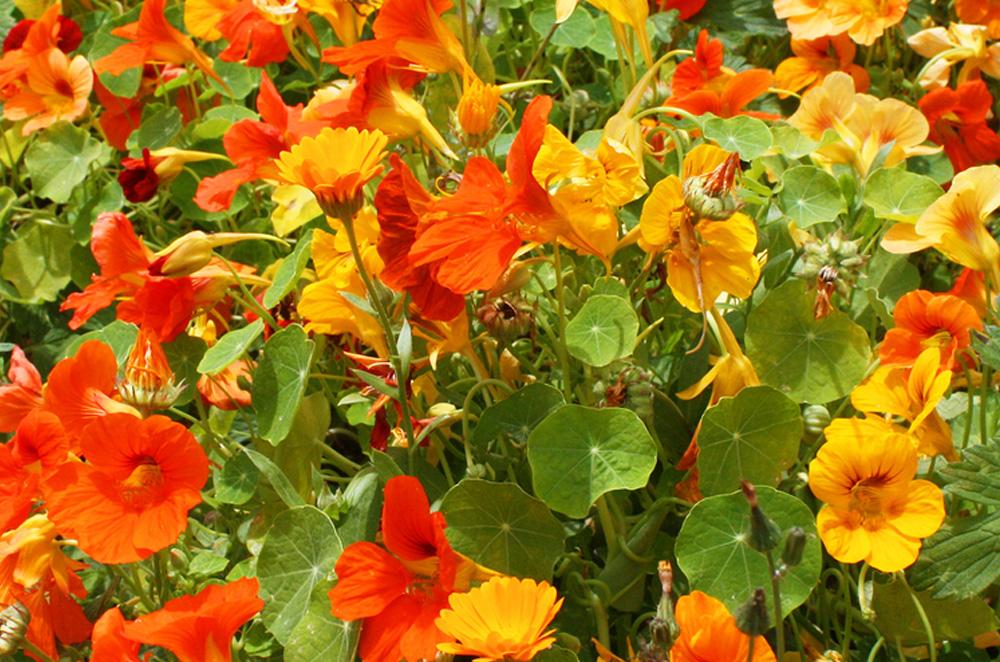
Nasturtium Jewel Mix is a colourful, easy-to-grow compact nasturtium producing bright flowers in a lively mixture of yellow, gold, orange, red and warm intermediate shades. The flowers are held above attractive rounded green foliage, creating a long-lasting display for garden beds, borders, pots, raised beds and cottage-style plantings.
Unlike vigorous trailing nasturtiums that can produce long scrambling stems, Jewel Mix nasturtium develops a comparatively compact, mounded habit, generally reaching around 30–40 cm high under suitable conditions. This makes it particularly useful where gardeners want the colour and character of nasturtiums without a large climbing or spreading plant.
Nasturtiums are remarkably easy annual flowers to establish directly from seed. They perform best in sunny positions and free-draining soil and generally flower more freely where the soil is not excessively fertile. Both the flowers and young leaves are traditionally used as edible garnishes and have a distinctive peppery flavour.
Key Attributes
Bright Jewel ColoursProduces cheerful flowers in a mixture of yellow, gold, orange, red and related warm shades for a vibrant garden display. |
Compact Mounded HabitA compact Jewel-type nasturtium generally growing around 30–40 cm high, ideal for borders, containers and smaller garden spaces. |
Easy to Grow from SeedLarge seeds are simple to handle and may be sown directly into prepared garden soil once conditions are suitably warm. |
Edible Flowers & LeavesFlowers and young leaves have a fresh peppery flavour and may be used as colourful culinary garnishes when grown appropriately for food use. |
Long Flowering DisplayRegular picking and deadheading encourages plants to continue producing fresh blooms throughout favourable growing conditions. |
Versatile Garden PlantSuitable for cottage gardens, vegetable gardens, containers, raised beds, borders, edible gardens and pollinator-friendly plantings. |
Product Description
Nasturtium Jewel Mix is a compact, colourful selection of garden nasturtium grown for its cheerful flowers, rounded foliage and easy-care growth habit. It is particularly well suited to gardeners looking for a dwarf or compact nasturtium rather than one of the vigorous climbing and trailing types.
The plants form low, branching mounds of distinctive rounded leaves. Each leaf is supported near its centre by a slender stalk, giving nasturtium foliage its characteristic shield-like or parasol appearance.
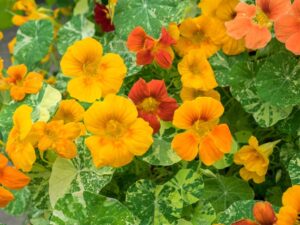
Above the foliage appear brightly coloured, spurred flowers in a mixture of warm shades. Individual plants may produce yellow, golden yellow, orange, scarlet, red and related tones, creating a varied display when several plants are grown together.
Jewel Mix typically remains considerably shorter than tall climbing nasturtiums, commonly reaching approximately 30–40 cm high. Exact plant size varies according to seed strain, growing conditions, fertility, moisture and climate.
One of the advantages of nasturtiums is their ability to flower well without rich soil or intensive feeding. In fact, excessive fertility—particularly high nitrogen levels—can encourage vigorous leaf production while reducing flowering. A sunny position with ordinary, reasonably well-drained soil is usually preferable.
Nasturtiums are also popular in edible gardens. The young leaves and flowers have a characteristic fresh, peppery flavour somewhat reminiscent of watercress. Flowers can provide striking colour to salads and plated dishes, while the leaves may be used in small quantities where their distinctive flavour is desired.
For culinary use, only harvest flowers and foliage that have been grown without unsuitable garden chemicals and that are clean and correctly identified.
Jewel Mix is equally useful as a purely ornamental flower. Its compact growth makes it suitable for flower beds, vegetable garden edges, patio pots, window boxes and raised beds.
Why Grow Nasturtium Jewel Mix?
- Compact, colourful Jewel-type nasturtium.
- Produces bright flowers in mixed warm colours.
- May include yellow, gold, orange, scarlet and red shades.
- Generally grows approximately 30–40 cm high.
- Excellent for garden beds, borders and containers.
- Suitable for cottage gardens and edible gardens.
- Large seeds are easy to handle and direct sow.
- Quick-growing annual under suitable conditions.
- Flowers readily in ordinary, well-drained garden soil.
- Does not require heavy fertilisation.
- Attractive rounded foliage provides ornamental value before flowering.
- Regular deadheading can prolong flower production.
- Flowers and young leaves are traditionally used as edible garnishes.
- Distinctive peppery flavour.
- Useful around vegetable gardens and mixed ornamental plantings.
- Suitable for beginner gardeners.
Plant Details
| Plant Type | Warm-season annual flowering plant |
| Variety | Jewel Mix |
| Botanical Group | Tropaeolum minus / compact Jewel-type garden nasturtium |
| Family | Tropaeolaceae |
| Growth Habit | Compact, bushy to mounded |
| Approximate Height | Approximately 30–40 cm; individual plants may vary |
| Flower Colour | Mixed yellow, gold, orange, red and related warm shades |
| Flowering | Approximately 8–11 weeks from sowing under suitable conditions; timing varies with climate |
| Foliage | Rounded green leaves with centrally attached leaf stalks |
| Position | Full sun to light partial shade; flowering is generally strongest with good sunlight |
| Soil | Average to moderately poor, free-draining soil |
| Life Cycle | Annual |
Sowing Information
| Sowing Method | Direct sow preferred; may also be started carefully in individual cells or pots | Sowing Depth | Approximately 1 cm deep | Germination | Usually approximately 7–14 days under suitable conditions; cooler soil may delay emergence | Preferred Soil Temperature | Approximately 12–18°C or warmer for reliable establishment | Plant Spacing | Approximately 20–30 cm | Position | Full sun to light partial shade | Soil | Free draining; avoid excessively fertile soil | Watering | Maintain moisture during germination and establishment; moderate watering once established |
When to Sow Nasturtium Jewel Mix in Australia
| Climate Zone | Suggested Planting Time | Growing Notes |
|---|---|---|
| Cool | September – December | Sow once the danger of heavy frost has passed and the soil has begun to warm. Protect young seedlings from late cold conditions. |
| Temperate | September – December | Spring sowing generally provides rapid establishment and flowering through late spring and summer. |
| Subtropical | August – February | Grow through the milder part of the warm season. Some afternoon protection may benefit plants during periods of intense summer heat. |
| Tropical | February – September | Best grown through the comparatively cooler and drier period where possible. Provide good drainage and airflow during humid weather. |
| Arid | August – February | Provide reliable water during establishment and avoid exposing young plants to prolonged extreme heat. |
These sowing periods are general guides. Local frost dates, elevation, rainfall, heat, humidity and seasonal conditions should also be considered when deciding when to plant.
How to Grow Nasturtium Jewel Mix from Seed
Choose a position receiving plenty of sunlight and prepare soil that drains freely after rain or irrigation.
Nasturtiums generally perform exceptionally well in ordinary garden soil. There is usually no need to enrich the planting area heavily with fertiliser or manure.
In fact, highly fertile soil—particularly soil containing excessive nitrogen—can encourage vigorous foliage at the expense of flowers.
Direct sow the large seeds approximately 1 cm deep, spacing them sufficiently apart to allow the mature plants to form compact mounds.
Water gently after sowing and keep the soil moderately moist while germination takes place.
Under favourable conditions, seedlings commonly emerge within approximately one to two weeks, although germination may take longer in cool soil.
Once established, thin plants where required to provide approximately 20–30 cm between them.
Maintain regular moisture while plants establish. Mature plants tolerate comparatively dry conditions better than newly germinated seedlings, although prolonged drought can reduce flowering.
Avoid keeping the root zone constantly saturated. Nasturtiums prefer free-draining conditions and may perform poorly in persistently wet soil.
Once flowering begins, remove faded blooms regularly if prolonged flowering is desired.
Direct Sowing Nasturtium Seeds
Direct sowing is generally the simplest method for growing nasturtiums.
Their large seeds are easy to handle, making them suitable for gardeners who find very fine flower seeds difficult to sow.
Prepare the soil by removing weeds and breaking up large clods. A perfectly fine seed bed is not required, but the soil should be loose enough for seedlings to emerge easily.
Make small planting holes approximately 1 cm deep.
Place one seed into each position, cover with soil and water gently.
Keep the area evenly moist until seedlings emerge.
Direct sowing also reduces the root disturbance that can occur when established nasturtium seedlings are transplanted.
Starting Nasturtiums in Pots or Cells
Although direct sowing is preferred, nasturtiums can be started in small individual pots or cells when early establishment is useful.
Avoid keeping seedlings in small containers for too long.
Sow one seed into each pot and transplant carefully once the plant is established and outdoor conditions are suitable.
Minimise disturbance to the developing root system during transplanting.
Water the plants immediately after transplanting and protect them from severe heat or drying winds while they re-establish.
Do Nasturtium Seeds Need Soaking?
Pre-soaking is optional rather than essential.
Nasturtium seeds have a relatively large seed coat and may be soaked in clean water for several hours before planting if desired.
However, good-quality seed will normally germinate without soaking when sown into suitably moist soil.
Avoid leaving seed submerged for excessive periods, particularly under warm conditions.
If seeds are pre-soaked, sow them promptly afterwards.
Best Soil for Nasturtiums
Nasturtiums are unusual among ornamental annuals because they often flower best in soil that is not exceptionally rich.
Ordinary garden soil with good drainage is generally ideal.
Very rich soil or excessive fertiliser can encourage large leaves and vigorous stems while reducing flower production.
For this reason, avoid applying heavy quantities of high-nitrogen fertiliser solely to encourage nasturtium growth.
Where soil is extremely compacted or poorly drained, improving its physical structure is more important than substantially increasing fertility.
Sunlight Requirements
Jewel Mix grows in full sun to partial shade.
For strong flowering, provide plenty of sunlight.
Plants grown in substantial shade may produce larger leaves and fewer flowers.
In extremely hot Australian climates, some protection from intense afternoon sun may help plants continue performing during the hottest part of the season.
The appropriate position therefore depends partly on local climate.
Watering Nasturtiums
Keep newly sown seed consistently moist until germination and early establishment are complete.
Once mature, Jewel Mix is relatively undemanding.
Water deeply when conditions become dry rather than maintaining constantly wet soil.
Plants grown in containers require more frequent checking because potting mix dries considerably faster than open garden soil.
Avoid permanently waterlogged conditions.
Feeding Nasturtiums
Heavy fertilisation is rarely necessary.
One of the most common reasons for lush nasturtium foliage with very few flowers is excessive nitrogen.
If plants are producing large amounts of healthy foliage but little colour, avoid applying additional high-nitrogen fertiliser.
In ordinary garden soil, Jewel Mix can usually grow and flower successfully with minimal feeding.
Container-grown plants in exhausted potting mix may occasionally require light feeding, but avoid excessive applications.
Flowering
Jewel Mix is relatively quick to flower.
Under favourable conditions, plants commonly begin producing flowers around 8–11 weeks after sowing.
Exact flowering time depends on temperature, sunlight, soil conditions, moisture and sowing date.
The flowers appear above the rounded foliage and provide a particularly strong colour display when several plants are grown together.
Regular deadheading helps prevent energy being directed entirely into seed production and can encourage continued blooming.
Deadheading Nasturtiums
Removing faded flowers is useful where the goal is a long ornamental display.
Use clean fingers, scissors or secateurs to remove old blooms and developing seed heads.
This helps keep the plants tidy and encourages continued production of flowering growth.
However, if you would like to collect seed or allow natural reseeding, leave selected flowers in place so that seed pods can develop and mature.
Growing Nasturtium Jewel Mix in Pots
The compact growth habit of Jewel Mix makes it particularly well suited to containers.
Choose a pot with adequate drainage holes.
Fill with a free-draining potting mix and avoid excessive fertilisation.
Position the container where it receives plenty of sunlight.
Container-grown nasturtiums may require more frequent watering than plants grown in the ground, particularly during hot or windy conditions.
Jewel Mix works particularly well in:
- Patio pots
- Window boxes
- Raised planters
- Balcony gardens
- Herb and edible-garden containers
- Mixed annual flower pots
Nasturtiums in the Vegetable Garden
Nasturtiums are commonly included in vegetable gardens because they provide flowers, attractive foliage and habitat for insects.
They may also attract aphids, which is why nasturtiums are sometimes deliberately used as a trap crop.
A trap crop works by attracting a pest away from another crop or by concentrating the pest where it can be monitored and managed.
This does not mean nasturtiums will automatically prevent pest problems in neighbouring vegetables.
Check plants regularly, particularly tender growing tips and the undersides of leaves.
Where aphids become heavily concentrated, affected shoots may be removed or insects can often be dislodged with water.
Nasturtiums and Pollinators
Nasturtium flowers can be visited by pollinating insects and add floral diversity to mixed garden plantings.
They are particularly useful when combined with other annual and perennial flowers that provide different flower forms and flowering periods.
For a more diverse pollinator-friendly garden, Jewel Mix may be grown alongside plants such as:
- Calendula
- Cosmos
- Sweet alyssum
- Phacelia
- Cornflowers
- Herbs allowed to flower
Avoid unnecessary insecticide applications while flowering plants are being actively visited by insects.
Edible Nasturtium Flowers
Nasturtium flowers are traditionally used as edible flowers.
They have a fresh, peppery flavour and provide vivid natural colour to food.
Potential culinary uses include:
- Salad garnish
- Plated vegetable dishes
- Decorating savoury meals
- Garnishing cheese platters
- Adding colour to sandwiches and open toasts
- Decorating cold soups
- Garnishing drinks
Use only correctly identified flowers grown specifically under conditions suitable for food production.
Do not eat flowers that have been sprayed with pesticides or other chemicals not approved for edible crops.
Wash harvested flowers gently before use where appropriate.
Using Nasturtium Leaves
Young nasturtium leaves are also traditionally eaten.
They have a distinctive peppery flavour that can be noticeably stronger than many conventional leafy greens.
Young, tender leaves may be used in small amounts in:
- Mixed salads
- Sandwiches
- Herb sauces
- Garnishes
- Savoury dishes
Use sparingly at first if you are unfamiliar with the flavour.
Nasturtium Seed Pods
After flowering, nasturtiums produce distinctive developing seed pods.
Young immature seed pods have traditionally been pickled and used as a caper-style condiment.
If seed saving is the objective, allow the pods to mature rather than harvesting them at the immature stage.
Mature nasturtium seeds are large and relatively easy to collect.
Saving Nasturtium Seeds
Allow selected flowers to remain on the plants and naturally develop seed.
Wait until mature seeds loosen and begin changing from fresh green to a drier appearance.
Collect mature seeds before they are lost into dense foliage or onto the ground.
Dry collected seed thoroughly in a well-ventilated location away from direct moisture.
Store only fully dry seed in a labelled container in a cool, dry position.
Because Jewel Mix is a mixed population, seed saved from individual plants may not reproduce exactly the same colour balance as the original mixture.
Self-Seeding
Nasturtiums may self-seed where mature seeds are allowed to fall onto suitable soil.
Natural germination depends on climate, moisture, winter temperatures, soil disturbance and garden management.
In favourable Australian climates, volunteers may appear in subsequent seasons.
If self-seeding is unwanted, remove developing seed pods before mature seed falls.
Common Problems
Nasturtiums are generally easy to grow, but several problems may occur.
Lots of Leaves but Few Flowers
Excessive soil fertility, especially excessive nitrogen, is a common cause. Plants may also flower less strongly in substantial shade.
Aphids
Aphids frequently gather on tender shoots. Small populations can often be removed with a strong spray of water or affected growing tips can be pruned away.
Yellow Leaves
Check soil moisture and drainage. Both prolonged saturation and severe drought can stress plants.
Poor Germination
Cold, saturated soil can delay or reduce germination. Maintain moderate moisture rather than constantly wet conditions.
Weak, Stretched Growth
Insufficient light can cause plants to become elongated. Move plants to a brighter position where practical.
Perfect For
- Cottage gardens
- Flower borders
- Edible gardens
- Vegetable garden edges
- Raised garden beds
- Patio pots
- Window boxes
- Balcony gardens
- Mixed annual flower displays
- Edible flower gardens
- Pollinator-friendly plantings
- Beginner gardeners
- Low-input flower gardens
- Compact garden spaces
- Warm-coloured flower displays
Frequently Asked Questions
What is Nasturtium Jewel Mix?
Jewel Mix is a compact nasturtium selection producing rounded green foliage and brightly coloured flowers in a mixture of warm shades. It is much more compact than vigorous climbing nasturtium varieties.
What colours are in Nasturtium Jewel Mix?
The mixture commonly contains shades of yellow, gold, orange, red and related intermediate colours. As it is a seed mixture, the exact proportion of colours can vary.
How tall does Nasturtium Jewel Mix grow?
Jewel Mix generally reaches approximately 30–40 cm high under suitable conditions, although plant size varies according to growing conditions and seed strain.
Is Jewel Mix a climbing nasturtium?
No. Jewel Mix is primarily grown as a compact, mounded nasturtium. Garden nasturtiums are also available in much longer trailing and climbing forms.
Is Nasturtium Jewel Mix an annual?
Yes. Jewel Mix is generally grown as an annual flowering plant.
Are nasturtiums easy to grow from seed?
Yes. Their large seeds are easy to handle, and direct sowing is straightforward once soil and weather conditions are suitable.
How long do nasturtium seeds take to germinate?
Germination commonly occurs in approximately 7–14 days under favourable conditions, although cooler outdoor conditions may extend this period.
How deep should Jewel Mix seeds be planted?
Sow the seeds approximately 1 cm deep and cover with soil.
Should I soak nasturtium seeds before planting?
Soaking is optional. Nasturtium seed normally germinates successfully without pre-soaking when planted into suitably moist soil.
Should nasturtiums be direct sown?
Direct sowing is generally preferred and works particularly well because nasturtium seeds are large and easy to position.
Can nasturtiums be started in pots?
Yes. Sow into individual cells or small pots and transplant carefully to minimise root disturbance.
When should I sow nasturtium seeds in Australia?
Sowing time depends on climate. Spring is generally ideal in cool and temperate areas, while subtropical and tropical gardeners can often grow nasturtiums through a much broader part of the year, particularly during milder conditions.
Can nasturtiums tolerate frost?
Nasturtiums are frost-sensitive. In frost-prone areas, sow after the main risk of frost has passed.
Do nasturtiums need full sun?
Jewel Mix performs well in full sun to partial shade. Strong light generally promotes better flowering, while substantial shade may encourage foliage at the expense of flowers.
What soil is best for Jewel Mix nasturtiums?
Average, well-drained soil is ideal. Nasturtiums do not require highly fertile soil and frequently flower better when fertility is moderate rather than excessive.
Why shouldn’t I heavily fertilise nasturtiums?
Excess nitrogen can promote vigorous leaf and stem growth while reducing flower production.
How often should nasturtiums be watered?
Maintain regular moisture during germination and establishment. Once established, water according to weather and soil conditions, allowing excess water to drain away.
Are nasturtiums drought tolerant?
Established plants tolerate short periods of dry conditions reasonably well, but prolonged drought can reduce growth and flowering.
Can Jewel Mix be grown in pots?
Yes. Its compact habit makes Jewel Mix particularly suitable for pots, planters, window boxes and raised containers.
How quickly does Jewel Mix flower?
Under favourable conditions, flowering commonly begins approximately 8–11 weeks after sowing.
How do I encourage more nasturtium flowers?
Provide good sunlight, avoid excessive nitrogen fertiliser, maintain appropriate moisture and remove faded flowers regularly.
Should I deadhead nasturtiums?
Yes, if prolonged flowering is the objective. Deadheading removes developing seed and encourages the plant to continue producing flowers.
Are nasturtium flowers edible?
Yes. Nasturtium flowers are traditionally eaten and have a characteristic peppery flavour. Only consume flowers that have been correctly identified and grown under conditions appropriate for edible crops.
Are nasturtium leaves edible?
Yes. Young leaves are also traditionally eaten and have a strong peppery flavour.
What do nasturtium flowers taste like?
Nasturtiums have a fresh, peppery character often compared with watercress or other peppery greens.
How can I use nasturtium flowers?
Fresh flowers can be used as colourful garnishes for salads, savoury dishes, cheese platters and other foods.
Can nasturtium seed pods be eaten?
Young immature seed pods have traditionally been pickled and used as a caper-style condiment.
Are nasturtiums useful in vegetable gardens?
Yes. They provide ornamental flowers and can contribute to diverse garden plantings. They are also commonly used as trap plants for aphids.
Do nasturtiums repel pests?
Claims that nasturtiums directly repel a wide range of pests should be treated cautiously. They are better known for attracting certain pests such as aphids and may therefore be used strategically as trap plants.
Why are there aphids on my nasturtiums?
Nasturtiums can be highly attractive to aphids. Check tender stems regularly and remove heavily infested shoots or dislodge insects with water where appropriate.
Are nasturtiums good for pollinator gardens?
They can contribute flowers to a mixed pollinator planting and are best combined with other flowering species to provide a broader range of floral resources.
Can I save seed from Jewel Mix nasturtiums?
Yes. Allow selected seed pods to mature fully, collect the seed and dry it thoroughly before storage.
Will Jewel Mix come true from saved seed?
Because Jewel Mix contains multiple flower colours, individual saved seed may not reproduce exactly the same colour balance as the original commercial mixture.
Do nasturtiums self-seed?
They can self-seed where mature seed falls onto suitable soil and climate conditions allow germination.
Can Jewel Mix be used as ground cover?
The compact plants can cover exposed soil around their immediate growing area, although Jewel Mix does not produce the long spreading stems of trailing nasturtium varieties.
What’s the difference between Jewel Mix and climbing nasturtiums?
Jewel Mix forms compact mounds approximately 30–40 cm high, while climbing and trailing nasturtiums can produce stems extending for metres and may be trained over supports or allowed to cascade.
Is Jewel Mix suitable for small gardens?
Yes. Its compact growth habit makes it particularly suitable for small garden beds, courtyard gardens, containers and raised beds.
Can Jewel Mix grow in partial shade?
Yes. Nasturtiums tolerate partial shade, although flowering is generally strongest where plants receive plenty of sunlight.
Why is my nasturtium producing leaves but no flowers?
The most common reasons are excessive soil fertility, particularly nitrogen, or insufficient sunlight.
Can I grow nasturtiums with vegetables?
Yes. Their compact growth makes Jewel Mix suitable for planting along vegetable garden edges, provided the plants receive sufficient light and are not competing heavily with neighbouring crops.
Is Nasturtium Jewel Mix suitable for beginners?
Yes. Large easy-to-handle seed, rapid establishment, moderate water requirements and little need for fertiliser make Jewel Mix an excellent flower for beginner gardeners.
Can children grow nasturtiums?
Nasturtium seeds are relatively large and easy to handle, making the plant straightforward for supervised gardening activities.
Can I grow Nasturtium Jewel Mix for edible flowers?
Yes. If flowers are intended for food, grow the plants under conditions suitable for edible crops and avoid pesticides or other treatments that are not approved for food plants.
What makes Jewel Mix different from ordinary nasturtiums?
Its main distinguishing feature is its compact, mounded habit combined with a mixture of bright jewel-toned flowers, making it particularly useful for borders, pots and smaller garden spaces.
Reviews
There are no reviews yet.