
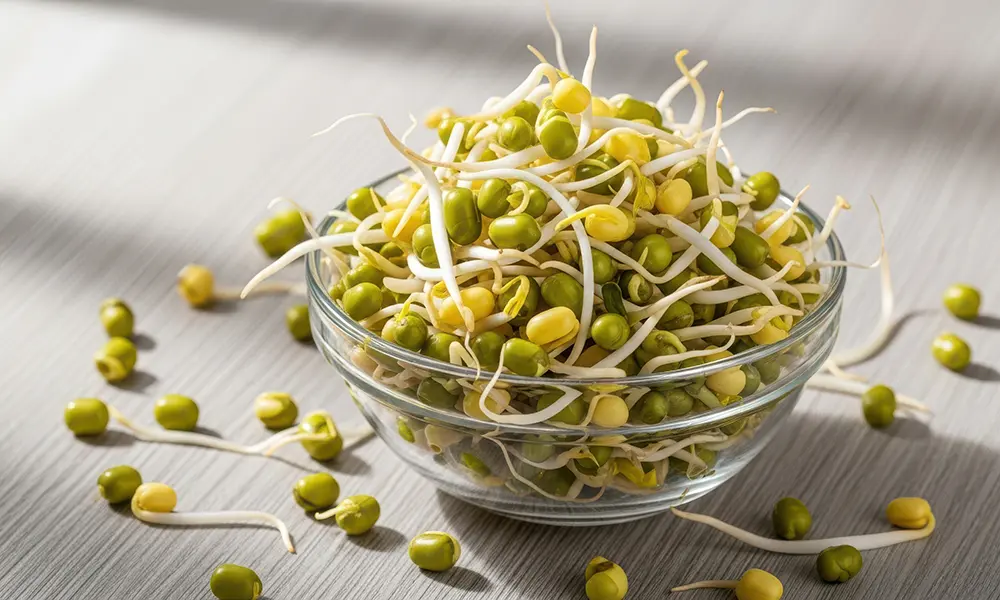
Mung bean sprouts are fast-growing, crunchy sprouts produced by germinating whole green mung beans. They require no soil, very little space and are usually ready to harvest within approximately three to five days, making them one of the easiest edible crops to grow at home in Singapore.
Singapore’s warm tropical climate supports rapid germination throughout the year. However, consistently high temperatures and humidity also make thorough rinsing, complete drainage, clean equipment and prompt refrigeration particularly important.
This guide explains how to grow mung bean sprouts in Singapore using a jar, colander or sprouting container. It covers soaking time, rinsing frequency, growing thick white sprouts, identifying common problems, harvesting, cleaning, storage and essential food-safety precautions.
The crisp white bean sprouts commonly used in stir-fries, noodle dishes and soups are usually grown from mung beans (Vigna radiata). The small green bean is the seed; the white shoot that develops after germination is the mung bean sprout.
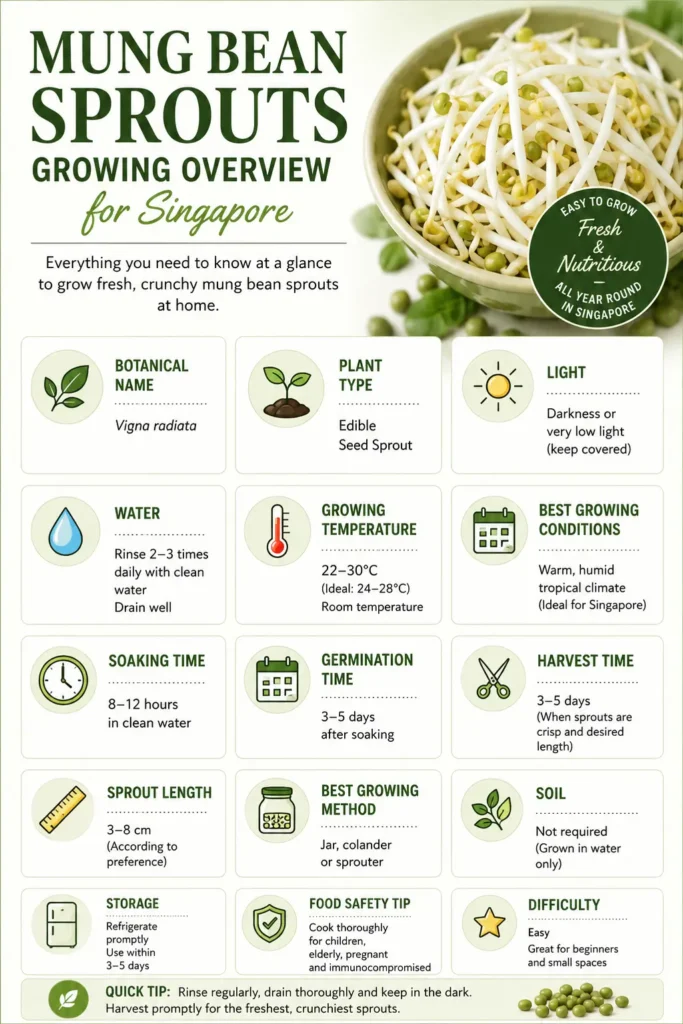
Quick Facts
| Botanical Name | Vigna radiata |
| Crop Type | Edible seed sprout |
| Growing Method | Jar, colander or purpose-made sprouter |
| Soaking Time | Approximately 8–12 hours |
| Rinsing | 2–3 times daily with clean water |
| Light | Darkness or very low light |
| Growing Temperature | Warm room temperature, ideally around 22–30°C |
| Time to Harvest | Approximately 3–5 days |
| Best Growing Season | Year-round in Singapore |
| Difficulty | Easy |
What Are Mung Bean Sprouts?
Mung bean sprouts are the young shoots produced when whole mung beans absorb water and begin to germinate. During sprouting, the green seed coat splits and a pale root and stem emerge.
The familiar culinary sprout is generally grown without soil and with little or no light. This produces a white or cream-coloured stem with small yellow leaves rather than a green seedling.
Mung bean sprouts are commonly used in:
- Stir-fries.
- Noodle dishes.
- Soups and broths.
- Spring rolls.
- Rice dishes.
- Salads and cold dishes.
- Korean, Chinese, Vietnamese, Malay, Indian and other Asian cuisines.
They are different from a mature mung bean plant. To produce sprouts, the crop is harvested only a few days after germination. To grow mung beans for pods and dry seed, the seedlings must instead be planted in soil and allowed to mature for several months.
Are Mung Beans and Bean Sprouts the Same?
Mung beans and mung bean sprouts are two stages of the same plant, but the terms do not describe exactly the same product.
| Product | What it is | Appearance | Common use |
|---|---|---|---|
| Mung bean | The mature, dried seed of Vigna radiata | Small, oval and usually green | Cooking, milling or sprouting |
| Mung bean sprout | A mung bean that has absorbed water and germinated | White stem with a root and small yellow leaves | Fresh or cooked vegetable |
| Soybean sprout | A sprout grown from a soybean | Usually thicker, with a larger yellow bean attached | Soups, side dishes and cooked meals |
The term bean sprouts can refer to several sprouted legumes. In Singapore supermarkets, hawker dishes and recipes, it most commonly refers to mung bean sprouts unless another bean is specified.
Can You Grow Mung Bean Sprouts in Singapore?
Yes. Mung bean sprouts can be grown throughout the year in Singapore because they are produced indoors over a very short growing period.
Singapore is close to the equator and has a tropical climate with high and relatively uniform temperatures, abundant rainfall and high humidity throughout the year. These warm conditions support rapid mung bean germination.
However, the climate also means that wet sprouts can deteriorate quickly when:
- Water remains pooled in the container.
- The beans are packed too densely.
- Air cannot circulate around the sprouts.
- The container becomes excessively warm.
- Equipment or hands are not clean.
- The sprouts are left growing beyond their ideal harvest stage.
Do not try to keep mung beans submerged after their initial soak. Sprouting beans need moisture, oxygen and drainage. After each rinse, remove as much excess water as possible and return the container to a well-drained position.
What You Need to Grow Mung Bean Sprouts
Mung bean sprouts can be grown with basic household equipment. A specialist sprouter is convenient but not essential.
| Item | Purpose | Recommended choice |
|---|---|---|
| Whole mung beans | The seed used to produce the sprouts | Fresh, untreated seed supplied for edible sprouting |
| Growing container | Holds the beans during germination | Wide jar, colander, tray sprouter or purpose-made bean sprouter |
| Drainable cover | Keeps beans inside while water drains | Mesh sprouting lid, clean mesh cloth or perforated cover |
| Clean water | Used for soaking and rinsing | Potable tap or drinking water |
| Draining rack or bowl | Holds a jar at a downward angle | A rack that leaves the opening unobstructed |
| Dark cover | Excludes light and helps keep sprouts pale | Clean tea towel, cupboard or opaque outer container |
Which Mung Beans Should You Use for Sprouting?
Use whole, viable mung beans that are untreated and intended for edible sprouting or food production.
Suitable beans should be:
- Whole rather than split.
- Free from insect damage.
- Free from visible mould or discolouration.
- Stored under cool, dry conditions.
- Untreated with agricultural fungicides or pesticides.
- Obtained from a reliable supplier.
Garden seed may be treated with chemicals that make it unsuitable for food production. Never use seed carrying a warning that it has been treated with fungicide, insecticide or another agricultural chemical.
Sprouting creates warm, moist conditions in which microorganisms can multiply. Begin with clean, untreated seed from a reliable source and follow careful hygiene throughout the growing process.
How Many Mung Beans Should You Sprout?
Mung beans expand considerably during soaking and continue increasing in volume as their shoots grow. Overfilling the container restricts airflow and makes drainage difficult.
The following quantities provide a practical starting point:
| Container | Starting quantity | Growing notes |
|---|---|---|
| 500 ml jar | Approximately 2 tablespoons | Suitable for a small household batch. |
| 1 litre jar | Approximately ¼ cup | Leave ample room for expansion and rinsing. |
| Large colander | Approximately ½–1 cup | Spread beans evenly rather than allowing a deep compact layer. |
| Purpose-made sprouter | Follow the manufacturer’s capacity | Do not exceed the recommended fill level. |
These amounts are starting guides rather than fixed rules. Reduce the seed quantity if the sprouts become compressed or difficult to rinse.
How Long Should You Soak Mung Beans for Sprouting?
Soak mung beans for approximately 8–12 hours in plenty of clean, room-temperature water.
The beans absorb a substantial amount of water during this stage. Use at least three times their volume of water so they remain submerged as they expand.
Avoid soaking mung beans for an unnecessarily long period in Singapore’s warm conditions. Extended soaking can reduce oxygen around the beans and encourage sour odours or deterioration.
Begin soaking the mung beans in the evening and drain them the following morning, or soak them in the morning and drain them that evening. The beans should appear swollen and the green seed coat may begin to split.
How to Grow Mung Bean Sprouts in a Jar
A wide glass jar with a mesh lid is one of the simplest methods for growing a small household batch.
| Growing factor | General guide |
|---|---|
| Initial soak | Approximately 8–12 hours |
| Rinsing frequency | Usually 2–3 times per day |
| Growing position | Dark, shaded and well ventilated |
| Container position | Inverted at an angle between rinses |
| Typical harvest | Approximately 3–5 days after soaking |
| Best harvest length | According to preference, commonly around 3–8 cm |
Step-by-Step Jar Method
-
- Clean the jar and lid.
Wash the jar, mesh lid and any utensils thoroughly with hot, soapy water. Rinse well and begin with clean hands and a clean work surface.
- Clean the jar and lid.
“`
-
- Sort and rinse the mung beans.
“`Remove broken, damaged or discoloured beans and any foreign material. Rinse the beans under clean running water.
- Sort and rinse the mung beans.
“`
-
- Soak for 8–12 hours.
“`Place the mung beans in the jar and add plenty of water. The beans will swell substantially, so do not fill the jar with seed.
- Soak for 8–12 hours.
“`
-
- Drain the soaking water.
“`After soaking, pour out all the water through the mesh lid. Rinse the swollen beans again and drain thoroughly.
- Drain the soaking water.
“`
-
- Place the jar in darkness.
“`Cover the jar with a clean tea towel or place it in a dark cupboard with enough ventilation. Do not seal it inside an airtight container.
- Place the jar in darkness.
“`
-
- Rinse two or three times daily.
“`Fill the jar with clean water, swirl gently and immediately drain. In Singapore, morning and evening rinsing is the minimum practical routine; a midday rinse may help when conditions are particularly warm.
- Rinse two or three times daily.
“`
-
- Drain completely after every rinse.
“`Leave the jar upside down at an angle. Make sure the mesh opening is not pressed flat against a bowl or bench, as air must be able to enter.
- Drain completely after every rinse.
“`
-
- Separate the sprouts gently.
“`Rotate the jar after rinsing so the beans do not remain packed in one dense mass. Avoid vigorous shaking that may break the shoots.
- Separate the sprouts gently.
“`
-
- Harvest after approximately 3–5 days.
“`Harvest when the sprouts are crisp, pale and the desired length. Do not leave a mature batch in warm conditions merely to produce longer shoots.
- Harvest after approximately 3–5 days.
“`
- Clean and refrigerate promptly.
“`Give the sprouts a final rinse, remove loose seed coats where practical, drain thoroughly and refrigerate in a clean container.
The beans require oxygen while germinating. Use a breathable mesh cover that allows both air movement and complete drainage.
Step-by-Step Jar Method
- Clean the jar and lid.
Wash the jar, mesh lid and any utensils thoroughly with hot, soapy water. Rinse well and begin with clean hands and a clean work surface. - Sort and rinse the mung beans.
Remove broken, damaged or discoloured beans and any foreign material. Rinse the beans under clean running water. - Soak for 8–12 hours.
Place the mung beans in the jar and add plenty of water. The beans will swell substantially, so do not fill the jar with seed. - Drain the soaking water.
After soaking, pour out all the water through the mesh lid. Rinse the swollen beans again and drain thoroughly. - Place the jar in darkness.
Cover the jar with a clean tea towel or place it in a dark cupboard with enough ventilation. Do not seal it inside an airtight container. - Rinse two or three times daily.
Fill the jar with clean water, swirl gently and immediately drain. In Singapore, morning and evening rinsing is the minimum practical routine; a midday rinse may help when conditions are particularly warm. - Drain completely after every rinse.
Leave the jar upside down at an angle. Make sure the mesh opening is not pressed flat against a bowl or bench, as air must be able to enter. - Separate the sprouts gently.
Rotate the jar after rinsing so the beans do not remain packed in one dense mass. Avoid vigorous shaking that may break the shoots. - Harvest after approximately 3–5 days.
Harvest when the sprouts are crisp, pale and the desired length. Do not leave a mature batch in warm conditions merely to produce longer shoots. - Clean and refrigerate promptly.
Give the sprouts a final rinse, remove loose seed coats where practical, drain thoroughly and refrigerate in a clean container.
The beans require oxygen while germinating. Use a breathable mesh cover that allows both air movement and complete drainage.
How to Grow Mung Bean Sprouts in a Colander
A colander is useful when growing a larger batch because it provides more surface area and can drain more freely than a narrow jar.
Choose a clean colander with holes small enough to retain the soaked mung beans. A perforated steamer basket or purpose-made bean sprouter can be used in a similar way.
- Sort, wash and soak the mung beans for approximately 8–12 hours.
- Drain and rinse the swollen beans thoroughly.
- Spread them evenly across the base of the colander.
- Cover with a clean damp cloth or an inverted opaque container.
- Place the colander over a bowl or draining tray without allowing it to sit in collected water.
- Rinse the beans two or three times per day.
- Allow all rinse water to drain away after each watering.
- Keep the beans shaded and protected from insects and kitchen contamination.
- Harvest once the sprouts reach the preferred size.
A colander should not be packed with a deep layer of beans. A thinner, evenly spread layer receives better airflow and is easier to rinse.
How to Grow Thick Mung Bean Sprouts
Commercial-style mung bean sprouts are thick, pale and crisp. Their appearance is influenced by seed quality, moisture, darkness, temperature, space and the physical conditions in which they grow.
To encourage thicker mung bean sprouts:
- Use fresh seed with strong germination.
- Keep the sprouts in darkness.
- Grow them in a broad container rather than a narrow, overcrowded jar.
- Maintain regular moisture without leaving standing water.
- Allow roots and shoots enough room to expand.
- Use light, evenly distributed pressure only when the container is designed for it.
- Harvest while stems remain firm and crisp.
Does Weight Make Mung Bean Sprouts Thicker?
Gentle pressure can encourage shorter, sturdier sprouts, which is one reason commercial bean sprout systems may use weighted covers.
At home, any weight must be:
- Light enough not to crush the sprouts.
- Clean and food-safe.
- Evenly distributed.
- Used in a container that still drains freely.
- Removed whenever the sprouts are rinsed.
Do not place a heavy object directly on mung beans in a glass jar. A broad colander or purpose-made bean sprouter is more suitable for experimenting with gentle downward pressure.
Fresh seed, darkness, space, steady moisture and prompt harvesting are more important than applying heavy pressure. Excessive weight can bruise the sprouts and restrict drainage.
Do Mung Bean Sprouts Need Light?
Mung bean sprouts are generally grown in darkness or very low light. This keeps the stems pale and limits leaf expansion.
When mung bean seedlings receive light, they begin producing chlorophyll. The small leaves become green and the shoots start developing more like young plants than conventional white bean sprouts.
Light-exposed sprouts are not automatically spoiled, but they will look and taste different from the thick white sprouts generally used in cooking.
Keep the growing container:
- Inside a ventilated cupboard.
- Under a clean, breathable cloth.
- Inside an opaque sprouter.
- Away from direct sunlight.
Never place a glass sprouting jar in direct Singapore sunlight. The enclosed container can heat rapidly.
Why Do Mung Beans Grow Faster in the Dark?
Mung beans do not necessarily germinate because of darkness. Water, suitable temperature, oxygen and viable seed initiate germination.
Darkness changes the form of the developing seedling. Without light, the shoot elongates while remaining pale, a process known as etiolation. This produces the long white stem associated with culinary bean sprouts.
Once exposed to light, the seedling begins greening and redirects its development towards leaf growth.
How Often Should Mung Bean Sprouts Be Rinsed in Singapore?
Rinse mung beans approximately two or three times per day.
A suitable routine is:
- Once in the morning.
- Once in the late afternoon or evening.
- An optional midday rinse during particularly warm conditions.
The sprouts should be thoroughly wetted during each rinse and then drained immediately. They should remain damp between rinses but should never sit in a pool of water.
More frequent rinsing does not compensate for poor drainage. If the container retains water, correct the angle, reduce the seed quantity or use a more open sprouter.
Can You Grow Mung Bean Sprouts in Air Conditioning?
Yes. Mung bean sprouts can be grown in a moderately air-conditioned room.
A comfortably cool indoor position may provide more stable conditions than a hot kitchen or exposed balcony. However, do not place the sprouts directly in front of an air-conditioning vent, as strong airflow may dry the surface unevenly.
The best position is:
- Shaded.
- Away from direct sun.
- Away from cooking heat.
- Well ventilated.
- Accessible for regular rinsing.
Air conditioning is not essential. Good hygiene and drainage remain the primary requirements.
Can Mung Bean Sprouts Be Grown on a Singapore Balcony?
A shaded, sheltered balcony can be used, but an indoor location is normally easier to manage.
Balcony-grown sprouts must be protected from:
- Direct tropical sunlight.
- Wind-driven rain.
- Insects and animals.
- Dust and airborne debris.
- Excessive daytime heat.
A glass jar exposed to sunlight can become much warmer than the surrounding air. Use an opaque, ventilated sprouter in full shade or move the crop indoors.
How Long Do Mung Beans Take to Sprout?
Mung beans often show the first visible root within approximately 24 hours after soaking. A practical harvest is generally ready within three to five days.
| Stage | Approximate timing | What to expect |
|---|---|---|
| Initial soaking | 0–12 hours | Beans swell as they absorb water. |
| Early germination | 12–24 hours after draining | The seed coat begins splitting and a small root appears. |
| Short sprouts | Approximately day 2 | Short white roots develop; suitable for some sprouted-bean dishes. |
| Typical harvest | Approximately days 3–5 | Stems lengthen and become crisp and pale. |
| Overextended crop | Beyond the ideal harvest stage | Roots lengthen, leaves expand and quality may begin declining. |
Timing varies with seed freshness, indoor temperature, container type, rinsing routine and preferred sprout length.
When Should Mung Bean Sprouts Be Harvested?
Harvest mung bean sprouts when they are:
- Pale white or cream.
- Crisp and firm.
- Fresh smelling.
- Free from slime and dark patches.
- At the preferred length.
- Still showing only small, pale leaves.
Home-grown mung bean sprouts do not need to match the exact dimensions of commercial sprouts. Short sprouts can be harvested earlier, while longer sprouts can be allowed another day if they remain clean and fresh.
In Singapore’s warm conditions, inspect the crop closely once it reaches harvest size. Prompt harvesting is preferable to leaving mature sprouts warm and wet for several additional days.
How to Harvest and Clean Mung Bean Sprouts
-
- Empty the sprouts into a clean bowl.
Use clean hands and equipment.
- Empty the sprouts into a clean bowl.
“`
-
- Rinse under clean water.
“`Agitate the sprouts gently to loosen detached green seed coats.
- Rinse under clean water.
“`
-
- Remove floating hulls.
“`Many seed coats float and can be poured away. It is not necessary to remove every hull.
- Remove floating hulls.
“`
-
- Discard ungerminated beans.
“`Remove hard, damaged, discoloured or unpleasant-smelling beans.
- Discard ungerminated beans.
“`
-
- Inspect the sprouts.
“`Discard the entire batch if there is widespread slime, decay, mould or an abnormal odour.
- Inspect the sprouts.
“`
-
- Drain thoroughly.
“`Use a clean colander or salad spinner and remove as much surface water as possible.
- Drain thoroughly.
“`
- Cook or refrigerate promptly.
“`Do not leave wet harvested sprouts standing at warm room temperature.
No. Mung bean roots are edible and do not need to be trimmed for ordinary home cooking. Removing roots is mainly a matter of appearance, texture and recipe preference.
Food Safety When Growing Mung Bean Sprouts
Sprouts require warm, moist conditions for germination. Unfortunately, these conditions can also allow harmful microorganisms to multiply when they are present on the seed or introduced during handling.
Rinsing and clean equipment reduce contamination, but they cannot guarantee that raw sprouts are free from harmful bacteria.
The Singapore Food Agency advises that raw vegetables carry greater food-safety risk and specifically recommends that people who are very young, elderly, pregnant or immunocompromised avoid raw sprouts. Cooked vegetables are the safer choice for these groups.
Children, pregnant people, older adults and people with weakened immune systems should avoid eating raw mung bean sprouts. Thorough cooking provides a more reliable reduction in food-safety risk than rinsing alone.
Safer Home Sprouting Practices
- Use seed intended for edible sprouting.
- Reject damaged, mouldy or discoloured seed.
- Wash hands before handling seed or sprouts.
- Clean and rinse the growing container before every batch.
- Use potable water.
- Keep sprouts separate from raw meat, poultry, eggs and seafood.
- Do not allow soaking or rinse water to remain pooled.
- Discard sprouts with slime, mould, decay or an unusual odour.
- Drain and refrigerate harvested sprouts promptly.
- Cook sprouts thoroughly when serving vulnerable people.
Should Mung Bean Sprouts Be Eaten Raw or Cooked?
Mung bean sprouts are used both raw and cooked, but cooking is the safer option from a food-safety perspective.
For cooking, mung bean sprouts can be:
- Stir-fried quickly over high heat.
- Blanched in boiling water.
- Added to soups and broths.
- Steamed.
- Cooked into noodle and rice dishes.
Brief cooking helps retain their characteristic crunch. When food safety is the priority, cook the sprouts thoroughly rather than relying on a short rinse or superficial heating.
How to Store Home-Grown Mung Bean Sprouts
Mung bean sprouts are highly perishable and should be cooled promptly after harvest.
- Give the sprouts a final rinse.
- Remove damaged sprouts, loose hulls and ungerminated beans.
- Drain thoroughly.
- Remove excess surface moisture with a clean salad spinner or clean absorbent towel.
- Place the sprouts in a clean food-storage container.
- Refrigerate immediately.
- Use promptly while they remain crisp and fresh.
Avoid packing dripping-wet sprouts into a sealed container. Excess moisture accelerates deterioration.
The University of California’s postharvest guidance describes sprouts as highly perishable and notes that shelf life drops rapidly as storage temperature rises. Home refrigerators are generally warmer than the ideal commercial storage temperature, so small batches and prompt use are preferable.
Because fresh sprouts deteriorate quickly, it is usually better to start a new batch every few days than to produce a large quantity for extended storage.
Can Mung Bean Sprouts Be Frozen?
Mung bean sprouts can be frozen, but freezing damages their crisp texture. They are generally better used fresh.
Where freezing is necessary:
- Wash and sort the sprouts.
- Blanch them briefly in boiling water.
- Cool immediately in iced water.
- Drain and dry thoroughly.
- Pack into freezer-safe portions.
- Use later in cooked dishes rather than fresh salads.
Frozen sprouts are best suited to soups, stir-fries and other cooked meals where a softer texture is acceptable.
Common Problems When Growing Mung Bean Sprouts
| Problem | Likely cause | What to do |
|---|---|---|
| Mung beans do not sprout | Old seed, damaged seed, unsuitable treatment, poor storage or insufficient soaking | Use fresh untreated sprouting seed, soak for 8–12 hours and maintain regular moisture. |
| Only some beans germinate | Variable seed quality or damaged beans | Remove ungerminated beans at harvest and use a fresher seed lot for the next batch. |
| Sprouts smell sour | Standing water, excessive heat, poor airflow or deterioration | Discard the batch, clean the equipment and improve drainage before restarting. |
| Sprouts feel slimy | Excess moisture, decay or microbial growth | Do not eat the batch. Discard it and sanitise the container. |
| Sprouts are thin and long | Natural growth habit, crowding or lack of gentle resistance | Use fresh seed, a broader container and optional light, evenly distributed pressure. |
| Sprouts turn green | Exposure to light | Grow in darkness or cover the container with breathable opaque material. |
| Roots turn brown | Age, drying, bruising, heat stress or decay | Harvest earlier and inspect for odour or slime. Discard questionable sprouts. |
| Beans collect near the jar lid | The jar remains in one position after draining | Rotate the jar gently so sprouts spread along its sides. |
| Water will not drain | Blocked mesh, overcrowding or poor jar angle | Clear the mesh, reduce the batch size and keep the opening unobstructed. |
| Sprouts dry between rinses | Strong airflow, very small batch or insufficient rinsing | Move away from direct air-conditioning and adjust the rinsing routine without leaving standing water. |
| White fuzzy growth appears | Fine root hairs or possible mould | Inspect the location, pattern, smell and response to rinsing before deciding whether the batch is sound. |
Root Hairs or Mould on Mung Bean Sprouts?
Mung bean sprouts can develop fine white root hairs, especially when the roots begin drying slightly between rinses. These are part of the plant and are sometimes mistaken for mould.
Root hairs generally:
- Grow evenly along the roots.
- Appear as fine white fibres.
- Become less visible after rinsing.
- Do not produce a musty or rotten smell.
- Do not create slimy, decaying patches.
Mould is more likely to:
- Appear in irregular colonies.
- Spread across beans, stems or the container.
- Remain visible after rinsing.
- Have a stale, musty or unpleasant smell.
- Occur with discolouration, slime or decay.
Do not taste sprouts to determine whether suspicious growth is mould. Sprouts that look, smell or feel abnormal should not be consumed.
Why Are My Mung Bean Sprouts Bitter?
Mung bean sprouts are normally mild, fresh and slightly nutty. Noticeable bitterness can result from:
- Allowing sprouts to grow for too long.
- Exposure to strong light.
- Heat stress.
- Poor-quality or unsuitable beans.
- Deterioration.
A slight vegetal taste may be normal, but sprouts with a strong abnormal flavour, unpleasant smell or slimy texture should be discarded.
Why Do My Mung Bean Sprouts Smell?
Healthy mung bean sprouts may have a mild earthy or bean-like smell. They should not smell sour, rotten, fermented or musty.
Unpleasant odours are commonly associated with:
- Beans remaining submerged after soaking.
- Water trapped at the bottom of the container.
- An overcrowded jar.
- Insufficient airflow.
- Infrequent rinsing.
- Excessive warmth.
- Delayed harvesting.
Discard the batch rather than attempting to rescue sprouts that smell abnormal.
Can You Reuse the Water from Soaking Mung Beans?
For home sprouting, discard the initial soaking water and use fresh potable water for each rinse.
The soaking water may contain seed residue, dust and microorganisms removed from the surface of the beans. Reusing it provides no meaningful advantage and may increase contamination risk.
Do not use old rinse water to rinse the sprouts again.
Should Salt Be Added to Mung Bean Sprout Water?
Plain potable water is sufficient for ordinary home sprouting. Salt, fertiliser and plant nutrients are not required.
Mung beans use energy stored within the seed during the first few days of germination. Adding salt can alter water uptake and may inhibit germination when used at an unsuitable concentration.
For reliable household production, soak and rinse with clean, unsalted water.
Mung Bean Sprouts Versus Mung Bean Microgreens
Mung bean sprouts and mung bean microgreens are produced from the same species but grown and harvested differently.
| Feature | Mung bean sprouts | Mung bean microgreens |
|---|---|---|
| Growing medium | Water only | Usually soil, coir or another growing medium |
| Light | Usually grown in darkness | Exposed to light after germination |
| Harvest | Seed, stem and root are collected | Shoots are cut above the growing medium |
| Typical timing | Approximately 3–5 days | Usually harvested later after leaves develop |
| Appearance | White stem with small yellow leaves | Green leaves and more developed stems |
| Common use | Stir-fries, soups, noodles and salads | Garnishes, salads and fresh dishes |
How to Use Fresh Mung Bean Sprouts
Fresh mung bean sprouts have a crisp texture and mild flavour that suits many Singaporean and regional dishes.
Stir-Fries
Add mung bean sprouts towards the end of cooking so they heat through without becoming excessively soft. They combine well with garlic, ginger, spring onion, tofu, noodles and leafy vegetables.
Soups and Noodles
Sprouts can be added to noodle soups, laksa-style dishes, broths and other hot meals. Add them early enough to achieve the desired level of cooking.
Popiah and Spring Rolls
Cooked mung bean sprouts can add texture and volume to vegetable fillings. Drain them well so excess liquid does not make wrappers soggy.
Rice and Noodle Dishes
Mung bean sprouts are commonly used with fried noodles, rice noodles and rice-based meals. Their mild flavour balances richer sauces and seasonings.
Salads and Cold Dishes
Raw sprouts carry greater food-safety risk than cooked sprouts. Where sprouts are served cold, consider blanching or cooking them first and cooling them under hygienic conditions.
Frequently Asked Questions
How do you grow mung bean sprouts in Singapore?
Soak whole untreated mung beans in clean water for approximately 8–12 hours. Drain them, keep them in a dark and ventilated container, rinse two or three times per day and drain thoroughly after every rinse. Harvest in approximately three to five days.
How long should mung beans soak before sprouting?
Soak mung beans for approximately 8–12 hours. In Singapore’s warm climate, avoid leaving them submerged for substantially longer than necessary.
How long do mung beans take to sprout?
The first root may appear within approximately 24 hours after soaking. Mung bean sprouts are commonly ready to harvest within three to five days.
How often should mung bean sprouts be rinsed?
Rinse them two or three times per day. Drain all excess water immediately after each rinse.
Do mung bean sprouts need sunlight?
No. Conventional pale mung bean sprouts are grown in darkness or very low light. Exposure to light causes the leaves to become green.
Can mung bean sprouts grow in air conditioning?
Yes. A moderately air-conditioned room can provide stable conditions. Keep the sprouter away from direct airflow so the beans do not dry unevenly.
Can mung bean sprouts be grown without soil?
Yes. Culinary mung bean sprouts are normally grown with water alone in a jar, colander, tray or specialist sprouter.
Can supermarket mung beans be sprouted?
Some whole food-grade mung beans may germinate, but germination rates and handling standards vary. Seed specifically supplied for edible sprouting provides more predictable results. Never use chemically treated garden seed.
How do you grow thick mung bean sprouts?
Use fresh seed, keep the sprouts dark, provide enough space, maintain steady moisture and harvest while stems are crisp. Gentle, evenly distributed pressure can be used in a suitable broad sprouter, but excessive weight can damage the crop.
Why are my mung bean sprouts thin?
Thin sprouts can result from genetics, seed quality, crowding or unrestricted vertical growth. A broad container, fresh seed and light resistance may encourage sturdier shoots.
Why are my mung bean sprouts turning green?
The sprouts have been exposed to light and have started producing chlorophyll. Keep them in darkness if pale white sprouts are preferred.
Why do my mung bean sprouts smell sour?
A sour smell can indicate standing water, excessive warmth, poor airflow or spoilage. Discard the batch, clean the equipment and improve drainage before starting again.
Are white hairs on mung bean roots mould?
They may be normal root hairs. Root hairs grow evenly along the roots and become less visible after rinsing. Irregular fuzzy patches accompanied by slime, discolouration or unpleasant odours are more concerning.
Can you eat mung bean sprouts raw?
Raw sprouts can carry harmful microorganisms. Cooking is the safer option, especially for children, pregnant people, older adults and people with weakened immune systems.
How do you clean mung bean sprouts?
Rinse them in clean water, remove loose green seed coats, discard hard ungerminated beans and drain thoroughly. Washing does not guarantee that raw sprouts are free from harmful bacteria.
How should mung bean sprouts be stored?
Drain them thoroughly, place them in a clean food-storage container and refrigerate promptly. Use them while they remain crisp and discard sprouts that develop slime, discolouration or an abnormal smell.
Can mung bean sprouts be frozen?
Yes, but they lose much of their crisp texture. Blanch before freezing and use thawed sprouts in cooked dishes.
Are mung beans the same as green beans?
No. Mung bean is Vigna radiata, while the common green bean is generally Phaseolus vulgaris. They are different legume species with different culinary uses.
Are mung bean sprouts and soybean sprouts the same?
No. Mung bean sprouts develop from small green mung beans. Soybean sprouts retain a much larger yellow bean and generally have a thicker, firmer structure.
Tips for Growing Mung Bean Sprouts Successfully in Singapore
Mung bean sprouts are among the quickest and easiest edible crops to grow in a Singapore apartment. They require no soil, no balcony and no specialist lighting, and a small batch can be ready within several days.
The keys to reliable results are:
- Use fresh, untreated seed intended for edible sprouting.
- Soak the beans for approximately 8–12 hours.
- Grow a manageable quantity rather than overcrowding the container.
- Keep the sprouts dark and away from direct sun.
- Rinse two or three times each day.
- Drain every batch thoroughly.
- Maintain airflow around the container.
- Harvest promptly after approximately three to five days.
- Refrigerate harvested sprouts without delay.
- Cook sprouts when serving people at increased risk from foodborne illness.
Singapore’s warm climate helps mung beans germinate quickly, but it also makes water management and hygiene especially important. The beans should remain damp—not submerged—and the growing container should never hold stagnant rinse water.
Begin with a small batch while learning how the beans behave in your home. Once the rinsing and draining routine is established, stagger new batches every few days for a regular supply of fresh mung bean sprouts.
Grow Fresh Mung Bean Sprouts at Home
Grow crisp mung bean sprouts in only a few days using fresh, untreated seed selected for edible sprouting. Suitable for jars, colanders and home sprouting systems.
For information about Singapore’s tropical climate, refer to the Meteorological Service Singapore climate guide. For local advice concerning raw vegetables and sprouts, refer to the Singapore Food Agency’s salad and raw vegetable safety guidance.