
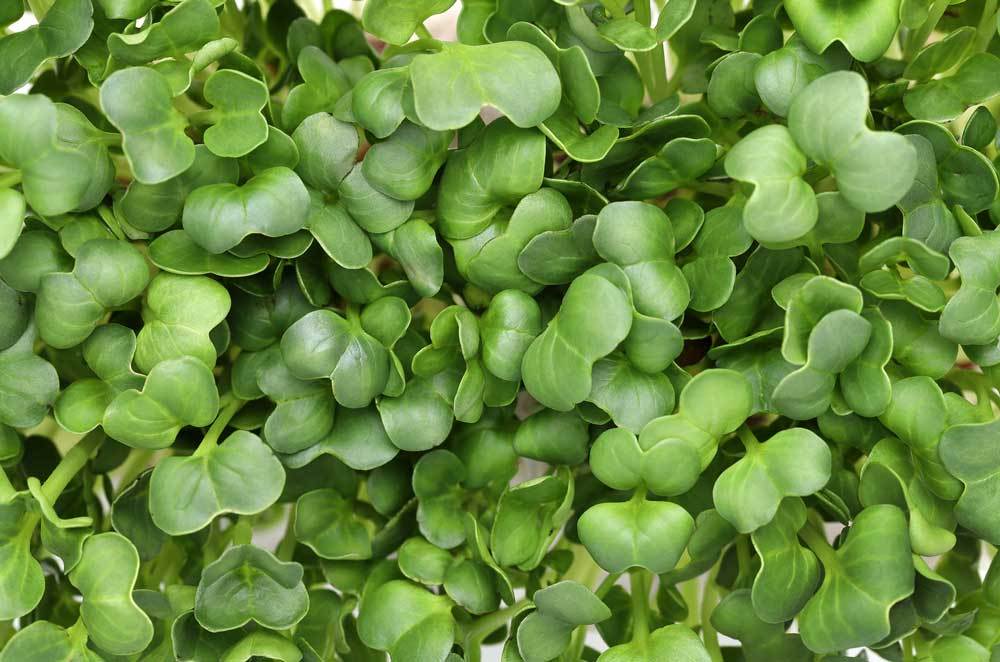
Daikon radish microgreens are one of the fastest and easiest microgreens to grow at home. In around 7–10 days, you can harvest crisp green microgreens with bright white stems and the distinctive fresh, peppery flavour of radish.
If you’re wondering how to grow Daikon radish microgreens, you do not need a garden or complicated equipment. With quality Daikon radish microgreen seeds, a shallow tray, a suitable growing medium and regular watering, you can grow a fresh crop indoors throughout the year.
This beginner-friendly guide explains exactly how to grow Daikon radish microgreens at home, including how much seed to use, whether Daikon seeds need soaking, the best growing medium, how long to keep the tray covered, when to expose the seedlings to light, how to prevent common growing problems and when to harvest your microgreens.
Daikon Radish Microgreens at a Glance
What Are Daikon Radish Microgreens?
Daikon radish microgreens are the young seedlings of Raphanus sativus, harvested shortly after germination while the plants are still very young.
Unlike mature Daikon radishes, which are grown for their large white roots, microgreens are grown for their tender stems and leaves.
Daikon microgreens typically develop white to pale stems with fresh green cotyledons. They have a crisp texture and a distinctive peppery radish flavour, making them particularly popular in salads, sandwiches, wraps, rice bowls and as a garnish.
Because Daikon germinates rapidly and grows vigorously, it is also an excellent microgreen variety for beginners.
Why Grow Daikon Radish Microgreens?
Daikon radish microgreens combine fast growth with a distinctive flavour and attractive appearance. They are particularly useful if you want a microgreen that provides more bite than milder varieties such as broccoli or cabbage.
- Fast growing and generally ready in around 7–10 days
- Easy to grow for beginners
- No seed soaking required
- Strong, vigorous germination under suitable conditions
- Crisp texture and peppery radish flavour
- Suitable for indoor growing
- Can be grown in soil, coco coir and suitable soilless systems
- Excellent for salads, sandwiches, wraps and garnishes
- Suitable for home and commercial microgreen production
- Can be grown throughout the year in a controlled indoor environment
How to Grow Daikon Radish Microgreens in 7 Simple Steps
- Prepare a shallow growing tray and moist growing medium.
- Sow approximately 12–15 g of Daikon radish microgreen seeds evenly over a 10 x 10 inch tray.
- Press the seeds gently against the growing medium and cover or stack the tray for approximately 2–3 days.
- Remove the cover once the seeds have germinated and the seedlings are pushing upwards.
- Place the tray in bright light and begin bottom watering where practical.
- Continue growing until the cotyledons are fully open and the crop reaches your preferred size.
- Harvest with clean scissors, generally around 7–10 days after sowing.
Under good indoor growing conditions, Daikon radish microgreens develop very quickly and can produce a harvest in little more than a week.
What You Need to Grow Daikon Radish Microgreens at Home
- Daikon radish microgreen seeds
- A shallow growing tray with drainage holes
- A second tray without holes to use underneath for bottom watering
- A second tray, lid or cover for the germination period
- Growing medium such as coco coir or fine quality potting mix
- Clean water
- Spray bottle for initial watering
- A bright windowsill or LED grow light
- Clean scissors or a sharp knife for harvesting
How Much Daikon Radish Seed for a 10 x 10 Inch Tray?
For a standard 10 x 10 inch microgreen tray, approximately 12–15 grams of Daikon radish microgreen seed is a useful starting point.
The aim is to distribute the seeds in a dense but reasonably even layer without piling them on top of one another.
Daikon seeds are considerably larger than broccoli, cabbage and many other Brassica microgreen seeds, so measuring by weight is generally more accurate than measuring by volume.
For a standard 10 x 20 inch microgreen tray, approximately 22–30 grams is a useful starting range depending on your growing system and preferred crop density.
Avoid assuming that more seed will automatically produce a better crop. Excessively dense sowing reduces airflow through the canopy and can increase the risk of damping-off, mould and uneven growth.
Do Daikon Radish Microgreen Seeds Need to Be Soaked?
No. Daikon radish microgreen seeds generally do not need to be soaked before sowing.
Unlike larger microgreen seeds such as peas and sunflowers, Daikon seed absorbs moisture and germinates readily when placed directly onto a properly moistened growing medium.
Simply prepare your growing medium, spread the dry seeds evenly, press them gently against the surface and mist after sowing.
Skipping the soaking stage also makes Daikon one of the simpler microgreens to start.
Best Growing Medium for Daikon Radish Microgreens
Daikon radish microgreens can be grown in several types of media. The important factors are reliable moisture, good drainage and enough support for the rapidly developing roots.
Coco Coir
Coco coir is an excellent option for Daikon microgreens. It retains moisture well while remaining relatively light and well aerated.
Its fine texture also makes it easy to distribute seeds evenly across the growing surface.
Quality Potting Mix
A fine, clean quality potting mix can also produce excellent Daikon microgreens.
Avoid mixes containing large pieces of bark or other coarse material, as an uneven surface makes uniform sowing and harvesting more difficult.
Soilless Growing
Daikon radish can also be grown using suitable hydroponic or soilless microgreen systems.
Because radish develops quickly and vigorously, maintaining even moisture is particularly important. Growing surfaces that dry unevenly can result in patchy growth.
Best Temperature for Growing Daikon Radish Microgreens
Daikon radish microgreens generally perform well under normal mild indoor conditions of approximately 18–24°C.
Warm conditions can speed water loss and increase disease pressure, particularly when densely planted trays remain excessively wet.
Cooler temperatures may slow germination and extend the number of days required before harvest.
For consistent results, avoid placing trays directly beside heaters, air-conditioning outlets or in extremely hot direct sunlight.
Step 1: Prepare Your Growing Tray
Start with a clean shallow tray with drainage holes.
If using coco coir or potting mix, add approximately 2–3 cm of growing medium and level the surface.
Moisten the medium thoroughly before sowing. It should feel evenly damp but should not be saturated or waterlogged.
A flat, even surface helps ensure good seed-to-medium contact and encourages more uniform germination.
Step 2: Sow the Daikon Radish Microgreen Seeds
Measure approximately 12–15 grams of seed for a 10 x 10 inch tray.
Sprinkle the Daikon seeds evenly across the surface.
Aim for a reasonably dense single layer while avoiding large clusters of overlapping seed.
There is no need to pre-soak Daikon radish microgreen seeds.
After sowing, gently press the seeds against the moist growing medium. Good seed-to-medium contact helps the seeds absorb moisture evenly.
Mist the surface lightly with clean water.
Step 3: Cover and Weight the Tray
Place another tray or suitable cover over the seeds after sowing.
A small amount of weight can help maintain good contact between the seeds and growing medium while the roots establish.
Keep the tray covered for approximately 2–3 days, checking the crop regularly.
Daikon radish germinates quickly. Once the majority of the seeds have germinated and the young seedlings are beginning to lift the covering tray, they are ready to move into the next stage.
The growing medium should remain moist during germination, but avoid excessive watering.
Step 4: Expose the Daikon Microgreens to Light
Once germination is well established, remove the cover and place the tray in bright light.
A bright windowsill can work well, or you can use an LED grow light for more consistent indoor production.
Do not be concerned if the seedlings initially look pale or yellow after being uncovered. This is normal following the covered germination period.
After exposure to light, the cotyledons will open and become green.
Step 5: Water and Grow
Once the seedlings are established, bottom watering is generally preferable where your tray system allows it.
Place the growing tray inside a solid tray and add a small amount of water to the bottom tray. The growing medium can then draw moisture upwards through the drainage holes.
Bottom watering helps keep the stems and leaves drier and reduces disturbance to the young plants.
For best results:
- Keep the growing medium evenly moist
- Do not leave the roots permanently sitting in deep water
- Provide good airflow around the tray
- Give the plants bright, even light
- Rotate trays if using light from a window
- Avoid excessive heat and harsh direct sunlight
- Reduce watering if the growing medium remains constantly wet
Daikon grows rapidly once exposed to light, so check the tray at least daily.
Step 6: When to Harvest Daikon Radish Microgreens
Daikon radish microgreens are generally ready to harvest around 7–10 days after sowing, although growing conditions and your preferred harvest stage will affect the exact timing.
You can harvest once the cotyledons have fully opened and the microgreens have developed their characteristic green leaves, crisp stems and upright growth.
Some growers prefer harvesting relatively young for a tender crop, while others allow the seedlings to grow slightly longer towards the emergence of the first true leaves.
The flavour is characteristically peppery and radish-like.
Step 7: How to Harvest Daikon Radish Microgreens
Use clean scissors or a sharp knife to cut the stems just above the growing medium.
Try to avoid pulling the plants out by the roots, as this can introduce coco coir, soil or other growing material into the harvested crop.
For the cleanest harvest:
- Avoid watering immediately before harvesting
- Use clean, sharp scissors
- Cut above the growing medium
- Handle the harvested microgreens gently
- Wash before eating using fresh drinking-quality water
If possible, harvest only what you need and enjoy the microgreens while they are fresh and crisp.
How Much Can You Harvest from One Tray?
Yield varies considerably depending on seed density, germination percentage, tray dimensions, growing medium, lighting, temperature, watering and harvest stage.
A well-grown 10 x 10 inch tray can produce a substantial handful of Daikon radish microgreens.
Rather than trying to maximise yield by adding excessive seed, aim for a uniform healthy crop with good airflow.
Overcrowding can cause weaker growth and create a humid microclimate around the stems, increasing the likelihood of fungal problems.
How to Store Daikon Radish Microgreens
Freshly harvested Daikon microgreens can be refrigerated if you do not plan to use them immediately.
For best storage:
- Harvest with clean scissors or a knife
- Remove obvious growing-medium debris
- Keep harvested microgreens cool
- Avoid storing them excessively wet
- Place them in a clean covered container in the refrigerator
- Wash them in clean drinking water before eating
Because microgreens are delicate, they are generally best enjoyed as fresh as possible.
What Do Daikon Radish Microgreens Taste Like?
Daikon radish microgreens have a fresh, crisp and distinctly peppery radish flavour.
They provide more bite than mild microgreens such as broccoli, kale or cabbage, without requiring a large quantity to add noticeable flavour to a meal.
Their combination of green leaves, pale stems and spicy flavour also makes them popular as a garnish.
How to Use Daikon Radish Microgreens
Daikon microgreens work particularly well with savoury foods where their fresh peppery flavour can provide contrast.
Try them:
- In sandwiches and wraps
- Mixed through fresh salads
- On avocado toast
- Scattered over eggs
- With rice and noodle bowls
- As a topping for soups
- With stir-fries after cooking
- On tacos and savoury bowls
- As a fresh garnish
- Mixed with milder microgreens
For the best texture, add Daikon microgreens towards the end of meal preparation rather than cooking them for an extended period.
Daikon Radish Microgreens vs Radish Sprouts
Although they can be produced from the same species of seed, Daikon radish sprouts and Daikon radish microgreens are not the same thing.
Tips for Growing Daikon Radish Microgreens Indoors
Daikon radish is particularly suitable for indoor microgreen production because it grows rapidly and does not require a large growing area.
For consistent crops:
- Start with clean trays and equipment
- Sow seeds evenly rather than excessively thickly
- Ensure good seed-to-medium contact
- Keep the medium moist without waterlogging it
- Switch to bottom watering once the crop is established
- Provide good airflow
- Use bright natural light or a suitable LED grow light
- Start another tray every few days if you want a continuous supply
Because Daikon grows quickly, it is also an excellent variety for learning how changes in seed density, watering and lighting affect microgreen production.
Common Problems When Growing Daikon Radish Microgreens
Mould or Damping-Off
Dense microgreen crops are vulnerable to excessive moisture and poor airflow.
If you see genuine mould developing, check that the growing medium is not saturated, improve airflow around the tray and consider reducing your sowing density.
Using clean trays and clean growing media also helps reduce problems.
White Fuzz Around the Roots
Fine white growth immediately around the roots may be root hairs rather than mould.
Root hairs often appear as a fine white halo around individual roots and can become particularly noticeable when the tray is relatively dry.
Mould generally spreads differently and may occur across seeds, stems or growing medium rather than appearing uniformly along healthy roots.
Seeds Germinating Unevenly
Uneven germination can result from:
- Uneven moisture
- Poor seed-to-medium contact
- Seeds being piled too thickly in some areas
- Parts of the tray drying out
- Large temperature differences across the tray
Level the growing surface before sowing and distribute the seed as evenly as possible.
Yellow Daikon Microgreens
Pale or yellow seedlings are normal when the tray is first uncovered.
The seedlings have been growing without light. Once exposed to adequate light, the cotyledons should begin turning green.
Long, Weak or Leggy Growth
Excessively long, weak stems usually indicate inadequate light.
Move the tray to a brighter location or place it under an appropriate grow light.
Wilting Microgreens
Daikon grows quickly and can use water rapidly once it develops a dense canopy.
If the plants begin to wilt, check the growing medium. Water from below if it is becoming dry.
Avoid compensating by permanently flooding the tray, as constantly saturated growing media can create different problems.
Seed Hulls Stuck to the Leaves
It is normal for some Daikon seed hulls to remain attached to the cotyledons when the plants first emerge.
Many will fall away naturally as the leaves expand. Gentle airflow and normal growth usually help loosen remaining hulls.
Frequently Asked Questions
How long do Daikon radish microgreens take to grow?
Daikon radish microgreens are fast growing and are generally ready to harvest in around 7–10 days. Temperature, light, growing medium and preferred harvest stage can all affect timing.
Do Daikon radish microgreen seeds need soaking?
No. Daikon radish seeds do not normally require pre-soaking when grown as microgreens. Sow the dry seed directly onto a properly moistened growing medium.
How much Daikon seed should I use for a 10 x 10 tray?
Approximately 12–15 grams is a useful starting rate for a standard 10 x 10 inch tray. Adjust slightly according to your growing conditions and tray system.
How much Daikon seed should I use for a 10 x 20 tray?
Approximately 22–30 grams per 10 x 20 inch tray is a practical range for many growing systems.
Avoid excessively heavy seeding, as overcrowding can reduce airflow.
Can Daikon radish microgreens be grown indoors?
Yes. Daikon is particularly well suited to indoor growing. After germination, provide bright light from a suitable window or grow light.
Can you grow Daikon microgreens without soil?
Yes. Daikon microgreens can be grown using suitable coco coir and soilless or hydroponic microgreen systems. Maintaining consistent moisture is important whichever medium you choose.
What do Daikon radish microgreens taste like?
Daikon microgreens have a fresh, crisp and peppery radish flavour. They are stronger tasting than many mild Brassica microgreens and work particularly well in savoury dishes.
Are Daikon microgreens easy to grow?
Yes. Daikon is considered a good microgreen for beginners because it germinates quickly, grows vigorously and does not require pre-soaking.
How often should I water Daikon microgreens?
There is no fixed watering schedule because moisture requirements depend on tray size, growing medium, temperature, airflow and plant growth.
Check the tray regularly and keep the growing medium evenly moist without keeping it permanently saturated. Once seedlings are established, bottom watering is a useful method.
Why are my Daikon microgreens yellow?
Yellow seedlings immediately after the covered germination stage are normal. Once the seedlings are exposed to adequate light, the cotyledons should become green.
Is the white fuzz on my Daikon microgreens mould?
Not always. Radish seedlings can develop highly visible white root hairs, particularly around newly developed roots. Root hairs form uniformly around individual roots, whereas mould generally spreads irregularly across seeds, stems or growing medium.
Do Daikon radish microgreens regrow after harvesting?
Daikon radish microgreens are generally treated as a single-cut crop. For a continuous supply, sow a fresh tray every few days rather than relying on regrowth.
Can I grow Daikon radish microgreens all year round?
Yes. When grown indoors with suitable temperature, moisture and light, Daikon microgreens can be produced throughout the year.
When should I remove the cover from Daikon microgreens?
Remove the covering tray once germination is well established and the seedlings are beginning to push upwards, generally after around 2–3 days under suitable conditions.
Do Daikon microgreens need fertiliser?
For such a short crop, additional fertiliser is generally unnecessary when using a quality growing medium containing some fertility. In inert hydroponic media, growing requirements depend on the particular system being used.
Can beginners grow Daikon radish microgreens?
Yes. Their rapid germination, vigorous growth and short harvest time make Daikon radish microgreens one of the easiest varieties for someone growing microgreens for the first time.
Learning how to grow Daikon radish microgreens is simple and rewarding. With quality seed, a shallow tray and a little daily care, you can produce crisp, peppery microgreens at home in little more than a week.
For reliable results, start with approximately 12–15 grams of Daikon radish microgreen seed per 10 x 10 inch tray, sow directly without soaking, maintain even moisture during germination and provide bright light once the seedlings are uncovered.
Once you have grown your first tray, sowing a new batch every few days makes it easy to maintain a regular supply of fresh Daikon radish microgreens throughout the year.
Ready to grow your own? Shop Daikon Radish Microgreen Seeds from Seedmart Australia.