


Feijoa Seeds
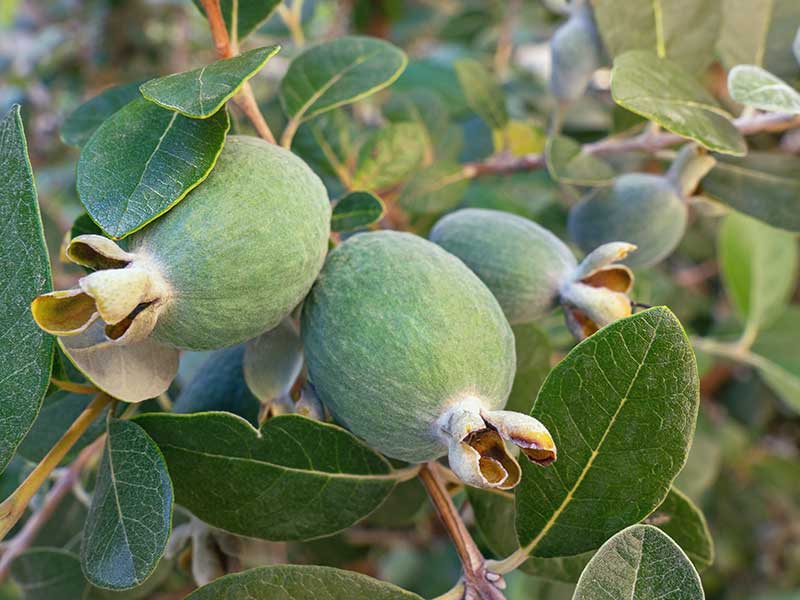
Buy Feijoa seeds in Australia and grow your own pineapple guava tree. Feijoa (Acca sellowiana) is an evergreen fruiting shrub that produces fragrant tropical fruit and attractive flowers while also making an excellent edible hedge or screening plant.
Botanical Name: Acca sellowiana
Other Names: Pineapple Guava, Guavasteen
Feijoa, also known as pineapple guava, is an attractive evergreen fruiting shrub grown for its fragrant green fruit, ornamental flowers and useful hedging habit. The fruit has a distinctive tropical flavour often described as a blend of pineapple, guava, pear and mint.
Although feijoa is especially popular in New Zealand, it can also be grown in many parts of Australia, particularly in temperate, cool and elevated subtropical regions. It is a hardy and adaptable plant once established, making it a valuable choice for edible gardens, food forests, privacy screens and productive hedges.
- Evergreen fruiting shrub or small tree with attractive silvery-green foliage.
- Produces aromatic green fruit with sweet, tropical pineapple-guava flavour.
- Showy red and white flowers attract bees and beneficial pollinators.
- Useful as an edible hedge, screen, feature shrub or backyard fruit tree.
- Tolerates light frost, wind and coastal conditions once established.
- Best suited to temperate, cool and elevated subtropical climates.
- Moderately drought tolerant once mature, but benefits from summer moisture.
Why Grow Feijoa?
Feijoa is one of the most underrated fruit trees for Australian gardens. It combines attractive evergreen foliage, beautiful edible flowers and delicious aromatic fruit in a relatively low-maintenance plant. It can be grown as a backyard fruit tree, privacy hedge or feature shrub and is particularly well suited to temperate and cooler subtropical regions of Australia.
Plant Details
- Plant Type: Evergreen fruiting shrub / small tree
- Botanical Name: Acca sellowiana
- Common Name: Feijoa, Pineapple Guava
- Plant Height: Usually 2–4 m, depending on pruning and conditions
- Plant Width: 2–3 m
- Foliage: Evergreen, silvery-green leaves
- Flowers: Red and white edible flowers in spring
- Fruit: Oval green fruit, usually ripening in autumn
What Does Feijoa Taste Like?
Feijoa fruit has a unique sweet, tangy and highly aromatic flavour. It is commonly compared to pineapple, guava, pear, strawberry and mint. The flesh is usually scooped out with a spoon and eaten fresh, or used in cakes, jams, chutneys, desserts and preserves.
Growing Feijoa from Seed
Feijoa can be grown from seed, although seedlings may vary in fruit quality and can take several years to produce fruit. Seed-grown plants are still very useful for hedging, screening, ornamental planting and edible landscaping.
For best germination, sow feijoa seeds into a free-draining seed raising mix and keep warm, moist and protected while germinating. Germination can be variable, so allow several weeks for seedlings to emerge.
Sowing Information
- Germination: Usually 2–6 weeks, but can be variable
- Sowing Depth: Sow approximately 5 mm deep
- Position: Full sun to partial shade
- Sow Where: Seed trays or small pots are recommended
- Soil Type: Free-draining seed raising mix; avoid waterlogged soil
- Transplanting: Transplant once seedlings are large enough to handle
- Spacing: 1.5–3 m apart, depending on use
Where Does Feijoa Grow Best in Australia?
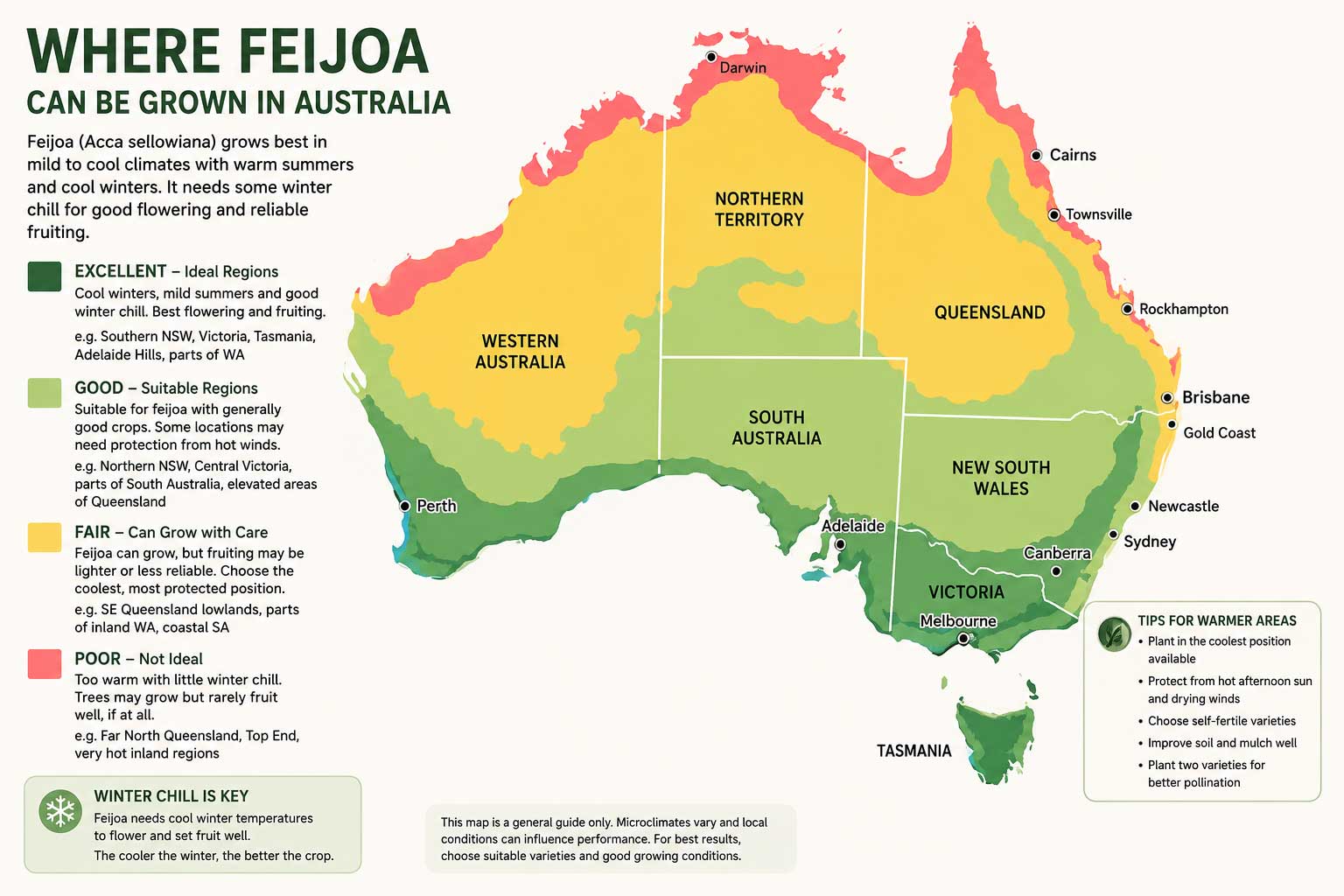
Feijoa grows best in areas with mild summers, cool winters and well-drained soil. It generally performs well in temperate regions and can also grow in elevated subtropical areas where winter temperatures are cooler.
In warmer coastal subtropical areas, feijoa may grow well as a shrub but fruiting can be less reliable if winters are too warm. Choose the coolest suitable position available and protect young plants from hot, drying winds.
Growing Tips
- Use a free-draining seed raising mix and avoid waterlogged conditions.
- Keep seed trays lightly moist but not saturated during germination.
- Grow seedlings in a protected position until strong enough to transplant.
- Plant in full sun for best flowering and fruiting.
- Mulch around established plants to conserve soil moisture.
- Water deeply during dry periods, especially while young.
- Prune lightly to maintain shape or encourage dense hedging growth.
- Plant more than one feijoa where possible to improve pollination and fruit set.
Flowering and Fruiting
Feijoa produces striking red and white flowers in spring. The fleshy flower petals are edible and mildly sweet. Fruit usually develops after flowering and ripens in autumn, depending on climate and growing conditions.
Seed-grown feijoa plants may take several years to fruit. Fruiting time can vary depending on climate, plant health, pollination and genetics.
Traditional and Practical Uses
- Grown for aromatic edible fruit.
- Used in jams, chutneys, cakes, desserts and preserves.
- Suitable for edible hedges and privacy screening.
- Useful in food forests, permaculture gardens and edible landscaping.
- Attractive flowers provide value for bees and pollinators.
- Suitable for many coastal and wind-exposed gardens once established.
When to Sow Feijoa Seeds in Your Climate
| Climate Zone | Best Sowing Time | Growing Tips | |
|---|---|---|---|
| Temperate | September–November | Sow in spring as temperatures warm. | |
| Ideal climate for feijoa growth and fruiting. | |||
| Protect young plants from extreme summer heat. | |||
| Tropical | May–July | May grow as an evergreen shrub, but fruiting may be unreliable without winter chill. | |
| Protect young seedlings in cold conditions. | |||
| Arid | August–September | Provide regular moisture and shelter from hot, dry winds during establishment. |
Frequently Asked Questions
Can you grow feijoa from seed?
Yes. Feijoa can be grown from seed, although seedlings can vary and may take several years to produce fruit.
Is feijoa the same as pineapple guava?
Yes. Feijoa is commonly known as pineapple guava. Its botanical name is Acca sellowiana.
How long does feijoa take to fruit from seed?
Seed-grown feijoa plants may take several years to fruit, often around 4–7 years depending on growing conditions and plant genetics.
Does feijoa need full sun?
Feijoa grows best in full sun, especially if fruit production is the goal. It can tolerate partial shade, but flowering and fruiting may be reduced.
Do I need two feijoa trees?
Some feijoas are partially self-fertile, but planting more than one plant can improve pollination and increase fruit set.
Can feijoa grow in pots?
Yes. Feijoa can be grown in large pots with good drainage, although plants grown in containers need regular watering and feeding.
Reviews
There are no reviews yet.