
Coastal Saltbush Seeds – Rhagodia candolleana
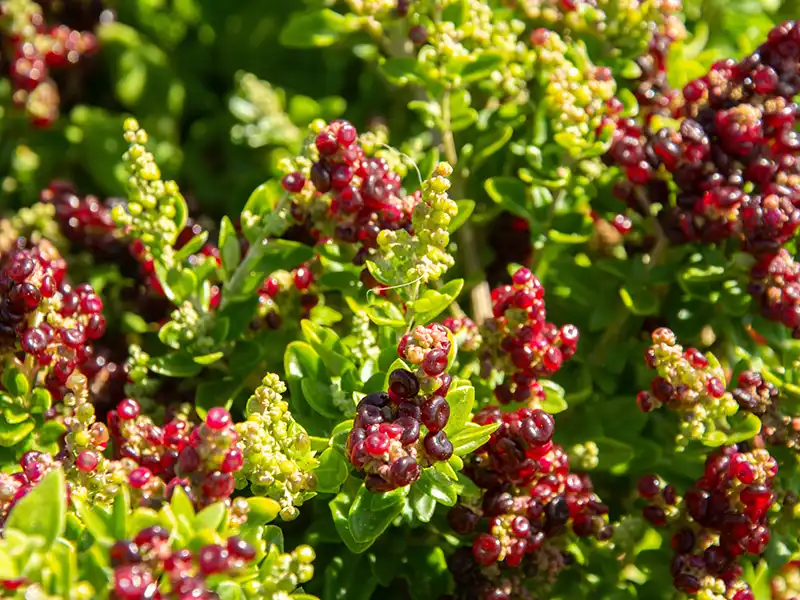
Coastal Saltbush (Rhagodia candolleana), also known as Seaberry Saltbush, is an Australian native evergreen shrub with spreading or scrambling stems, fleshy green leaves and small red berries. Naturally associated with coastal environments, it is useful for native gardens, coastal landscapes and locally appropriate revegetation projects.
Its growth varies from low, spreading forms to larger, upright or scrambling shrubs. Established plants tolerate coastal exposure and dry conditions, while their foliage and berries provide shelter and food for wildlife.
Coastal Saltbush Seed Details
| Botanical name | Rhagodia candolleana |
|---|---|
| Common names | Coastal Saltbush, Seaberry Saltbush |
| Plant type | Australian native evergreen shrub |
| Growth habit | Spreading, upright or scrambling; varies with form and growing conditions |
| Approximate height | Variable; low-growing forms occur, while upright or scrambling plants can reach approximately 4 m |
| Foliage | Somewhat fleshy leaves, green above with pale grey, scaly undersides |
| Flowers and fruit | Small, inconspicuous flowers followed by red to crimson berries |
| Flowering period | Generally spring to summer; timing varies with location and conditions |
| Position | Full sun to part shade |
| Soil | Adaptable to sandy, loamy and clay soils with suitable drainage |
| Seeds per gram | Approximately 240; varies with seed lot and preparation |
| Uses | Coastal gardens, informal screening, wildlife habitat and suitable coastal revegetation plantings |
Why Grow Coastal Saltbush?
- Coastal resilience: Established plants tolerate salt spray and exposed coastal conditions.
- Wildlife value: Berries provide food for birds, while dense growth offers shelter.
- Evergreen foliage: Provides lasting greenery in mixed native plantings.
- Dry-condition tolerance: Useful in suitable landscapes once established.
- Flexible landscaping uses: Can be managed as a spreading shrub or informal screen.
How to Grow Coastal Saltbush from Seed
- Check seed preparation: If seed still has fleshy fruit attached, gently remove the pulp and rinse before sowing. Already cleaned seed does not need this step. Routine hot-water treatment is not required.
- Prepare containers: Use clean trays or pots filled with a free-draining seed-raising mix. Moisten the mix before sowing.
- Sow shallowly: Scatter seed evenly and cover lightly with fine seed-raising mix. Avoid burying seed deeply.
- Maintain moisture: Keep the sowing surface consistently moist with gentle watering, allowing excess water to drain.
- Provide protected conditions: Place containers in a bright, sheltered position and protect them from drying winds, intense heat and heavy rain.
- Allow time for emergence: Germination is commonly reported within approximately 2–5 weeks, although timing varies with seed quality and conditions.
- Transplant and establish: Move seedlings into individual pots once large enough to handle. Gradually acclimatise them before planting outdoors and water regularly during establishment.
Coastal Saltbush for Native Gardens and Landscaping
Coastal Saltbush works well in informal native gardens where its branching stems have room to develop. Combine it with locally suitable shrubs and grasses, or use it as part of a coastal shelter planting.
Pruning can encourage bushier growth and help manage its size. Monitor scrambling stems so they do not overwhelm smaller neighbouring plants.
Coastal Revegetation and Soil Protection
This species can contribute vegetation cover and wildlife habitat in suitable coastal rehabilitation projects. Its spreading growth is useful within mixed plantings designed for the site.
Use locally appropriate seed provenance and assess the surrounding vegetation before planting. Erosion-control projects should combine suitable species with appropriate site preparation and establishment care.
Flowers, Berries and Wildlife
The small flowers are less conspicuous than the red berries that follow. Fruiting plants add seasonal interest and provide a food source for birds, while the shrub’s branching growth offers protective cover.
Where to Grow Coastal Saltbush
- Coastal native gardens with suitable drainage.
- Informal shrub borders with room for spreading growth.
- Wildlife gardens and mixed habitat plantings.
- Locally appropriate coastal shelter plantings.
- Suitable coastal rehabilitation and revegetation sites.
When to Sow Coastal Saltbush Seeds in Australia
TreeProject recommends late spring to summer in its Victorian nursery guidance. The following table provides general planning guidance across climates. Maintain moisture and avoid extreme propagation temperatures.
| Climate Zone | Suitable Sowing Period | Growing Notes |
|---|---|---|
| Cool | Late spring to early summer under protected conditions | Provide suitable warmth and shelter young seedlings from severe weather. |
| Temperate | Late spring to summer with heat protection | Maintain moisture and protect containers from drying winds. |
| Subtropical | Mild to warm periods under managed conditions | Check local suitability and avoid excessive tray temperatures. |
| Tropical | Milder periods under controlled nursery conditions, where suitable | Assess provenance suitability and protect containers from heavy rain. |
| Arid / Semi-arid | Mild, warm periods with dependable irrigation, where suitable | Maintain moisture through emergence and arrange establishment watering. |
Coastal Saltbush Growing Tips
- Keep young plants watered while their root systems establish.
- Allow drainage after watering rather than keeping propagation containers saturated.
- Choose a planting position with room for the supplied form to develop.
- Prune as needed to maintain a bushier shape and manage spreading stems.
- Use suitable local provenance for habitat restoration projects.
Frequently Asked Questions
Is Coastal Saltbush a groundcover?
Some forms are low and spreading, but the species also includes larger upright or scrambling shrubs. Mature size depends on the form and growing conditions.
Does Coastal Saltbush seed need hot-water treatment?
Routine hot-water treatment is not required. Remove any remaining fleshy fruit before sowing.
How long does germination take?
Approximately 2–5 weeks is reported in nursery guidance, although individual seed lots and growing conditions can produce different results.
Is Coastal Saltbush suitable for exposed coastal gardens?
Established plants tolerate salt spray and coastal exposure. Young seedlings still benefit from shelter and establishment watering.
Grow Coastal Saltbush from Seed
Grow Coastal Saltbush Seeds for evergreen foliage, wildlife habitat and adaptable native shrub plantings. Choose a suitable site and allow space for its spreading growth to develop.
Reviews
There are no reviews yet.