
Samphire Seeds – Salicornia quinqueflora
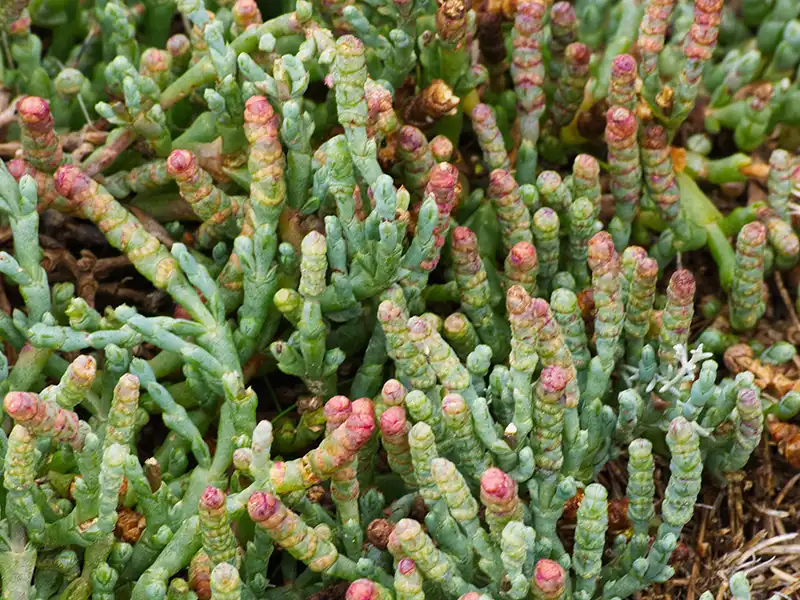
Grow an Australian native succulent perennial with distinctive beaded stems, edible young shoots and a natural affinity for coastal saltmarsh environments. Samphire (Salicornia quinqueflora), also known as Beaded Samphire or Beaded Glasswort, forms low, spreading growth with fleshy, jointed green stems.
Previously known as Sarcocornia quinqueflora, this species occurs naturally in saline coastal habitats, including estuaries and saltmarshes. It can be grown in sunny garden positions or containers and incorporated into locally appropriate saltmarsh restoration projects.
Samphire Seed Details
| Botanical name | Salicornia quinqueflora |
|---|---|
| Synonym | Sarcocornia quinqueflora |
| Common names | Samphire, Beaded Samphire, Beaded Glasswort |
| Family | Amaranthaceae; traditionally classified in Chenopodiaceae |
| Plant type | Australian native succulent perennial herb or low subshrub |
| Growth habit | Low, spreading to partly upright; prostrate stems can root at the nodes |
| Approximate height | Commonly up to approximately 30 cm; some plants reach 50 cm |
| Stems and foliage | Fleshy, jointed green stems with reduced leaves; stems may develop red colouring |
| Flowers | Tiny, inconspicuous flowers embedded in terminal flowering spikes |
| Flowering period | Varies considerably with region and seasonal conditions |
| Position | Full sun; protect young plants from frost |
| Soil | Adaptable to suitable sandy, loamy and clay soils; naturally associated with saline, periodically flooded habitats |
| Uses | Edible native gardens, containers, coastal landscapes and suitable saltmarsh restoration projects |
Why Grow Samphire?
- Distinctive succulent stems with a beaded appearance.
- Edible young shoots for a homegrown native ingredient.
- Low, spreading perennial growth.
- Naturally adapted to saline coastal environments.
- Can be grown in sunny containers or suitable garden beds.
- Useful for locally appropriate saltmarsh revegetation.
How to Grow Samphire from Seed
Samphire can be propagated from seed without routine hot-water treatment or scarification. The following steps provide a practical nursery starting point.
- Prepare the growing medium. Fill clean trays or small pots with fine seed-raising mix that holds moisture while allowing drainage.
- Sow at the surface. Scatter the small seeds over the moist medium and gently press them into contact with the surface. Avoid deep burial.
- Water gently. Use a fine spray or careful bottom watering to avoid displacing seed.
- Maintain consistent moisture. Prevent the sowing surface from drying while avoiding stagnant conditions in propagation containers.
- Provide a protected position. Keep trays in good light, sheltered from frost, intense heat and heavy rain.
- Allow time for emergence. Germination may occur over several weeks and can vary with seed lot and propagation conditions.
- Transplant established seedlings. Move seedlings into individual pots once sufficiently developed, then gradually acclimatise them before outdoor planting.
Samphire for Gardens and Containers
Samphire offers an unusual succulent texture in sunny native gardens and container plantings. Its jointed stems provide a different appearance from broad-leaved groundcovers and grasses.
Choose a position where moisture can be managed and protect plants from damaging frost. Containers allow closer control of watering and exposure.
Samphire for Saltmarsh Revegetation
This species is a natural component of Australian saltmarsh vegetation. Its creeping stems and ability to root at the nodes contribute to low vegetation cover in suitable habitats.
For restoration projects, match seed provenance to the site and assess salinity, tidal inundation and surrounding vegetation. Successful establishment depends on suitable hydrology as well as species selection.
Harvesting Samphire
The tender young stems are edible and are generally best harvested during fresh spring and summer growth. Allow plants to establish before taking small amounts of new growth, leaving sufficient stems for continued development.
Flowers and Beaded Stems
Samphire is grown mainly for its succulent stems. Its leaves are greatly reduced, producing the characteristic segmented appearance. Tiny flowers develop within the flowering spikes rather than forming a showy display.
Flowering varies by location, so a single nationwide flowering season is not reliable.
Where to Grow Samphire
- Sunny containers with managed watering.
- Edible native gardens.
- Suitable coastal and saline landscape sites.
- Locally appropriate saltmarsh habitat plantings.
- Restoration projects with suitable salinity and inundation conditions.
When to Sow Samphire Seeds in Australia
These are general nursery planning guides rather than fixed species-specific sowing dates. Choose mild conditions that support consistent moisture and protect young plants from frost and extreme heat.
| Climate Zone | Suitable Sowing Period | Growing Notes |
|---|---|---|
| Cool | Spring to early summer under protected conditions | Protect seedlings from frost and maintain surface moisture. |
| Temperate | Spring or mild early autumn | Avoid temperature extremes and shelter trays from drying winds. |
| Subtropical | Milder periods under managed conditions | Avoid excessive tray temperatures and maintain consistent moisture. |
| Tropical | Milder periods under controlled nursery conditions, where suitable | Confirm provenance suitability and protect surface-sown seed from heavy rain. |
| Arid / Semi-arid | Mild periods with dependable irrigation, where suitable | Assess site suitability and prevent drying during germination and establishment. |
Tips for Growing Samphire Successfully
- Sow small seeds shallowly and water gently.
- Maintain consistent moisture during emergence.
- Protect young plants from frost and extreme heat.
- Allow plants to establish before harvesting shoots.
- Match provenance and site conditions for ecological restoration.
Frequently Asked Questions
What is Samphire?
This product is Salicornia quinqueflora, an Australian native succulent perennial also known as Beaded Samphire or Beaded Glasswort.
Is Samphire an annual or perennial?
Salicornia quinqueflora is perennial. Other plants sold under the common name Samphire may have different life cycles.
Can Samphire be grown in pots?
Yes. Use a sunny position and manage watering carefully, particularly while plants establish.
Does Samphire seed need hot-water treatment?
Routine hot-water treatment or scarification is not required.
Is Samphire frost tolerant?
Frost can damage plants. Provide protection in frost-prone locations, especially for young seedlings.
Can Samphire be used for revegetation?
Yes, in suitable saltmarsh environments. Use locally appropriate provenance and assess the site’s tidal and salinity conditions.
Grow Samphire from Seed
With its beaded succulent stems and spreading perennial growth, Salicornia quinqueflora is a distinctive choice for edible native gardens, containers and suitable coastal restoration projects.
Sow shallowly, maintain moisture during emergence and give seedlings time to establish before planting or harvesting.
Reviews
There are no reviews yet.