
River Oak Seeds
Grow a tall Australian native tree with fine, drooping foliage, suited to spacious landscapes, rural shelter plantings and locally appropriate waterway revegetation. River Oak (Casuarina cunninghamiana) develops an upright trunk, textured bark and a graceful canopy of slender, green branchlets.
This species naturally grows along freshwater rivers and streams in eastern and northern Australia. Its association with waterways makes it particularly useful for suitable creek-bank restoration and riparian habitat plantings, while its height and canopy provide structure in larger landscapes.
River Oak Seed Details
| Botanical name | Casuarina cunninghamiana |
|---|---|
| Common names | River Oak, River Sheoak |
| Family | Casuarinaceae |
| Plant type | Australian native evergreen tree |
| Growth habit | Fast-growing, upright tree with a conical young crown and fine, often drooping branchlets |
| Approximate height | Commonly approximately 15–35 m; can reach 50 m in favourable conditions |
| Foliage | Slender, jointed green branchlets; true leaves are reduced to tiny scales at the joints |
| Bark | Grey-brown, fissured and scaly |
| Flowers and fruit | Small male flower spikes and female flower heads on separate trees; female trees produce woody cones containing winged seeds |
| Flowering period | Summer flowering is recorded in south-eastern cultivation; timing varies with location and conditions |
| Position | Full sun, with ample space for mature growth |
| Soil | Adaptable to varied soils; naturally associated with freshwater stream banks and reliable moisture |
| Seeds per gram | Approximately 556–1,200; varies with seed lot and preparation |
| Uses | Large native landscapes, rural shade and shelter plantings, riparian habitat restoration and suitable riverbank revegetation |
Why Grow River Oak?
- Tall native tree for spacious landscapes and rural properties.
- Fine-textured branchlets provide an attractive evergreen canopy.
- Useful for shade, shelter and windbreak plantings on suitable sites.
- Suitable for locally appropriate creek and river restoration.
- Established roots help stabilise suitable stream banks.
- Can form nitrogen-fixing root nodules through an association with Frankia bacteria.
How to Grow River Oak from Seed
Casuarina cunninghamiana is propagated from seed without routine hot-water treatment or scarification. Its small, winged seeds need gentle handling and consistent moisture during germination.
- Prepare the growing medium. Fill trays, tubes or small pots with a clean, free-draining seed-raising mix.
- Sow shallowly. Scatter seed thinly over the prepared surface and press gently into contact with the mix. If covering, use only a light layer of fine mix or washed sand.
- Water gently. Use a fine mist or gentle watering method to avoid displacing the small seeds.
- Maintain moisture. Keep the sowing surface consistently moist and allow excess water to drain from containers.
- Provide warmth and light. Place containers in a bright, sheltered propagation area, protected from drying winds and excessive heat.
- Allow time for germination. Emergence commonly takes approximately 2–4 weeks under suitable conditions, but timing varies with seed quality and temperature.
- Transplant and harden seedlings. Move seedlings into individual tubes or pots once they can be handled safely. Gradually introduce outdoor conditions before planting into their permanent position.
River Oak for Landscaping
River Oak adds height and fine foliage texture to larger native landscapes. Young trees commonly have a conical crown, developing a broader canopy as they mature.
It can be used as a feature tree or incorporated into rural shade and shelter plantings. Plan the planting position around its mature size, allowing generous clearance from buildings, services and other trees.
River Oak for Revegetation and Riverbank Stabilisation
River Oak is useful for restoring suitable freshwater riparian vegetation. Include it with locally appropriate shrubs, grasses, sedges and other trees to rebuild vegetation structure around waterways.
For restoration projects, match the supplied subspecies and provenance to the site. Planting on actively eroding banks should follow the project’s bank-stabilisation design, with protection and follow-up watering provided while seedlings establish.
Flowers and Foliage
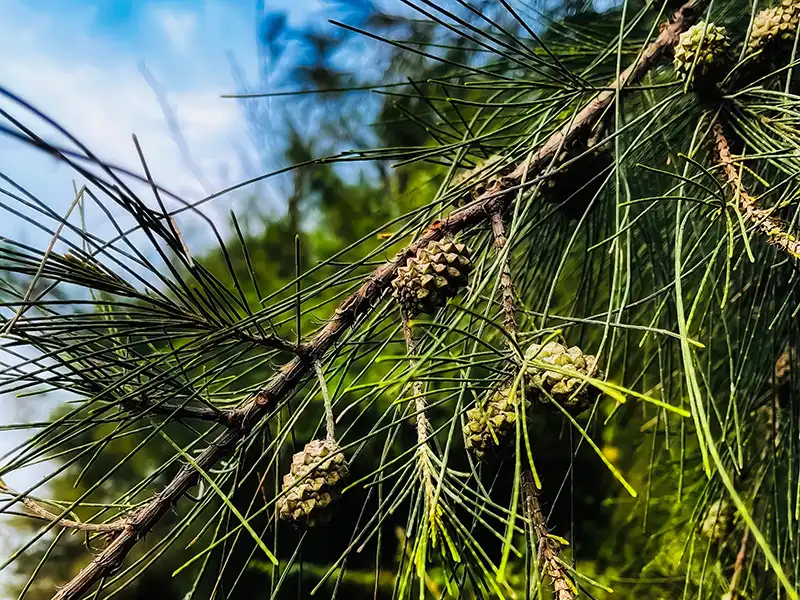
The needle-like foliage consists mainly of slender green branchlets, with the true leaves reduced to small scales. This gives River Oak a soft, distinctive appearance despite its substantial mature size.
Male and female flowers develop on separate trees. Male trees bear small flower spikes, while female trees produce inconspicuous flower heads followed by woody cones. These release small winged seeds when mature.
Where to Grow River Oak
- Spacious Australian native landscapes.
- Rural properties requiring shade or shelter.
- Locally appropriate freshwater creek and river margins.
- Riparian habitat restoration projects.
- Suitable mixed native revegetation plantings with adequate moisture.
When to Sow River Oak Seeds in Australia
These are general nursery planning guides rather than fixed species-specific sowing dates. Choose conditions that support reliable moisture and seedling establishment, and assess planting suitability for the supplied provenance.
| Climate Zone | Suitable Sowing Period | Growing Notes |
|---|---|---|
| Cool | Spring to early summer with protected warmth | Use suitable provenance and protect emerging seedlings from severe frost. |
| Temperate | Spring to early summer | Maintain moisture and shelter containers from drying winds. |
| Subtropical | Mild to warm periods under managed conditions | Avoid excessive tray temperatures and maintain consistent surface moisture. |
| Tropical | Suitable periods with controlled nursery conditions | Confirm subspecies and provenance suitability; protect seed from heavy rain. |
| Arid / Semi-arid | Mild, warm periods with dependable irrigation, where suitable | Assess long-term water availability before choosing this species. |
Tips for Growing River Oak Successfully
- Use clean containers and a free-draining propagation medium.
- Sow thinly and avoid burying seed deeply.
- Keep the sowing surface moist during emergence.
- Protect young seedlings from temperature extremes.
- Separate crowded seedlings before roots become difficult to handle.
- Harden plants gradually before planting outdoors.
- Provide establishment watering and control competing weeds.
- Allow ample space for a large mature tree.
Frequently Asked Questions
What is River Oak?
River Oak is an Australian native tree botanically known as Casuarina cunninghamiana, also commonly called River Sheoak.
Is River Oak a pine or a true oak?
No. It is a flowering tree in the family Casuarinaceae. Its fine branchlets and woody cones give it a pine-like appearance.
Does River Oak seed need pretreatment?
Routine hot-water treatment or scarification is not required. Sow shallowly into a suitable propagation medium and maintain moisture.
How long does River Oak take to germinate?
Germination commonly takes approximately 2–4 weeks under suitable conditions. Seed quality and propagation conditions affect emergence.
Is River Oak suitable for small gardens?
Its mature size generally makes it more appropriate for spacious landscapes and rural properties.
Can River Oak be used beside waterways?
Yes, where it is appropriate to the local vegetation community and restoration plan. Choose suitable provenance and provide care during establishment.
Grow River Oak from Seed
With its graceful branchlets and substantial canopy, River Oak is a useful native tree for suitable large landscapes and waterway restoration projects.
Sow shallowly, maintain reliable moisture during germination and establish seedlings in a position suited to their long-term growth.
Reviews
There are no reviews yet.