
Weeping Grass Native Seeds
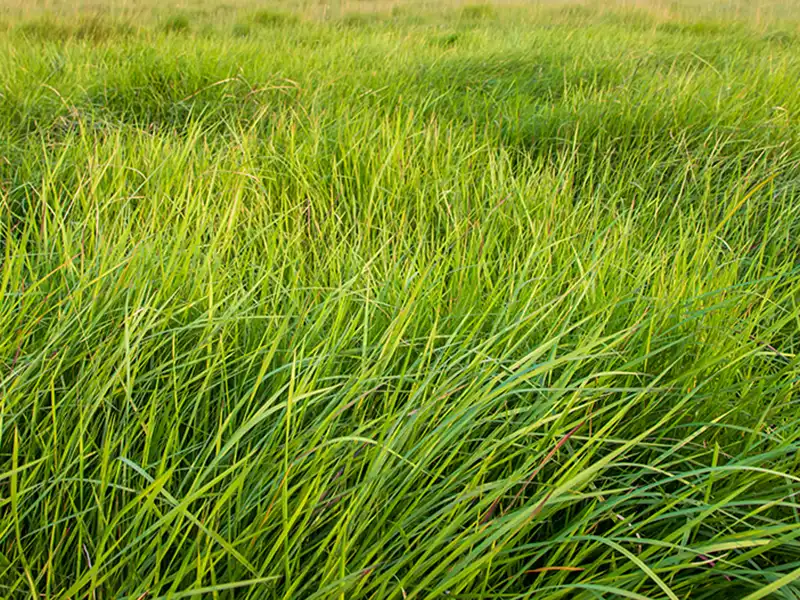
Establish a soft, naturally green Australian native lawn, groundcover or landscape planting with Weeping Grass (Microlaena stipoides).
Weeping Grass is a versatile Australian native perennial grass valued for its fine green foliage, tolerance of mowing, ability to grow in sun or partial shade and adaptability to a wide range of Australian conditions.
Unlike many warm-season lawn grasses, Weeping Grass can remain green through much of the year where conditions are suitable. It develops as a tufted grass and spreads gradually through short underground rhizomes, allowing established plants to form a soft, attractive groundcover.
Suitable for native lawns, lightly shaded lawn areas, garden groundcovers, landscape plantings, revegetation and low-maintenance native gardens, Weeping Grass is particularly useful where a natural alternative to conventional exotic turf is preferred.
Weeping Grass Seed Details
| Botanical name | Microlaena stipoides |
|---|---|
| Common names | Weeping Grass, Weeping Rice Grass |
| Family | Poaceae |
| Plant type | Australian native perennial grass |
| Growth habit | Tufted to spreading grass with short rhizomes |
| Maximum height | Up to approximately 1 m when allowed to grow and flower; substantially shorter when regularly mown |
| Position | Full sun to partial shade |
| Soil | Adaptable to a range of soils; particularly suited to loams and acidic soils with reasonable drainage |
| Sowing depth | Approximately 10 mm |
| Typical germination | Approximately 7–15 days under favourable soil temperature and moisture conditions |
| Optimal germination temperature | Approximately 20–30°C |
| Approximate seeds per gram | Approximately 178–187 seeds |
| Indicative lawn sowing rate | Approximately 5 g per m² for establishing a lawn or dense groundcover; rates may vary according to seed lot, site and desired density |
| Uses | Native lawns, groundcovers, lightly shaded turf areas, native gardens, landscaping, revegetation and erosion-control plantings |
Why Choose Weeping Grass for a Native Lawn?
- Australian native perennial grass naturally distributed across a large part of Australia.
- Can produce a soft, attractive native lawn when regularly mown.
- Suitable for full sun and partially shaded areas.
- Can remain green throughout much of the year where moisture and growing conditions are suitable.
- Tolerates regular mowing once established.
- Adaptable to a wide range of soils, including acidic soils.
- Established plants have useful drought and frost tolerance.
- Useful for lawns, landscaping, revegetation and native garden plantings.
- Provides an Australian native alternative to conventional exotic lawn grasses.
Weeping Grass as an Australian Native Lawn
Microlaena stipoides is one of the Australian native grasses most commonly considered for lawn-style plantings.
The species naturally forms clumps but also develops short rhizomes beneath the soil, allowing plants to gradually spread and fill gaps as they establish.
When left unmown, Weeping Grass can produce arching foliage and flowering stems approaching approximately 1 m high. When regularly mown, however, it can be maintained as a much shorter, soft green groundcover.
Unlike aggressively spreading grasses such as Couch or Kikuyu, Weeping Grass generally establishes more gradually. This makes careful seedbed preparation and early weed control particularly important.
For gardeners wanting a natural-looking Australian lawn rather than an intensely manicured conventional turf, Weeping Grass can provide an attractive alternative.
How to Sow Weeping Grass Native Lawn Seed
Successful establishment begins with good site preparation. Young Weeping Grass seedlings initially develop relatively slowly, so reducing weed competition before sowing is particularly important.
- Remove weeds and unwanted vegetation.
Clear the planting area thoroughly before sowing. Existing weeds can compete strongly with young native grass seedlings during establishment. - Prepare a fine, level seedbed.
Loosen compacted soil and rake the surface to create good seed-to-soil contact. Remove large clods, stones and plant debris where practical. - Broadcast the seed evenly.
For a lawn-style planting, approximately 5 g per m² can be used as an indicative starting rate. Divide the seed into two portions and sow in opposite directions to improve distribution. - Lightly cover the seed.
Aim for a sowing depth of approximately 10 mm. After broadcasting, lightly rake the seed into the soil or cover it with a thin layer of fine soil or suitable topdressing. - Firm the soil.
Lightly roll or press the seedbed to improve contact between the seed and moist soil. - Water gently.
Use a fine spray that moistens the soil thoroughly without washing seed away or concentrating it into low areas. - Maintain moisture during germination.
Keep the upper soil layer consistently moist while germination takes place. Under favourable conditions, germination may begin in approximately 7–15 days. - Control competing weeds.
Young Weeping Grass can establish slowly after germination. Remove competing weeds carefully while avoiding unnecessary disturbance to the developing seedlings. - Begin mowing after establishment.
Wait until plants have developed a sufficiently strong root system and useful groundcover before regular mowing begins. Initially mow higher rather than scalping young plants.
Seed Quantity & Native Lawn Coverage
Coverage depends on seed quality, seedbed preparation, desired lawn density and growing conditions. Using approximately 5 g per m² as an indicative lawn-establishment rate gives the following approximate coverage.
| Seed Quantity | Approximate Lawn Coverage |
|---|---|
| 100 g | Approximately 20 m² |
| 250 g | Approximately 50 m² |
| 500 g | Approximately 100 m² |
| 1 kg | Approximately 200 m² |
Coverage figures are approximate and are intended as a general lawn-establishment guide. Actual requirements vary according to seed lot, germination, soil preparation, weed pressure, site conditions and the density required. Lower rates may be suitable for revegetation or less intensive groundcover plantings.
Can Weeping Grass Grow in Shade?
One of the useful characteristics of Weeping Grass is its ability to tolerate partial shade.
The species naturally occurs in a range of environments, including damp and partially shaded areas, making it useful for sites where some conventional lawn grasses struggle.
It can be planted beneath open-canopied trees, beside buildings and in garden areas receiving filtered sunlight, provided there is sufficient light to maintain healthy growth.
Very dense shade can still reduce turf density. For the strongest lawn cover, aim for a position receiving either direct sunlight or good-quality filtered light for a substantial part of the day.
Is Weeping Grass Green All Year?
Weeping Grass is commonly described as a year-long green native perennial grass.
Where rainfall, irrigation and temperatures are favourable, it can maintain green foliage through seasons when some warm-season lawn grasses lose colour or become dormant.
Actual appearance will depend on local climate and moisture availability. Severe drought, extreme heat, frost, low rainfall or prolonged moisture stress can affect growth and colour.
Once established, however, Weeping Grass has useful drought and frost tolerance and can recover when favourable growing conditions return.
When to Sow Weeping Grass in Australia
Weeping Grass occurs naturally across a broad geographical range and can be established in many Australian climates. The best sowing period is when moderate temperatures and reliable soil moisture are available.
| Climate | General Sowing Guide |
|---|---|
| Tropical | Best suited to suitable higher-rainfall or cooler sites. Avoid sowing during periods of extreme heat or torrential rainfall. |
| Subtropical | Autumn and spring are generally useful establishment periods where reliable moisture is available. |
| Temperate | Autumn and spring are generally well suited to sowing, avoiding extreme summer heat and the coldest winter conditions. |
| Cool / frost-prone | Spring or early autumn can provide favourable establishment conditions. Established plants have useful frost tolerance. |
| Dry / low-rainfall | Sow when dependable rainfall is expected or where irrigation can maintain soil moisture during establishment. |
For best results, sow when soil temperatures are favourable for germination and reliable moisture can be maintained during the critical establishment period.
What Soil Is Best for Weeping Grass?
Weeping Grass is adaptable to a broad range of soils and is particularly noted for its ability to grow in acidic and relatively low-fertility soils.
Loamy soils are particularly suitable, although the species can establish in other soil textures provided moisture and drainage conditions are appropriate.
Good soil preparation remains important when establishing a lawn from seed. Compacted sites should be loosened before sowing and heavily weed-infested areas should be cleaned up in advance.
Excessive fertiliser is not normally necessary simply because the species is being used as a lawn. Apply soil amendments according to the condition of the site rather than assuming that high nutrient levels are required.
Mowing Weeping Grass as a Native Lawn
Weeping Grass responds well to mowing once properly established.
Regular mowing prevents tall flowering stems from developing and encourages the plants to form a shorter lawn-like cover.
- Allow young seedlings to establish before beginning regular mowing.
- Initially mow higher rather than cutting young plants too closely.
- Avoid scalping the lawn or removing excessive foliage in a single mow.
- Regular mowing encourages a shorter, more uniform native lawn.
- Reduce mowing frequency where a more natural or meadow-like appearance is preferred.
- Allow selected areas to flower if ornamental seed heads and a more natural native-grass appearance are desired.
The final appearance will depend on mowing frequency, moisture, soil conditions and the natural variation within the seed population.
Native Lawn Care & Maintenance
- Maintain consistent soil moisture during germination and early establishment.
- Control weeds carefully while seedlings are developing.
- Avoid heavy foot traffic until a strong root system and useful groundcover have formed.
- Begin mowing conservatively once plants are well established.
- Avoid repeatedly scalping established plants.
- Water deeply when required rather than maintaining constantly wet soil once established.
- Avoid excessive fertilising unless soil conditions indicate nutrients are required.
- Allow flowering stems to develop in selected areas if a more natural native-grass appearance is preferred.
Weeping Grass for Landscaping & Revegetation
Weeping Grass is useful beyond residential lawns.
Its broad natural distribution, tolerance of different soil conditions and perennial growth habit make it suitable for a range of landscape and revegetation applications.
Potential uses include:
- Australian native landscape plantings.
- Revegetation projects.
- Naturalistic groundcovers.
- Partially shaded landscape areas.
- Erosion-control and soil-cover plantings.
- Native grass gardens.
- Mixed native meadow and grassland plantings.
For revegetation projects, sowing rates may be considerably lower than those used to establish a dense lawn and should be selected according to the project objective, seed quality and desired plant density.
Frequently Asked Questions
What is Weeping Grass?
Weeping Grass (Microlaena stipoides) is an Australian native perennial grass that produces fine green foliage and distinctive arching seed heads. It can be used for native lawns, groundcovers, landscaping and revegetation.
Can Weeping Grass be used as a lawn?
Yes. Weeping Grass can produce a soft native lawn when regularly mown. It establishes differently from aggressively spreading grasses such as Couch or Kikuyu, so good seedbed preparation and patience during establishment are important.
Is Weeping Grass native to Australia?
Yes. Microlaena stipoides has a broad natural distribution across Australia and occurs in New South Wales, Queensland, Victoria, Tasmania, South Australia and Western Australia.
Is Weeping Grass perennial?
Yes. Weeping Grass is a perennial native grass and can persist for many years where growing conditions are suitable.
Does Weeping Grass stay green all year?
It is regarded as a year-long green perennial grass. In favourable conditions it can maintain green foliage through much of the year, although drought, extreme temperatures and moisture stress can affect its appearance.
Does Weeping Grass tolerate shade?
Yes. Weeping Grass has useful shade tolerance and can grow in partial shade and filtered light. Very dense shade may still reduce lawn density.
Does Weeping Grass tolerate drought?
Established Weeping Grass has useful drought tolerance. Newly sown seed and young seedlings still require reliable moisture while establishing.
Is Weeping Grass frost tolerant?
Yes. Established plants have good frost tolerance and the species occurs naturally in a wide range of Australian climates.
How deep should Weeping Grass seed be sown?
Aim to sow approximately 10 mm deep. Broadcast seed can be lightly raked into a prepared seedbed or covered with a thin layer of fine soil.
How long does Weeping Grass take to germinate?
Under favourable conditions, germination may occur in approximately 7–15 days. Soil temperature, moisture, sowing depth and seed quality can affect germination.
What temperature is best for germinating Weeping Grass?
An approximate soil temperature of 20–30°C is considered suitable for germination.
How much Weeping Grass seed do I need for a lawn?
Approximately 5 g per m² can be used as an indicative lawn-establishment rate. The optimum rate varies with the seed lot, desired density, site preparation and intended use.
How much area will 1 kg of Weeping Grass seed cover?
At an indicative lawn sowing rate of approximately 5 g per m², 1 kg will cover approximately 200 m².
How many Weeping Grass seeds are in a gram?
The supplied seed contains approximately 178–187 seeds per gram. Seed count varies naturally between seed lots.
Can Weeping Grass be mown?
Yes. It tolerates mowing once established and can be maintained as a relatively short native lawn. Regular mowing also prevents the taller flowering stems from developing.
How tall does Weeping Grass grow if it is not mown?
Plants and flowering stems can reach up to approximately 1 m under suitable conditions. Regularly mown lawns remain substantially shorter.
Does Weeping Grass spread?
Weeping Grass forms tufts and can spread gradually through short rhizomes as well as by seed. It is not an aggressively running lawn grass like Couch or Kikuyu.
When should I sow Weeping Grass?
Autumn and spring are generally useful sowing periods in temperate and subtropical areas because moderate temperatures and reliable moisture assist establishment. Where irrigation is available, sowing periods can be broader.
Can Weeping Grass be used for revegetation?
Yes. It is useful for revegetation, landscape groundcovers and native grass plantings as well as lawn-style applications.
Grow an Australian Native Lawn with Weeping Grass
With its fine green foliage, tolerance of mowing and partial shade, broad Australian distribution and ability to remain green through much of the year under favourable conditions, Microlaena stipoides is one of Australia’s most useful native grasses for lawn and landscape applications.
For best establishment, prepare a clean seedbed, sow approximately 10 mm deep, maintain consistent moisture while the seed germinates and control competing weeds carefully while young plants develop.
Once established, Weeping Grass can be maintained as a soft native lawn through regular mowing or allowed to grow more naturally for an attractive Australian grassland effect.
Reviews
There are no reviews yet.