
Botanical Name: Brassica carinata
Variety: Cappucchino
Also Known As: Abyssinian Mustard, Ethiopian Mustard
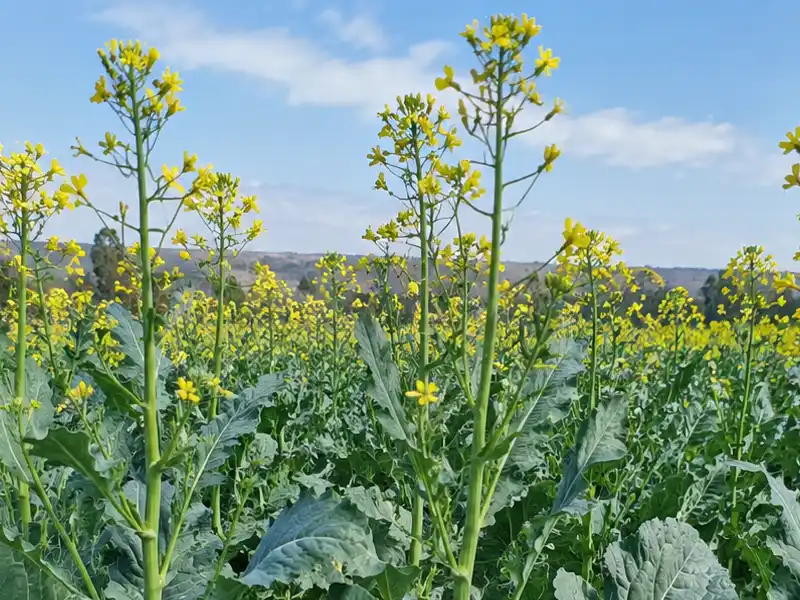
Cappucchino is a vigorous biofumigant and green manure cover crop selected for rapid growth and very high biomass production. A tall-growing Brassica carinata variety, it produces dense waxy blue-green foliage and is designed to be grown as a rotational cover crop before being finely chopped and incorporated into the soil.
As a biofumigant brassica, Cappucchino produces glucosinolates within its plant tissue. When the crop is finely macerated and rapidly incorporated into moist soil, breakdown of this plant material releases biologically active compounds. This makes Cappucchino particularly useful in intensive vegetable rotations where growers want to combine biofumigation, green manure, biomass production and soil cover in a single crop.
- Specialist Brassica carinata biofumigant cover crop.
- Also known as Abyssinian or Ethiopian mustard.
- Very high biomass-producing green manure crop.
- Produces glucosinolate-rich plant material for biofumigation.
- Can help suppress selected soil-borne pathogens when correctly managed and incorporated.
- Provides dense ground cover and helps protect soil from rainfall runoff.
- Provides habitat for beneficial insects while growing.
- Suitable for commercial vegetable rotations, soil improvement and cover cropping.
- Recommended sowing rate approximately 15 kg/ha.
- Can be planted throughout the year in suitable conditions, with cooler months generally preferred.
Plant Details
- Plant Type: Annual brassica biofumigant and green manure crop
- Botanical Name: Brassica carinata
- Variety: Cappucchino
- Common Names: Abyssinian mustard, Ethiopian mustard
- Growth Habit: Tall, vigorous and upright
- Plant Height: Approximately 1–1.8 m under suitable conditions
- Foliage: Waxy blue-green foliage with a broccoli-like appearance
- Flowers: Pale yellow
- Biomass: Very high biomass potential under favourable growing conditions
- Position: Full sun
- Best Growing Conditions: Performs particularly well during cooler growing periods with adequate moisture and fertility
Best Uses
- Biofumigation
- Green manure
- High-biomass cover cropping
- Commercial vegetable rotations
- Soil organic matter production
- Protecting bare soil from rainfall and runoff
- Maintaining living ground cover between cash crops
- Supporting beneficial insect populations
Why Grow Cappucchino?
Cappucchino combines the benefits of a high-biomass green manure with the biofumigation potential of a glucosinolate-rich brassica.
The crop develops substantial above-ground plant material relatively quickly. When incorporated, this biomass returns organic material to the soil while providing the opportunity for biofumigation.
Queensland Department of Agriculture and Fisheries information identifies Cappucchino for use as a biofumigant, green manure crop, protection against soil loss from rainfall runoff and as a nursery for beneficial insects.
For growers using planned crop rotations, Cappucchino can therefore perform several functions during the period between commercial crops rather than leaving soil bare.
How Biofumigation Works
Brassica plants naturally contain compounds known as glucosinolates. When plant cells are crushed, these compounds can break down into biologically active compounds including isothiocyanates.
For biofumigation to work effectively, simply growing a brassica crop is not enough. The crop needs to produce adequate biomass and then be finely chopped or macerated and rapidly incorporated into moist soil so the breakdown products are released within the soil profile.
Good biomass production, fine chopping, rapid incorporation, adequate soil moisture and correct timing are therefore important parts of the biofumigation process.
Biofumigation & Soil-Borne Disease
Queensland Department of Agriculture and Fisheries information identifies potential suppression of several soil-borne pathogens from Cappucchino biofumigation, including Macrophomina phaseolina, Verticillium dahliae, Pythium spp., Fusarium spp. and Rhizoctonia spp.
Performance will depend heavily on crop growth and incorporation technique, and disease suppression should not be assumed under all conditions.
Cappucchino should not be selected primarily for nematode control. Queensland information reports low nematode control, and susceptibility can vary according to nematode species. Where nematode management is the primary objective, select a cover crop based on the specific nematode present and appropriate local agronomic advice.
Sowing Information
- Recommended Sowing Rate: Approximately 15 kg/ha
- Equivalent Rate: Approximately 1.5 kg per 1,000 m²
- Position: Full sun
- Planting: Can be planted throughout the year in suitable Australian growing conditions
- Preferred Season: Generally performs best during cooler growing periods
- Moisture: Adequate soil moisture is important for establishment and biomass production
- Fertility: Responds to moderate fertility where high biomass production is required
Sowing Rate & Coverage
Sowing rates are a guide. Actual seed requirements may vary according to seedbed preparation, sowing equipment, germination, soil moisture and establishment conditions.
When to Sow Cappucchino in Australia
Queensland DAF describes Cappucchino as suitable for year-round planting, with the best performance generally during cooler months. The climate guidance above should be adjusted for local frost, rainfall and irrigation conditions.
How to Sow Cappucchino Seeds
- Select a sunny site and determine where Cappucchino fits within the crop rotation.
- Control established weeds before sowing.
- Prepare a reasonably fine, firm seedbed for uniform establishment.
- Broadcast evenly or sow with suitable drilling equipment at approximately 15 kg/ha.
- Cover seed lightly and ensure good seed-to-soil contact.
- Maintain adequate moisture during germination and establishment.
- Manage fertility and irrigation to encourage strong biomass production.
- Plan incorporation before the following cash crop so there is sufficient time for plant residues to break down.
When to Incorporate Cappucchino
Queensland DAF provides indicative incorporation timings of approximately:
- Summer: 64 days after planting
- Winter: 97 days after planting
These timings demonstrate how strongly seasonal temperatures can affect crop development. Actual incorporation timing should also consider crop growth stage, biomass, weather conditions and the requirements of the following crop.
For biofumigation, incorporation technique is particularly important. The objective is to rupture as much plant tissue as practical and incorporate it into the soil rapidly.
How to Incorporate for Biofumigation
- Grow the crop to produce a substantial quantity of healthy biomass.
- Ensure adequate soil moisture around the intended incorporation period.
- Finely chop, flail or macerate the crop to rupture the plant tissue.
- Incorporate the chopped material into the soil as quickly as practical.
- Mix the plant material thoroughly through the upper soil profile.
- Firm or roll the soil where appropriate to reduce rapid loss of volatile compounds.
- Allow sufficient time for residues to decompose before establishing the following crop.
Green Manure & Biomass Production
Even where biofumigation is not the primary objective, Cappucchino is valuable as a high-biomass green manure crop.
Queensland trials have recorded very high fresh biomass production under favourable conditions. Actual biomass will vary substantially according to climate, soil fertility, irrigation, planting density and crop duration.
When incorporated, the crop returns a substantial quantity of plant material to the soil. This makes Cappucchino useful for growers seeking a productive cover crop between vegetable or other intensive cropping cycles.
Soil Cover & Beneficial Insects
Rapid crop development provides living ground cover that can help protect exposed soil from rainfall impact and runoff.
Queensland DAF also identifies Cappucchino as providing nursery habitat for beneficial insects. Where flowering is allowed, its pale yellow brassica flowers can contribute additional habitat within diversified farming systems.
Management
- Maintain adequate moisture during establishment and biomass production.
- Moderate fertility can substantially improve biomass production.
- Monitor the crop for common brassica insect pests.
- Potential pests include cabbage cluster caterpillar, diamondback moth, aphids and whitefly.
- Powdery mildew can be an important disease under favourable conditions.
- Very heavy biomass may be susceptible to lodging.
- Plan the incorporation date before sowing the following cash crop.
- For biofumigation, finely chop and rapidly incorporate the crop rather than leaving coarse residues on the surface.
- Do not rely on Cappucchino as a stand-alone nematode control strategy.
Quick Growing Guide
Important Notes
- Cappucchino is a specialist Brassica carinata biofumigant and green manure variety.
- The recommended sowing rate is approximately 15 kg/ha.
- Biofumigation performance depends on producing adequate biomass and correctly macerating and incorporating the crop.
- Allow sufficient time between incorporation and establishment of the following crop.
- Results against individual soil-borne pathogens can vary considerably between sites and growing conditions.
- Cappucchino provides low nematode control and should not be selected as a general-purpose nematode control crop.
- Monitor for brassica pests and diseases during crop development.
Reviews
There are no reviews yet.