
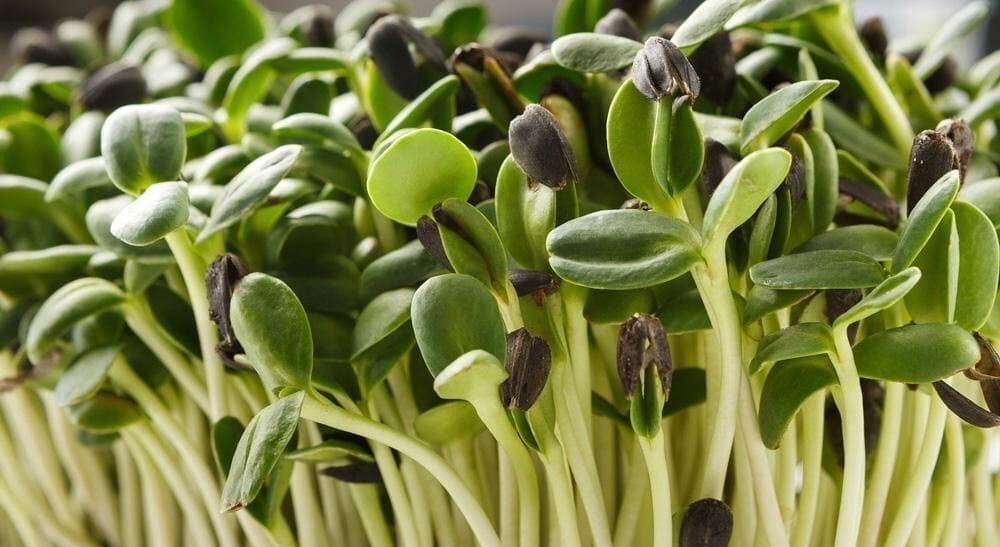
Sunflower microgreens are one of the easiest and most rewarding microgreens to grow at home. They produce thick, crunchy stems and broad green leaves with a mild, nutty flavour. In around 9–12 days, you can harvest fresh sunflower microgreens from a small growing tray on your kitchen bench, windowsill or indoor growing shelf.
If you’re wondering how to grow sunflower microgreens, the good news is that you do not need a garden, expensive equipment or previous growing experience. With quality sunflower microgreen seeds, a shallow tray, a suitable growing medium and regular watering, you can successfully grow sunflower microgreens indoors throughout the year.
This beginner-friendly guide explains exactly how to grow sunflower microgreens at home, including which sunflower seeds to use, whether sunflower seeds need soaking, how much seed to use, which growing medium works best, how long to keep the tray in blackout, why weighting the tray can help, when to expose your microgreens to light, how to remove seed hulls, when to harvest and how to store your fresh sunflower microgreens.
Sunflower Microgreens at a Glance
What Are Sunflower Microgreens?
Sunflower microgreens are young sunflower seedlings harvested while they are still small and tender. They are usually grown from sunflower seeds and harvested around the cotyledon stage, after the two seed leaves have opened and before the plant becomes a mature sunflower.
Unlike tiny brassica microgreens, sunflower microgreens develop relatively thick stems and large seed leaves. They have a distinctive mild, nutty and slightly crunchy flavour, making them substantial enough to use in salads, sandwiches, wraps and other meals.
Sunflower seeds can retain their dark seed hulls after germination. This is normal, and the hulls usually loosen as the seedlings grow and are exposed to moisture and light.
Why Grow Sunflower Microgreens?
Sunflower is a popular microgreen because it produces a substantial crop with a distinctive texture and mild flavour. Research on sunflower microgreens describes them as having a nutty, slightly sweet flavour with a crunchy, juicy texture.
- Thick, crisp stems and broad green leaves
- Mild, nutty flavour
- Usually ready within approximately 9–12 days
- Suitable for indoor growing
- Useful in salads, sandwiches and wraps
- Can be grown throughout the year under suitable indoor conditions
- Produces a very different crop from small-seeded microgreens
How to Grow Sunflower Microgreens in 7 Simple Steps
- Soak the sunflower seeds for approximately 8 hours.
- Prepare a shallow tray with moist growing medium.
- Sow the seeds evenly across the tray.
- Cover and weight the tray during germination.
- Remove the cover and expose the seedlings to bright light.
- Water regularly and remove loose seed hulls as the plants grow.
- Harvest the sunflower microgreens when they are mature and ready.
Under suitable indoor conditions, sunflower microgreens are generally ready to harvest in approximately 9–12 days from sowing. The exact timing can vary depending on temperature, light, seed quality and growing conditions.
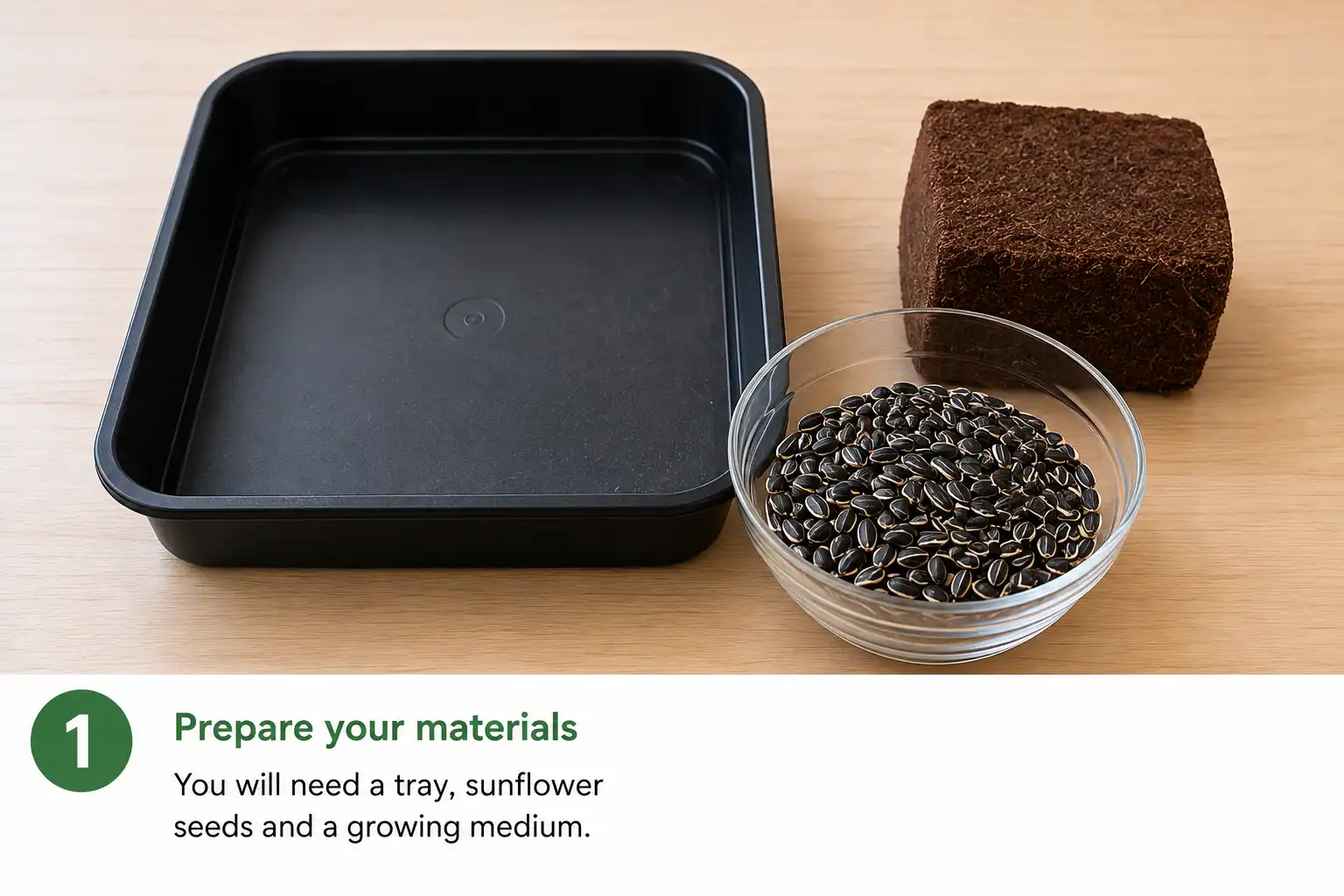
What You Need to Grow Sunflower Microgreens at Home
- Black sunflower microgreen seeds
- A shallow growing tray with drainage holes
- A second tray or blackout cover
- A suitable growing medium such as coco coir or quality potting mix
- A spray bottle or gentle watering bottle
- Clean water
- A bright windowsill or LED grow light
- A clean weight or second tray for the blackout stage
- Clean scissors or a sharp knife for harvesting
Which Sunflower Seeds Are Best for Microgreens?
Choose untreated sunflower seeds intended for sprouting or microgreen production. Black oil sunflower seeds are commonly used for growing sunflower microgreens because they germinate well and produce vigorous seedlings.
Avoid using roasted, salted, flavoured or otherwise processed sunflower seeds. If purchasing sunflower seeds specifically for microgreens, check that they are suitable for growing and have not been treated with chemicals that make them unsuitable for edible sprouting or microgreen production.
How Much Sunflower Seed for a 10 x 10 Inch Tray?
For a standard 10 x 10 inch microgreen tray, start with approximately 50–60 grams of sunflower seeds.
Sunflower seeds are considerably larger than broccoli, radish and many other microgreen seeds, so it is better to measure them by weight rather than by tablespoon.
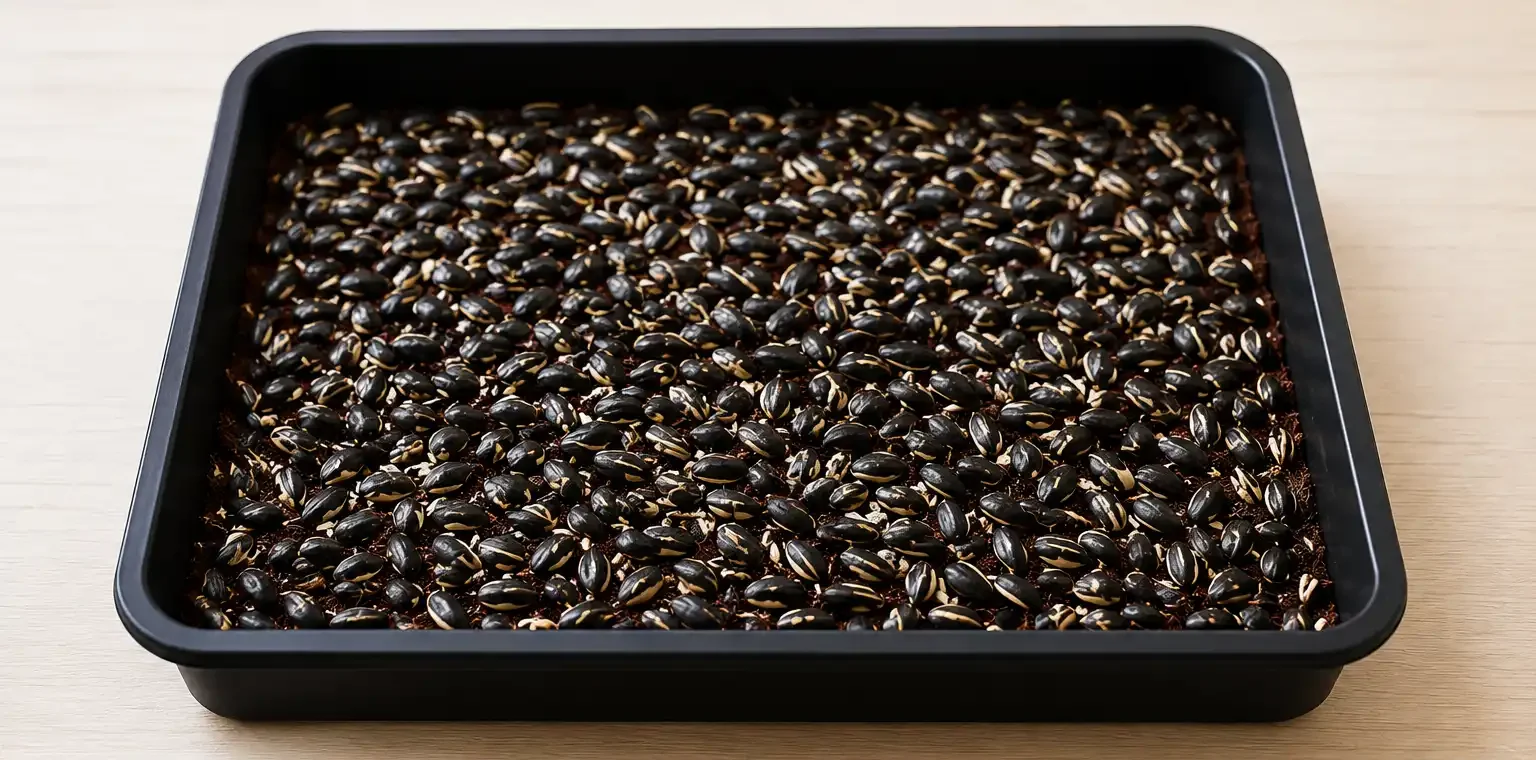
Spread the seeds in a dense, even layer across the growing medium. The seeds should be close together, but avoid creating large piles of seeds on top of one another.
The ideal sowing rate can vary depending on the sunflower seed variety, seed size and growing system. If your first tray is overcrowded or has poor airflow, reduce the amount slightly for the next tray.
Best Growing Medium for Sunflower Microgreens
Sunflower microgreens can be grown in several different growing mediums. The most suitable option depends on your growing setup and whether you prefer a soil-based or soilless system.
Coco Coir
Coco coir is a popular growing medium for microgreens because it holds moisture while still providing a relatively clean growing surface.
It also provides enough support for sunflower seedlings as their stems become larger and heavier.
Organic Potting Mix
A fine, quality potting mix can also be used for sunflower microgreens. Choose a clean, fine-textured growing medium rather than a chunky mix containing large pieces of bark or other material.
Hemp Mats
Hemp mats provide a tidy soilless growing option. They can be useful for growers who prefer to avoid loose growing media during harvesting.
Reusable Microgreen Mats
Reusable mats can also be used with sunflower microgreens when they are designed for microgreen production. Make sure the mat can provide adequate moisture and support for the relatively large sunflower seedlings.
Best Temperature for Growing Sunflower Microgreens
Sunflower microgreens generally perform well in warm indoor conditions. A temperature around 18–24°C is a practical target for many home growing setups.
Very warm conditions can cause the growing medium to dry out quickly and can increase the risk of mould if airflow is poor. Cooler conditions can slow germination and extend the time required to reach harvest.
Try to keep the tray away from strong heating, air-conditioning vents and areas with large temperature fluctuations.
Step 1: Soak the Sunflower Seeds
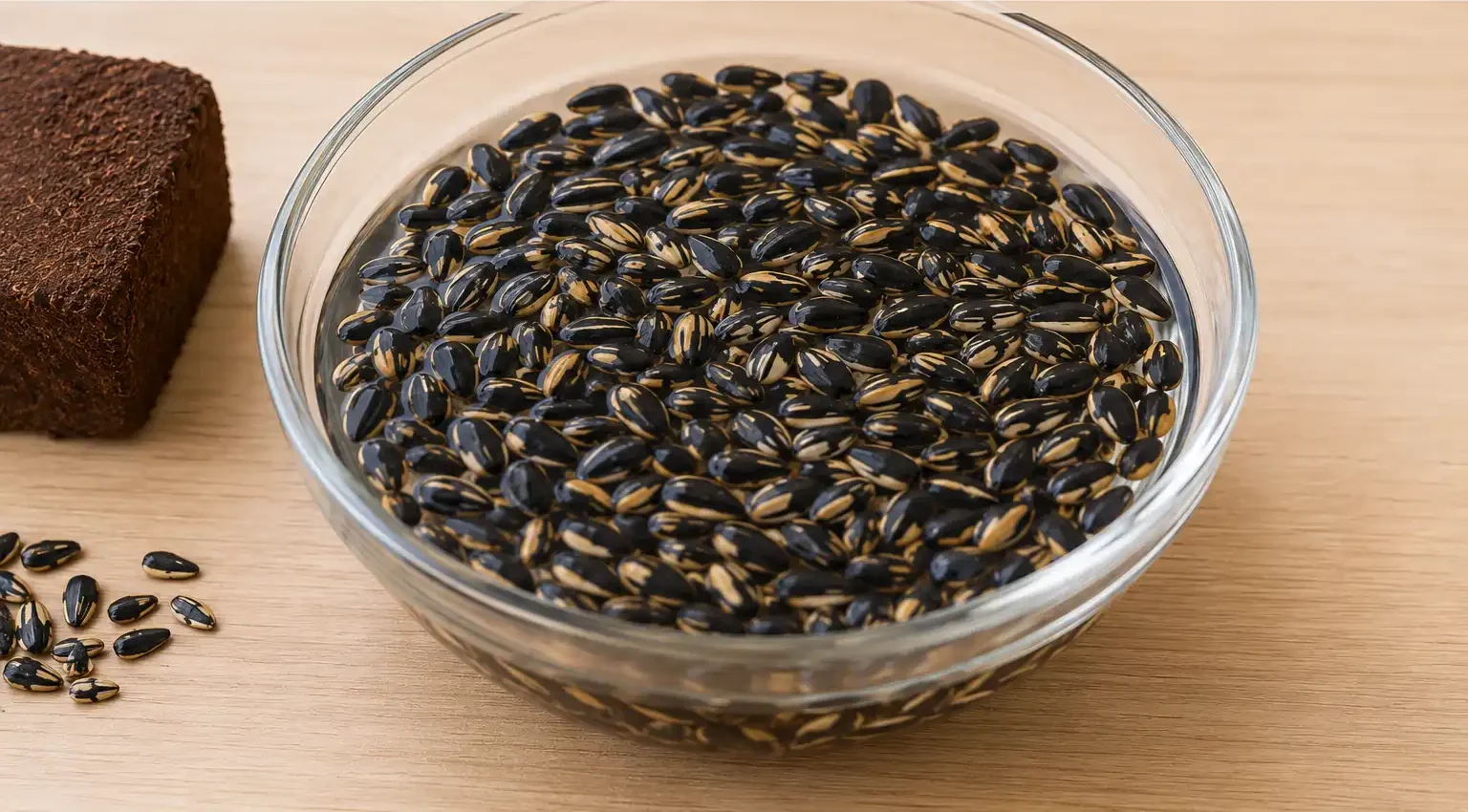
Unlike many small microgreen seeds, sunflower seeds benefit from soaking before sowing.
Place the sunflower seeds in a clean container and cover them with clean water. Allow them to soak for approximately 8 hours.
Soaking helps hydrate the larger seeds and can encourage more even germination. University of Florida guidance specifically lists sunflower as a microgreen seed that benefits from an approximately 8-hour soak.
After soaking, drain the seeds thoroughly.
Rinse them with clean water if necessary and allow excess water to drain away before sowing.
Do not leave the soaked seeds sitting in water for an unnecessarily long period, as the goal is to hydrate the seeds rather than keep them submerged throughout germination.
Step 2: Prepare Your Tray
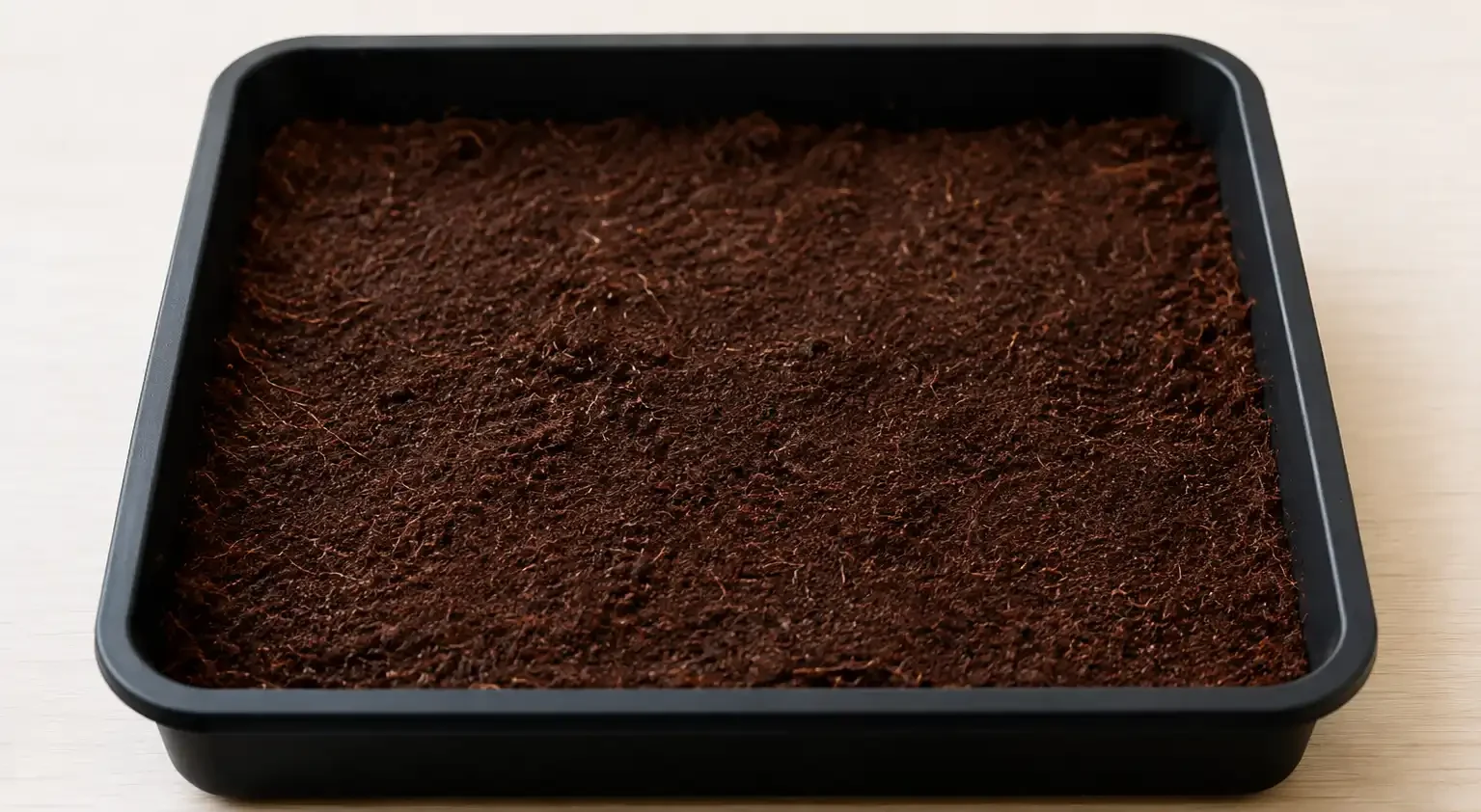
Start with a clean shallow tray. If using coco coir or potting mix, add approximately 2–4 cm of moist growing medium to the tray.
Level the surface gently with your hand or a flat tool.
The growing medium should be evenly moist but not saturated with standing water.
If using a growing mat, place it flat inside the tray and moisten it thoroughly before sowing.
Step 3: Sow the Sunflower Microgreen Seeds
Spread the soaked sunflower seeds evenly across the surface of the growing medium.
Try to create a single dense layer of seeds covering most of the tray. Avoid leaving large empty areas while also avoiding heavy piles of seeds.
Gently press the seeds into the surface so they make good contact with the growing medium.
Once the seeds are evenly distributed, lightly mist them with clean water.
Step 4: Cover and Weight the Tray
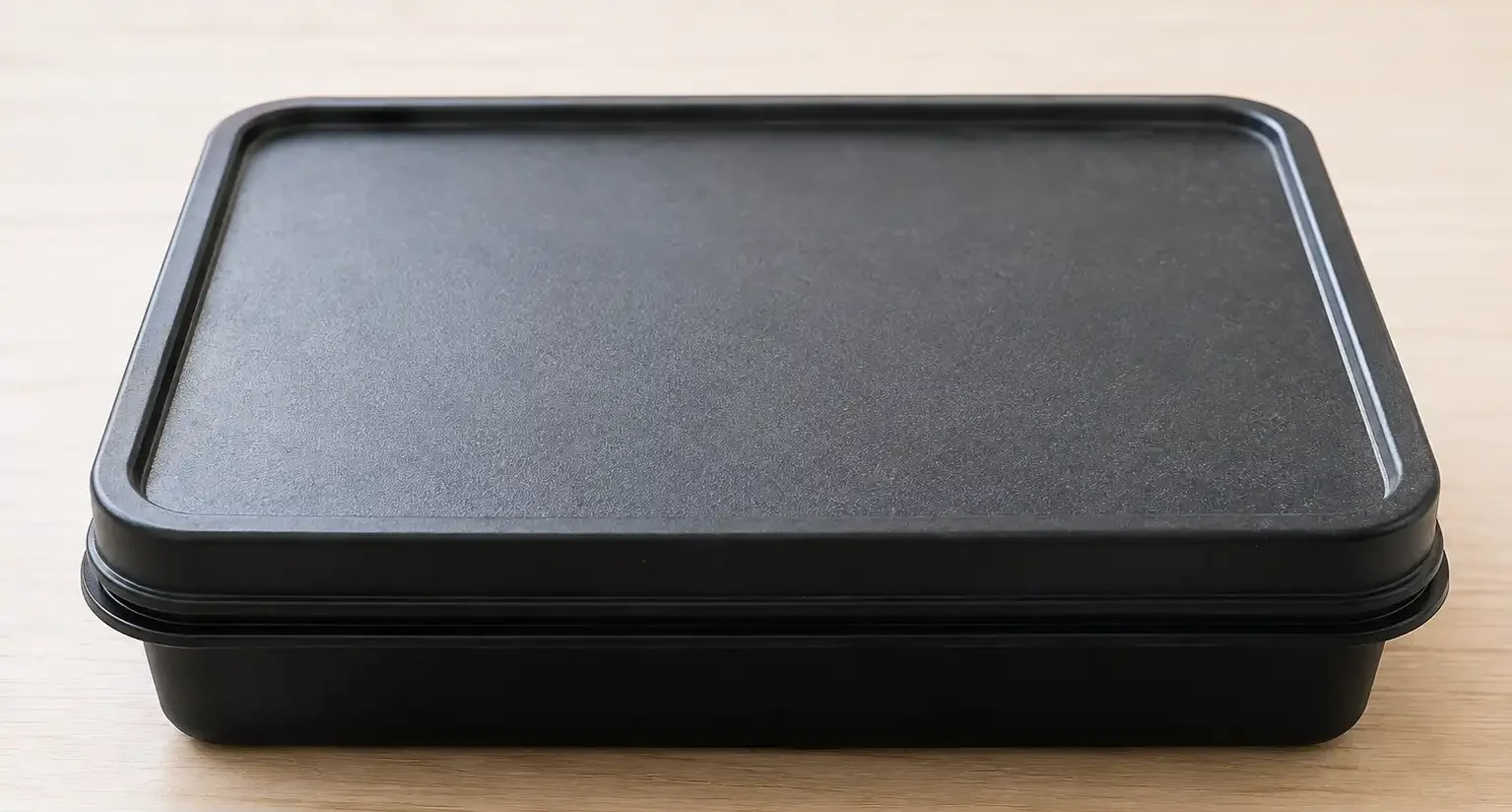
Place a second tray or suitable blackout cover over the seeded tray.
For sunflower microgreens, adding some weight on top of the cover can be particularly useful. Sunflower seeds are large and can benefit from pressure during germination. Penn State Extension notes that weighting sunflower trays can help maintain contact between the seeds and growing medium and can also encourage seed hulls to detach from the young plants.
Use a clean, stable weight that provides gentle pressure without crushing the seeds or damaging the tray.
Keep the tray covered and in a dark location for approximately 3–4 days.
Check the tray regularly to make sure the growing medium remains moist. If necessary, mist lightly.
Avoid excessive watering during the blackout period because excessive moisture and poor airflow can encourage mould.
Step 5: Expose the Sunflower Microgreens to Light
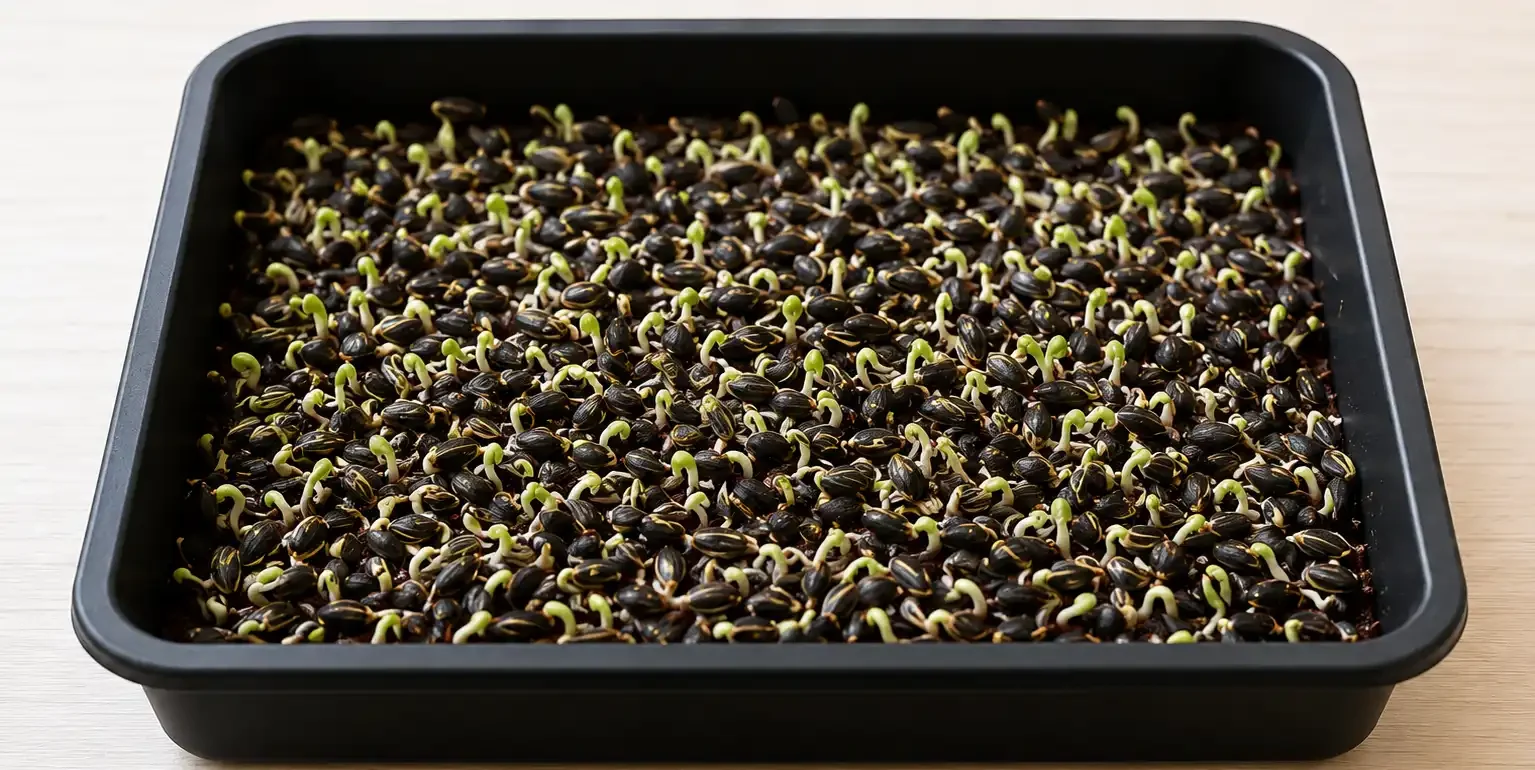
Once most of the sunflower seeds have germinated and the seedlings are pushing upward, remove the blackout cover.
Move the tray into a bright location such as a sunny windowsill or place it underneath an LED grow light.
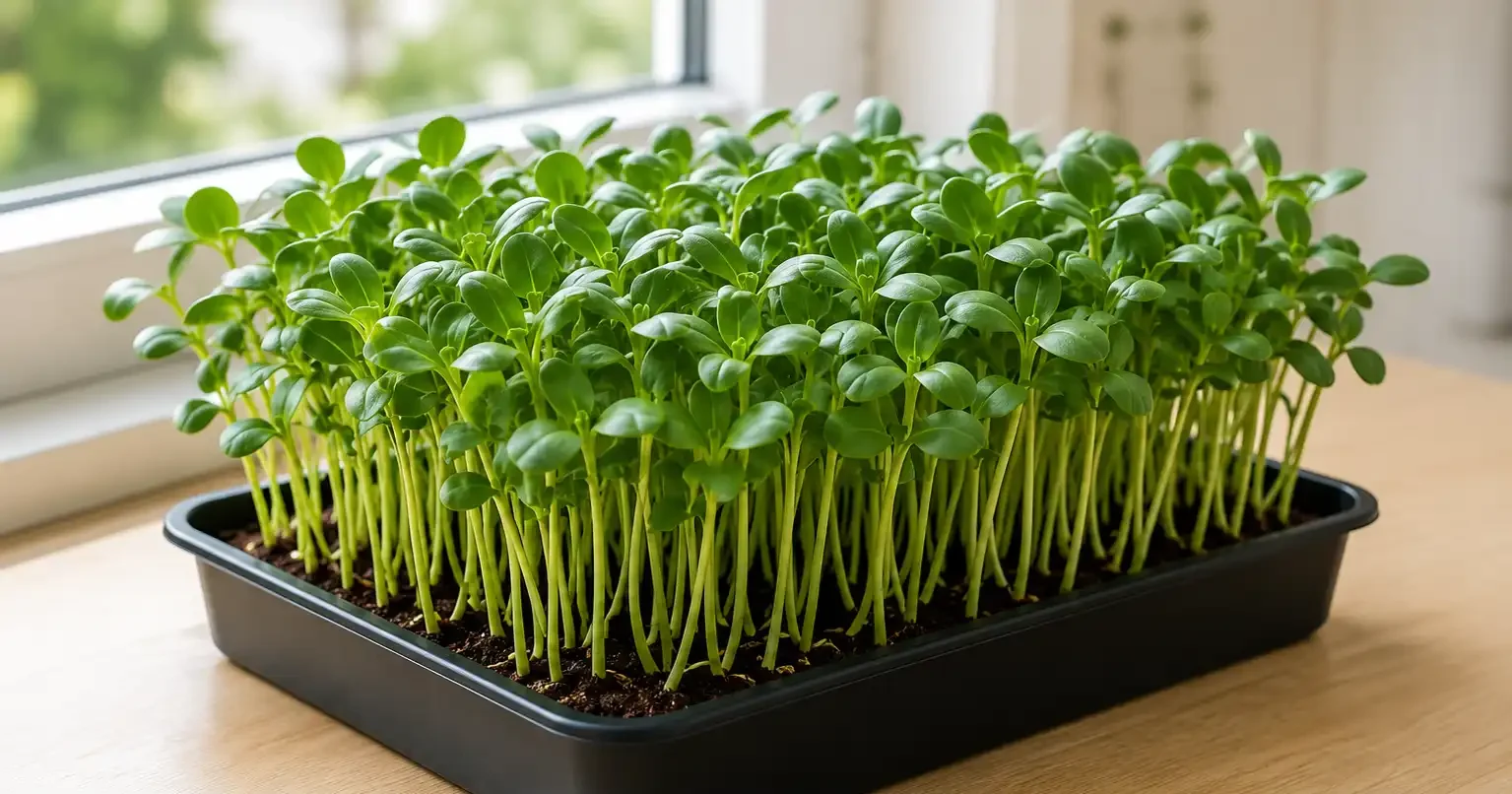
Sunflower microgreens need light after germination to develop their characteristic green leaves. Microgreens grown indoors can use sunlight or artificial grow lighting, with good light exposure helping prevent weak, elongated growth.
The seedlings may initially look pale or yellow after their time in darkness. This is normal.
After exposure to light, the young sunflower microgreens should gradually develop green leaves.
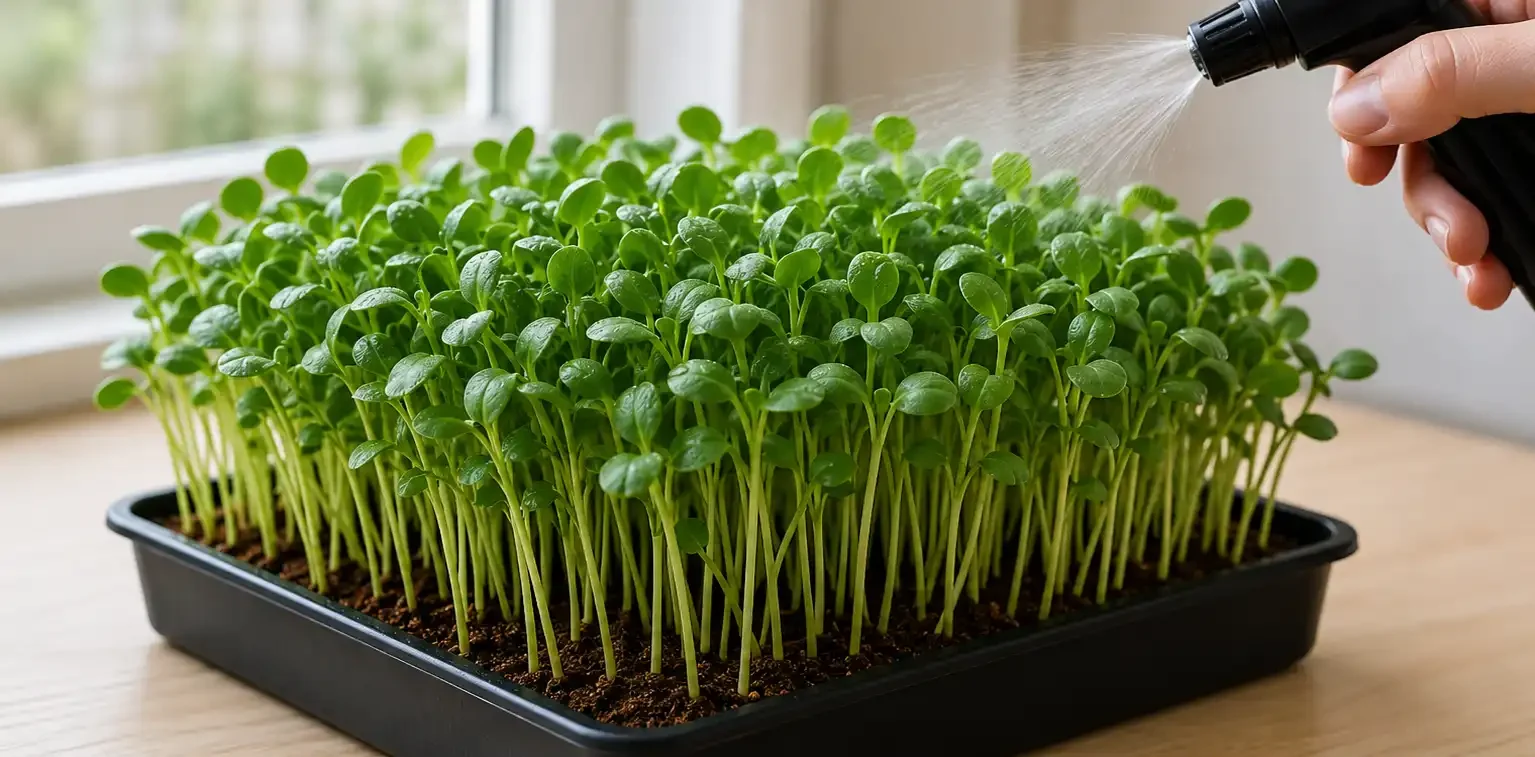
Step 6: Water and Grow the Microgreens
Continue growing the sunflower microgreens in bright light for several more days.
Keep the growing medium evenly moist, but avoid keeping the tray waterlogged.
Where possible, bottom watering can help keep the foliage drier and reduce unnecessary moisture around the leaves.
Check the tray regularly because sunflower microgreens can use water relatively quickly once they have developed their larger leaves.
For best results:
- Keep the growing medium moist but not waterlogged
- Provide good airflow around the tray
- Give the plants plenty of bright light
- Avoid overcrowding the tray
- Do not allow the growing medium to dry out completely
- Rotate the tray if light is coming strongly from one direction
Good airflow and careful watering are particularly important because excessive moisture can increase the risk of mould in dense microgreen crops.
What to Do About Sunflower Seed Hulls
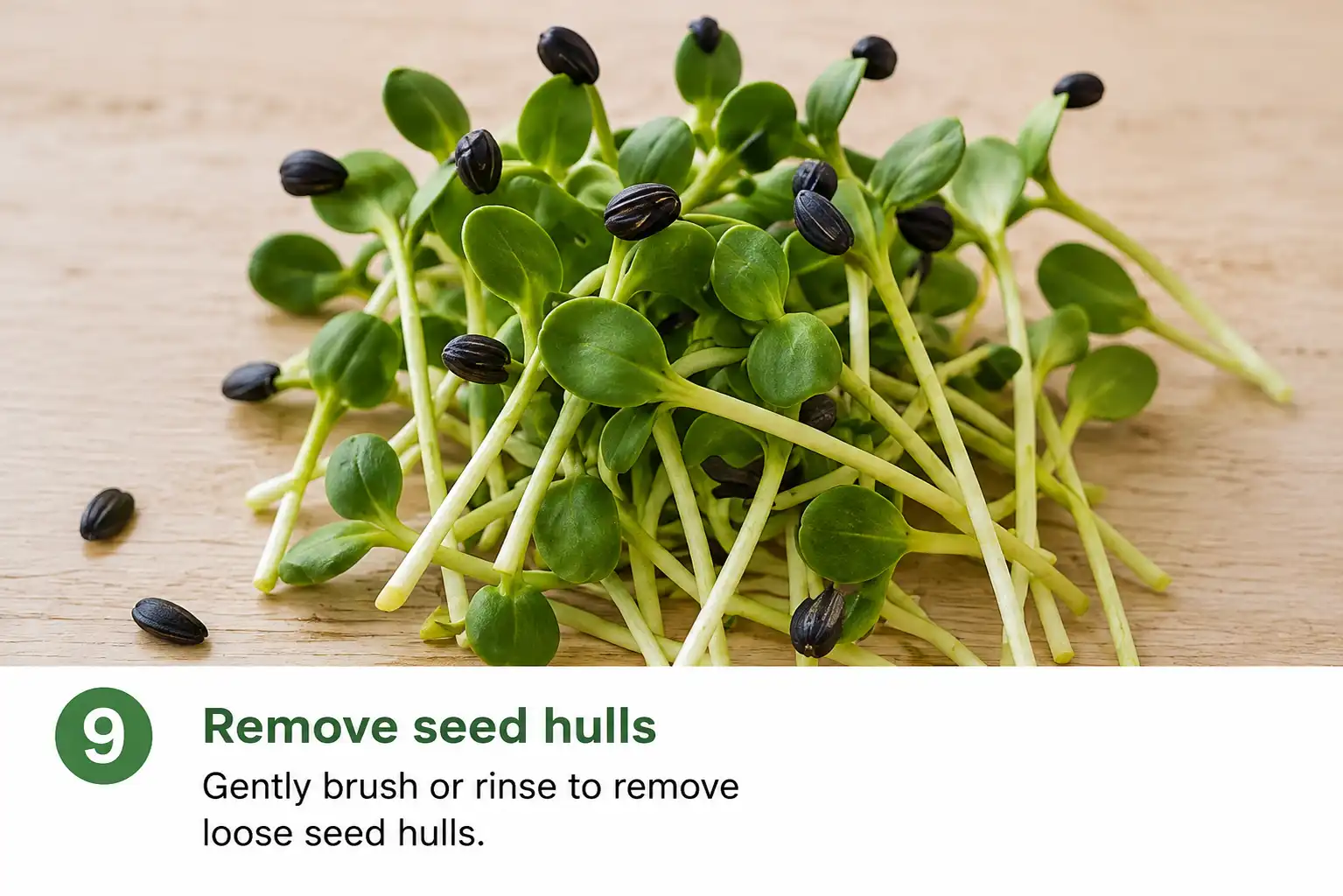
One of the most noticeable differences between sunflower microgreens and smaller microgreens is the presence of seed hulls.
The black or grey sunflower seed shells can remain attached to the young leaves after germination.
This is normal and does not necessarily mean there is a problem with your crop.
As the plants grow, moisture and light can help loosen the hulls. You can also gently mist the microgreens and carefully remove stubborn loose hulls by hand.
Avoid aggressively pulling hulls from firmly attached seedlings because this can damage the young plants.
Sunflower hulls can be particularly persistent, which is another reason why a weighted blackout period can be useful during early growth.
Step 7: When to Harvest Sunflower Microgreens
Sunflower microgreens are generally ready to harvest around 9–12 days after sowing, although the exact timing can vary depending on growing conditions.
Look for:
- Strong, upright stems
- Fully opened seed leaves
- Healthy green leaves
- A substantial, crunchy texture
- Few remaining attached seed hulls
Many growers harvest sunflower microgreens around the cotyledon stage, before the plants become more mature and develop their first true leaves.
The exact ideal harvest point depends on your preferred flavour, texture and intended use.
How to Harvest Sunflower Microgreens
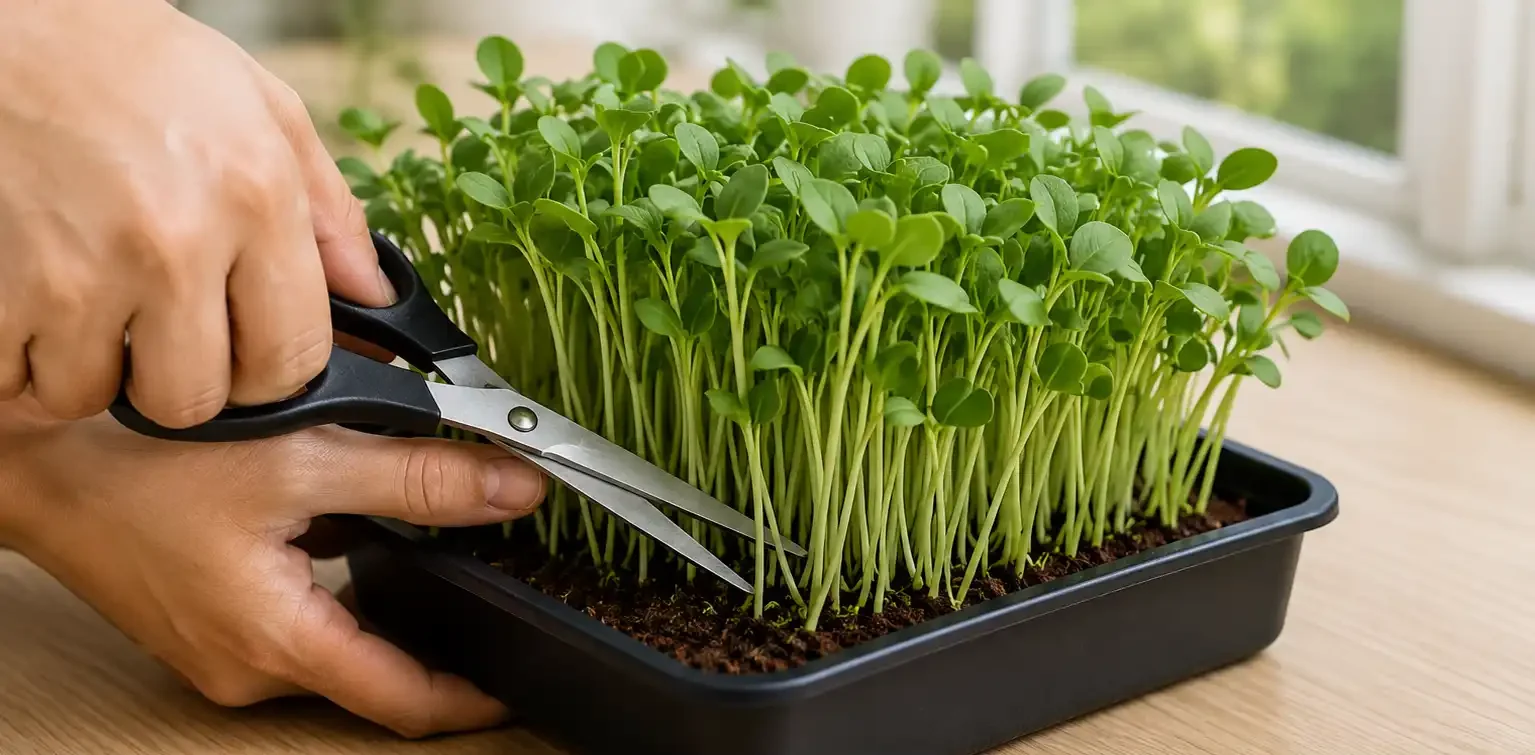
Use clean scissors or a sharp knife to cut the sunflower microgreens just above the growing medium.
Harvest carefully so you do not pull growing medium or roots into the edible portion.
For the freshest flavour and texture, harvest the microgreens shortly before you plan to eat them.
If harvesting the entire tray, cut the plants evenly across the surface
After harvesting, remove any remaining seed hulls or damaged leaves before storing.
How Much Can You Harvest from One Tray?
A standard 10 x 10 inch tray can produce a substantial handful of sunflower microgreens, although the exact yield varies considerably.
Yield depends on:
- Seed variety
- Seed size and quality
- Sowing density
- Growing medium
- Light levels
- Temperature
- Watering
- Harvest timing
For home growers, it is generally better to aim for a healthy, well-aerated crop rather than overcrowding the tray simply to maximise yield.
How to Store Sunflower Microgreens
Sunflower microgreens are perishable and are best used soon after harvesting.
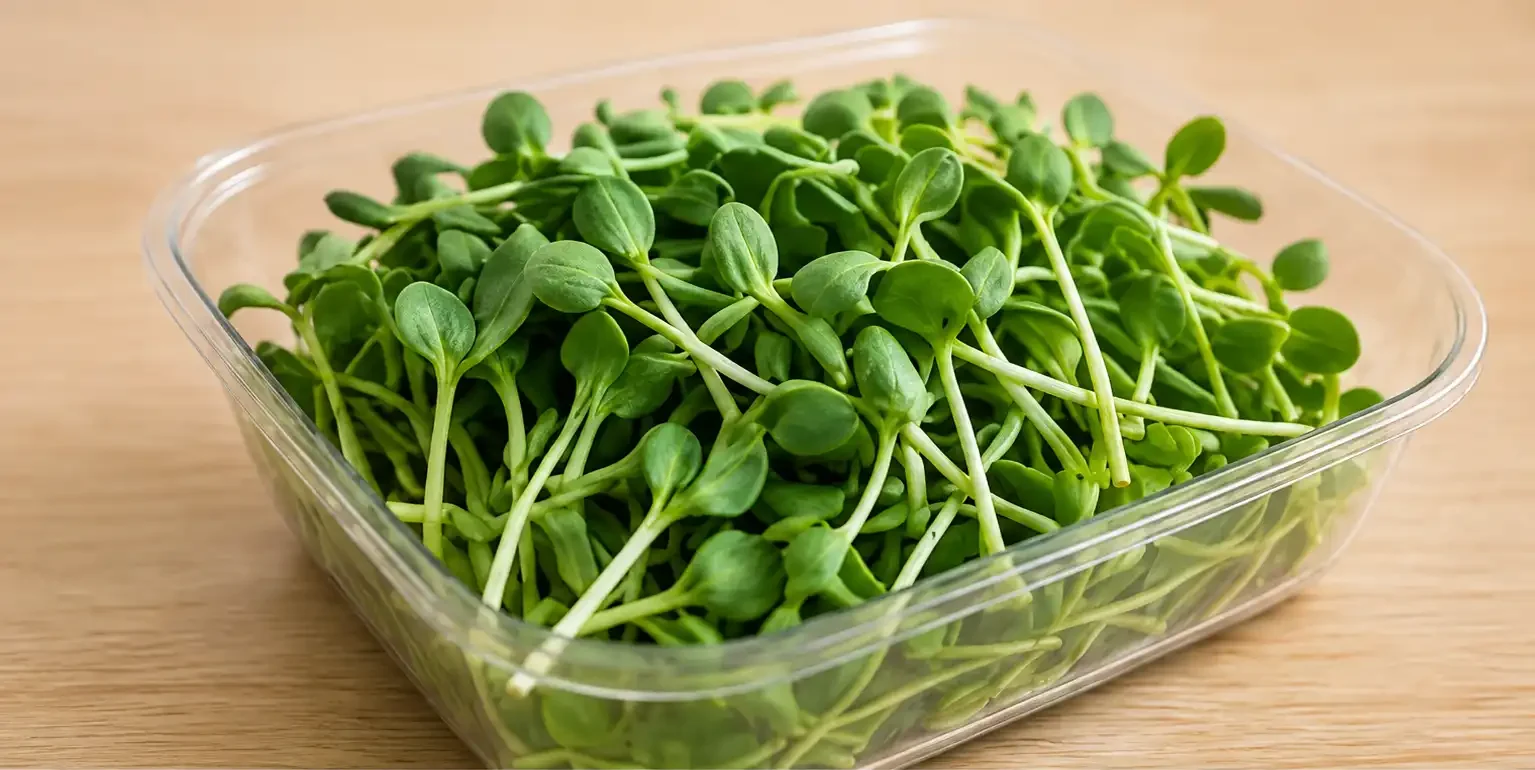
If you have extra microgreens, place them in a clean container and refrigerate them.
For best storage:
- Harvest using clean scissors or a clean knife
- Remove excess growing medium
- Keep the harvested microgreens as dry as practical
- Use a clean container with some ventilation
- Refrigerate promptly
- Use within several days for the best quality
University extension guidance notes that microgreens have a relatively short shelf life and recommends refrigerated storage; storage life can vary depending on the crop and handling conditions.
If you wash your microgreens before storage, excess moisture can shorten their shelf life. For best quality, many growers prefer to keep harvested microgreens dry and rinse them immediately before eating.
How to Use Sunflower Microgreens
Sunflower microgreens have a mild, nutty flavour and crunchy texture that makes them particularly versatile in everyday meals.
Try them:
- In fresh salads
- On sandwiches and wraps
- On avocado toast
- With scrambled eggs or omelettes
- In burgers
- Added to grain bowls
- Mixed into fresh salads
- As a topping for soups
- Served alongside roasted vegetables
- Added to wraps and rice bowls
Because sunflower microgreens are larger and crunchier than many small microgreens, they can be used as more than just a garnish.
Sunflower Microgreens vs Sunflower Sprouts
Sunflower microgreens and sunflower sprouts both come from sunflower seed, but they are grown and harvested differently.
Tips for Growing Sunflower Microgreens Indoors
Sunflower microgreens are well suited to indoor growing because they require relatively little space and can be harvested within a couple of weeks.
- Use high-quality sunflower seeds intended for edible growing
- Soak the seeds before sowing
- Use a shallow tray with adequate drainage
- Do not overcrowd the seeds
- Use a weighted blackout period to encourage strong germination
- Provide plenty of light after germination
- Maintain good airflow around the tray
- Water carefully to avoid excessive moisture
- Remove loose sunflower seed hulls as the plants grow
- Start a new tray every few days for continuous harvests
With a simple setup, you can grow fresh sunflower microgreens indoors throughout the year.
Common Problems When Growing Sunflower Microgreens
Sunflower Seed Hulls Are Stuck to the Leaves
Sunflower seeds naturally have relatively large hulls, and some may remain attached to the cotyledons after germination.
Keep the microgreens moist and provide good growing conditions. Loose hulls can often be removed gently by hand.
A weighted blackout period can also help encourage the seedlings to push through the seed hulls.
Mould on Sunflower Microgreens
Mould is commonly associated with excessive moisture, poor airflow and overcrowding.
Improve airflow around the tray, avoid overwatering and make sure your growing equipment is clean before starting a new crop.
Food safety is particularly important with microgreens because they are often eaten raw. Research has identified potential food-safety risks associated with microgreen production, including sunflower microgreens, making clean seeds, equipment and growing practices important.
Yellow Sunflower Microgreens
Yellow or pale seedlings are normal while sunflower microgreens are kept in darkness during germination.
Once the tray is exposed to light, the leaves should gradually become green.
If the plants remain pale or become excessively elongated after being exposed to light, they may not be receiving enough light.
Leggy Sunflower Microgreens
Long, thin and weak stems are usually a sign that the seedlings are not receiving enough light.
Move the tray to a brighter location or use an appropriate LED grow light.
Sunflower Microgreens Are Wilting
Wilting can occur when the growing medium becomes too dry.
Check the tray regularly and provide enough water to keep the growing medium evenly moist.
Avoid allowing the tray to sit in excessive standing water, as overly wet conditions can contribute to root and mould problems.
Frequently Asked Questions
Do sunflower microgreen seeds need to be soaked?
Yes. Sunflower seeds benefit from soaking before sowing. An approximately 8-hour soak is commonly recommended to hydrate the larger seeds and support germination.
How long do sunflower microgreens take to grow?
Sunflower microgreens generally take approximately 9–12 days from sowing to harvest under suitable growing conditions. Temperature, light, seed quality and growing methods can affect the exact timing.
Can sunflower microgreens be grown indoors?
Yes. Sunflower microgreens are well suited to indoor growing. They can be grown on a bright windowsill or under LED grow lights.
How much sunflower seed should I use for a 10 x 10 inch tray?
A useful starting point is approximately 50–60 grams of sunflower seed for a 10 x 10 inch tray. The ideal amount can vary depending on seed size and growing conditions.
Should sunflower microgreens be weighted during blackout?
Weighting can be helpful. Sunflower seeds are relatively large, and placing a suitable weight over the covered tray can improve seed-to-medium contact and encourage stronger germination. It may also help seedlings shed their seed hulls.
How long should sunflower microgreens stay in blackout?
A blackout period of approximately 3–4 days is a useful starting point. The exact timing depends on how quickly the seeds germinate and how the seedlings are developing.
Why do sunflower microgreens have black shells on their leaves?
The black pieces are sunflower seed hulls. They are the outer shells of the seeds and can remain attached to the young cotyledons after germination.
They usually loosen as the plants grow. Moistening the seedlings can help soften the hulls so they can be gently removed.
Can you grow sunflower microgreens without soil?
Yes. Sunflower microgreens can be grown using suitable soilless systems and microgreen mats. Sunflower and other larger seeds can also be grown on moist growing surfaces under appropriate conditions.
How often should I water sunflower microgreens?
There is no single watering schedule that works for every tray. Check the growing medium regularly and water when it begins to dry.
The goal is to keep the growing medium evenly moist without leaving it waterlogged.
Do sunflower microgreens regrow after cutting?
Sunflower microgreens are generally best treated as a single-harvest crop. Once harvested, the remaining roots and growing medium can be composted where appropriate and a new tray can be started.
When should I harvest sunflower microgreens?
Sunflower microgreens are commonly harvested when the cotyledons are fully developed and the plants have reached a useful size, generally around 9–12 days after sowing.
Should sunflower microgreens be washed before eating?
Yes. As with other fresh produce eaten raw, rinse harvested microgreens with clean drinking water before eating. However, if storing them, excess moisture can reduce shelf life, so many growers prefer to rinse immediately before consumption.
Can I grow sunflower microgreens all year round?
Yes. Because sunflower microgreens can be grown indoors, they can generally be produced year-round when suitable light, temperature, water and airflow are available.
Are sunflower microgreens the same as sunflower sprouts?
No. Sunflower sprouts are germinated seeds harvested at an earlier stage, while sunflower microgreens are grown further in a tray and exposed to light so they develop green leaves.
Food Safety When Growing Sunflower Microgreens
Because microgreens are often eaten raw, clean growing practices are important.
Use clean trays and equipment, start with seeds intended for edible growing, use clean water and avoid contaminated growing media.
Wash your hands before handling the seeds and harvested microgreens. After harvesting, rinse the microgreens with clean drinking water before eating.
Microgreens can carry food-safety risks if contaminated during production, and research has specifically investigated pathogen survival in sunflower microgreen growing systems.
If you are growing microgreens for people who are particularly vulnerable to foodborne illness, follow appropriate food-safety guidance and consider whether raw microgreens are suitable for them.
Learning how to grow sunflower microgreens is simple and rewarding. With sunflower seeds, a shallow tray, suitable growing medium and a few minutes of care each day, you can grow thick, crunchy greens at home in around two weeks.
The key differences compared with smaller microgreens are soaking the larger sunflower seeds, using a suitable blackout period and providing enough pressure during germination to encourage strong growth and help the seed hulls detach.
Once you have successfully grown your first tray, you can start a regular growing cycle and enjoy fresh sunflower microgreens in salads, sandwiches, wraps and everyday meals throughout the year.