
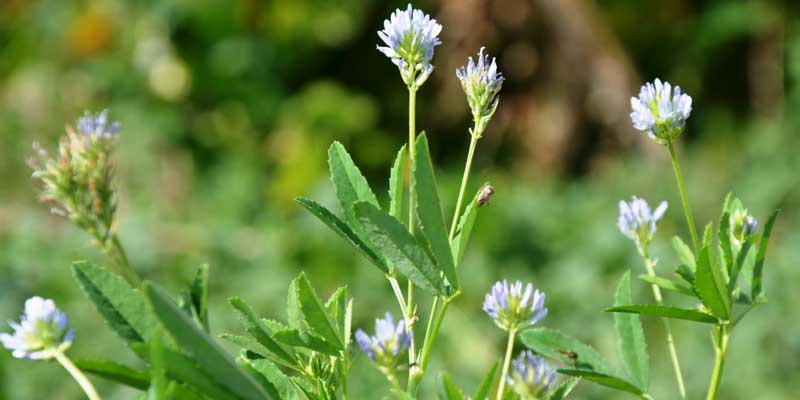
Fenugreek is a fast-growing cool-season legume that improves soil fertility, fixes atmospheric nitrogen, suppresses weeds, and adds valuable organic matter to the soil. Suitable for home gardens, market gardens, orchards, and regenerative farming systems, it is an excellent green manure crop for many Australian growing regions.
Most gardeners know fenugreek as a culinary herb used in curries and spice blends, but it is also an effective green manure and cover crop. As a member of the legume family, fenugreek works with beneficial soil bacteria to capture nitrogen from the atmosphere and store it within plant tissues. When incorporated into the soil, this nitrogen becomes available to future crops.
Fenugreek is particularly useful in Australian gardens because it germinates well in cooler conditions, grows quickly, and produces a dense canopy that helps suppress weeds and protect bare soil from erosion.
Why Use Fenugreek as a Green Manure?
- Fixes atmospheric nitrogen naturally.
- Improves soil fertility without synthetic fertilisers.
- Adds organic matter to increase soil carbon.
- Helps loosen heavy clay soils.
- Protects bare soil from erosion.
- Suppresses weeds through rapid ground cover.
- Supports beneficial soil biology.
Australian Climate Zones and Fenugreek
Fenugreek performs best during the cooler months of the year. Before planting, identify your climate zone using our Australian Climate Zones Guide.
View Australian Climate Zones Here
When to Sow Fenugreek in Australia
| Climate Zone | Best Sowing Time | Comments |
|---|---|---|
| Temperate | February–June | Excellent autumn and winter cover crop. |
| Subtropical | April–July | Best grown during cooler months. |
| Cool / Highland | February–May | Performs well in cold soils. |
| Arid | March–June | Requires moisture during establishment. |
| Tropical | May–July | Best grown during the coolest and driest part of the year. |
Recommended Sowing Rates
The amount of seed required depends on whether you are planting a small garden bed or a larger paddock.
| Area | Seed Required |
|---|---|
| 100 m² | 200–300 g |
| 500 m² | 1–1.5 kg |
| 1,000 m² | 2–3 kg |
| 1 Acre | 8–12 kg |
| 1 Hectare | 20–30 kg |
How to Grow Fenugreek as a Cover Crop
- Remove large weeds and prepare the soil surface.
- Broadcast seed evenly across the area.
- Lightly rake seed into the top 1–2 cm of soil.
- Water thoroughly after sowing.
- Keep soil moist during germination.
- Allow plants to grow for 6–8 weeks.
- Cut and incorporate before flowering.
Fenugreek for Clay Soil Improvement
Many Australian gardeners struggle with compacted clay soils. Fenugreek helps improve soil structure through its extensive root system while adding organic matter when incorporated. Repeated use can improve drainage, aeration, and soil workability.
Fenugreek vs Other Green Manure Crops
Fenugreek is often compared with vetch, field peas, clover, oats, and tillage radish. While oats and ryegrass produce greater biomass, fenugreek offers the advantage of nitrogen fixation and excellent cold-soil germination.
When to Cut and Incorporate Fenugreek
For maximum soil improvement, cut the crop just before flowering. At this stage nutrient levels are high and plant material breaks down rapidly after incorporation.
Wait approximately 2–3 weeks before sowing the next crop to allow decomposition and nutrient release.
Best Crops to Grow After Fenugreek
- Tomatoes
- Corn
- Pumpkins
- Capsicum
- Broccoli
- Cabbage
- Cauliflower
Frequently Asked Questions
Does fenugreek fix nitrogen?
Yes. Fenugreek is a legume that forms a relationship with nitrogen-fixing bacteria, helping improve soil fertility.
Can fenugreek grow in clay soil?
Yes. It is often used to improve heavy soils and increase organic matter levels.
How much fenugreek seed do I need per hectare?
Most growers use 20–30 kg per hectare depending on the desired level of ground cover.
Is fenugreek a good cover crop?
Yes. It provides weed suppression, nitrogen fixation, soil protection, and organic matter production.