
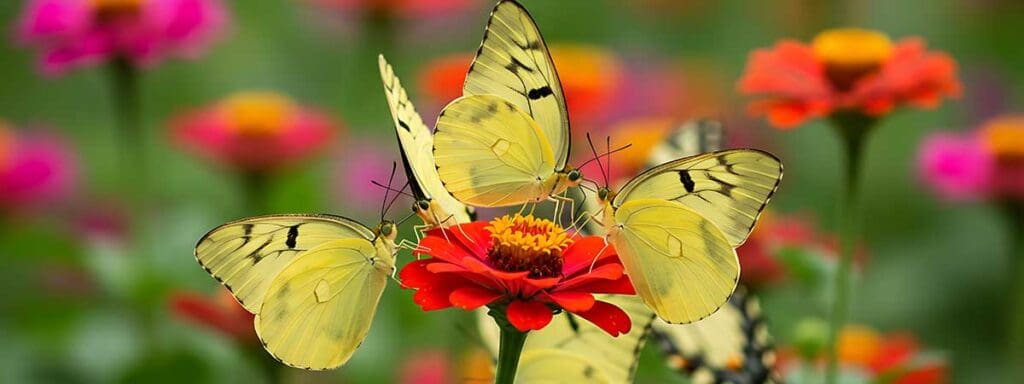
Pollinator-Friendly Gardening
Creating a pollinator-friendly garden in Australia is easier than you might think.
By planting a mixture of flowers that attract bees, butterflies, hoverflies and other beneficial insects, gardeners can provide valuable nectar and pollen while adding colour, texture and diversity to productive and ornamental gardens.
This guide looks at five useful flowering plants for Australian gardens — Lavender, Borage, Sunflower, Marigold and Cornflower — along with practical advice on planting, garden layout, seasonal flowering and habitat for beneficial insects.
Fragrant, long-flowering perennial
Nectar-rich blue annual
Large, highly visible blooms
Bright, compact garden colour
Easy annual with blue flowers
Pollinator plants, bee-friendly flowers, beneficial insect flowers and pollinator-friendly garden flowers.
Understanding Pollinator-Friendly Gardens
Pollinating insects such as bees, butterflies and hoverflies play an important role in garden ecosystems. They contribute to fruit and seed production, while many other beneficial insects help keep pest populations in check.
Research has shown that many flowering plants depend heavily on animal pollination for successful reproduction.
You can read more in this
scientific review of pollinator dependence.
Provide Food
Nectar and pollen-producing flowers give visiting insects food resources throughout the flowering season.
Create Diversity
Different flower shapes, colours, heights and flowering periods create a more varied and useful garden environment.
A better pollinator garden provides a succession of different flowers across the growing season instead of one short burst of blooms.
1. Lavender (Lavandula)

Fragrant Flowers for Sunny Gardens
Lavender is a Mediterranean herb well suited to many Australian gardens. Its fragrant purple flowers attract honeybees, native bees, hoverflies and other visiting insects.
It prefers sunny positions with excellent drainage and generally requires relatively little water once established.
Lavender works particularly well in herb gardens, borders, pots and around the edges of productive garden areas.
Full sun
Very well drained
Moderate while establishing
Borders, herbs and pots
Long-lasting fragrant flowers, a tidy perennial habit, suitability for pots and a useful nectar source while flowering.
2. Borage (Borago officinalis)
A Nectar-Rich Cottage Garden Favourite
Borage is a vigorous annual herb with distinctive star-shaped blue flowers.
Its blooms are rich in nectar and frequently visited by bees, hoverflies and other beneficial insects.
Borage works particularly well in vegetable gardens and informal planting schemes where a relaxed cottage-garden appearance is welcome.
It may also self-seed where growing conditions suit it.
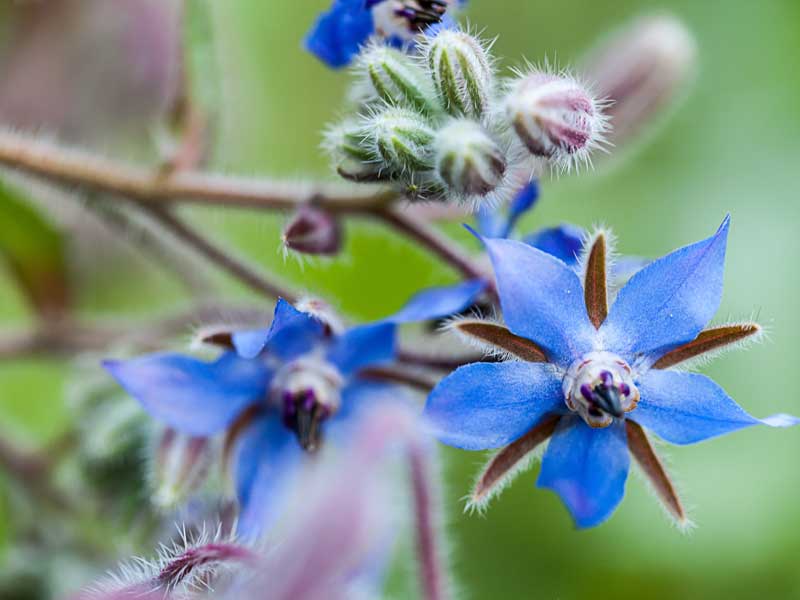
Distinctive star-shaped blooms add strong visual contrast.
Flowers are frequently visited by bees and other insects.
Easy to integrate among productive plantings.
May return naturally where mature seed is allowed to fall.
3. Sunflower (Helianthus annuus)
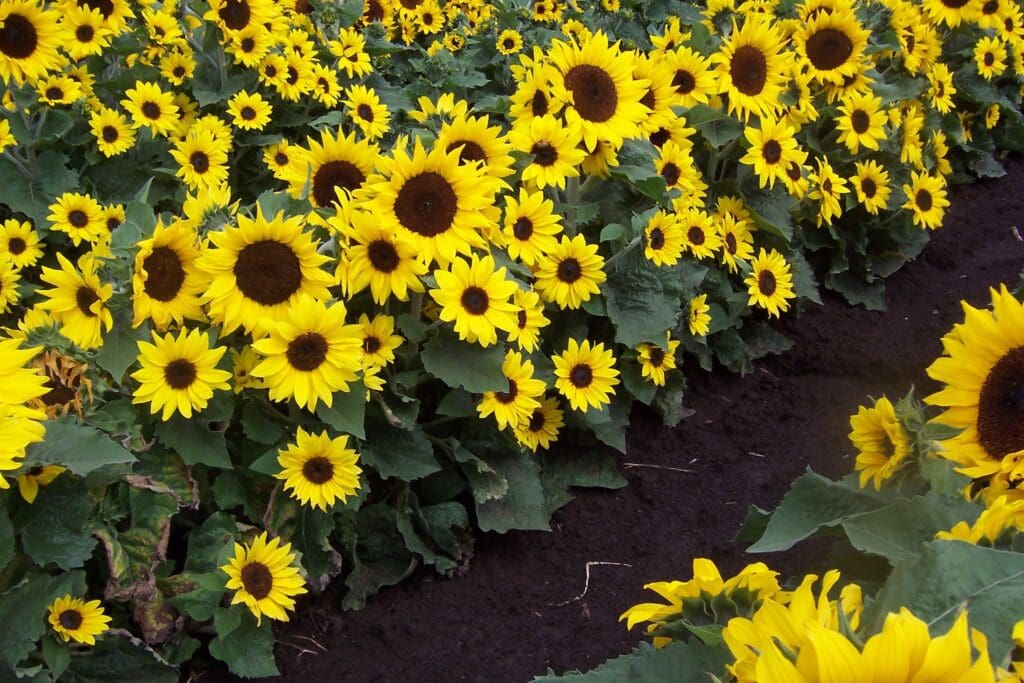
Sunflowers are among the most visually striking annual flowers for a productive garden.
Their large, open flower heads provide pollen and nectar for visiting insects, while their height makes them highly visible within the landscape.
Sunflowers prefer full sun and reasonably fertile, well-drained soil. Taller varieties should be given enough room for their mature growth and large flower heads.
Combine them with medium-height flowers such as borage and lavender, then add lower-growing marigolds and cornflowers around the edges.
Best in an open sunny position
Highly visible to visiting insects
Adds vertical structure
Mature heads may also feed birds
4. Marigolds (Tagetes spp.)

Marigolds are bright, cheerful annuals commonly grown around vegetable gardens, borders and containers.
Their orange, yellow and red flowers add a long period of colour and are visited by bees, hoverflies and other beneficial insects.
Growing at a Glance
Light: Full sun
Soil: Well drained
Water: Regular moisture during active growth
Best for: Beds, borders, pots and vegetable gardens
Marigolds are especially useful where you want compact flowers around the edges of larger vegetable plants without taking up too much space.
Several marigolds planted together usually create a stronger block of colour and flowering resource than isolated individual plants.
5. Cornflower (Centaurea cyanus)
Cornflower, also known as Bachelor’s Button, is an attractive annual with distinctive blue flowers.
The open blooms provide nectar for visiting insects and make cornflower useful in pollinator gardens, cottage gardens and mixed flowering borders.
Cornflowers prefer full sun and reasonably well-drained soil and can tolerate a range of garden conditions.
Why Grow Cornflower?
- Distinctive blue flowers
- Useful nectar-producing blooms
- Excellent cut flower
- Easy annual for borders and beds
- May self-seed where conditions suit

Planting Tips for Pollinator Gardens
A pollinator-friendly garden does not need to be large. Even a few well-planned flowering areas can provide useful food and habitat.
Plant in Groups
Grow several plants of the same type together rather than scattering individual flowers throughout the garden.
Stagger Flowering Times
Combine plants that flower at different times to extend the period when nectar and pollen are available.
Mix Plant Heights
Combine tall, medium and lower-growing species to create a layered planting.
Create Shelter
Include shrubs, low hedges or protected corners where insects can escape strong wind.
Add Water
Provide a shallow water source with stones or other landing surfaces.
Pollinator-Friendly Garden Layout
Think about your pollinator planting in terms of height, clusters and flowering succession.
Create Layers
Tall: Sunflowers
Medium: Lavender and borage
Lower: Cornflowers and marigolds
A layered planting creates greater visual interest and makes good use of the available growing space.
Create Flowering Clusters
Plant noticeable groups or drifts rather than scattering every plant individually.
Keep access paths and some open space between major planting areas for maintenance and airflow.
Place tall flowers towards the rear of a bed, medium-height plants through the centre and shorter flowers along paths and edges.
Companion Planting Strategies
Flowering plants can be integrated directly into vegetable gardens rather than being restricted to separate ornamental beds.
Plant near tomatoes, strawberries or brassicas to add flowers and greater plant diversity.
Works particularly well around sunny garden margins and perennial herb areas.
Easy to fit around vegetable-bed edges and between larger crops.
Use towards the rear of a bed or where their height will not shade smaller crops unnecessarily.
Creating Habitat for Beneficial Insects
Flowers provide food, but an insect-friendly garden can also provide water, nesting opportunities and sheltered places.
Keep Some Natural Areas
Shrubs, grasses, hollow stems and lightly disturbed corners can provide shelter and nesting material.
Leave Some Bare Ground
Some native bees nest in soil, so small undisturbed areas of suitable bare ground can be useful.
Provide Water
Use a shallow dish with stones or landing surfaces so insects can reach water safely.
Reduce Unnecessary Spraying
Avoid broad pesticide use where practical, particularly when flowers are open and insects are actively visiting.
Diverse flowering plants, suitable nesting areas, water and reduced pesticide exposure are generally more important than relying on an insect hotel alone.
Seasonal Planning for Pollinator Gardens
One of the best ways to support visiting insects is to avoid having every plant flower at exactly the same time.
Lavender, cornflower and borage can provide increasing flower availability as temperatures warm.
Sunflowers, marigolds and borage can provide strong warm-season flowering.
Later-flowering lavender and borage may continue producing blooms where local conditions remain suitable.
Flower availability depends heavily on location. Hardy perennial flowers and locally suitable native plants can help bridge seasonal gaps.
Soil and Nutrient Requirements
Pollinator-friendly flowers do not all require exactly the same growing conditions.
Lavender
Prefers free-draining soil and generally does not require highly fertile conditions.
Sunflowers & Marigolds
Perform well in reasonably fertile soil with adequate moisture during active growth.
Borage
Grows strongly in fertile soil with good drainage and adequate moisture.
Cornflower
Tolerates a range of soils provided drainage is reasonably good.
Compost can improve soil structure and organic matter, but avoid assuming every flowering plant wants rich soil. Mediterranean plants such as lavender generally prefer leaner, very well-drained conditions.
Pest and Disease Management
Even pollinator-friendly gardens can experience pests and disease problems.
Aphids
Check tender growth regularly. Predatory insects may also appear where aphid populations are present.
Slugs & Snails
Young seedlings can be vulnerable, particularly during damp conditions.
Caterpillars
Look for chewing damage and inspect leaves regularly before pest numbers become severe.
Fungal Problems
Avoid overcrowding, maintain airflow and minimise prolonged leaf wetness where practical.
If your aim is to attract pollinators and beneficial insects, choose pest-management methods carefully and avoid unnecessary spraying while plants are flowering.
Frequently Asked Questions
Which Flowers Attract the Most Bees?
Borage, sunflowers and lavender are all useful bee-attracting plants when actively flowering.
Can These Flowers Be Grown in Pots?
Yes. All five can be grown in containers if the pot size, drainage, sunlight and watering suit the individual species.
How Do I Keep Flowers Available for Longer?
Grow several species with different flowering periods and stagger annual sowings where appropriate.
Are These Flowers Drought Tolerant?
Their requirements vary. Established lavender is relatively drought tolerant, while young annual flowers generally require more regular moisture.
Can Flowers Help a Vegetable Garden?
Flowering plants can attract pollinating insects and other beneficial insects into and around productive garden areas.
Do I Need a Large Garden?
No. Pollinator-friendly flowers can be grown in beds, borders, containers and smaller productive spaces.
Your Pollinator Garden Action Plan
A productive pollinator garden does not need to be complicated. Start with one sunny area, grow several different flowering plants and gradually increase diversity over time.
Choose One Sunny Area
Use a garden bed, vegetable-bed edge or group of containers with suitable light and drainage.
Plant Different Flowers
Combine several colours, heights and flowering periods instead of relying on one species.
Add Habitat
Include water, shelter and suitable nesting opportunities while reducing unnecessary disturbance.
Grow More Flowers for Pollinators
Explore flower seeds for colourful garden beds, productive gardens and pollinator-friendly planting.