
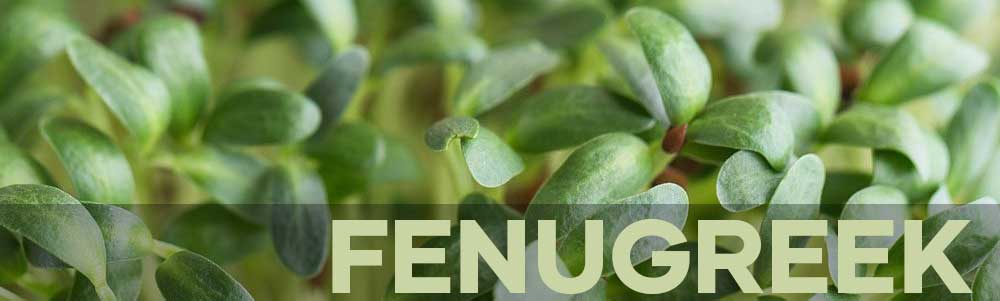
Fenugreek microgreens are aromatic young greens that are easy to grow at home in a shallow tray. Also known as methi, fenugreek (Trigonella foenum-graecum) is widely used in Indian, Middle Eastern and other cuisines, where its seeds and leaves are used for their distinctive flavour.
If you’re wondering how to grow fenugreek microgreens, you do not need a garden or complicated equipment. Fenugreek can be grown indoors using potting mix, coco coir or a suitable microgreen growing mat, making it a practical crop for kitchens, balconies and indoor growing shelves.
This beginner-friendly guide explains exactly how to grow fenugreek microgreens at home, including how much seed to use, whether to soak fenugreek seeds, the best growing medium, germination and blackout, watering, light, harvesting, storage and common problems to avoid.
Fenugreek Microgreens at a Glance
What Are Fenugreek Microgreens?
Fenugreek microgreens are the young seedlings of fenugreek (Trigonella foenum-graecum), an annual plant in the legume family.
Fenugreek is also commonly known as methi. The mature leaves and seeds are widely used in cooking, while the young plants can be harvested earlier as microgreens.
Fenugreek microgreens develop pale green stems topped with green cotyledons. As they continue to grow, their first true leaves begin to develop the characteristic three-part or trifoliate appearance associated with fenugreek.
What Do Fenugreek Microgreens Taste Like?
Fenugreek has a distinctive aromatic, slightly bitter and mildly spicy flavour. The young microgreens are generally milder than mature fenugreek leaves or dry seeds.
The flavour works particularly well with Indian and Middle Eastern dishes, but fenugreek microgreens can also be used in salads, wraps, sandwiches and savoury bowls.
If allowed to grow beyond the early microgreen stage, the flavour can become stronger and more bitter.
Why Grow Fenugreek Microgreens?
Fenugreek is an interesting alternative to the more common brassica microgreens. It produces relatively large seedlings with a distinctive flavour and can be grown in a small indoor space.
Fenugreek has also been used in peer-reviewed microgreen research. In one study comparing several microgreen species, fenugreek microgreens were successfully produced after a six-hour seed soak, three days in darkness and four days of light, demonstrating just how quickly fenugreek can develop under controlled growing conditions.
- Relatively fast-growing
- Can be grown indoors
- Suitable for small growing spaces
- Distinctive aromatic flavour
- Useful in Indian and Middle Eastern dishes
- Can be grown in soil or suitable soilless media
- A different flavour and appearance from brassica microgreens
Are Fenugreek Microgreens Easy to Grow?
Fenugreek is generally an easy to moderately difficult microgreen for home growers.
The seeds are substantially larger than broccoli, kale and mustard seed, so moisture management is slightly different. They need consistent moisture during germination, but overly wet conditions and dense sowing can encourage mould.
Once established, fenugreek develops a vigorous root system and grows quickly under good light.
How to Grow Fenugreek Microgreens in 7 Simple Steps
- Prepare a clean shallow growing tray.
- Optionally soak the fenugreek seeds for 4–6 hours, then drain thoroughly.
- Sow the fenugreek seeds evenly over moist growing medium.
- Cover the tray for approximately 2–4 days while the seeds germinate and establish.
- Move the seedlings into bright light.
- Bottom water as required and allow the microgreens to develop.
- Harvest when the cotyledons are open and the crop is approximately 5–10 cm tall.
Depending on temperature, light, cultivar and the stage at which you prefer to harvest, fenugreek microgreens can be ready in approximately 7–14 days from sowing.
What You Need to Grow Fenugreek Microgreens at Home
- Fenugreek microgreen seeds
- A shallow growing tray with drainage holes
- A solid bottom tray for bottom watering
- A second tray or lid for covered germination
- Coco coir, fine potting mix, seed-raising mix or suitable microgreen growing mat
- A container for soaking the seeds if required
- Spray bottle or gentle watering bottle
- Clean water
- A bright windowsill or LED grow light
- Clean scissors for harvesting
Do Fenugreek Microgreen Seeds Need to Be Soaked?
Fenugreek seeds do not always need to be soaked before growing as microgreens. They can germinate successfully when sown directly into a consistently moist growing medium.
However, because fenugreek seeds are relatively large and hard, some growers prefer to soak them for approximately 4–6 hours before sowing. Pre-soaking hydrates the seed before it is placed in the tray and can help encourage more even germination.
If you choose to soak:
- Place the fenugreek seeds in a clean container.
- Cover them generously with cool water.
- Leave for approximately 4–6 hours.
- Drain thoroughly.
- Sow promptly into the prepared tray.
Avoid leaving the seeds submerged for unnecessarily long periods.
How Much Fenugreek Seed for a 10 x 20 Inch Tray?
For a standard 10 x 20 inch microgreen tray, approximately 15 g of fenugreek seed is a useful starting rate.
For a 10 x 10 inch tray, use approximately 7–8 g.
Spread the seeds evenly across the surface rather than allowing them to form thick clumps. Fenugreek seedlings become relatively substantial as they grow, so they need enough space for airflow between the plants.
If you experience repeated mould or overcrowding problems, slightly reducing the sowing density can help.
Best Growing Medium for Fenugreek Microgreens
Fenugreek can be grown in either a soil-based or suitable soilless growing medium.
Coco Coir
Coco coir is a practical choice for home growers. It holds moisture while still providing support for the developing root system.
Fine Potting or Seed-Raising Mix
A fine, good-quality potting or seed-raising mix also works well. Avoid very coarse mixes containing large pieces of bark or wood.
Hemp or Other Microgreen Growing Mats
Fenugreek can also be grown on a suitable hemp or hydroponic growing mat. Make sure the mat remains evenly moist while the roots establish.
Because fenugreek produces a relatively strong root system, a medium with good moisture retention and root support is helpful.
Best Temperature for Growing Fenugreek Microgreens
Fenugreek microgreens grow well under typical indoor growing conditions of approximately 18–24°C.
Temperature can affect how quickly the seeds germinate. Controlled research on fenugreek seed germination has found temperature to be an important factor, with strong germination performance around 20°C.
Very warm conditions can increase the rate at which trays dry out and, when combined with high humidity and excessive watering, may increase disease pressure.
Step 1: Prepare Your Tray
Start with a clean shallow tray with drainage holes.
If using coco coir or potting mix, add approximately 2–3 cm of growing medium and level the surface.
Moisten the growing medium thoroughly before sowing. It should feel evenly damp but should not be saturated or waterlogged.
Place the growing tray inside a solid bottom tray.
Step 2: Prepare and Sow the Fenugreek Seeds
You can sow fenugreek directly or soak the seed for approximately 4–6 hours first.
If soaked, drain the seeds thoroughly before sowing.
Spread the fenugreek seed evenly over the surface of the growing medium.
Gently press the seeds against the moist surface to establish good seed-to-medium contact.
Fenugreek seeds can be left on the surface or covered very lightly with growing medium. If covering them, use only a thin layer.
After sowing, mist gently with clean water.
Step 3: Covered Germination
Place another tray or lid over the growing tray to create a dark, humid environment during early germination.
Fenugreek usually begins germinating within approximately 2–3 days.
Keep the tray covered for roughly 2–4 days, checking it daily. The exact timing depends on temperature and how quickly the seedlings establish.
If the growing medium is still moist, you do not need to add more water. If it is beginning to dry, mist or water gently.
Do not keep the tray saturated. Fenugreek seeds are relatively large, and excessively wet conditions combined with poor airflow can encourage mould.
Do Fenugreek Microgreens Need Weight?
Fenugreek does not require heavy weighting to grow successfully.
A second tray placed over the crop during germination is usually sufficient to keep the seeds dark and maintain humidity while allowing the emerging roots to establish.
Some growers use light tray stacking during germination. However, there is no need to place a very heavy weight over the fenugreek crop.
If seed hulls remain attached after germination, adequate moisture during the germination stage can help soften them. Avoid pulling firmly on hulls attached to delicate seedlings.
Step 4: Expose the Fenugreek Microgreens to Light
Once most seeds have germinated and the shoots are established, remove the cover.
The young seedlings may initially appear pale after growing in darkness. Place them in bright light and they will begin developing stronger green colouring.
You can grow fenugreek microgreens:
- On a bright windowsill
- In a sheltered indoor position with good natural light
- Under LED grow lights
If using a windowsill, rotate the tray regularly to encourage even upright growth.
Step 5: Water and Grow
Once the roots have established, bottom watering is generally preferable to repeatedly spraying the foliage.
Add a small amount of water to the solid bottom tray and allow the growing medium to absorb it through the drainage holes.
Check the tray regularly rather than watering automatically on a fixed schedule.
For best results:
- Keep the growing medium evenly moist
- Do not leave the roots permanently sitting in deep water
- Provide good airflow around the tray
- Rotate trays if natural light comes from one direction
- Avoid harsh direct sunlight that can rapidly dry or heat the tray
Step 6: When to Harvest Fenugreek Microgreens
Fenugreek microgreens can be harvested at different stages depending on the flavour and appearance you prefer.
A practical harvest window is approximately 7–14 days after sowing.
For a typical microgreen harvest, look for:
- Fully opened green cotyledons
- Healthy upright stems
- A height of approximately 5–10 cm
- Good green colour
- First true leaves just beginning to develop, if you prefer a slightly later harvest
Do not leave the crop simply because it has not reached a particular number of days. Temperature, light and growing conditions can make one tray develop faster than another.
Step 7: How to Harvest Fenugreek Microgreens
Use clean scissors to cut the fenugreek microgreens just above the growing medium.
Avoid pulling the seedlings out by their roots, as this can bring growing medium and root material into the harvested crop.
You can harvest the entire tray at once or cut only what you need.
For the best texture and appearance, harvest while the plants are fresh and upright.
How Much Can You Harvest from One Tray?
The yield from a tray of fenugreek microgreens depends on seed density, germination percentage, growing medium, temperature, light and harvest timing.
Rather than sowing heavily to maximise yield, aim for an even crop with enough space for airflow.
Overcrowding can cause the seedlings to remain damp for longer and may increase the risk of mould.
How to Store Fenugreek Microgreens
Fenugreek microgreens are best used fresh, but extra microgreens can be stored in the refrigerator.
For best storage:
- Harvest with clean scissors
- Keep the microgreens dry before refrigeration
- Place them in a clean airtight container
- Use paper towel to absorb excess moisture if necessary
- Refrigerate promptly
- Use while the leaves and stems remain fresh and crisp
If you rinse fenugreek microgreens, it is generally better to rinse them shortly before use rather than storing them wet.
How to Use Fenugreek Microgreens
Fenugreek microgreens have a distinctive flavour that works particularly well in savoury dishes.
Try them:
- Mixed through salads
- Added to sandwiches and wraps
- Scattered over curries just before serving
- Added to dhal and lentil dishes
- Used with eggs or omelettes
- Added to grain and vegetable bowls
- Used as a fresh garnish
- Mixed with milder microgreens
Because heat changes the texture and flavour of delicate microgreens, add them toward the end of cooking or use them fresh when you want to retain their microgreen texture.
Fenugreek Sprouts vs Fenugreek Microgreens
Fenugreek sprouts and fenugreek microgreens both begin with fenugreek seed, but they are grown and harvested differently.
Tips for Growing Fenugreek Microgreens Indoors
- Use clean trays and clean water
- Spread seeds evenly rather than in thick clumps
- Maintain consistent moisture during germination
- Do not keep the growing medium waterlogged
- Provide bright light after germination
- Switch to bottom watering once roots establish
- Maintain airflow around the tray
- Harvest according to plant development rather than relying only on the number of days
Growing Fenugreek Microgreens in Warm Weather
Fenugreek can grow well in warm conditions, but high temperature combined with high humidity can make moisture management more difficult.
During warm Australian weather:
- Keep trays in a well-ventilated indoor position
- Check moisture before adding more water
- Avoid leaving standing water in the bottom tray
- Reduce seed density if trays repeatedly remain wet
- Keep the crop away from harsh afternoon sun
- Improve airflow if humidity is high
The aim is to keep the roots supplied with moisture without creating a continuously wet environment around the stems and foliage.
Common Problems When Growing Fenugreek Microgreens
Mould on Fenugreek Microgreens
Mould is usually associated with a combination of excess moisture, overcrowding, poor airflow or contaminated growing equipment.
If mould repeatedly develops:
- Reduce watering
- Improve airflow
- Reduce seed density
- Clean trays thoroughly between crops
- Avoid leaving water standing in the bottom tray
Do not eat visibly mouldy or spoiled microgreens.
White Fuzz on Fenugreek Roots
Fine white root hairs can sometimes be mistaken for mould, particularly during germination.
Root hairs grow evenly along healthy roots and usually become less visible when wet. Mould tends to spread irregularly across seeds, growing medium or plant material and may develop a musty smell.
Seed Hulls Stuck to the Leaves
Some fenugreek seed hulls may remain attached as the seedlings emerge.
Maintaining adequate moisture during germination helps soften the hulls. Many will fall away naturally as the cotyledons expand.
Avoid aggressively pulling hulls from delicate seedlings.
Uneven Germination
Uneven germination can occur when seeds have inconsistent contact with the growing medium or parts of the tray dry out.
Level the growing surface before sowing, distribute the seed evenly and keep the medium consistently moist during early germination.
Yellow Fenugreek Microgreens
Pale or yellow seedlings are normal immediately after covered germination.
Once exposed to adequate light, the cotyledons should develop stronger green colouring.
Long, Weak or Leggy Seedlings
Fenugreek seedlings that become excessively tall and weak after germination may need more light.
Move the tray to a brighter location or use an LED grow light.
Fenugreek Microgreens Are Wilting
Fenugreek develops a substantial root system and can use water quickly once established.
If the plants wilt, check the growing medium. If it is dry, bottom water and allow the roots to absorb moisture.
If the medium is already very wet and the plants are collapsing, excessive moisture or root problems may be involved rather than lack of water.
Frequently Asked Questions
How long do fenugreek microgreens take to grow?
Fenugreek microgreens can generally be harvested in approximately 7–14 days, depending on temperature, light, growing method and preferred harvest stage.
Do you need to soak fenugreek seeds for microgreens?
Not necessarily. Fenugreek can be sown without soaking, but a short 4–6 hour soak is commonly used to hydrate the seeds before planting.
How much fenugreek seed should I use for a 10 x 20 tray?
Approximately 15 g of fenugreek seed per 10 x 20 inch tray is a useful starting rate. Adjust slightly if your growing conditions or cultivar produce an overly sparse or dense crop.
How long does fenugreek take to germinate?
Fenugreek generally begins germinating in approximately 2–3 days under suitable conditions.
How long should fenugreek microgreens stay covered?
Approximately 2–4 days of covered germination is a useful starting point. Move the seedlings into light once most seeds have germinated and the shoots are established.
Do fenugreek microgreens need weight during germination?
Heavy weighting is not necessary. A second tray can be placed over the crop during germination to maintain darkness and humidity. Some growers use light stacking, but avoid excessive pressure.
Can fenugreek microgreens be grown without soil?
Yes. Fenugreek can be grown using coco coir or suitable hydroponic microgreen mats as well as fine potting or seed-raising mixes.
Can fenugreek microgreens be grown indoors?
Yes. Fenugreek microgreens can be grown indoors on a bright windowsill or under LED grow lights.
What temperature is best for fenugreek microgreens?
Typical indoor temperatures of approximately 18–24°C are suitable. Fenugreek seed germination is strongly influenced by temperature, so very cold or excessively hot conditions can affect establishment.
What do fenugreek microgreens taste like?
Fenugreek microgreens have an aromatic, slightly bitter and mildly spicy flavour characteristic of fenugreek, but they are generally milder than mature leaves and dry fenugreek seed.
Are fenugreek microgreens the same as methi?
Fenugreek is commonly known as methi, particularly in Indian cuisine. Fenugreek microgreens are simply the young seedlings of the same plant, Trigonella foenum-graecum.
Do fenugreek microgreens regrow after cutting?
Fenugreek microgreens are normally treated as a single-cut crop. For a continuous supply, sow a fresh tray after harvesting.
Can I grow fenugreek microgreens all year round?
Yes. When grown indoors with suitable temperature, light and airflow, fenugreek microgreens can be grown throughout the year.
Why are my fenugreek microgreens bitter?
A degree of bitterness is characteristic of fenugreek. Flavour can become stronger as the plants mature, so harvesting at the young microgreen stage generally produces a milder crop.
Learning how to grow fenugreek microgreens is straightforward once you understand their moisture requirements. Start with quality fenugreek seed, sow it evenly over a moist growing medium and keep the tray covered while the seeds germinate.
Once the shoots are established, move them into bright light and switch to gentle bottom watering. With good airflow and consistent moisture, you can usually harvest fresh fenugreek microgreens at home within approximately 7–14 days.