
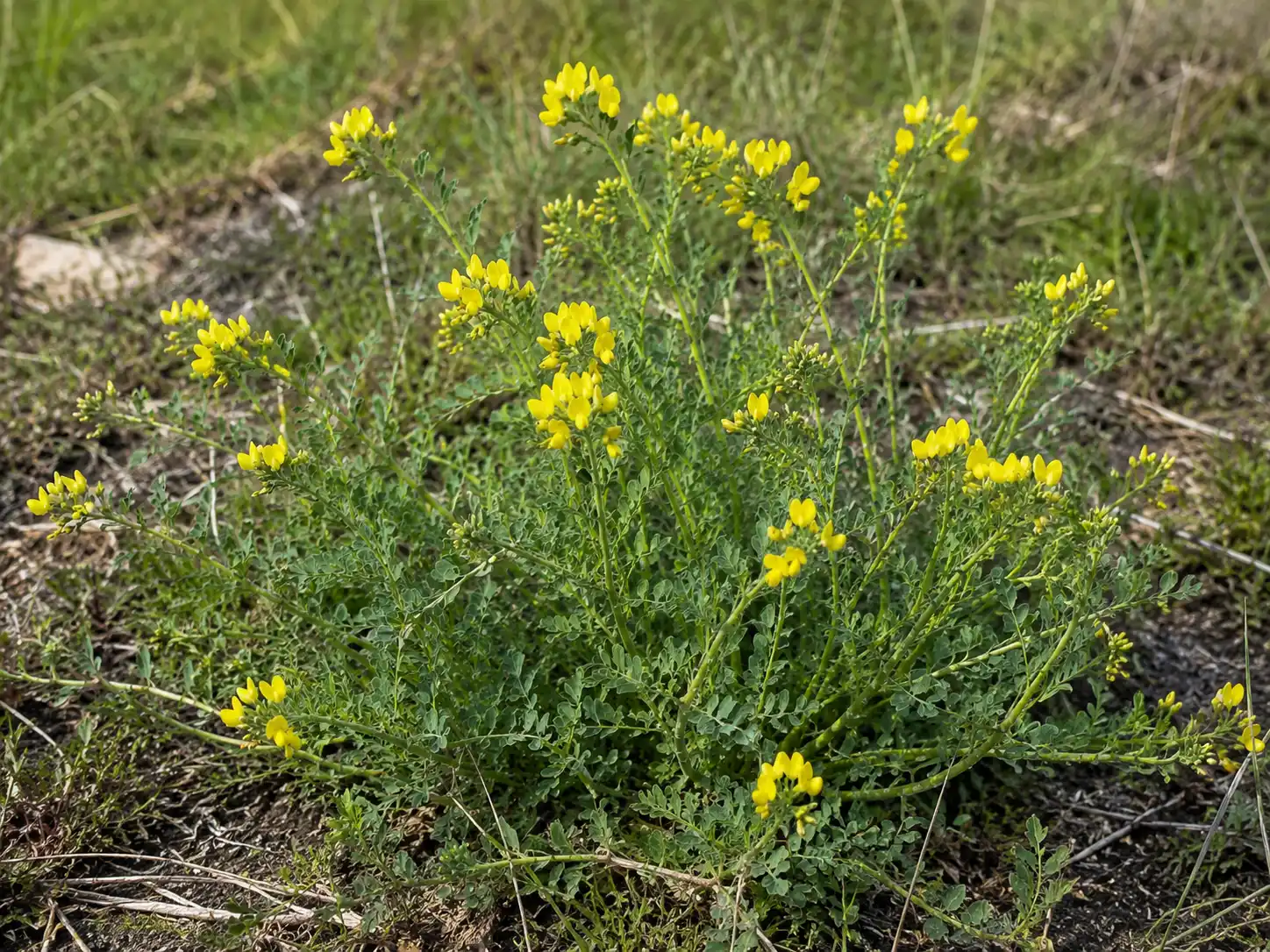

Yellow Serradella ‘Santorini’ Seeds
Botanical Name: Ornithopus compressus
Variety: Santorini
Yellow Serradella ‘Santorini’ is a cool-season annual legume suited to pasture improvement, green manure, cover cropping and soil-building applications. It is particularly useful on light, sandy and acidic soils where some traditional pasture legumes may perform poorly.
Serradella develops a relatively deep root system and is valued for its ability to grow on lower-fertility, free-draining soils. As a legume, it can fix atmospheric nitrogen when effectively nodulated with the appropriate rhizobium inoculant, making it a useful addition to pasture rotations, green manure systems and regenerative farming blends.
- Named Santorini variety of Yellow Serradella.
- Cool-season annual legume for pasture, green manure and cover cropping.
- Particularly suited to sandy, light-textured and acidic soils.
- Fixes nitrogen when effectively nodulated with the appropriate inoculant.
- Deep-rooted compared with many annual pasture legumes.
- Useful for improving soil fertility, ground cover and organic matter.
- Suitable for pasture renovation and regenerative farming systems.
- Can be grown alone or included in diverse pasture and green manure blends.
Plant Details
- Plant Type: Cool-season annual pasture and green manure legume
- Botanical Name: Ornithopus compressus
- Variety: Santorini
- Growth Habit: Spreading annual legume
- Root System: Deep-rooted
- Soil Preference: Sandy, light-textured, free-draining and acidic soils
- Frost Tolerance: Good once established
- Waterlogging Tolerance: Low; avoid prolonged waterlogging
- Best Position: Full sun
- Growth Period: Primarily autumn, winter and spring
Best Uses
- Green manure
- Cool-season cover cropping
- Pasture improvement
- Nitrogen fixation
- Sandy and acidic soil improvement
- Pasture renovation
- Building soil organic matter
- Mixed pasture and green manure blends
- Regenerative farming systems
- Cool-season ground cover
Why Grow Serradella?
Serradella is particularly valuable where soil conditions are less favourable for some traditional pasture legumes. It is well adapted to light-textured and acidic soils and can be especially useful on sandy sites.
Its deep root system allows plants to explore a greater volume of soil for moisture and nutrients. When successfully inoculated and nodulated, Serradella also contributes biologically fixed nitrogen to the growing system.
For gardeners and growers using cover crops, Santorini can be grown alone or combined with other cool-season species to increase diversity and produce living ground cover through the cooler months.
Sowing Information
- Best Sowing Time: Autumn, preferably following reliable seasonal rain or when irrigation is available
- Sowing Depth: Approximately 5–10 mm
- Position: Full sun
- Soil Type: Particularly suited to sandy, sandy-loam, acidic and other light-textured soils
- Moisture: Adequate soil moisture is important during germination and establishment
- Inoculation: Use Group S Serradella inoculant where inoculation is required for effective nodulation and nitrogen fixation.
Sowing Rate and Coverage
Seed Quantity Guide
Coverage is a guide only. Actual sowing rate will vary according to seed condition, germination, seedbed preparation, sowing method, seasonal conditions and intended use.
When to Sow Yellow Serradella in Australia
How to Sow Yellow Serradella Seeds
- Select a sunny site with suitable free-draining soil.
- Remove competing weeds and prepare a firm seedbed.
- Apply Group S Serradella inoculant where required.
- Broadcast seed evenly or sow with a suitable pasture seeder.
- Cover shallowly with approximately 5–10 mm of soil.
- Lightly roll or press the soil to improve seed-to-soil contact.
- Sow into adequate soil moisture or irrigate after sowing where possible.
- Maintain adequate moisture during germination and early establishment.
Management
- Control competing weeds during establishment.
- Avoid sowing too deeply.
- Maintain adequate moisture during germination and early growth.
- Use Group S inoculant where required for effective nitrogen fixation.
- Avoid prolonged waterlogging.
- For green manure, cut or incorporate while plants are actively growing and before residues become overly mature.
- Can be combined with grasses, cereals and other legumes in diverse cool-season cover-crop blends.
Pasture and Soil Benefits
Yellow Serradella is particularly useful on light and acidic soils where some other annual pasture legumes may be less well adapted. Its relatively deep root system allows it to explore the soil profile for moisture and nutrients while providing living ground cover during the cooler growing season.
When effectively nodulated, Serradella fixes atmospheric nitrogen through its association with rhizobia. This nitrogen can contribute to the fertility of the growing system, while roots and above-ground residues return organic matter to the soil.
When used as green manure, plants can be cut and incorporated into the soil or left on the surface as organic mulch.
Using Santorini in Green Manure Mixes
Santorini Yellow Serradella can be combined with other cool-season green manure and cover-crop species to increase plant diversity.
It is particularly useful in blends designed for sandy or acidic soils and can be combined with suitable cereals, other legumes, linseed, tillage radish and other cool-season cover crops according to the intended purpose and growing conditions.
Important Notes
- Best adapted to sandy, light-textured and acidic soils.
- Avoid sites subject to prolonged waterlogging.
- Use Group S Serradella inoculant where inoculation is required.
- Sow shallowly into a firm seedbed.
- Reliable soil moisture is important during establishment.
- Sowing rates should be adjusted according to intended use, seedbed conditions and whether Santorini is being grown alone or in a mixture.
Reviews
There are no reviews yet.