
Red Cabbage Microgreen Seeds
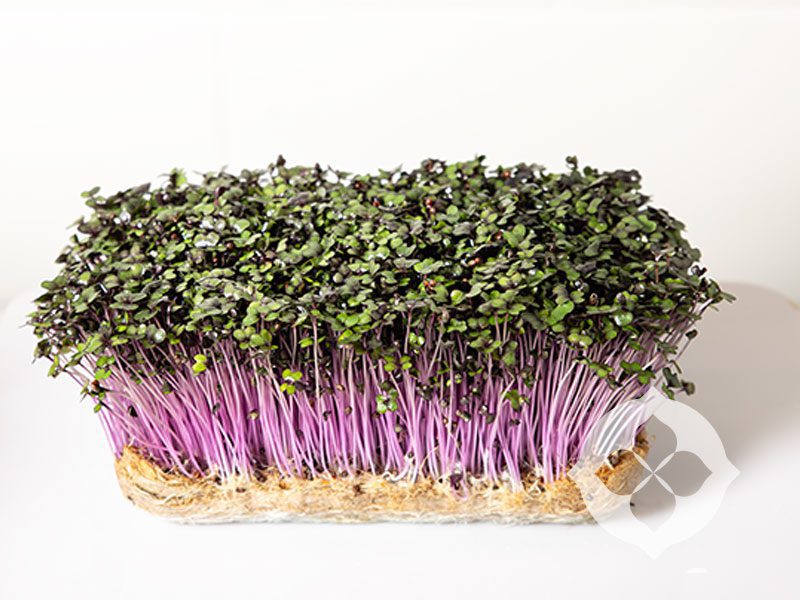
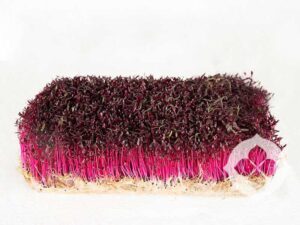
Grow colourful red cabbage microgreens at home in approximately 10–14 days. Red cabbage microgreen seeds produce attractive young seedlings with green to purple leaves, reddish-purple stems and a mild, fresh cabbage flavour. They are easy to grow in shallow trays using soil, coir, hemp growing mats or other suitable microgreen growing media.
Red cabbage is a popular microgreen variety for home growers, chefs and commercial microgreen production. The seedlings grow relatively quickly, develop striking colour and can be produced indoors throughout the year with adequate light, moisture and ventilation.
Their combination of colour, tender texture and mild brassica flavour makes red cabbage microgreens particularly useful for salads, sandwiches, wraps, bowls and fresh garnishes.
Seedmart red cabbage microgreen seeds are supplied for growing purposes and are available in packet and bulk quantities for home and commercial growers.
Red Cabbage Microgreen Seed Details
| Botanical name | Brassica oleracea var. capitata f. rubra |
|---|---|
| Common name | Red Cabbage, Purple Cabbage |
| Plant family | Brassicaceae |
| Pre-soak | Not required |
| Approximate sowing rate | Approximately 10–15 g per 10 × 20 inch tray |
| Growing medium | Soil, coir or hemp growing mats |
| Germination | Approximately 2–4 days |
| Typical harvest | Approximately 10–14 days |
| Availability | Retail packets and bulk quantities |
Why Grow Red Cabbage Microgreens?
- Fast-growing microgreen variety with a relatively short crop cycle.
- Attractive green, purple and reddish tones add colour to fresh dishes.
- Mild, fresh cabbage flavour that works well in a wide variety of foods.
- Suitable for growing indoors throughout the year.
- Can be grown on soil, coir or hydroponic hemp growing mats.
- No seed pre-soaking required.
- Suitable for home and commercial microgreen production.
- Excellent choice for colourful microgreen mixes and fresh garnishes.
- Available in smaller packets and economical bulk quantities.
- Supplied by an Australian-owned seed company.
How to Grow Red Cabbage Microgreens
Red cabbage microgreens are well suited to shallow growing trays and do not normally require pre-soaking. For a standard 10 × 20 inch microgreen tray, approximately 10–15 grams of seed provides a useful starting sowing rate. Adjust the quantity according to your tray dimensions, growing medium and preferred crop density.
- Prepare the growing tray.
Add approximately 3–4 cm of moist growing medium to a shallow tray and gently level the surface. Suitable media include quality soil, coir or a purpose-made hemp growing mat. - Sow the red cabbage seeds.
Spread the seed evenly across the growing surface. Aim for consistent coverage while avoiding thick piles or heavily overlapping seed. - Mist thoroughly.
Use a fine spray mister to moisten the seeds and growing surface evenly without washing the seeds into clusters. - Stack or cover the tray.
Cover with another tray and apply light, even pressure during the initial germination period. Keep the crop away from direct light while germination begins. - Maintain moisture during germination.
Check the crop regularly and keep the growing medium evenly moist without waterlogging it. Red cabbage commonly begins germinating within approximately 2–4 days under suitable conditions. - Introduce the seedlings to light.
Once the seedlings are established and pushing upward, remove the covering tray and move them into a position with suitable natural or artificial growing light. Adequate light encourages strong growth and helps the seedlings develop their characteristic colour. - Water as the crop develops.
Once established, bottom watering can help keep the stems and leaves relatively dry. Water as required to maintain even moisture without leaving the growing medium saturated. - Harvest the microgreens.
Red cabbage microgreens are commonly ready to harvest approximately 10–14 days after sowing. Cut the stems cleanly just above the growing medium when the cotyledons are fully developed and the crop has reached the size and colour you prefer.
Red Cabbage Microgreens: Colour and Appearance
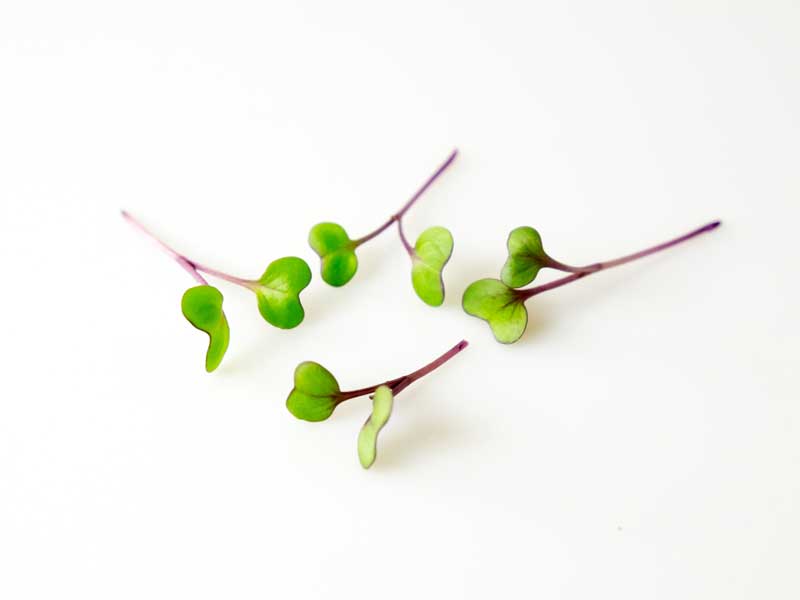
Red cabbage microgreens are particularly valued for their attractive colour. The developing seedlings can display green to purple cotyledons together with reddish, pink or purple-toned stems, creating strong visual contrast in microgreen trays and finished dishes.
Colour intensity can vary according to the variety, growing stage, temperature and lighting conditions. Research has also shown that lighting conditions can influence pigments and other naturally occurring compounds in red cabbage microgreens.
Their colourful appearance makes red cabbage a useful choice for restaurants, catering, salad mixes and commercial microgreen growers looking to add visual variety alongside green crops such as broccoli.
What Do Red Cabbage Microgreens Taste Like?
Red cabbage microgreens have a mild, fresh brassica flavour with the familiar character of cabbage in a tender young seedling.
They are generally less sharp than mustard and many radish microgreens, making them easy to combine with both mild and strongly flavoured crops. Their crisp stems, tender seed leaves and colourful appearance make them particularly useful in fresh dishes.
Red cabbage microgreens can be added to salads, sandwiches, wraps, grain bowls and other cold dishes or used as a colourful fresh garnish immediately before serving.
Red Cabbage Microgreens and Naturally Occurring Plant Compounds
Red cabbage microgreens naturally contain a range of plant compounds, including anthocyanins, phenolic compounds and glucosinolates.
Anthocyanins are pigments associated with red, purple and blue colours in plant tissue and contribute to the distinctive colouring of red cabbage microgreens.
Research into red cabbage microgreens has identified numerous phenolic compounds and anthocyanins, while studies of Brassica microgreens have also identified naturally occurring glucosinolates. The amount and composition of these compounds can vary according to variety, growing conditions, lighting, harvest stage and other production factors.
How to Use Red Cabbage Microgreens
Red cabbage microgreens combine mild flavour with striking colour, making them particularly versatile for home cooking and professional food presentation.
- Add to fresh salads and mixed greens.
- Use in sandwiches, wraps and burgers.
- Scatter over grain bowls and vegetable dishes.
- Use as a colourful garnish for soups immediately before serving.
- Add to tacos and other fresh savoury dishes.
- Combine with broccoli, radish, mustard or other microgreens in mixed trays and salad blends.
- Use as a fresh garnish for restaurant, catering and café dishes.
For the best texture and appearance, red cabbage microgreens are generally used fresh or added immediately before serving.
Red Cabbage Microgreens vs Broccoli Microgreens
Red cabbage and broccoli are both brassica microgreens and are grown using very similar methods. The main differences are their appearance and subtle differences in flavour.
| Feature | Red Cabbage Microgreens | Broccoli Microgreens |
|---|---|---|
| Appearance | Green to purple leaves with colourful reddish-purple stems | Predominantly green leaves and pale stems |
| Flavour | Mild, fresh cabbage flavour | Mild, fresh broccoli and brassica flavour |
| Typical harvest | Approximately 10–14 days | Approximately 8–14 days |
| Best suited to | Colourful salads, garnishes and microgreen mixes | Mild everyday microgreen crops and mixed greens |
Both are relatively easy brassica microgreens for home and commercial production. Red cabbage is particularly useful where additional colour and visual contrast are wanted.
Red Cabbage Microgreens vs Sprouts
Microgreens and sprouts are harvested at different stages and grown using different production methods.
| Feature | Red Cabbage Microgreens | Sprouts |
|---|---|---|
| Growing method | Usually grown in a shallow tray | Usually grown without a growing medium |
| Light | Exposed to light after germination | Usually grown largely without light |
| Harvest | Cut above the growing medium | Root, shoot and remaining seed are usually harvested together |
| Growth stage | Cotyledons are fully developed and sometimes first true leaves begin to appear | Harvested shortly after germination |
Frequently Asked Questions
How long do red cabbage microgreens take to grow?
Red cabbage microgreens are commonly ready for harvest approximately 10–14 days after sowing. Growth rate varies according to temperature, light, moisture, variety and other growing conditions.
Do red cabbage microgreen seeds need to be soaked?
No. Red cabbage microgreen seeds do not normally require pre-soaking before sowing.
How many red cabbage seeds should I use in a 10 × 20 tray?
Approximately 10–15 grams of red cabbage microgreen seed per standard 10 × 20 inch tray provides a useful starting rate. Growers can adjust the density according to their tray system and preferred crop.
How long do red cabbage microgreen seeds take to germinate?
Red cabbage seeds commonly begin germinating within approximately 2–4 days under suitable moisture and temperature conditions.
Can red cabbage microgreens be grown without soil?
Yes. Red cabbage microgreens can be grown using suitable soilless growing media such as coir or purpose-made hemp growing mats. The medium should provide consistent moisture while still allowing good drainage and airflow.
Do red cabbage microgreens need light?
The seeds do not need light during the initial germination stage. Once the seedlings are established, expose them to suitable natural or artificial growing light to support healthy growth and development of their characteristic colour.
When should I uncover red cabbage microgreens?
Red cabbage microgreens can generally be uncovered once germination is well established and the seedlings are beginning to push upward. This is often within a few days of sowing, although exact timing depends on growing conditions.
When should red cabbage microgreens be harvested?
Harvest is commonly around 10–14 days after sowing. Cut the stems just above the growing medium when the cotyledons are fully developed and the crop has reached the desired size and colour.
What do red cabbage microgreens taste like?
Red cabbage microgreens have a mild, fresh cabbage flavour with the characteristic taste of young brassica leaves. They are generally milder than mustard or strongly flavoured radish microgreens.
Why are red cabbage microgreens purple?
Red cabbage naturally produces anthocyanin pigments that contribute red, purple and blue tones to its plant tissue. Colour intensity can vary with genetics, growing conditions, lighting and crop maturity.
Do red cabbage microgreens contain anthocyanins?
Yes. Research has identified anthocyanins in red cabbage microgreens. The concentrations and individual compounds present can vary according to variety, growing conditions and harvest stage.
Can red cabbage microgreens be grown indoors?
Yes. Red cabbage is well suited to indoor microgreen production where suitable light, airflow, temperature and moisture can be maintained.
Are red cabbage microgreens suitable for commercial growing?
Yes. Their relatively short crop cycle, attractive colour and mild flavour make red cabbage suitable for commercial microgreen growers, restaurants, market gardeners and mixed microgreen production.
Are red cabbage microgreens the same as mature red cabbage?
No. They are seedlings of the same crop but are harvested much earlier. Microgreens are cut when the cotyledons are fully developed, before the plant begins forming the mature leaves and cabbage head associated with full-grown red cabbage.
Where can I buy red cabbage microgreen seeds in Australia?
Seedmart supplies red cabbage microgreen seeds in packet and bulk quantities for home growers, market gardeners, chefs, commercial microgreen growers and businesses throughout Australia.
Need More Help Growing Red Cabbage Microgreens?
Growing your own Red Cabbage microgreens? Follow our step-by-step guide to growing Red Cabbage microgreens for advice on sowing, germination, covered growing, watering, light and harvesting.
Trent Shuttlewood –
I’ve been using Seedmart for a couple of years now as a commercial grower and have had great success with this seed. The company is easy to deal with, friendly and knowledgeable about all things seeds and are very competitive with prices. Highly recommend not only this seed but Seedmart as a wonderful company.
Nikki Holst –
Amazing strike rate and delicious
G K Yeo –
I had trouble with the first attempt. I guess it’s unfair to rate this as a seed feature when it is actually a grower issue. The whole tray went mouldy. The only thing I’d like to change is a step by step guide on the seed packet to avoid growing problems. The seeds preform better when they are covered to begin with but at what point does covering become a mould issue and not a sprouting benefit? Thanks for any tips anyone would like to offer.
david mcpartlan –
we love this product great to grow and eat
Ross Cotton –
These are a nice looking Micro very good strike quick maturity Mixed with Broccoli makes a great K9 animal food mix but also great in a house mix.
Steven Lewis –
Red acre cabbage is the best variety for microgreens! Minimal to no problems and great germination.
Catarina Schwarz –
Have been purchasing these for a long time now and I always get a great crop. Fantastic quality seeds yielding a very nice looking and great tasting microgreen.
Tony James –
Red cabbage Micro greens – germination very poor 60/70% – this is over 3 trays – will try another media and see what happens