

RASPBERRY JAM WATTLE Seeds
Botanical Name: Acacia acuminata
Other Names: Raspberry Jam Wattle, Jam Wattle
- Attractive Australian native wattle known for its distinctive raspberry-scented wood.
- Slender shrub or small tree with fine, narrow phyllodes and elegant growth habit.
- Highly adaptable species suited to a wide range of climates and soil types.
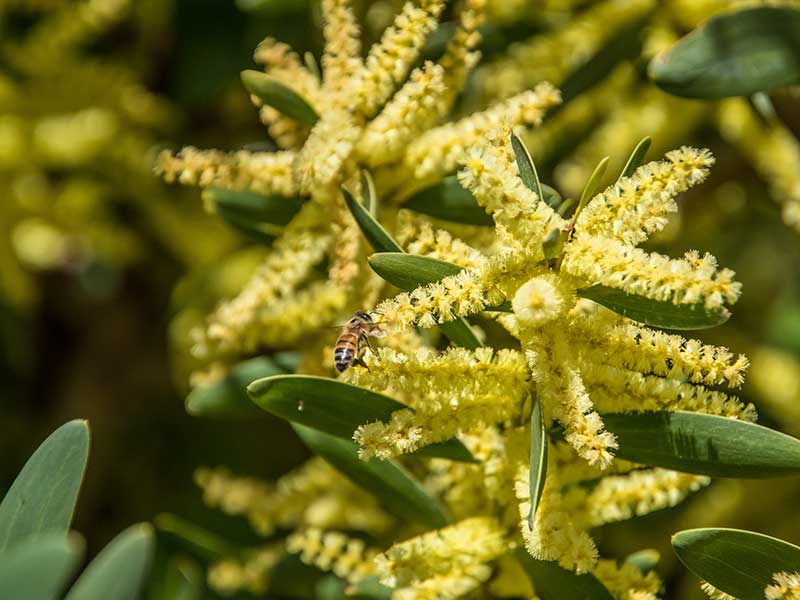
- Produces masses of golden-yellow flower spikes in winter to spring.
- Exceptionally hardy once established, with excellent drought tolerance.
- Important habitat and food source for native insects and birds.
- Widely used in revegetation, shelterbelts, and low-maintenance native landscapes.
Plant Details
- Plant Type: Native shrub or small tree
- Plant Height: 2–6 m tall (occasionally taller in favourable conditions)
Sowing Information
- Germination: 2–4 weeks after treatment
- Pre-treatment: Pour hot (not boiling) water over seed and soak until swollen
- Depth: 5–10 mm deep
- Position: Full sun to light shade
- Sow Where: Seed trays, forestry tubes, or direct sow
- Soil Type: Free-draining soils; tolerates sandy, gravelly, loamy, and poor soils
- Spacing: 1.5–3 m between plants
Growing Tips
- Use a free-draining, low-phosphorus native potting mix.
- Keep soil moist during early establishment, then reduce watering.
- Very drought-tolerant once established and well suited to dry landscapes.
- Minimal pruning required; light shaping can be done after flowering.
Flowering & Fruiting
Bright golden-yellow flower spikes appear from winter through spring, providing valuable nectar for pollinators. Woody seed pods follow flowering and mature through late spring and summer.
Traditional & Practical Uses
- Traditionally used by Indigenous Australians for tools and implements.
- Timber is prized for its distinctive raspberry fragrance when cut.
- Commonly planted for windbreaks, erosion control, and land rehabilitation.
When to Sow Raspberry Jam Wattle in Your Climate
| Climate Zone | Best Planting Time | Tips |
|---|---|---|
| Temperate | August–October | Sow in spring as soils begin to warm. |
| Subtropical | March–May | Avoid peak summer heat during establishment. |
| Tropical | May–July | Best sown in the dry season. |
| Cool | September–October | Sow after risk of heavy frost has passed. |
| Arid | July–September | Time sowing with seasonal rainfall where possible. |
Reviews
There are no reviews yet.