
Echinacea Purple Coneflower Herb Seeds
Botanical Name: Echinacea purpurea
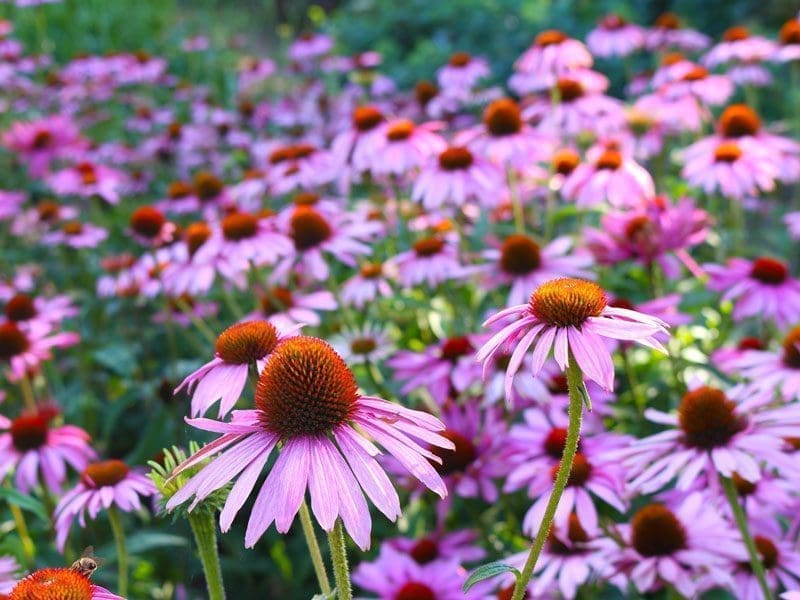
Echinacea Purple Coneflower is a hardy herbaceous perennial producing distinctive daisy-like flowers with pink to purple petals surrounding prominent raised orange-brown central cones. Native to eastern and central North America, Echinacea purpurea is widely grown as an ornamental, pollinator plant and traditional herb.
The long-lasting flowers are held on sturdy upright stems above clumps of coarse green foliage, creating an attractive display through the warmer months. Mature plants are particularly valuable in pollinator gardens, where the flowers are visited by bees, butterflies and other beneficial insects.
Purple Coneflower is well suited to herb gardens, cottage gardens, perennial borders, naturalistic plantings, cutting gardens and wildlife-friendly landscapes. Once established, plants are relatively hardy and tolerate periods of dry weather, making Echinacea a useful perennial for sunny, well-drained garden positions.
Key Attributes
Striking Purple FlowersProduces distinctive pink-purple daisy-like flowers with prominent raised orange-brown central cones. |
Long-Lived PerennialA herbaceous perennial that can return and flower for multiple seasons once successfully established. |
Pollinator FriendlyFlowers provide nectar and pollen and are attractive to bees, butterflies and other beneficial pollinating insects. |
Traditional HerbEchinacea purpurea has a long history of cultivation and traditional herbal use and is also widely grown as an ornamental garden plant. |
Excellent Cut FlowerStrong upright stems and distinctive flower heads make Purple Coneflower useful for fresh garden bouquets and floral arrangements. |
Hardy Once EstablishedEstablished plants tolerate periods of dry weather and perform well in sunny positions with reasonably free-draining soil. |
Product Description
Echinacea Purple Coneflower (Echinacea purpurea) is a distinctive perennial flowering herb belonging to the Asteraceae family. It develops an upright clumping habit and produces strong flowering stems topped with characteristic cone-shaped flower heads.
The blooms consist of a prominent raised central cone surrounded by pink to purple ray petals. As the flowers mature, the petals often extend outward or droop slightly below the central cone, giving Echinacea its characteristic appearance.
Plants commonly reach approximately 60–120 cm tall when flowering, although mature size varies according to climate, soil, moisture, plant age and growing conditions. The foliage forms a basal clump with additional leaves developing along the flowering stems.
Purple Coneflower is particularly valuable for pollinator and wildlife gardens. The flowers are visited by bees, butterflies and other insects during the flowering period, while mature seed heads can also provide structural interest if left standing after flowering.
Echinacea is also widely associated with traditional herbal cultivation. Echinacea purpurea is one of several Echinacea species historically grown for herbal purposes, with different plant parts traditionally harvested and prepared in various ways.
As a garden plant, Echinacea combines particularly well with other flowering perennials and ornamental grasses. Its upright habit and prominent flowers work well in cottage gardens, perennial borders, naturalistic plantings and dedicated herb gardens.
Once established, plants develop a substantial root system and become relatively tolerant of dry conditions. Good drainage remains important, particularly during cool or wet periods, as Echinacea does not perform well in persistently waterlogged soil.
Why Grow Echinacea Purple Coneflower?
- Beautiful pink to purple coneflowers with distinctive raised centres.
- Hardy herbaceous perennial once established.
- Botanical species Echinacea purpurea.
- Traditional herb with a long history of cultivation.
- Excellent addition to herb and medicinal plant gardens.
- Attractive to bees, butterflies and other pollinating insects.
- Strong upright stems make attractive cut flowers.
- Suitable for perennial flower borders and cottage gardens.
- Works well in naturalistic and prairie-style plantings.
- Relatively drought tolerant once established.
- Prefers full sun but can tolerate some light shade.
- Can flower for an extended period through the warmer months.
- Deadheading can encourage continued flower production.
- Mature seed heads can be left standing for garden interest.
- Suitable for home gardens and larger landscape plantings.
Plant Details
| Plant Type | Herbaceous perennial flowering herb |
| Botanical Name | Echinacea purpurea |
| Common Names | Purple Coneflower, Echinacea, Eastern Purple Coneflower |
| Family | Asteraceae |
| Flower Colour | Pink to purple petals with an orange-brown central cone |
| Growth Habit | Upright, clump-forming perennial |
| Approximate Height | Approximately 60–120 cm when flowering |
| Approximate Spread | Approximately 40–60 cm |
| Position | Full sun to light partial shade; best flowering generally occurs in full sun |
| Soil | Fertile to moderately fertile, well-drained soil; avoid persistent waterlogging |
| Flowering | Generally summer into autumn, depending on climate and sowing time |
| Life Cycle | Perennial |
| Uses | Herb gardens, perennial borders, cottage gardens, pollinator gardens, cut flowers, naturalistic plantings and traditional herb cultivation |
Sowing Information
| Sowing Method | Raise in trays or cells for transplanting, or direct sow into prepared soil where conditions are suitable |
| Sowing Depth | Approximately 3–6 mm; cover lightly |
| Germination | Often approximately 10–21 days under suitable conditions, although germination can be slower or irregular |
| Cold Stratification | A period of cool, moist stratification can improve germination consistency, particularly where seed is slow or uneven to germinate |
| Plant Spacing | Approximately 40–50 cm |
| Row Spacing | Approximately 45–60 cm or according to the planting design |
| Position | Full sun to light partial shade |
| Soil | Well-drained soil with moderate fertility |
| Watering | Keep evenly moist during germination and establishment; established plants tolerate moderate dry periods |
When to Sow Echinacea Seeds in Australia
| Climate Zone | Suggested Planting Time | Growing Notes |
|---|---|---|
| Cool | Spring to early summer; autumn sowing is also possible | Spring sowings establish as conditions warm. Autumn sowing can expose seed naturally to cool winter conditions before spring germination. |
| Temperate | Autumn or spring | Both seasons can be suitable. Autumn-sown seed may receive natural cool stratification, while spring sowing allows seedlings to establish during warming conditions. |
| Subtropical | Autumn to early spring | Establish plants during the milder months where possible so they can develop before periods of intense summer heat and humidity. |
| Tropical | Cooler, drier season | Echinacea is better adapted to temperate climates. In tropical regions, choose the coolest and least humid growing period and provide excellent drainage and airflow. |
| Arid | Autumn to spring | Avoid establishing seedlings during extreme heat. Provide reliable moisture while young plants develop their root systems. |
These sowing periods are general guides. Local frost dates, elevation, rainfall, summer temperatures and seasonal conditions should always be considered when deciding when to plant.
How to Grow Echinacea Purple Coneflower from Seed
Choose a sunny, well-drained position. Echinacea generally produces its strongest growth and most abundant flowering when grown in full sun, although plants can tolerate some light partial shade.
Prepare the soil by removing weeds and cultivating the planting area. Heavy, persistently wet soil should be improved before planting, as established Echinacea plants perform best where excess water drains readily away.
Sow seeds approximately 3–6 mm deep and cover lightly with seed-raising mix or fine soil. Keep the growing medium evenly moist while germination occurs.
Echinacea seed can show variable germination. Fresh seed may germinate without special treatment, but a period of cool, moist stratification can improve germination consistency, particularly with seed lots that are otherwise slow or irregular.
To cold stratify seed before sowing, mix or place the seed in a lightly moist medium and refrigerate it for several weeks, ensuring the material remains moist rather than saturated. Alternatively, autumn outdoor sowing in suitable cool climates can expose seed naturally to winter conditions.
Once seedlings are large enough to handle, transplant carefully into individual cells or their final position. Space plants approximately 40–50 cm apart to allow the mature clumps adequate room to develop.
Keep young plants watered while their root systems establish. Mature plants become considerably more tolerant of dry conditions but will still benefit from supplementary watering during extended drought.
Echinacea grown from seed may concentrate on vegetative and root development during its first season. Flowering may occur in the first year under favourable conditions, but stronger flowering displays are often produced as plants mature.
Cold Stratifying Echinacea Seeds
Cold stratification exposes seed to cool, moist conditions similar to those experienced naturally during winter.
Although Echinacea purpurea seed does not invariably require stratification to germinate, the treatment can improve the speed and uniformity of germination in some seed lots.
A simple method is to place the seeds in a lightly damp medium inside a suitable container or bag and refrigerate them for approximately 4–8 weeks. The medium should remain slightly moist but never saturated.
After the chilling period, sow the seeds shallowly into seed-raising mix and provide suitable warmth and moisture for germination.
Gardeners in colder climates can also sow outdoors in autumn or early winter and allow natural seasonal temperature changes to provide the chilling period.
Growing Echinacea in a Herb Garden
Echinacea is an attractive choice for a dedicated herb garden because it combines ornamental flowers with a long history of traditional herbal cultivation.
Plants develop into substantial perennial clumps, so allow sufficient permanent space rather than treating Echinacea as a short-term annual crop.
A sunny location with free-draining soil is ideal. Plants can be positioned toward the middle or rear of a herb bed, where their taller flowering stems can rise above lower-growing herbs.
Echinacea combines well with other flowering herbs and perennial plants, particularly where the garden is designed to provide habitat and food resources for pollinating insects.
Where plants are being grown for traditional herbal purposes, ensure they are correctly identified as Echinacea purpurea before harvesting or using any plant material.
Echinacea for Bees and Pollinator Gardens
Purple Coneflower is an excellent flowering perennial for bee-friendly and pollinator gardens.
The prominent flower heads provide nectar and pollen to visiting insects during the flowering season. Bees and butterflies are commonly attracted to mature Echinacea plantings.
For greater habitat value, combine Echinacea with other flowering species that bloom at different times of the year. A mixture of flower shapes and flowering periods provides a more continuous supply of resources than a single species planted alone.
Suitable companion flowering plants can include:
- Calendula
- Cosmos
- Phacelia
- Salvia
- Yarrow
- Coreopsis
- Rudbeckia
- Other flowering herbs and perennial wildflowers
Avoid unnecessary insecticide use while plants are flowering, particularly when bees and other beneficial insects are actively visiting the blooms.
Growing Echinacea for Cut Flowers
Purple Coneflower produces sturdy stems and distinctive flowers that work particularly well in informal bouquets, cottage-style arrangements and mixed perennial flower bunches.
Harvest stems when the flowers are freshly open and in good condition. Cutting during the cooler part of the day and placing stems promptly into clean water can help maintain flower quality.
The prominent cones also provide interesting texture in floral arrangements and can remain decorative after the petals begin to age.
Regularly removing spent flowers during the main flowering season can encourage established plants to continue developing additional flowering stems.
Watering and Feeding
Maintain reasonably even moisture during germination and early seedling growth. Young Echinacea plants have not yet developed the extensive root systems that make mature plants more resilient to dry conditions.
Once established, Purple Coneflower becomes relatively drought tolerant. However, flowering and overall plant quality are generally improved where plants receive supplementary water during prolonged hot or dry periods.
Avoid permanently wet soil. Good drainage is particularly important during cool weather when excess moisture around the crown and roots can contribute to plant decline.
Echinacea generally does not require excessive fertiliser. In average garden soil, a moderate amount of compost or balanced fertiliser is usually sufficient.
Excessive nitrogen can encourage lush vegetative growth and may reduce plant sturdiness, so heavy feeding is generally unnecessary.
Encouraging More Echinacea Flowers
Established Echinacea plants can produce flowers over an extended period during summer and into autumn where conditions remain favourable.
For continued flowering:
- Grow plants in full sun.
- Provide good drainage.
- Maintain adequate moisture during prolonged dry periods.
- Avoid excessive nitrogen fertiliser.
- Remove faded flowers regularly during the main flowering period.
- Allow mature plants adequate space and airflow.
If seed production or ornamental seed heads are desired, leave selected flowers on the plants rather than deadheading every bloom.
Deadheading Echinacea
Deadheading involves removing flower heads after they begin to fade.
Removing spent blooms can encourage established plants to continue producing flowers rather than directing all of their energy into seed development.
Use clean secateurs or scissors and cut the old flowering stem back to a healthy leaf or branching point.
Towards the end of the flowering season, selected seed heads can be left on the plant. The dried cones provide architectural interest in the garden and allow mature seed to develop.
Growing Echinacea in Pots and Containers
Echinacea can be grown successfully in containers, although its perennial growth habit and substantial root system mean that reasonably large pots are preferable.
Choose a container with generous drainage holes and fill it with a quality, free-draining potting mix. Position the container in full sun or a location receiving plenty of direct sunlight.
Container-grown plants dry more quickly than plants growing in open ground, so monitor moisture carefully during warm weather.
At the same time, avoid leaving the container permanently saturated. Good drainage is particularly important for Echinacea during cooler periods.
As plants mature, they may eventually benefit from division or transplanting into a larger container or permanent garden position.
Growing Echinacea as a Perennial
Unlike annual herbs and flowers, Purple Coneflower is a perennial that can remain in the garden for multiple years.
Plants typically develop a clump of foliage and flowering stems during the growing season. In colder climates, above-ground growth may die back during winter before new shoots emerge from the crown as conditions warm.
The plant’s first season is often focused heavily on establishing its root system. Mature plants generally become larger and more floriferous in subsequent seasons.
Avoid disturbing newly established plants unnecessarily. Once a strong root system has developed, Echinacea becomes a robust and relatively low-maintenance perennial.
Traditional Herbal Use of Echinacea
Echinacea purpurea has a long history of cultivation as a traditional herb and is one of the principal Echinacea species used in commercial and traditional herbal preparations.
Different preparations have historically used the roots and above-ground portions of the plant.
This product is supplied as seed for growing plants. Information about traditional use is provided for botanical and horticultural context and should not be interpreted as medical advice or as a claim that plants grown from these seeds can prevent, treat or cure any medical condition.
Perfect For
- Herb gardens
- Traditional herb plantings
- Perennial flower gardens
- Cottage gardens
- Cut flower gardens
- Fresh flower arrangements
- Pollinator gardens
- Bee-friendly plantings
- Butterfly gardens
- Wildlife-friendly gardens
- Naturalistic landscapes
- Prairie-style plantings
- Mixed perennial borders
- Large containers
- Low-maintenance perennial gardens
Frequently Asked Questions
What is Echinacea Purple Coneflower?
Echinacea Purple Coneflower is Echinacea purpurea, a herbaceous perennial native to North America. It produces distinctive pink-purple flowers with prominent raised central cones and is widely grown as an ornamental, pollinator plant and traditional herb.
Is Purple Coneflower the same as Echinacea?
Purple Coneflower is a common name for Echinacea purpurea. The genus Echinacea contains several species, so not every plant called Echinacea is necessarily Echinacea purpurea.
Is Echinacea annual or perennial?
Echinacea purpurea is a perennial. Once established, plants can return and flower for multiple growing seasons.
How tall does Echinacea Purple Coneflower grow?
Plants commonly reach approximately 60–120 cm when flowering, although final height varies according to plant age, climate, soil, moisture and other growing conditions.
What colour are Purple Coneflowers?
The species typically produces pink to purple ray petals surrounding a raised orange-brown central cone. Flower colour and intensity can vary between individual plants.
Are Echinacea seeds easy to grow?
Echinacea can be successfully grown from seed, although germination may be slower and less uniform than many annual flowers. Providing suitable moisture and temperature and using cold stratification where necessary can improve establishment.
Do Echinacea seeds need cold stratification?
Not always. Echinacea purpurea seed can germinate without stratification, particularly when seed is fresh, but a period of cool, moist stratification can improve germination speed and uniformity in some seed lots.
How do I cold stratify Echinacea seeds?
Place the seed in or with a lightly moist medium and refrigerate for approximately 4–8 weeks. Keep the material slightly moist rather than wet, then sow the seeds shallowly into seed-raising mix after the chilling period.
How deep should Echinacea seeds be planted?
Sow approximately 3–6 mm deep and cover lightly with fine soil or seed-raising mix.
How long do Echinacea seeds take to germinate?
Germination commonly occurs in approximately 10–21 days under favourable conditions, although some seed can take longer and emergence may be irregular.
When should I sow Echinacea seeds in Australia?
Spring and autumn are generally suitable in cool and temperate regions. In warmer climates, establishing plants during the milder part of the year is preferable to sowing during extreme summer heat.
Can Echinacea be sown in autumn?
Yes. Autumn sowing can be particularly useful in cool and temperate climates because natural winter conditions can provide the seed with a period of chilling before spring growth.
Can Echinacea be planted in spring?
Yes. Spring is a suitable sowing period once conditions begin to warm, particularly where seed has already been cold stratified.
Does Echinacea need full sun?
Echinacea flowers most strongly in full sun. Plants can tolerate light partial shade, but excessive shade can reduce flowering and encourage weaker growth.
What soil does Echinacea prefer?
Purple Coneflower performs best in reasonably fertile, well-drained soil. It adapts to a range of soil types but should not be kept permanently waterlogged.
Is Echinacea drought tolerant?
Established plants are relatively tolerant of dry conditions. Young seedlings require more consistent moisture while their root systems are developing.
How far apart should Echinacea plants be spaced?
Allow approximately 40–50 cm between plants. Adequate spacing provides room for mature clumps to develop and improves airflow.
Does Echinacea flower in the first year?
Some plants can flower during their first growing season under favourable conditions, but Echinacea often produces a stronger flowering display once plants have matured and developed a substantial root system.
When does Echinacea flower?
Purple Coneflower generally flowers through summer and can continue into autumn, depending on climate, plant maturity and local growing conditions.
Should Echinacea be deadheaded?
Deadheading can encourage continued flower production during the main flowering season. Leave selected flower heads in place if you want mature seed or decorative dried cones.
Is Echinacea good for bees?
Yes. Echinacea flowers provide nectar and pollen and are visited by bees and other pollinating insects.
Does Echinacea attract butterflies?
Yes. Butterflies commonly visit Echinacea flowers, making Purple Coneflower a useful addition to butterfly and wildlife-friendly gardens.
Is Echinacea a good cut flower?
Yes. The strong stems and distinctive flowers make Echinacea useful in fresh bouquets and mixed floral arrangements.
Can Echinacea be grown in pots?
Yes. Use a reasonably large container with good drainage and position it in full sun. Mature plants develop substantial root systems, so small pots are not ideal for long-term cultivation.
Does Echinacea die back in winter?
In colder climates, the above-ground growth can die back during winter while the perennial crown and roots remain alive below ground. New growth generally emerges as temperatures warm.
Can Echinacea tolerate frost?
Established dormant plants are cold hardy, although young seedlings and fresh growth can be more vulnerable to severe frost. Cold tolerance also depends on local conditions and drainage.
Can Echinacea be used in a herb garden?
Yes. Echinacea purpurea is widely grown in herb gardens because of its traditional herbal history, attractive flowers and value to pollinating insects.
Which Echinacea species is Purple Coneflower?
Purple Coneflower is Echinacea purpurea. Other Echinacea species include Echinacea angustifolia and Echinacea pallida, which are botanically distinct species.
Is Echinacea a medicinal herb?
Echinacea purpurea has a long history of traditional herbal use and is cultivated commercially for herbal products. This seed is supplied for growing plants, and references to traditional use should not be interpreted as medical advice or therapeutic claims.
Where can I grow Echinacea Purple Coneflower?
Echinacea is suitable for sunny herb gardens, perennial borders, cottage gardens, pollinator gardens, naturalistic landscapes, cutting gardens and sufficiently large containers.
What can I plant with Echinacea?
Purple Coneflower combines well with other flowering perennials and herbs such as yarrow, salvia, coreopsis, rudbeckia and ornamental grasses. It can also be incorporated into mixed pollinator plantings with annual flowers such as cosmos, calendula and phacelia.
How can I keep Echinacea flowering longer?
Provide plenty of sunlight, adequate moisture during dry periods and good drainage. Regularly removing faded flowers during the main flowering season can encourage plants to continue producing additional blooms.
Roslyn L Hooker –
Beautiful flowers with a healing property. Love the packaging.