
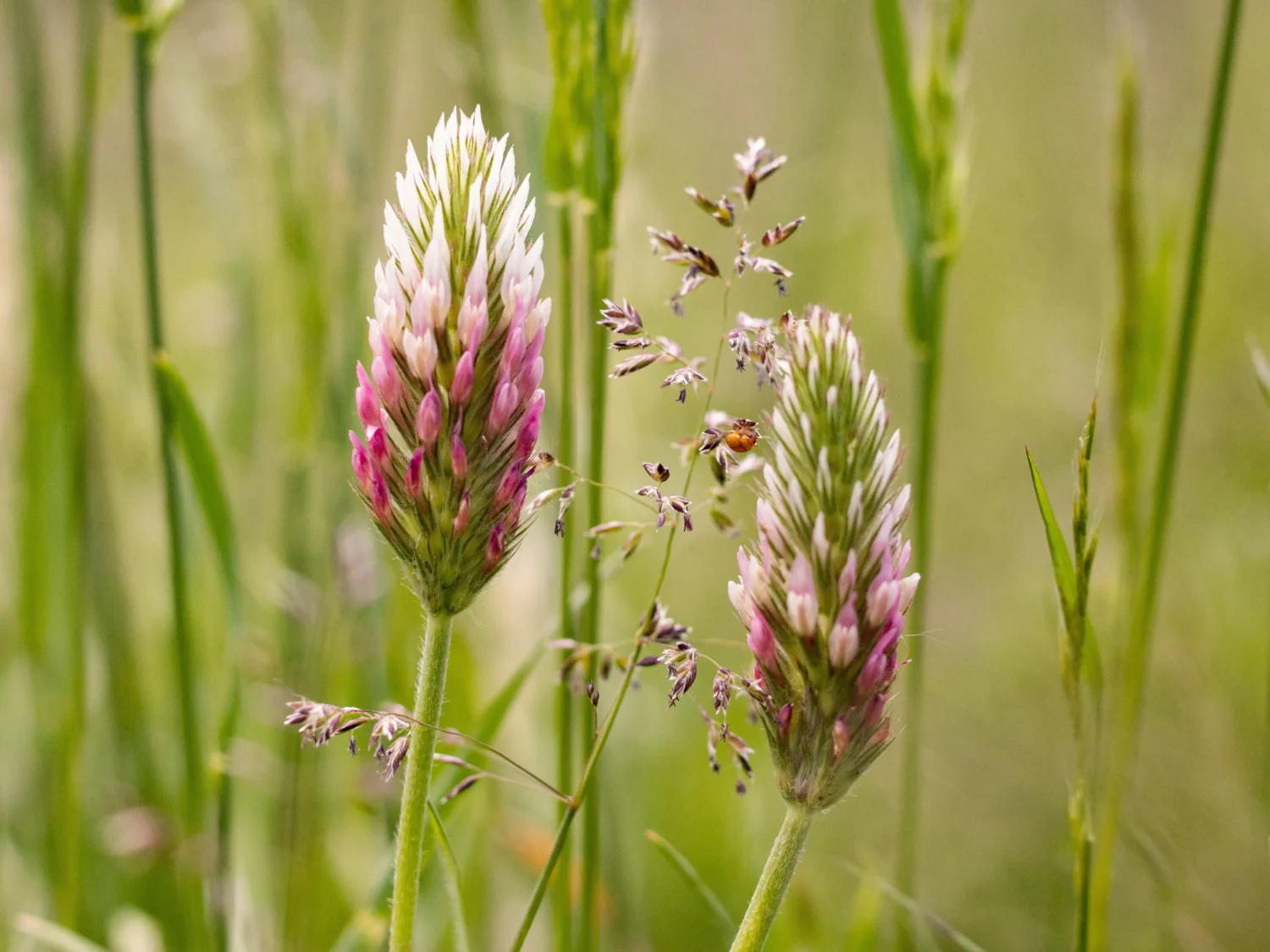

Arrowleaf Clover Seeds – Green Manure, Cover Crop & Pasture
Botanical Name: Trifolium vesiculosum
Common Name: Arrowleaf Clover
Arrowleaf Clover is a cool-season annual legume valued for green manure, cover cropping, pasture and forage production. It develops a deep root system and has a relatively long growing season, with its strongest growth generally occurring during spring and extending into early summer where soil moisture remains available.
As a legume, Arrowleaf Clover can form a symbiotic relationship with compatible rhizobia and fix atmospheric nitrogen. This makes it useful in rotations where growers want to add legume biomass, maintain soil cover and contribute biologically fixed nitrogen for the cropping system.
- Cool-season annual legume for green manure, cover cropping and pasture.
- Deep-rooted growth habit capable of accessing moisture deeper in the soil profile.
- Produces substantial spring biomass under favourable conditions.
- Later maturing than many commonly grown annual clovers.
- Can continue productive growth into late spring and early summer where moisture is available.
- Fixes atmospheric nitrogen when effectively nodulated with compatible rhizobia.
- Useful in mixed cover crops with grasses, cereals and other annual legumes.
- Best suited to well-drained soils and does not tolerate prolonged waterlogging.
Plant Details
- Plant Type: Cool-season annual legume
- Botanical Name: Trifolium vesiculosum
- Growth Habit: Initially low-growing, becoming increasingly upright during spring growth
- Growth Height: Can exceed 1 m under favourable conditions
- Root System: Deep-rooted annual legume
- Growth Period: Autumn establishment with strongest growth generally occurring in spring and extending into early summer where moisture is available
- Soil Drainage: Requires well-drained soil; poorly suited to waterlogged sites
- Best Position: Full sun
- Inoculation: Group C rhizobial inoculant is recommended where seed is not already appropriately inoculated
- Nitrogen Fixation: Yes, when effectively nodulated with compatible rhizobia
Best Uses
- Cool-season green manure
- Autumn, winter and spring cover cropping
- Nitrogen-fixing cover crop blends
- Organic matter and biomass production
- Mixed-species cover crops
- Pasture and forage production
- Hay and silage
- Vegetable and cropping rotations
- Orchard and vineyard inter-row cover where conditions are suitable
- Mixed plantings with annual grasses and other legumes
Sowing Information
- Best Sowing Time: Autumn is generally preferred so plants can establish before their main spring growth period
- Sowing Depth: Sow shallowly, approximately 5–10 mm deep
- Position: Full sun
- Soil Type: Adapted to a range of well-drained soils with moderate to good fertility
- Soil pH: Approximately pHCa 5.0–7.5 is a useful Australian adaptation range
- Watering: Adequate soil moisture is important during establishment and spring growth; prolonged waterlogging should be avoided
- Inoculation: Use Group C inoculant where seed has not already been appropriately inoculated
- Sow Where: Paddocks, garden beds, orchards, cropping rotations and mixed cover crop plantings where drainage is suitable
- Companion Crops: Can be combined with suitable cool-season grasses, cereals and other annual legumes in mixed cover crop systems
Sowing Rate and Coverage
| Use | Sowing Rate | Approx. Coverage |
|---|---|---|
| Pure Stand / Green Manure | 6–10 kg per hectare | 1 kg covers approx. 1,000–1,650 m² |
| Small Areas / Garden Beds | Approx. 0.6–1 g per m² | 100 g covers approx. 100–165 m² |
| Mixed Cover Crop Blends | 1–4 kg per hectare | Reduce the rate according to the proportion of Arrowleaf Clover required in the blend |
Seed Quantity Guide
| Seed Pack Size | Approx. Coverage at 6 kg/ha | Approx. Coverage at 10 kg/ha |
|---|---|---|
| 100 g | Approx. 165 m² | Approx. 100 m² |
| 250 g | Approx. 415 m² | Approx. 250 m² |
| 500 g | Approx. 830 m² | Approx. 500 m² |
| 1 kg | Approx. 1,650 m² | Approx. 1,000 m² |
| 5 kg | Approx. 0.83 ha | Approx. 0.5 ha |
| 10 kg | Approx. 1.67 ha | Approx. 1 ha |
| 20 kg | Approx. 3.33 ha | Approx. 2 ha |
Coverage is a guide only and is calculated from a pure-stand sowing rate of approximately 6–10 kg/ha. Actual seed requirements vary with establishment method, seedbed preparation, seed quality, intended crop density and local growing conditions.
Coverage is a guide only and is calculated from a pure-stand sowing rate of approximately 6–10 kg/ha. Actual seed requirements vary with establishment method, seedbed preparation, seed quality, intended crop density and local growing conditions.
When to Sow Arrowleaf Clover Seeds in Australia
| Climate Zone | Best Planting Time | Suitability | Growing Notes |
|---|---|---|---|
| Cool | Autumn | Moderate to good | Establish before winter where possible; spring growth strengthens as temperatures rise. |
| Temperate | Autumn | Good | Well suited to cool-season cover cropping where soils are well drained. |
| Subtropical | Autumn | Good where adapted | Can provide substantial late-winter and spring growth where soil moisture remains available. |
| Tropical | Cooler dry-season growing period | Limited / location dependent | Generally better suited to temperate and subtropical cool-season production than hot, humid tropical conditions. |
| Arid / Semi-arid | Autumn with reliable rainfall or irrigation | Location dependent | Adequate moisture is required for establishment and productive spring growth. |
How to Sow Arrowleaf Clover Seeds
- Choose a well-drained site and prepare a fine, relatively weed-free seedbed.
- Where seed is not already appropriately inoculated, inoculate with Group C rhizobia immediately before sowing according to the inoculant manufacturer’s directions.
- Broadcast seed evenly or sow with suitable seeding equipment.
- Sow shallowly, generally around 5–10 mm deep. Avoid burying the small seed too deeply.
- Firm or roll the soil lightly after sowing to improve seed-to-soil contact.
- Maintain adequate moisture during germination and early establishment.
- For green manure, terminate the crop while it is still actively growing and before mature seed production if self-seeding is not wanted.
- Slash and leave residues on the soil surface as mulch, or incorporate them according to the requirements of the following crop.
Growing Tips
- Autumn establishment allows plants to develop before their strongest spring growth period.
- Use Group C rhizobial inoculant where compatible rhizobia are not already supplied with the seed.
- Ensure good seed-to-soil contact and avoid sowing too deeply.
- Choose well-drained soils; Arrowleaf Clover is poorly suited to waterlogged conditions.
- Maintain adequate moisture through spring to maximise biomass production and extend growth into early summer.
- For green manure, terminate while the crop is actively growing if maximum residue quality and easier management are desired.
- Terminate before mature seed production where volunteer plants in following crops are not wanted.
- Combine with suitable grasses or cereals where greater ground cover, fibrous rooting or additional biomass is required.
Green Manure and Soil Benefits
Arrowleaf Clover can be used as a cool-season green manure where a nitrogen-fixing legume is required. When effectively nodulated with compatible rhizobia, the crop fixes atmospheric nitrogen and incorporates that nitrogen into plant biomass.
The crop also produces substantial above-ground material and develops a relatively deep root system. These characteristics make it useful in cover crop rotations where growers want living soil cover, legume biomass and greater rooting depth.
When the crop is terminated, residues can be left on the soil surface as mulch or incorporated into the soil. The amount of nitrogen ultimately available to a following crop depends on biomass production, nodulation, soil conditions, termination timing and residue management.
Arrowleaf Clover in Cover Crop Mixes
Arrowleaf Clover is particularly useful as a legume component in mixed cover crops. NSW DPI recommends it as a component with other annual legumes rather than relying solely on Arrowleaf Clover as a pure pasture sward.
In cover crop systems, it can be combined with suitable cool-season grasses or cereals to provide a mixture of fibrous and deeper root systems, while Arrowleaf Clover contributes the nitrogen-fixing legume component.
Because Arrowleaf Clover matures relatively late, it can also extend the productive period of a mixed cool-season cover crop into spring where soil moisture remains available.
Pasture and Forage
Arrowleaf Clover is also used for grazing, hay and silage. It is capable of producing high dry-matter yields under suitable conditions and its relatively late maturity can extend the availability of green forage later into the season than many earlier-maturing annual clovers.
Where pasture persistence through natural reseeding is required, management must allow sufficient flowering and seed production. Where the crop is being used strictly as a green manure and volunteers are undesirable, terminate before mature seed develops.
Important Notes
- Arrowleaf Clover is a cool-season annual legume rather than a perennial clover.
- It fixes atmospheric nitrogen only when effectively nodulated with compatible rhizobia.
- Group C inoculant is recommended in Australian production systems where seed is not already appropriately inoculated.
- It requires good drainage and is not suitable for soils prone to prolonged waterlogging.
- Spring moisture is important because much of its biomass production occurs relatively late in the season.
- The species produces a high proportion of hard seed, which contributes to its ability to regenerate from seed.
- Seed intended for sowing should have adequate soft, germinable seed; hard seed may require scarification to improve immediate germination.
- For green manure use, terminate before mature seed develops if volunteer Arrowleaf Clover is not wanted in subsequent crops.
Quick Growing Guide
| Feature | Details |
|---|---|
| Plant Type | Cool-season annual legume |
| Botanical Name | Trifolium vesiculosum |
| Best Uses | Green manure, cover cropping, pasture, forage, hay, silage and mixed cover crops |
| Best Sowing Period | Generally autumn in Australian temperate and subtropical production areas |
| Sowing Rate | Approx. 6–10 kg/ha alone; 1–4 kg/ha in suitable mixtures |
| Sowing Depth | Approx. 5–10 mm |
| Sunlight | Full sun |
| Drainage | Well-drained soil; avoid waterlogged sites |
| Inoculant | Group C rhizobia |
| Nitrogen Fixation | Yes, when effectively nodulated with compatible rhizobia |
| Management | For green manure, terminate while actively growing and before mature seed develops where volunteer plants are undesirable |
Reviews
There are no reviews yet.