

NATIVE GINGER Seeds
Botanical Name: Alpinia caerulea
Other Names: Native Ginger, Blue Ginger, Australian Ginger
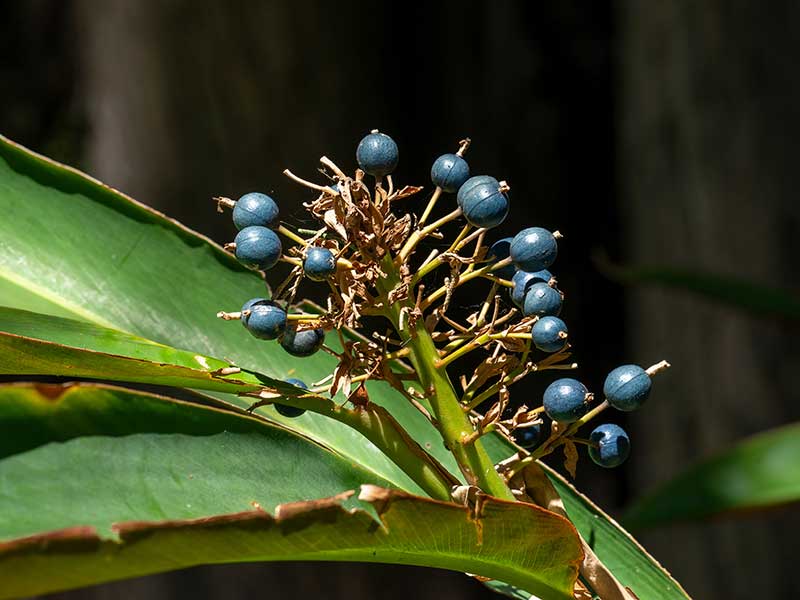
- Attractive Australian native rainforest plant with lush green foliage and striking bright blue berries.
- Grows naturally in subtropical and tropical rainforests of eastern Australia.
- Highly ornamental understory plant, ideal for shaded gardens and rainforest-style landscapes.
- Produces aromatic rhizomes, leaves, and berries with traditional cultural significance.
- Thrives in moist, sheltered conditions with protection from frost and harsh winds.
- Excellent habitat plant that attracts birds and supports native biodiversity.
Plant Details
- Plant Type: Perennial native herbaceous plant
- Plant Height: 1–2 m tall; clumping growth habit
Sowing Information
- Germination: 4–8 weeks (can be slow and variable)
- Depth: Surface sow to 5 mm deep
- Position: Part shade to full shade
- Sow Where: Seed trays or pots; transplant once established
- Soil Type: Moist, well-drained, organic-rich soil
- Spacing: 1–1.5 m between plants
Growing Tips
- Maintain consistently moist soil, especially during establishment.
- Mulch well to retain moisture and protect shallow roots.
- Shelter from frost and cold winds in cooler climates.
- Suitable for containers in shaded positions or indoor-outdoor courtyards.
Flowering & Fruiting
Creamy white flowers appear on spikes near the base of the plant, followed by distinctive bright blue berries that persist for extended periods and are highly ornamental.
Traditional & Practical Uses
- Rhizomes and young shoots were traditionally used by Indigenous Australians for flavouring and medicinal purposes.
- Leaves historically used for wrapping food during cooking.
- Widely planted today for ornamental use, rainforest revegetation, and wildlife habitat.
When to Sow Native Ginger in Your Climate
| Climate Zone | Best Planting Time | Tips |
|---|---|---|
| Temperate | October–December | Sow after frost risk; provide warmth and shelter. |
| Subtropical | August–November | Ideal conditions; keep soil consistently moist. |
| Tropical | March–June | Best sown at the end of the wet season. |
| Cool | November–January | Start seeds in a warm, protected environment. |
| Arid | September–October | Grow in shaded, irrigated areas with rich soil. |
Reviews
There are no reviews yet.