
With fertiliser prices remaining volatile, many Australian farmers are looking for practical ways to reduce input costs without sacrificing productivity.
One crop attracting renewed attention is Sunn Hemp (Crotalaria juncea) — a fast-growing tropical legume capable of fixing nitrogen, producing valuable biomass, improving soil structure and helping suppress weeds.
Recent coverage by ABC Rural
highlighted growers using Sunn Hemp to reduce their reliance on urea fertiliser, showing how cover crops can play an important role in more profitable farming systems.
Whether you are growing broadacre crops, vegetables, sugarcane, pasture or cover crops, Sunn Hemp is increasingly proving itself as more than just a green manure crop.

What Is Sunn Hemp?
Sunn Hemp is a vigorous annual legume grown primarily as a green manure, nitrogen-fixing cover crop and soil improver.
Crotalaria juncea
Fast-growing annual tropical legume
Green manure and cover cropping
Approximately 8–12 weeks for green manure use
Biological nitrogen fixation
Rapid upright biomass production
Full sun
Warm-season crop
Common Uses
- Green manure crop
- Nitrogen-fixing cover crop
- Soil improver
- Biomass producer
- Weed suppressor
Not Industrial Hemp
Despite the name, Sunn Hemp is not the same as industrial hemp. It is a different plant species grown for its agricultural and soil-building benefits.
In warm conditions, Sunn Hemp establishes rapidly and can produce a large volume of organic matter in just 8–12 weeks.
Why Farmers Are Planting More Sunn Hemp
Legumes can work with nitrogen-fixing bacteria to capture atmospheric nitrogen and convert it into forms that become part of the plant and soil nitrogen cycle.
When Sunn Hemp is incorporated back into the soil, its plant material contributes nitrogen and organic matter that can support following crops as the residue decomposes.
Instead of relying entirely on purchased nitrogen, farmers can use legumes such as Sunn Hemp as part of a broader nutrient-management strategy.
Reducing Reliance on Urea
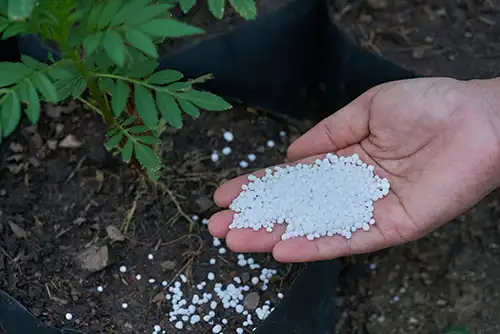
One reason Sunn Hemp is receiving attention is its potential to help reduce fertiliser inputs.
Although every farming system is different, many growers use Sunn Hemp between cash crops to achieve several complementary benefits.
Reduce nitrogen inputs
Biological nitrogen fixation can contribute nitrogen to the farming system.
Build organic matter
Large quantities of crop residue can be returned to the soil.
Improve infiltration
Roots and organic matter can contribute to better soil structure and water movement.
Recycle nutrients
Cover crops can capture nutrients that might otherwise be lost from the active root zone.
Reduce erosion
Rapid ground cover helps protect exposed soil.
Support soil biology
Living roots and decomposing plant residues provide resources for soil organisms.
For growers facing high fertiliser costs, these benefits may translate into meaningful savings over time. The actual reduction in purchased nitrogen will depend on biomass production, crop management, soil conditions and the nitrogen requirements of the following crop.
Additional Benefits of Sunn Hemp
Sunn Hemp grows quickly in warm conditions, developing a dense canopy that shades the soil and helps suppress many annual weeds before they become established.
Sunn Hemp can produce a substantial volume of leafy biomass during a relatively short growing period. When terminated and returned to the soil, this material contributes organic matter.
Repeated use of well-managed cover crops can contribute to improved soil structure, greater biological activity and better moisture management.
Integrating legumes into crop rotations can help farmers diversify their nutrient sources and maintain living roots in the soil between cash crops.
Potential Soil Benefits
Adds plant-derived organic matter to the farming system.
Root growth and organic matter can support improved soil structure.
Root development can help improve soil porosity in suitable conditions.
Living roots support active soil biological communities.
Increased organic matter can contribute to improved soil water-holding characteristics.
When to Plant Sunn Hemp in Australia
Sunn Hemp is a warm-season crop. For most regions, it performs best when soil temperatures are consistently warm, generally above 18–20°C.
Tropical growing regions
Recommended planting: September–February
Warm conditions provide an extended growing window. Consider rainfall patterns, irrigation availability and the timing of the following crop.
Subtropical and warm production areas
Recommended planting: September–January
Plant once soil temperatures are warm and there is sufficient moisture for rapid establishment.
Warm temperate and subtropical districts
Recommended planting: October–January
Establish during the warm part of the year and allow enough time for useful biomass production before cooler conditions.
Temperate growing regions
Recommended planting: Late spring–summer
Sunn Hemp requires warm conditions and a sufficiently long growing window before temperatures decline.
Sunn Hemp performs best in full sun and well-drained soil. Rapid establishment is important if weed suppression and high biomass production are key objectives.
How Long Does Sunn Hemp Take to Grow?
Under favourable conditions, Sunn Hemp establishes quickly and produces strong canopy growth within a few weeks.
For green manure use, the crop is commonly terminated or incorporated after around 8–12 weeks, before the stems become excessively mature and woody.
Earlier Termination
Younger Sunn Hemp plants generally contain softer, more succulent material that breaks down relatively quickly after termination.
Later Termination
Allowing the crop to mature for longer can increase total biomass, but older stems become more fibrous and slower to decompose.
Does Sunn Hemp Fix Nitrogen?
Yes. Like many legumes, Sunn Hemp can form nodules on its roots containing nitrogen-fixing bacteria.
These bacteria convert atmospheric nitrogen into nitrogen compounds that become incorporated into the plant.
Where suitable rhizobia are not already present in the soil, using the appropriate compatible legume inoculant can help establish effective nodulation and maximise biological nitrogen fixation.
How Sunn Hemp Fits Into a Crop Rotation
Sow into warm soil
Establish Sunn Hemp during the warm growing season when adequate soil moisture is available.
Build biomass
Allow the crop to develop a strong canopy and substantial vegetative growth.
Terminate the crop
Slash, mow or incorporate the crop at the stage appropriate for your farming system.
Manage the residue
Leave residue as surface mulch or incorporate it according to the requirements of the following crop and farming system.
Is Sunn Hemp Suitable for Australian Farms?
Sunn Hemp can fit into a wide range of Australian growing systems where a warm-season legume cover crop is appropriate.
Use between vegetable crops to produce biomass, maintain ground cover and contribute nitrogen.
A useful option for summer green manure rotations where rapid establishment is important.
Can provide an additional warm-season cover crop option within diverse rotations.
Useful where growers aim to increase living-root periods, crop diversity and soil cover.
May be incorporated into fallow and rotation programs where a summer legume is suitable.
Can be used as a soil-building cover crop within appropriately managed farming systems.
May provide seasonal biomass and ground cover where space, water and management allow.
Can be grown alone or incorporated into suitable warm-season cover-crop programs.
Its rapid growth and adaptability make Sunn Hemp a useful summer green manure option in many Australian farming systems.
Frequently Asked Questions
What is Sunn Hemp used for?
Sunn Hemp is primarily used as a nitrogen-fixing cover crop, green manure, biomass crop and soil improver.
Is Sunn Hemp edible?
Sunn Hemp is grown primarily for agricultural and soil-improvement purposes rather than as a human food crop.
Is Sunn Hemp the same as industrial hemp?
No. Sunn Hemp (Crotalaria juncea) is a completely different plant species from industrial hemp.
Does Sunn Hemp fix nitrogen?
Yes. Sunn Hemp is a legume capable of biological nitrogen fixation when it forms an effective relationship with compatible rhizobia.
Does Sunn Hemp need inoculation?
Inoculation may be beneficial where compatible rhizobia are not already present in the soil. Use an inoculant appropriate for Sunn Hemp where required.
How quickly does Sunn Hemp grow?
In warm conditions it can establish rapidly and produce substantial vegetative growth within approximately 8–12 weeks.
When should Sunn Hemp be incorporated?
For green manure use, many growers terminate it while growth is still relatively soft and leafy, before the stems become excessively woody.
Can Sunn Hemp help suppress weeds?
Yes. Rapid establishment and dense canopy development can help shade the soil and reduce opportunities for many annual weeds to establish.
Why Buy Sunn Hemp Seed from Seedmart?
Seedmart supplies Sunn Hemp seed for Australian green manure, cover cropping and soil-improvement programs.
Whether you are improving degraded soils, reducing reliance on purchased fertiliser or introducing cover crops into your rotation, Sunn Hemp provides a fast-growing warm-season option for producing biomass and biologically fixed nitrogen.
Grow Sunn Hemp for Green Manure
Build biomass, improve soil cover and introduce a nitrogen-fixing summer legume into your crop rotation.