
Billy Buttons Growing Guide
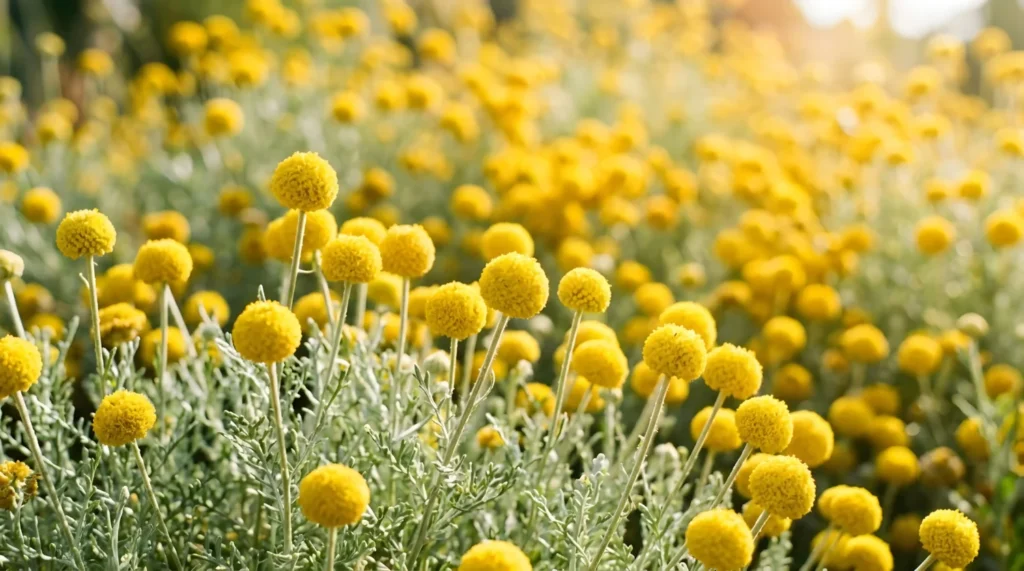
Billy Buttons are Australian native flowers known for their golden-yellow, globe-shaped flower heads, slender stems and soft grey-green foliage. They add colour and structure to native gardens, cottage borders and containers, and are popular for fresh bouquets and dried arrangements.
To grow Billy Buttons from seed, sow shallowly onto moist seed-raising mix, provide bright conditions and maintain consistent moisture during germination. Once established, plants grow best in a sunny position with suitable drainage and water during prolonged dry periods.
This guide focuses on Pycnosorus globosus, also sold under its older name Craspedia globosa. It explains the different plants called Billy Buttons, Australian sowing seasons, growing requirements, harvesting and seed saving.
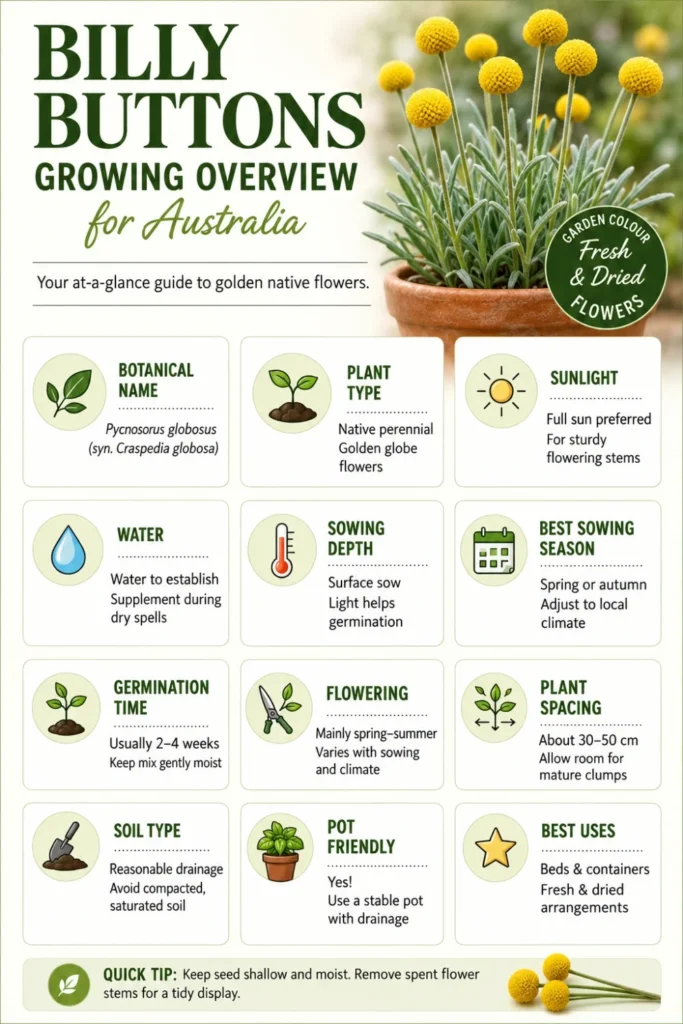
Botanical NamePycnosorus globosus
Also Listed AsCraspedia globosa
Plant TypeAustralian native herbaceous perennial
PositionFull sun preferred
GerminationUsually approximately 2–4 weeks
Best UsesGarden colour, containers, fresh flowers and dried arrangements
Shop Billy Buttons SeedsGrow golden drumstick flowers for sunny garden beds, native plantings and homegrown arrangements.
What Are Billy Buttons?
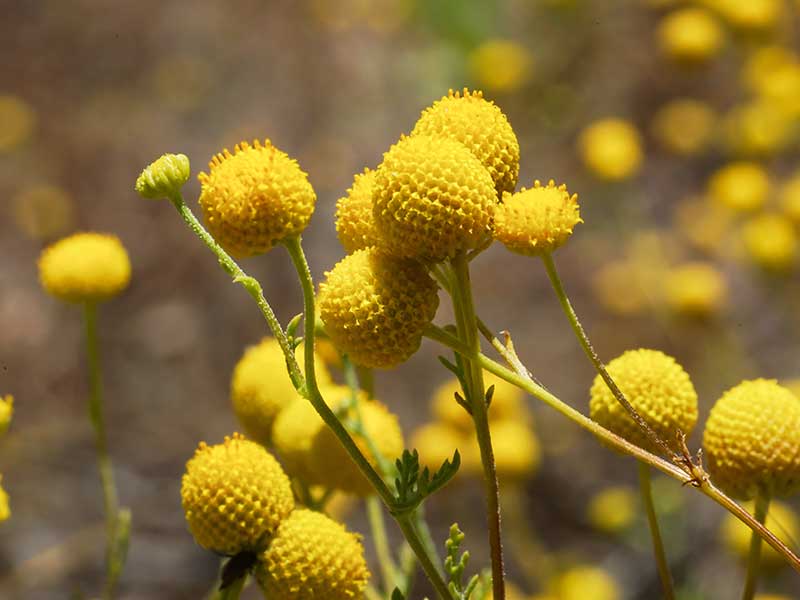
Billy Buttons are members of the daisy family, Asteraceae. Their rounded flower heads contain many small flowers grouped together, creating the appearance of a golden ball on the end of a stem.
Pycnosorus globosus, commonly called Billy Buttons or Drumsticks, is native to parts of Queensland, New South Wales, Victoria and South Australia.
Plants develop soft, hairy, grey-green leaves and upright flower stems. Mature size varies with the seed strain and growing conditions. Many garden plants flower around 50–90 cm tall, while vigorous plants can reach approximately 1.2 m.
The foliage remains much lower than the flowering stems. Consider both the height of the flowers and the space needed by the developing clump when planning a planting.
Are Billy Buttons perennial?Pycnosorus globosus is a perennial. Plants can persist beyond one growing season where conditions suit them, although lifespan and flowering performance vary. Some growers also manage them as seasonal cut-flower crops.
Benefits of Growing Billy Buttons
Distinctive Garden ColourGolden flower heads provide contrast against green foliage and softer flower shapes.
Fresh Cut FlowersSlender stems add height and a rounded focal point to bouquets.
Dried ArrangementsProperly harvested heads retain their shape well and are useful for long-lasting indoor displays.
Native Garden InterestCombine with suitable native daisies, grasses and other flowering plants.
Container GrowingGrow in suitable pots where sunlight, moisture and drainage can be managed.
Flowers for Visiting InsectsLeave some blooms in the garden for flower-visiting insects rather than cutting every stem.
Billy Buttons are useful where you want upright flowers without a dense shrub. Repeated groups can create a stronger display than isolated plants scattered throughout a bed.
Although established plants tolerate some dryness, they are not plants to neglect completely. Adequate moisture during establishment and active growth helps maintain healthy foliage and flowering.
Billy Buttons Types: Craspedia or Pycnosorus?
The name Billy Buttons is used for more than one Australian native daisy. Botanical names help distinguish the familiar florist’s drumstick flower from other species with similar common names.
| Plant or name | What it means | Choosing advice |
|---|---|---|
| Pycnosorus globosus | The accepted name for the golden drumstick flower covered in this guide. | A useful choice for ornamental gardens and fresh or dried flowers. |
| Craspedia globosa | An older botanical name for Pycnosorus globosus, still widely used in horticulture. | This is the name used on Seedmart’s Billy Buttons listing. |
| Craspedia variabilis | A different native species, also called Common or Variable Billy Buttons. | Check its own growing requirements rather than treating it as identical to Pycnosorus globosus. |
| Named garden selections | Selected plants may differ in height, habit or flower production. | Use the individual selection’s mature dimensions and propagation guidance. |
Are Pink Billy Buttons Natural?
The Billy Buttons covered here produce yellow to golden-yellow flower heads. A pink, blue or brightly coloured florist’s stem may have been dyed or otherwise coloured after harvest.
Do not assume that a coloured dried arrangement shows the natural colour of a seed-grown plant. Check the botanical name and variety description before buying seed.
Are Billy Buttons the Same as Yellow Buttons?
Not necessarily. Yellow Buttons commonly refers to Chrysocephalum apiculatum, a different native plant often grown for spreading foliage and clusters of smaller yellow flower heads.
For the upright drumstick flowers described here, look for Pycnosorus globosus or its synonym Craspedia globosa.
When to Sow Billy Buttons Seeds in Australia
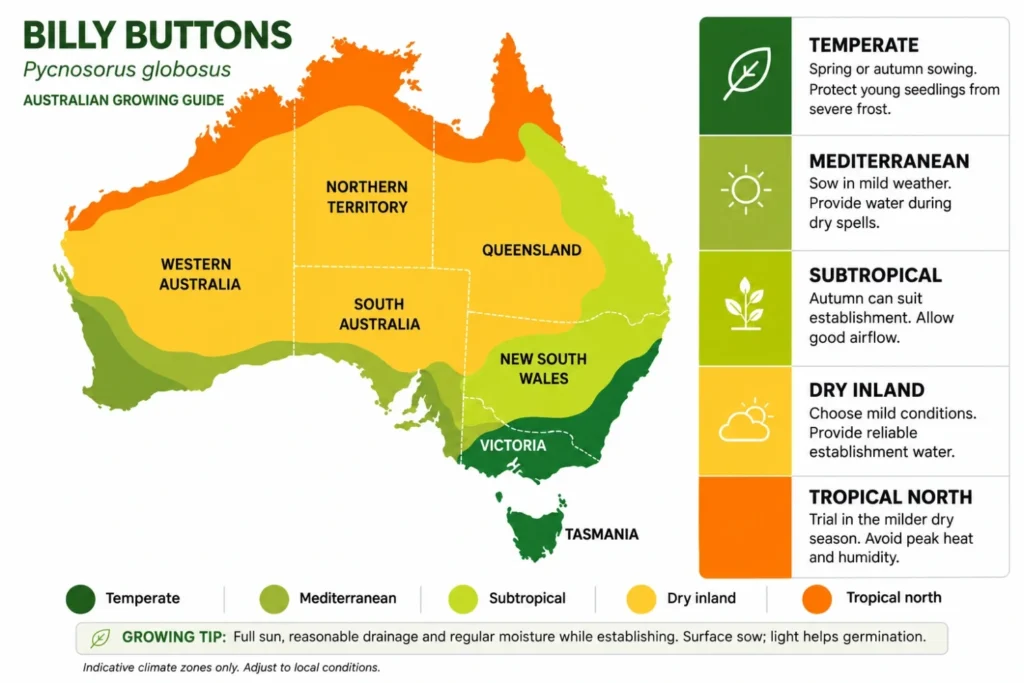
Choose a sowing period that provides mild growing conditions and reliable establishment moisture. Spring and autumn are useful starting points in many regions, but local frost, summer heat and humidity affect the best timing.
Cool ClimateSpring; protected autumn sowing where suitable
Spring sowing gives seedlings time to develop as conditions warm. Protect tender seedlings from severe frost and provide bright conditions if raising them under cover.
Temperate ClimateSpring or autumn
Both seasons can work where moisture and temperature are suitable. Autumn-raised plants need enough time to establish before harsh winter conditions.
Subtropical ClimateMild autumn conditions are useful
Avoid establishing delicate seedlings during peak summer heat and heavy rain. Provide ventilation and manage moisture carefully.
Tropical ClimateTrial during the milder dry season
Heat, humidity and prolonged rainfall can make cultivation more difficult. Use suitable drainage and allow good airflow around plants.
Arid ClimateMild spring or autumn weather
Time sowing around manageable temperatures and available irrigation. Protect trays from drying winds and avoid exposing young seedlings to extreme heat.
There is no single sowing month for every Australian garden.Use the packet instructions alongside local temperatures, frost exposure and rainfall. Sowing seed and planting out established seedlings are separate stages with different protection needs.
How to Grow Billy Buttons from Seed
Starting in trays makes it easier to monitor the fine seed, maintain moisture and protect young plants. Direct sowing is also possible in a carefully prepared bed.
Prepare a Clean TrayFill a clean seed tray or cells with fresh, fine, free-draining seed-raising mix. Moisten before sowing and allow excess water to drain.
Sow on the SurfaceScatter seed thinly and press gently into contact with the mix. Light stimulates germination, so surface sow or use only a very fine, light-transmitting covering according to the packet.
Water GentlyUse a fine mist or careful bottom watering to avoid displacing the seed. Keep the surface moist without leaving the tray standing in water.
Provide Bright, Sheltered ConditionsProtect trays from intense sun, downpours and drying winds. If using a propagator lid, provide ventilation and avoid excessive heat.
Allow Time for GerminationGermination commonly takes approximately 2–4 weeks, although emergence can be uneven. Continue checking moisture rather than allowing the tray to dry while waiting.
Thin and Grow OnThin crowded seedlings and provide good light as they develop. Gradually acclimatise established seedlings before moving them into their final outdoor position.
Do Billy Buttons Seeds Need Soaking?
Routine soaking, boiling-water treatment or scarification is not generally required for commercially supplied Billy Buttons seed. Follow any instructions supplied for your particular seed lot.
Freshly collected seed can behave differently from stored commercial seed. TreeProject notes that Pycnosorus globosus may have an after-ripening period, so seed maturity and storage history can affect emergence.
Can You Scatter Billy Buttons Seeds Directly?
Yes, onto a suitable prepared surface. Remove competing weeds, break up clods and rake the bed level before sowing.
Scatter thinly on a calm day, press seed into contact with the soil and water gently. Keep the surface moist while seedlings emerge.
Scattering onto established grass, deep mulch or hard, dry soil is unlikely to produce a reliable planting. A labelled tray is often easier for a small packet or first attempt.
What Do Billy Button Seedlings Look Like?
Young plants begin with seed leaves before producing their true foliage. As they develop, the leaves become more elongated and the plant gradually takes on its characteristic soft, hairy appearance.
Very young seedlings can be difficult to identify among weeds. Use labelled trays or mark the direct-sown area clearly, and keep a reference plant before weeding unfamiliar seedlings.
When to Transplant Billy Buttons
Transplant once seedlings have true leaves, are sturdy enough to handle and have roots that hold their growing mix together. Avoid leaving them crowded in a tray until their roots become tangled.
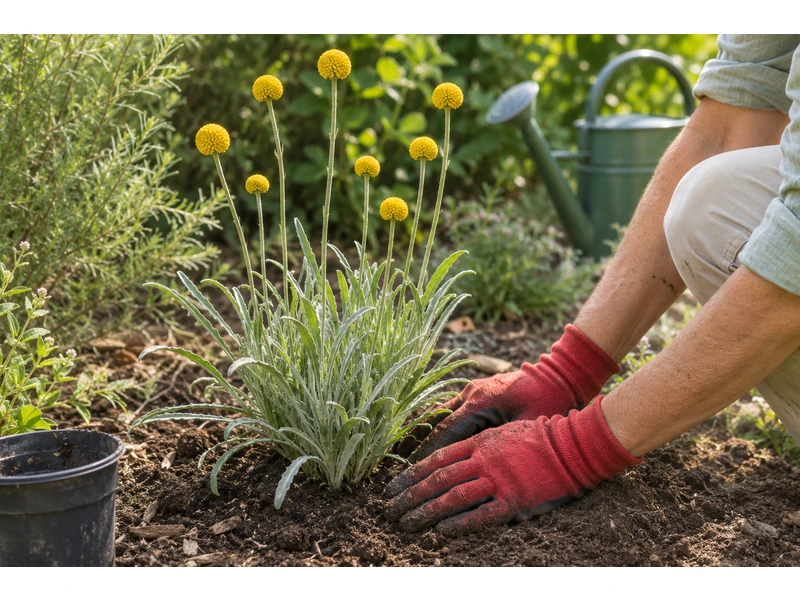
Introduce outdoor sun and wind gradually, then plant during mild weather and water in thoroughly.
Allow room for the mature clump. Approximately 30–50 cm apart is a useful garden starting point, adjusted to the selected form and packet guidance. Closer spacing used for a cutting crop may require more attention to airflow and water.
Billy Buttons Care: Sunlight, Soil, Water and Feeding
Sunlight
Choose an open, sunny position for strong flowering. Too much shade can encourage weak, elongated stems and reduce the display.
Soil
Billy Buttons can grow in different soil textures. Good structure and reasonable drainage are more useful than assuming they require sandy soil alone.
Watering
Maintain moisture during establishment. Established plants tolerate some dryness but generally perform better with supplementary water during prolonged dry weather.
Feeding
Use modest feeding suited to your soil or potting mix. Follow product rates and avoid repeated heavy applications that encourage soft growth.
Are Billy Buttons Drought Tolerant?
Established plants can tolerate dry periods, but drought tolerance does not mean they grow best without water. Botanic Gardens of South Australia notes that the species benefits from additional moisture.
Check the root zone rather than watering by a fixed calendar. Sandy soil, containers and windy positions dry faster than sheltered garden beds.
Can Billy Buttons Grow in Clay?
Yes, suitable clay-based soils can support them. The species occurs naturally in situations that include sandy-clay soils and moist depressions.
Avoid equating clay with permanent waterlogging. If a compacted bed remains saturated and plants struggle, improve the planting area or use a suitable raised bed or container.
Keep heavy mulch away from the crown and avoid burying the foliage base.
Can You Grow Billy Buttons in Pots?
Yes. Billy Buttons can be grown in containers where they receive enough sunlight and their roots have room to develop.
- Choose a stable pot: allow for the height of the flower stems, especially in exposed positions.
- Provide drainage holes: use a quality potting mix and let excess water escape.
- Check moisture regularly: pots may dry quickly in warm or windy weather.
- Avoid overcrowding: start with one plant in a suitable container and allow it to develop.
- Feed as needed: follow the potting mix and fertiliser instructions.
A larger container is usually easier to manage than a tiny decorative pot. If using an outer cover pot, empty any collected water after watering.
When Do Billy Buttons Flower?
Pycnosorus globosus generally flowers during spring and summer, although timing varies with sowing date, climate and plant development.
Seed-grown plants need time to build a healthy clump before producing their flowering stems. An autumn sowing may establish through cooler weather before flowering in the following warmer season.
Avoid treating a fixed number of days as a promise. Temperature, sunlight, seed strain and growing conditions all influence the first flowers.
How to Encourage Flowering
- Provide sufficient direct sunlight.
- Prevent severe moisture stress during active growth.
- Keep competing weeds under control.
- Allow space for the plant to develop.
- Remove finished flower stems unless saving seed.
How to Prune Billy Buttons
Cut spent flower stalks back towards their base without damaging the living crown. Remove dead or damaged foliage as needed.
Harvesting suitable stems and removing finished flowers keeps the planting tidy and can encourage further blooms. Avoid cutting away the entire foliage clump simply because the flower stems have finished.
Growing Billy Buttons for Cut Flowers
The rounded heads and slender stems make Billy Buttons useful in both simple bunches and mixed bouquets.
For a home cutting patch, leave enough space to reach plants without trampling the surrounding soil. Support may be useful where tall stems are exposed to wind.
- Select healthy stems with well-developed, golden flower heads.
- Harvest after surface moisture has dried.
- Use clean, sharp snips and cut without damaging nearby shoots.
- Place stems intended for fresh arrangements into clean water promptly.
- Keep harvested flowers shaded while preparing the arrangement.
Keep some flowers uncut if you also want a garden display and opportunities for visiting insects.
How to Dry Billy Buttons
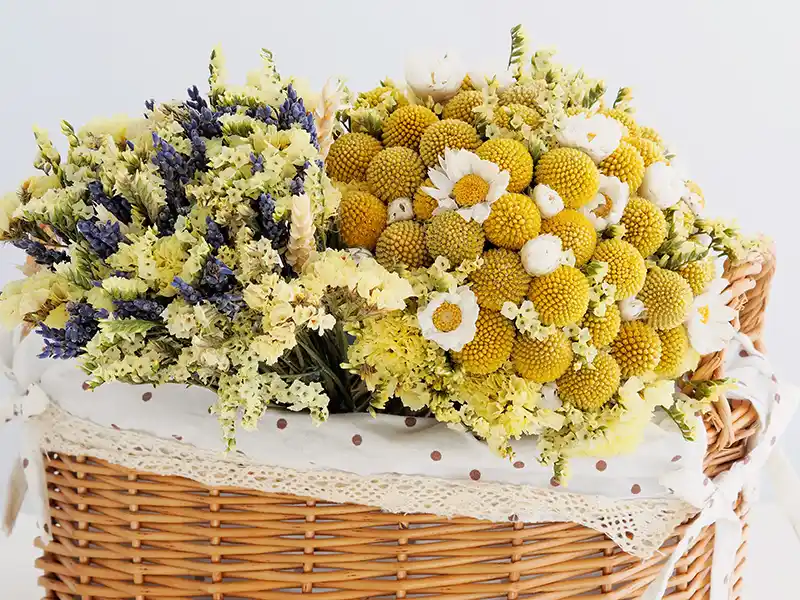
Billy Buttons are valued for their ability to retain their rounded shape after drying. Choose healthy heads that are well developed and evenly golden, before they become weathered or begin shedding seed.
Harvest Dry FlowersWait until dew or rain has dried from the plants. Choose firm stems and undamaged heads.
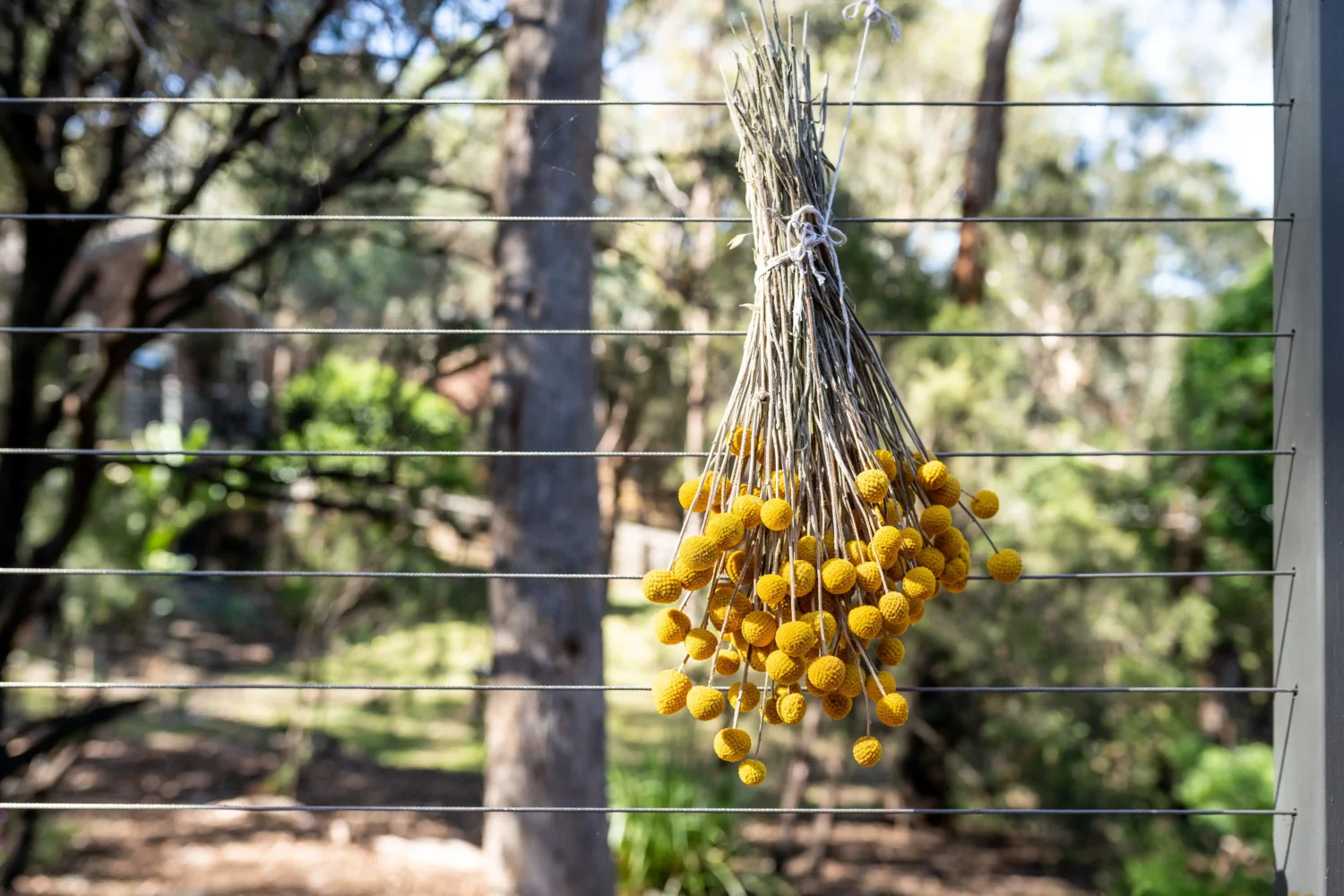
Prepare Small BunchesRemove unwanted lower foliage and group a few stems together. Keep bunches loose enough for air to circulate.
Hang in a Sheltered PlaceHang upside down in a dry, airy position out of direct sunlight. Avoid damp rooms and tightly packed bundles.
Check Before StoringWait until stems and heads are thoroughly dry before storing or arranging. Drying time depends on humidity and the size of the bunch.
How Long Do Dried Billy Buttons Last?
They can remain decorative for a long time when kept dry and handled gently. Strong sunlight can fade their colour, while damp storage encourages deterioration.
For lasting indoor displays, keep arrangements away from humid bathrooms, direct sun and places where they will be knocked frequently.
How to Collect Billy Button Seeds
Leave selected flower heads on healthy plants to mature fully. Flowers cut for arrangements are not necessarily ready to provide mature seed.
- Watch for heads that have finished flowering and are becoming dry.
- Collect when mature seed releases readily, before it is lost to wind or rain.
- Place heads in a labelled paper bag and finish drying in a ventilated place.
- Gently separate seed from loose flower material.
- Store fully dry seed in a labelled envelope in cool, dry conditions.
Record the botanical name and collection date. Germination can vary with seed maturity, storage and after-ripening, so a small test sowing can be useful.
Do Billy Buttons Self-Seed?
They may produce self-sown seedlings where mature seed reaches suitable ground and conditions allow germination. Do not rely on self-seeding for a planned display.
Remove unwanted seedlings or harvest heads before seed disperses where volunteers would be inconvenient.
Can Billy Buttons Be Grown from Cuttings?
Yes. Pycnosorus globosus can also be propagated from suitable cuttings. Vegetative propagation is useful when maintaining the characteristics of a selected plant.
What to Plant with Billy Buttons
Choose companions with compatible sunlight, moisture and soil requirements. The yellow globes provide contrast beside flatter daisy flowers and finer grass foliage.
Everlasting Daisies
Combine golden Billy Buttons with pink, white or mixed-colour everlasting daisies for contrasting flower shapes.
Suitable Native Plantings
Use repeated groups among locally suitable native grasses and flowering plants, allowing each species enough space to develop.
For restoration or planting beside natural bushland, choose locally appropriate species and provenance rather than relying on the general label “Australian native”.
Common Billy Buttons Growing Problems
| Problem | Possible causes | What to check |
|---|---|---|
| Seeds fail to emerge | Deep covering, dry mix, unsuitable conditions or seed dormancy. | Sow shallowly, maintain moisture and allow sufficient time. Review the seed packet’s guidance. |
| Seedlings disappear | Snails, slugs, disturbance or drying out. | Inspect after dark, protect trays and monitor moisture. |
| Seedlings collapse at the base | Damping-off, saturated mix or poor ventilation. | Improve hygiene and airflow, remove affected seedlings and avoid persistent saturation. |
| Weak or leaning flower stems | Shade, wind, crowding or soft growth. | Improve light and spacing, review feeding and support exposed stems. |
| Few flowers | Young plants, unsuitable season, shade or moisture stress. | Check plant maturity and growing conditions before adding fertiliser. |
| A plant suddenly wilts | Dry roots, root damage or disease. | Inspect the root zone before watering again. Wilting does not always mean the soil is dry. |
| Dried heads fade or deteriorate | Strong sunlight, damp storage or poor harvest quality. | Harvest healthy material, dry fully and display away from direct sunlight and humidity. |
Frequently Asked Questions
Are Billy Buttons native to Australia?
Yes. Pycnosorus globosus is native to parts of eastern and southern mainland Australia. Other native species also share the common name Billy Buttons.
Are Billy Buttons easy to grow?
They can be rewarding to grow from seed when provided with shallow sowing, suitable temperatures, light and steady moisture. Fine seedlings still need protection and attention.
Do Billy Buttons come back every year?
Pycnosorus globosus is perennial and may persist for several seasons in suitable conditions. Plant survival and flowering depend on climate, care and the individual plant.
Do Billy Buttons spread?
Plants develop a broader clump as they mature and may also produce self-sown seedlings. Allow room for the selected form rather than judging its final size by the seedling.
Can Billy Buttons grow indoors?
They are better suited to a sunny outdoor position. Dried stems can be displayed indoors, while living plants generally need more direct light than an ordinary room provides.
Can Billy Buttons grow in partial shade?
Some light shade can be tolerated, but an open sunny position is preferable for strong flowering. Deep shade is unsuitable for a reliable display.
Why are my Billy Buttons not flowering?
Check plant age, season, sunlight and moisture. A young plant or one growing through cool conditions may need more time. Extra fertiliser will not correct insufficient light.
Can I save seed from dried Billy Buttons in a bouquet?
Not reliably. Florist stems may have been cut before seed matured or treated after harvest. Collect mature seed from a known living plant or use seed supplied for sowing.
Are pink and blue Billy Buttons grown from coloured seed varieties?
Not necessarily. The species described here flowers yellow. Brightly coloured dried florist stems may have been dyed, so check the supplier’s variety description.
Where can I buy Billy Buttons seeds?
Seedmart supplies Billy Buttons seeds under the name Craspedia globosa. Check the product page for current pack options and seed information.
Grow Your Own Golden Billy Buttons
Start with a labelled tray, sow shallowly and keep seedlings moist as they establish. Plant into a sunny position, allow room for the clump to develop and enjoy the flowers in the garden or as fresh and dried arrangements.