


Mat-rush Grass Seeds
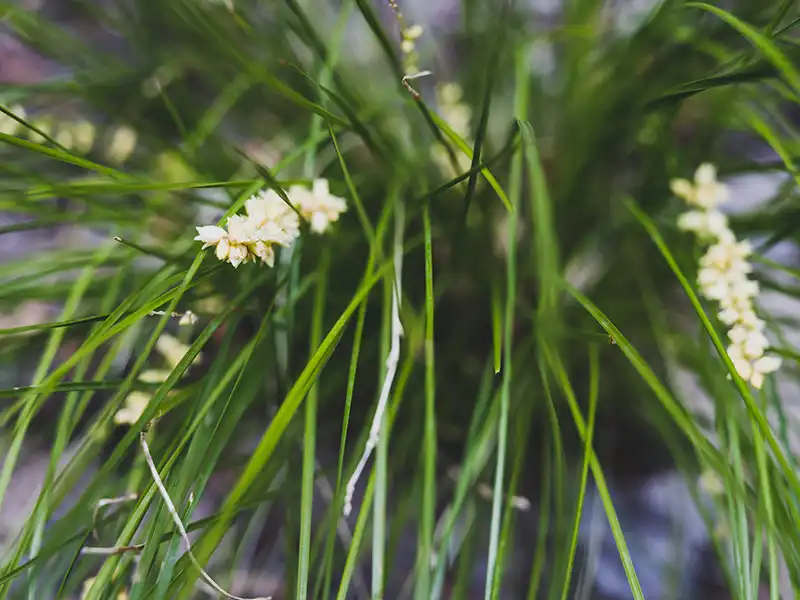
Grow an Australian native grass-like perennial suited to native gardens, mass landscaping and locally appropriate creek-bank revegetation. Mat-rush (Lomandra hystrix) forms substantial clumps of long, arching green leaves, with small yellow flowers arranged amongst the foliage.
Native to Queensland and New South Wales, this species is particularly useful in moist landscape settings. Its foliage adds texture to garden beds, while established clumps can help stabilise suitable waterway banks.
Mat-rush Seed Details
| Botanical name | Lomandra hystrix |
|---|---|
| Common names | Mat-rush, Creek Mat-rush, River Mat-rush |
| Family | Asparagaceae |
| Plant type | Australian native evergreen, clump-forming perennial |
| Growth habit | Dense, rhizomatous clumps with long, arching strap-shaped leaves |
| Approximate height | Approximately 1–1.5 m, depending on growing conditions |
| Foliage | Long green leaves with toothed tips |
| Flowers | Small, fragrant yellow flowers in clustered inflorescences; male and female flowers occur on separate plants |
| Position | Full sun to shade, with suitable moisture |
| Soil | Prefers moist soil; tolerates a range of soil textures, including clay |
| Seeds per gram | Approximately 80; varies between seed lots |
| Uses | Native gardens, mass landscaping, moist garden beds and suitable riparian revegetation and bank-stabilisation projects |
Why Grow Mat-rush?
- Arching foliage provides texture and year-round garden structure.
- Clumping growth suits repeated planting in larger garden beds.
- Useful for shaded positions with adequate moisture.
- Can be incorporated into locally appropriate waterway restoration.
- Can be raised from seed for garden and landscape projects.
How to Grow Mat-rush from Seed
Mat-rush can be propagated by sowing seed directly into a suitable propagation medium. Routine hot-water treatment or scarification is not required in the published nursery method.
- Prepare the growing medium. Use clean trays or pots filled with a free-draining seed-raising mix.
- Sow shallowly. Spread seed over the firmed surface, press gently into contact with the mix and cover only lightly.
- Water gently. Use a fine spray to settle the seed without washing it away.
- Maintain moisture. Keep the medium moist throughout germination, allowing excess water to drain.
- Protect the trays. Shelter them from drying winds, intense heat and seed-eating rodents.
- Allow time for emergence. A local Landcare propagation guide reports germination in approximately 4–6 weeks. Timing varies with conditions and seed quality.
- Pot on and harden gradually. Move seedlings into individual containers when large enough to handle. Keep them partly shaded initially, then gradually introduce them to the intended planting conditions.
Mat-rush for Landscaping
Use Mat-rush as an individual foliage feature or repeat it through a planting bed. Plan spacing around paths and neighbouring plants so mature leaves have room to arch naturally.
Prepare the planting area before transplanting, water seedlings in thoroughly and manage competing weeds while the clumps develop.
Mat-rush for Revegetation and Erosion Control
Lomandra hystrix is used in suitable riparian plantings, where its established clumps help protect river-bank soil. It can withstand temporary flooding in its natural waterway habitat.
For restoration projects, confirm local suitability and seed provenance. Planting design should account for bank condition, water flow and other vegetation required at the site. Active erosion may also require additional stabilisation measures.
Flowers and Foliage
Mat-rush is grown primarily for its foliage. Flower clusters develop amongst the leaves, adding subtle seasonal interest rather than a large floral display.
Seed-grown plants may vary in size and appearance. They should not be expected to reproduce the exact characteristics of named landscaping cultivars.
Where to Grow Mat-rush
- Native garden beds with adequate moisture.
- Shaded landscape areas.
- Mass plantings with space for substantial clumps.
- Locally appropriate creek-bank restoration sites.
- Mixed plantings around larger native shrubs and trees.
Check suitability before planting near bushland outside its natural range. This species can spread into native vegetation in some areas where it has been introduced.
When to Sow Mat-rush Seeds in Australia
These are general nursery planning guides rather than fixed species-specific dates. Choose conditions that allow suitable warmth, reliable moisture and protection for emerging seedlings.
| Climate Zone | Suitable Sowing Period | Growing Notes |
|---|---|---|
| Cool | Spring to early summer under protected conditions | Confirm planting suitability and protect young seedlings from severe frost. |
| Temperate | Spring or early autumn with suitable warmth | Maintain moisture and shelter trays from drying winds. |
| Subtropical | Mild to warm periods with managed moisture | Avoid excessive tray temperatures and allow drainage after watering. |
| Tropical | Suitable periods under managed nursery conditions | Protect trays from heavy rain and maintain airflow. |
| Arid / Semi-arid | Mild periods with dependable irrigation, where suitable | Assess long-term moisture availability before choosing this species. |
Tips for Growing Mat-rush Successfully
- Use clean propagation containers.
- Sow shallowly and water gently.
- Check moisture regularly during germination.
- Allow room for airflow as seedlings develop.
- Harden seedlings before planting outdoors.
- Keep mulch clear of the plant crown.
- Mark young plants in revegetation areas so they can be located during maintenance.
Frequently Asked Questions
Is Mat-rush a true grass?
No. It has a grass-like appearance but belongs to the family Asparagaceae.
Is this the same species as Spiny-headed Mat-rush?
No. These seeds are Lomandra hystrix. Spiny-headed Mat-rush is Lomandra longifolia.
Does Mat-rush need seed treatment?
The published Landcare method uses direct sowing without hot-water treatment or scarification.
Can it be grown in pots?
Seedlings can be raised in pots or tubes before transplanting. Use containers that provide enough room for root development.
Does it require regular mowing?
No. Grow it as a clumping landscape perennial, allowing its leaves to develop naturally.
Will these seeds produce a named cultivar?
No named cultivar is specified. This is species seed, and individual plants may vary.
Grow Mat-rush from Seed
Raise Mat-rush in a protected propagation area, maintain moisture and gradually prepare seedlings for planting outdoors. Choose the final site and planting layout before transplanting, and provide establishment care while roots develop.
Reviews
There are no reviews yet.