


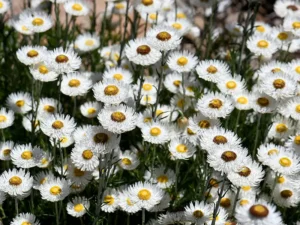
Sunflower Lemon Rush Flower Seeds
Grow elegant lemon-yellow sunflowers with dark centres, strong stems and pollen-free blooms developed for cut-flower production. Lemon Rush F1 (Helianthus annuus) is a fast-growing, single-headed sunflower producing uniform flowers with soft lemon-yellow petals surrounding a contrasting dark central disc.
Lemon Rush has been bred for cut-flower production and typically grows to approximately 120 cm tall under suitable conditions. Plants can begin flowering at around 60 days from sowing, making the variety particularly useful for succession planting and commercial flower production.
The pollen-free flowers offer excellent vase appeal and are particularly well suited to florists, flower farmers, market gardeners and home gardeners wanting attractive sunflowers for cutting.
Lemon Rush Sunflower Seed Details
| Botanical name | Helianthus annuus |
|---|---|
| Variety | Lemon Rush F1 |
| Plant type | Warm-season annual cut-flower sunflower |
| Flower colour | Soft lemon-yellow petals with a dark centre |
| Flower type | Single-headed, pollen-free |
| Approximate height | Approximately 120 cm under suitable conditions |
| Approximate flowering | Approximately 60 days under suitable conditions |
| Position | Full sun |
| Sowing method | Direct sow preferred; seedlings can also be raised for transplanting |
| Approximate sowing depth | Approximately 1–2 cm |
| Approximate seeds per gram | Approximately 15 seeds |
| Uses | Cut flowers, flower farms, market gardens, garden beds and seasonal displays |
Why Grow Lemon Rush Sunflowers?
- Soft lemon-yellow petals surrounding a contrasting dark central disc.
- Pollen-free flowers particularly well suited to indoor arrangements and floristry.
- Single-headed F1 hybrid bred for cut-flower production.
- Uniform plants with strong, useful cutting stems.
- Approximately 120 cm tall under suitable growing conditions.
- Relatively quick flowering at approximately 60 days.
- Excellent vase life when harvested at the appropriate stage.
- Suitable for commercial flower growers, florists, market gardeners and home cutting gardens.
Growing Lemon Rush Sunflowers for Cut Flowers
Lemon Rush is a fast-growing annual sunflower that performs best in a warm, sunny position with well-drained soil. Direct sowing is generally preferred because sunflowers establish rapidly and do not require transplanting, although young seedlings can also be raised separately where growers require greater control over establishment.
- Choose a sunny position. Select an open location receiving plenty of direct sunlight. Good light supports strong stems and flower development.
- Prepare the soil. Cultivate the planting area, remove competing weeds and provide fertile, well-drained soil. Avoid sites that remain persistently waterlogged.
- Sow the seed. Plant Lemon Rush sunflower seeds approximately 1–2 cm deep. Direct sow into the final growing position where practical, or raise seedlings carefully for transplanting.
- Maintain moisture during establishment. Water gently after sowing and keep the soil consistently moist during germination without saturating it.
- Set spacing for your market. Plant spacing influences stem thickness and flower size. Commercial cut-flower growers can use closer spacing where slimmer stems and more manageable flower heads are required.
- Water during active growth. Maintain adequate moisture as plants establish, elongate and develop flower buds. Once established, deeper watering is generally preferable to frequent shallow watering.
- Support if required. Lemon Rush develops tall cutting stems. Plants grown in exposed or windy positions may benefit from support or protective netting.
- Harvest for cut flowers. Cut stems as the petals begin to lift away from the central disc, before the flower is completely open. Place harvested stems into clean water promptly.
Lemon Rush as a Cut-Flower Sunflower
Lemon Rush has been bred specifically for cut-flower production. Its soft lemon-yellow colouring provides a noticeably different appearance from the deeper golden and orange shades associated with many traditional sunflower varieties.
The single flowers combine lemon-yellow petals with a dark central disc, creating strong contrast while retaining a softer overall colour palette. This makes Lemon Rush particularly useful in mixed bouquets alongside white, blue, purple, burgundy, peach and pastel flowers.
Lemon Rush is also pollen-free, an important characteristic for floristry because the flowers do not shed the conspicuous loose yellow pollen associated with pollen-producing sunflower varieties. The combination of uniform growth, strong stems, clean flowers and excellent vase life makes it particularly suitable for professional cut-flower production.
How Quickly Does Lemon Rush Sunflower Flower?
Lemon Rush is a medium to quick cut-flower sunflower and typically flowers in approximately 60 days under suitable conditions.
Another Australian grower reference gives a flowering range of approximately 50–60 days, reinforcing that actual maturity varies with growing conditions.
Temperature, sunlight, sowing date, soil fertility, moisture and plant spacing can all influence development. For commercial growers, the stated maturity should therefore be treated as a production guide rather than an exact harvest date.
How Tall Does Lemon Rush Sunflower Grow?
Lemon Rush is commercially listed at approximately 120 cm tall, although final height varies according to growing conditions.
This moderate cut-flower height provides useful stem length without the extreme height of many traditional ornamental sunflowers. Plant spacing, fertility, moisture, season and climate can all influence final stem length and plant height.
What Colour Is Lemon Rush Sunflower?
Lemon Rush produces distinctive soft lemon-yellow petals surrounding a dark central disc. The colouring is paler and softer than the saturated golden-yellow or orange shades associated with many conventional sunflowers.
This softer colour makes Lemon Rush particularly useful for florists wanting sunflower form without the strong golden colour traditionally associated with the crop.
Is Lemon Rush a Pollen-Free Sunflower?
Yes. Lemon Rush is a pollen-free cut-flower sunflower.
Pollen-free sunflowers are particularly useful for indoor arrangements because they do not shed the conspicuous loose yellow pollen produced by conventional pollen-bearing sunflowers. This helps keep tables, clothing and neighbouring flowers cleaner.
Pollen-free does not mean that the flower has no value to visiting insects; pollenless sunflower flowers can still produce nectar.
Spacing Lemon Rush Sunflowers for Cut Flowers
Plant spacing can be adjusted according to the stem and flower size required. Closer spacing generally restricts individual plant growth and is useful when growers want slimmer cutting stems and smaller, more manageable flower heads. Wider spacing allows individual plants and flower heads to develop more strongly.
An Australian specialist source suggests Lemon Rush can be planted approximately 10–20 cm apart for cut-flower production.
Commercial growers should trial spacing under their own growing conditions, as fertility, irrigation, climate and planting density all influence final stem and flower size.
Succession Planting Lemon Rush Sunflowers
Lemon Rush is well suited to succession planting because it is a relatively quick, single-headed cut-flower crop.
Rather than sowing the entire crop at once, growers can sow smaller batches at regular intervals during the suitable growing season. Sowing approximately every one to two weeks can help spread flowering and provide a more continuous supply of cut stems.
Development speed will change as temperature and day length change through the season, so succession intervals should be adjusted according to local conditions.
When to Harvest Lemon Rush Sunflowers
For cut-flower use, harvest Lemon Rush when the petals are beginning to lift away from the central disc rather than waiting until the flower is completely open.
Use clean, sharp secateurs or a harvesting knife and place stems into clean water promptly after cutting. Remove foliage that would otherwise sit below the waterline.
Harvesting during the cooler part of the day and protecting cut stems from excessive heat can also help maintain flower quality.
Frequently Asked Questions
What is Lemon Rush sunflower?
Lemon Rush is an F1 cut-flower variety of Helianthus annuus producing single, pollen-free flowers with soft lemon-yellow petals and contrasting dark centres.
How tall does Lemon Rush sunflower grow?
Lemon Rush is commercially listed at approximately 120 cm tall under suitable growing conditions. Final height can vary according to climate, fertility, moisture and plant spacing.
What colour are Lemon Rush sunflowers?
The flowers have soft lemon-yellow petals surrounding a dark central disc.
Is Lemon Rush pollen free?
Yes. Lemon Rush is a pollen-free sunflower variety developed for cut-flower production.
How long does Lemon Rush take to flower?
Approximately 60 days is a useful commercial guide under suitable conditions. Another Australian reference gives approximately 50–60 days, so actual flowering time will depend on growing conditions.
Is Lemon Rush suitable for cut flowers?
Yes. Lemon Rush was bred for cut-flower production and combines uniform growth, strong stems, pollen-free flowers and excellent vase life.
How many Lemon Rush sunflower seeds are in a gram?
There are approximately 15 Lemon Rush sunflower seeds per gram. Seed size can vary slightly between seed lots.
Should Lemon Rush sunflowers be direct sown?
Direct sowing is generally preferred, although seedlings can also be raised separately and transplanted carefully while young.
How deep should Lemon Rush sunflower seeds be planted?
Sowing approximately 1–2 cm deep is a practical starting point. Keep the soil moist during germination without allowing it to remain waterlogged.
Does Lemon Rush need full sun?
Yes. A sunny position is preferred for strong stems, vigorous growth and good flower development.
Can Lemon Rush be succession planted?
Yes. Its relatively quick flowering and single-headed growth habit make Lemon Rush well suited to succession sowing for a more continuous cut-flower harvest.
When should Lemon Rush sunflowers be cut for a vase?
Harvest when the petals are beginning to lift and open away from the central disc rather than waiting until the flower is completely open.
Can Lemon Rush be grown in a home garden?
Yes. Although bred for cut-flower production, Lemon Rush is also an attractive sunflower for sunny garden beds and dedicated cutting gardens.
Grow Lemon Rush Sunflowers for Cut Flowers
With its soft lemon-yellow petals, contrasting dark centre, pollen-free flowers, uniform growth and relatively quick flowering, Lemon Rush is particularly well suited to flower farms, market gardens, florists and home cutting gardens.
Sow into a sunny, well-drained position, maintain adequate moisture during establishment and active growth, and consider succession planting if you require a continuing supply of fresh sunflower stems throughout the growing season.
Reviews
There are no reviews yet.