
Hairpin Banksia Seeds
Grow one of Australia’s distinctive flowering native shrubs with Hairpin Banksia Seeds, producing striking cylindrical golden flower spikes that provide an impressive feature in native and wildlife-friendly gardens.
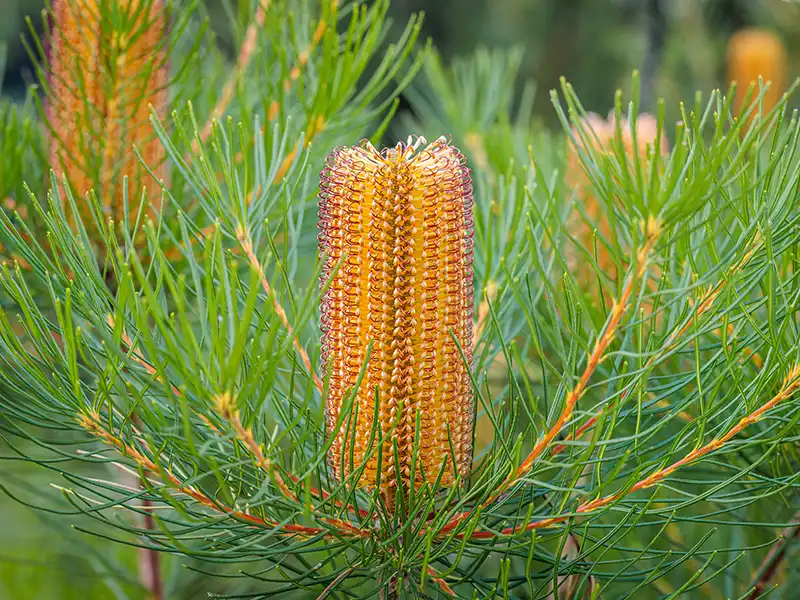
Hairpin Banksia (Banksia spinulosa) is an Australian native evergreen shrub valued for its attractive narrow foliage and distinctive upright flower spikes. The golden-yellow flowers are accompanied by characteristic hooked styles that may vary from yellow through red to dark purple-black.
Naturally occurring in eastern Australia, Hairpin Banksia is well suited to Australian native gardens, wildlife gardens, feature plantings, informal hedges and naturalistic landscapes.
Once established, plants develop into attractive woody shrubs capable of producing spectacular flower spikes through the cooler months.
Hairpin Banksia Seed Details
| Botanical name | Banksia spinulosa |
|---|---|
| Common name | Hairpin Banksia |
| Family | Proteaceae |
| Plant type | Australian native evergreen shrub |
| Approximate height | Up to approximately 3 m depending on form and growing conditions |
| Flower colour | Golden-yellow flower spikes with styles varying from yellow to red, purple or almost black |
| Flowering | Primarily autumn through winter; timing varies with climate and location |
| Position | Full sun to light shade |
| Soil | Well-drained, low-phosphorus soil; sandy and other free-draining soils are suitable |
| Sowing depth | Sow shallowly and cover lightly with seed-raising mix |
| Uses | Native gardens, wildlife gardens, feature shrubs, informal screening and naturalistic landscapes |
Why Grow Hairpin Banksia?
- Distinctive Australian native flowering shrub.
- Produces spectacular cylindrical golden-yellow flower spikes.
- Characteristic hooked styles give the flowers their distinctive Hairpin Banksia appearance.
- Excellent feature plant for Australian native gardens.
- Flowers provide a valuable food source for nectar-feeding wildlife.
- Attractive narrow evergreen foliage provides year-round garden interest.
- Suitable for naturalistic and wildlife-friendly landscapes.
- Established plants can provide many years of flowering and ornamental value.
How to Grow Hairpin Banksia from Seed
Hairpin Banksia can be propagated from seed and is best started in a free-draining native seed-raising medium. Good drainage, careful watering and protection of young seedlings are important during establishment.
- Prepare a free-draining seed-raising mix.
Use a clean, well-drained propagation medium suitable for Australian native plants. Avoid rich mixes containing high levels of phosphorus. - Sow the seeds shallowly.
Place the seeds onto the prepared medium and cover lightly with a thin layer of fine seed-raising mix. - Water gently.
Use a fine spray or gentle watering method to moisten the growing medium without disturbing the seeds. - Maintain consistent moisture.
Keep the growing medium moist during germination, but avoid keeping it constantly saturated or waterlogged. - Provide good light and airflow.
Keep emerging seedlings in a bright, protected position with adequate ventilation. - Allow seedlings to develop.
Continue growing the seedlings in their propagation containers until they are sufficiently established to handle safely. - Pot seedlings individually.
Transplant established seedlings carefully into individual pots containing a free-draining native plant growing medium. - Gradually acclimatise before planting.
Harden young plants gradually before transferring them to their permanent garden position.
Distinctive Golden Hairpin Banksia Flowers
The flowers are one of the outstanding features of Banksia spinulosa. Numerous individual flowers are packed together into upright cylindrical spikes, creating a bold display against the narrow green foliage.
The flower spikes are generally golden-yellow, while the hooked styles can vary considerably in colour. Depending on the plant, they may be yellow, reddish, purple or very dark purple-black.
This contrast between the golden flowers and darker hooked styles gives Hairpin Banksia its characteristic appearance and makes it an attractive feature shrub in Australian native gardens.
Hairpin Banksia for Wildlife Gardens
Banksias are valuable plants for wildlife-friendly Australian gardens because their flower spikes provide nectar during flowering.
- Native birds: nectar-rich flowers can attract nectar-feeding birds.
- Pollinating insects: flowering spikes provide a food resource for visiting insects.
- Native gardens: combines naturally with other Australian shrubs and groundcovers.
- Habitat planting: mature shrubs add vegetation structure and shelter to garden landscapes.
- Cool-season flowers: autumn and winter flowering can provide seasonal interest when many other garden plants are less active.
When Does Hairpin Banksia Flower?
Hairpin Banksia is particularly valued for flowering during the cooler part of the year. In its natural NSW range, flowering is commonly recorded from approximately April through August.
Flowering time can vary according to geographic location, climate, rainfall, plant maturity and growing conditions.
Young plants grown from seed require time to establish before reaching flowering maturity, so Hairpin Banksia should be regarded as a longer-term native garden plant rather than a fast-flowering annual.
What Soil Is Best for Hairpin Banksia?
Hairpin Banksia performs best in well-drained soil and is naturally associated with Australian heath, woodland and dry sclerophyll vegetation.
Sandy and other free-draining soils are particularly suitable. Where soils are heavy or poorly drained, improving drainage or planting into a raised position can help reduce prolonged waterlogging around the root system.
Like other members of the Proteaceae family, Banksias are adapted to relatively nutrient-poor Australian soils and can be sensitive to excessive phosphorus.
If fertiliser is required, choose a product formulated specifically for Australian native plants and apply according to the manufacturer’s directions.
Does Hairpin Banksia Need Full Sun?
Hairpin Banksia grows well in full sun to light shade. An open, sunny position generally encourages stronger flowering and compact shrub growth.
When planting young seedlings, provide sufficient space for the plant to develop and avoid locations where surrounding vegetation will eventually create dense shade.
Good airflow and freely draining soil are particularly useful when growing Banksias in humid climates.
Where to Grow Hairpin Banksia
Hairpin Banksia is a versatile native shrub that can be incorporated into a range of Australian garden and landscape styles.
- Australian native gardens.
- Wildlife and bird-friendly gardens.
- Feature shrub plantings.
- Naturalistic landscapes.
- Informal screening and shrub borders.
- Coastal and sandstone-inspired gardens where conditions are suitable.
- Mixed plantings with compatible Australian native species.
Tips for Growing Hairpin Banksia Successfully
- Use a clean, free-draining propagation medium when sowing seeds.
- Sow shallowly rather than burying the seed deeply.
- Maintain consistent moisture during germination without waterlogging the growing medium.
- Provide seedlings with good light and airflow.
- Transplant young seedlings carefully to minimise root disturbance.
- Choose a sunny to lightly shaded permanent position.
- Prioritise good drainage when selecting a planting site.
- Avoid high-phosphorus fertilisers.
- Use a fertiliser formulated for Australian native plants if additional nutrition is required.
Frequently Asked Questions
What is Hairpin Banksia?
Hairpin Banksia is an Australian native evergreen shrub botanically known as Banksia spinulosa. It is known for its cylindrical golden flower spikes and distinctive hooked styles.
Is Hairpin Banksia native to Australia?
Yes. Banksia spinulosa is native to eastern Australia and occurs naturally in Queensland and New South Wales.
How large does Hairpin Banksia grow?
The species can develop into a multi-stemmed shrub up to approximately 3 m high. Ultimate size varies according to genetic form, climate, soil and growing conditions.
What colour are Hairpin Banksia flowers?
The flower spikes are generally yellow to golden. Their distinctive hooked styles may be yellow, red, purple or very dark purple-black.
When does Hairpin Banksia flower?
Flowering commonly occurs during autumn and winter. In New South Wales, flowering is recorded primarily from approximately April through August, although timing varies with location and growing conditions.
Can Hairpin Banksia be grown from seed?
Yes. Hairpin Banksia can be propagated from seed. Sow into a free-draining seed-raising medium, cover lightly and maintain consistent moisture during germination.
Do Hairpin Banksia seeds need hot-water treatment?
No. Banksia seed does not require the hot-water scarification treatment commonly used for hard-coated Acacia seed. Sow the seed shallowly into a suitable free-draining propagation medium.
Does Hairpin Banksia need full sun?
Full sun is ideal for strong flowering, although Hairpin Banksia can also grow in light shade.
What soil does Hairpin Banksia prefer?
Well-drained soil is preferred. Hairpin Banksia is naturally associated with relatively low-nutrient Australian soils and should not be heavily fertilised with phosphorus.
Can I use normal garden fertiliser on Hairpin Banksia?
Use caution. Banksias belong to the Proteaceae family and can be sensitive to excessive phosphorus. Where fertiliser is required, use a product specifically formulated for Australian native plants.
Is Hairpin Banksia good for wildlife gardens?
Yes. Its nectar-producing flower spikes make it a useful flowering shrub for wildlife-friendly gardens and can attract nectar-feeding birds and pollinating insects.
Can Hairpin Banksia be grown in a coastal garden?
Hairpin Banksia can be suitable for coastal-region gardens where the soil is free draining and other growing conditions are appropriate. Local exposure, soil type and salt conditions should be considered when selecting the planting position.
Is Hairpin Banksia the same as dwarf Banksias such as Birthday Candles?
No. Named dwarf cultivars sold by nurseries are selected forms of Hairpin Banksia or related material. Seed-grown Banksia spinulosa should not be expected to reproduce the compact size or exact flower characteristics of a named cultivar.
Grow Australian Hairpin Banksia from Seed
With its striking golden flower spikes, distinctive hooked styles and attractive evergreen foliage, Banksia spinulosa is an excellent Australian native shrub for feature plantings, wildlife gardens and naturalistic landscapes.
For best results, sow the seeds shallowly into a free-draining propagation medium, maintain consistent moisture during establishment and gradually acclimatise young plants before planting them into a sunny, well-drained garden position.
Reviews
There are no reviews yet.