
Sugardrip Sweet Sorghum Seeds
Botanical Name: Sorghum bicolor
Variety: Sugardrip
Type: Sweet / Forage Sorghum
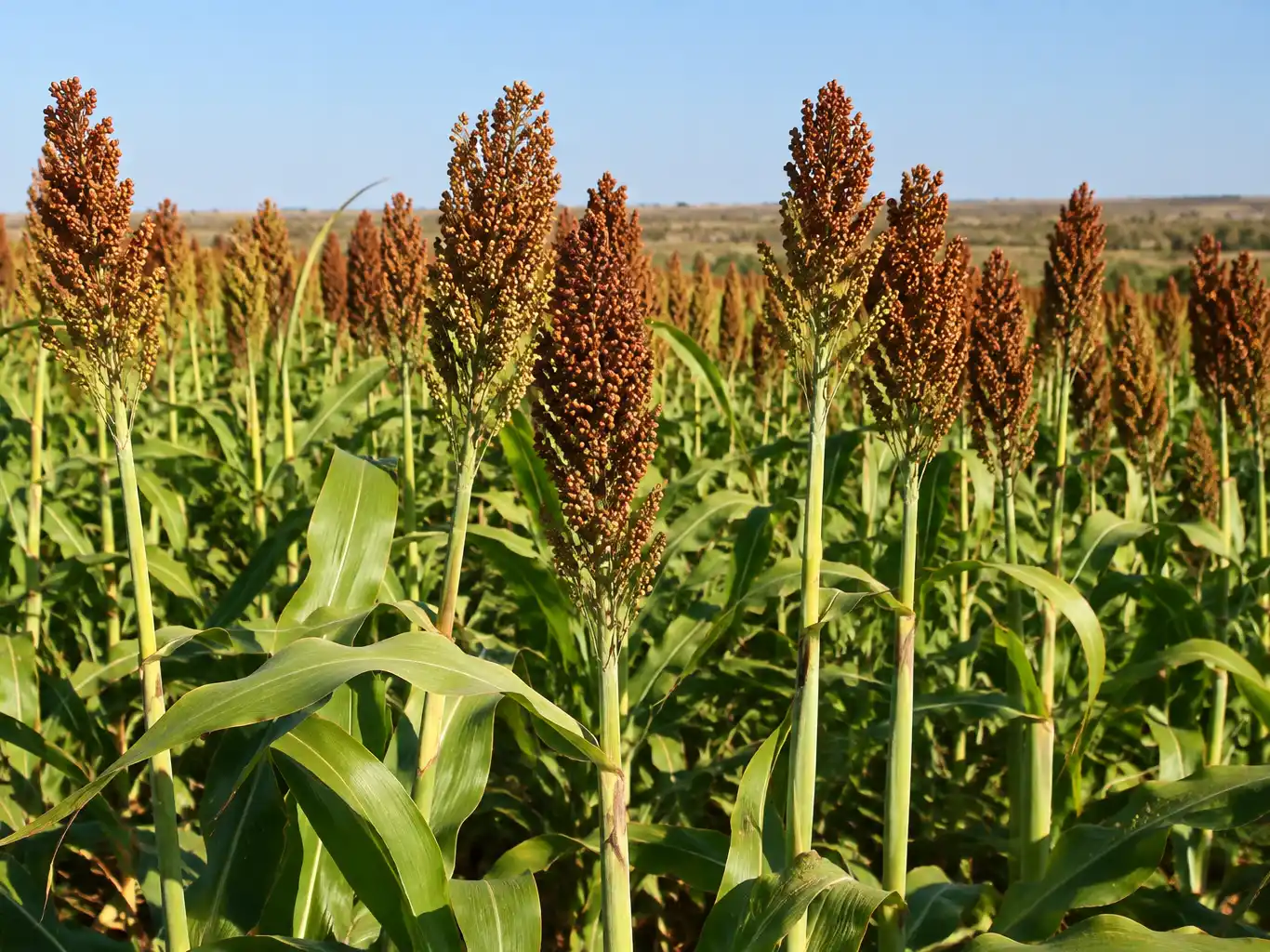
Sugardrip is a tall, warm-season sweet sorghum valued for forage production, grazing, stand-over feed, biomass and its characteristically sweet, juicy stems. It produces vigorous summer growth and abundant leafy material, making it useful for farms, small acreage, regenerative growing systems and warm-season cover cropping.
Unlike grain sorghums grown primarily for seed production, Sugardrip is a sweet sorghum selected for its leafy growth and sugar-rich stems. Established plants develop tall canes topped by seed heads containing small brown grain.
Sugardrip has a long history of cultivation in Australia and is particularly associated with forage production in warmer regions. Its combination of vigorous summer growth, sweet stems and useful biomass makes it a versatile warm-season crop.
- Traditional sweet and forage sorghum variety.
- Tall, vigorous warm-season annual.
- Produces sweet, juicy stems and abundant leafy growth.
- Suitable for forage, grazing and stand-over feed.
- Produces substantial biomass for warm-season cover cropping.
- Good heat tolerance once established.
- Useful for farms, acreage, pasture systems and soil-building applications.
- Can also be grown for traditional sweet sorghum syrup production.
Plant Details
- Plant Type: Warm-season annual sweet and forage sorghum
- Botanical Name: Sorghum bicolor
- Variety: Sugardrip
- Growth Habit: Tall, upright and vigorous
- Foliage: Leafy summer growth
- Stems: Juicy and characteristically sweet
- Seed: Small brown grain
- Season: Warm season
- Best Position: Full sun
- Frost Tolerance: Low; frost sensitive
- Drought Tolerance: Good once established
Best Uses
- Summer forage
- Grazing
- Stand-over feed
- Warm-season cover cropping
- Biomass production
- Green manure
- Soil protection and organic matter
- Farm and acreage plantings
- Sweet sorghum syrup production
Why Grow Sugardrip Sorghum?
Sugardrip combines rapid warm-season growth with tall, leafy plants and sweet, juicy stems. This makes it particularly useful where the objective is to produce substantial summer biomass rather than simply harvest grain.
For forage systems, its sweet stems can remain palatable as plants mature, making Sugardrip useful for grazing and stand-over feed.
For soil-building applications, the large amount of plant material produced can provide valuable organic matter. Plants can be cut and incorporated as green manure or chopped and left on the soil surface as mulch.
Sowing Information
- Best Sowing Time: Spring to summer once soil temperatures are consistently warm
- Sowing Depth: Approximately 1–2 cm
- Position: Full sun
- Soil Type: Adaptable to a range of soils but performs best in fertile, well-drained soil
- Moisture: Maintain adequate moisture during germination and establishment
- Temperature: Sow into warm soil after frost risk has passed
Sowing Rate
Sowing rates are a general guide only. Adjust according to seedbed preparation, rainfall, irrigation, intended use and local growing conditions.
When to Sow Sugardrip Sorghum in Australia
How to Sow Sugardrip Sorghum Seeds
- Wait until frost risk has passed and the soil has warmed.
- Select a sunny position with well-drained soil.
- Control existing weeds and prepare a firm seedbed.
- Broadcast evenly or sow with a suitable seed drill.
- Cover seed with approximately 1–2 cm of soil.
- Roll or press lightly to ensure good seed-to-soil contact.
- Water after sowing where soil moisture is inadequate.
- Maintain moisture until seedlings are well established.
Forage and Grazing
Sugardrip has traditionally been grown as a forage sorghum because of its leafy growth and sweet, juicy stems. It can provide substantial summer forage and can also be retained as stand-over feed as the season progresses.
For grazing, plants should be managed according to standard forage sorghum livestock-safety practices. Avoid grazing young, stressed, wilted or frost-damaged sorghum because potentially dangerous levels of prussic acid can occur.
Nitrate accumulation can also occur under certain environmental and fertility conditions. Seek appropriate livestock or agronomic advice where sorghum is being grown specifically for grazing.
Green Manure and Cover Cropping
Sugardrip can produce a substantial amount of warm-season biomass, making it useful as a summer cover crop or green manure.
Dense growth helps shade the soil and compete with summer weeds, while its extensive root system contributes below-ground organic matter.
For green manure, cut plants while actively growing and before stems become excessively mature and fibrous. Material can be incorporated into the soil or chopped and left on the surface as mulch.
Sweet Sorghum
Sugardrip belongs to the sweet sorghum group. Unlike grain sorghum, sweet sorghums accumulate substantial sugars in their juicy stems.
Traditionally, mature stems can be crushed to extract their juice, which can then be processed into sorghum syrup. The crop can also produce grain at maturity, making Sugardrip a versatile multipurpose sorghum.
Management
- Sow only after soil has warmed and frost risk has passed.
- Maintain adequate moisture during germination and establishment.
- Control weeds while seedlings are establishing.
- For green manure, cut before stems become excessively mature and fibrous.
- Can be incorporated into warm-season cover crop blends.
- Manage grazing carefully and observe forage sorghum livestock-safety precautions.
Important Notes
- Sugardrip is a sweet / forage sorghum rather than a conventional grain sorghum.
- It is a warm-season crop and is frost sensitive.
- Produces tall, leafy growth with sweet, juicy stems.
- Useful for forage, stand-over feed, biomass and cover cropping.
- Can also be grown for traditional sweet sorghum syrup production.
- Do not graze young, severely stressed, wilted or frost-damaged sorghum.
- Appropriate livestock management is essential when forage sorghum is used for grazing.
Reviews
There are no reviews yet.