
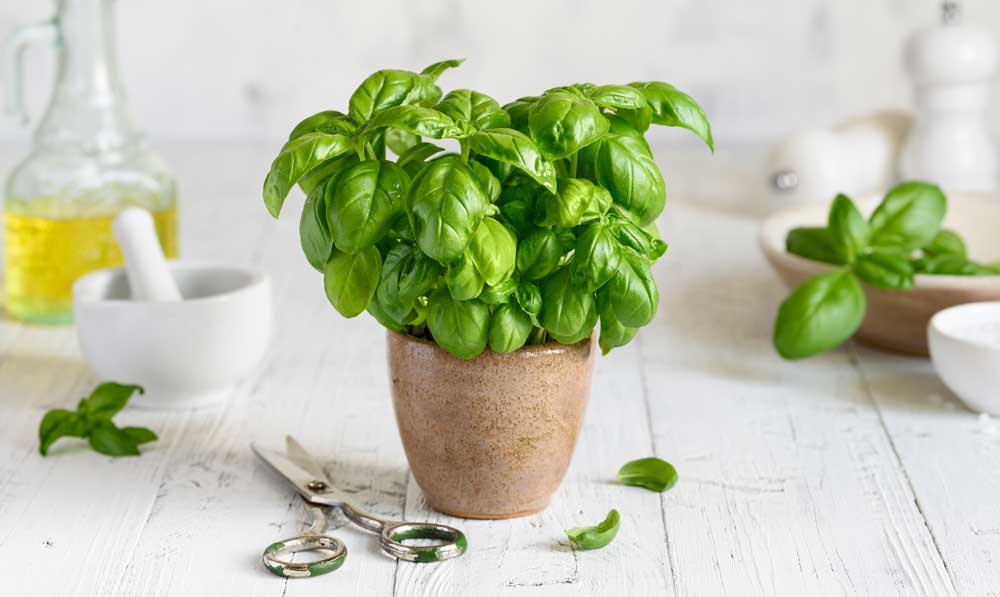
Basil is one of the world’s most popular culinary herbs, loved for its rich fragrance, vibrant flavour and remarkable versatility in the kitchen. Whether you’re making homemade pesto, flavouring Thai curries, garnishing fresh salads or brewing aromatic herbal teas, basil is one of the easiest and most rewarding herbs to grow from seed.
Australia’s warm climate is ideal for growing basil throughout much of the year. With the right variety and proper care, even beginner gardeners can enjoy months of fresh, homegrown leaves from a single planting. From traditional Italian Sweet Genovese Basil to fragrant Lemon Basil, compact Greek Basil, colourful Dark Opal Basil and aromatic Holy Basil (Tulsi), there is a basil variety suited to almost every garden and every style of cooking.
This comprehensive growing guide explains everything you need to know about growing basil from seed in Australia, including choosing the best variety, sowing times for different climates, soil preparation, watering, harvesting, seed saving and solving common growing problems.
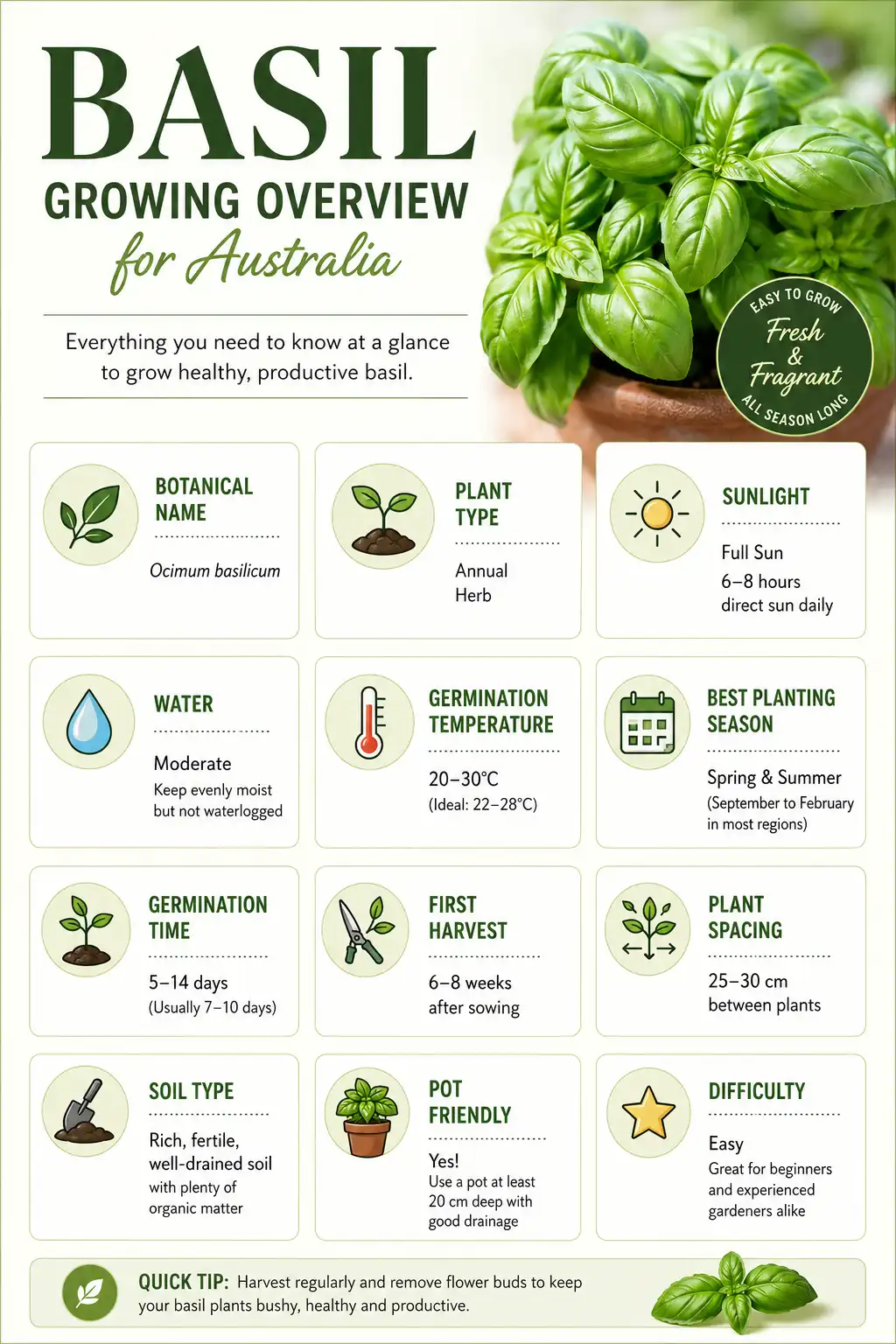 Basil growing overview for Australian climates, from sowing and variety selection to pruning and pest management.
Quick Facts
| Botanical Name | Ocimum basilicum (plus related Ocimum species) |
| Plant Type | Warm-season annual herb |
| Plant Height | 25–70 cm depending on variety |
| Position | Full sun |
| Soil | Rich, fertile, well-drained soil |
| Germination | 5–14 days |
| Best Growing Season | Spring to autumn (year-round in tropical climates) |
| Difficulty | Easy |
Contents
- Why Grow Basil?
- What is Basil?
- Choosing the Right Basil Variety
- When to Plant Basil in Australia
- How to Grow Basil from Seed
- Growing Basil in Pots
- Companion Planting
- Harvesting Basil
- Saving Basil Seed
- Common Problems
- Frequently Asked Questions
Why Grow Basil?
Basil has remained one of the world’s favourite herbs for centuries because it combines exceptional flavour with fast, reliable growth. Plants establish quickly from seed, require very little space and produce abundant harvests over many months when picked regularly.
Growing basil from seed also provides access to dozens of unique varieties that are rarely available as seedlings. Gardeners can choose from traditional Italian basil for pesto, spicy Thai basil for Asian cooking, citrus-scented Lemon Basil, compact Greek Basil for containers, colourful Dark Opal Basil or highly aromatic Holy Basil (Tulsi).
- Grow a much wider range of basil varieties.
- Harvest fresh leaves whenever you need them.
- Excellent for pots, raised beds and kitchen gardens.
- Ideal for beginner gardeners.
- Attracts bees and beneficial pollinators.
- Suitable for home gardens and commercial production.
- Produces high yields from a small growing space.
What is Basil?
Basil belongs to the mint family (Lamiaceae) and is native to tropical regions of Asia and Africa. It has been cultivated for thousands of years as both a culinary and ornamental herb and is now grown throughout the world.
Most basil varieties are grown as warm-season annuals in Australia, although plants may survive longer in frost-free tropical and subtropical regions. The leaves vary considerably in size, colour, flavour and aroma depending on the variety, ranging from the classic sweet flavour of Genovese Basil through to spicy Thai Basil, lemon-scented varieties and strongly aromatic Holy Basil.
Because basil grows rapidly from seed and responds well to regular harvesting, it remains one of the easiest herbs for home gardeners to cultivate successfully.
Browse our complete collection of premium Basil Seeds, including Sweet Genovese, Thai Basil, Lemon Basil, Holy Basil (Tulsi), Greek Basil, Dark Opal Basil and more.
Choosing the Right Basil Variety
Basil varieties can differ substantially in flavour, aroma, leaf colour, plant habit and culinary use. Some produce large, tender leaves for pesto and salads, while others have spicy, citrus, clove-like or anise-like flavours better suited to Asian cooking, herbal infusions or ornamental planting.
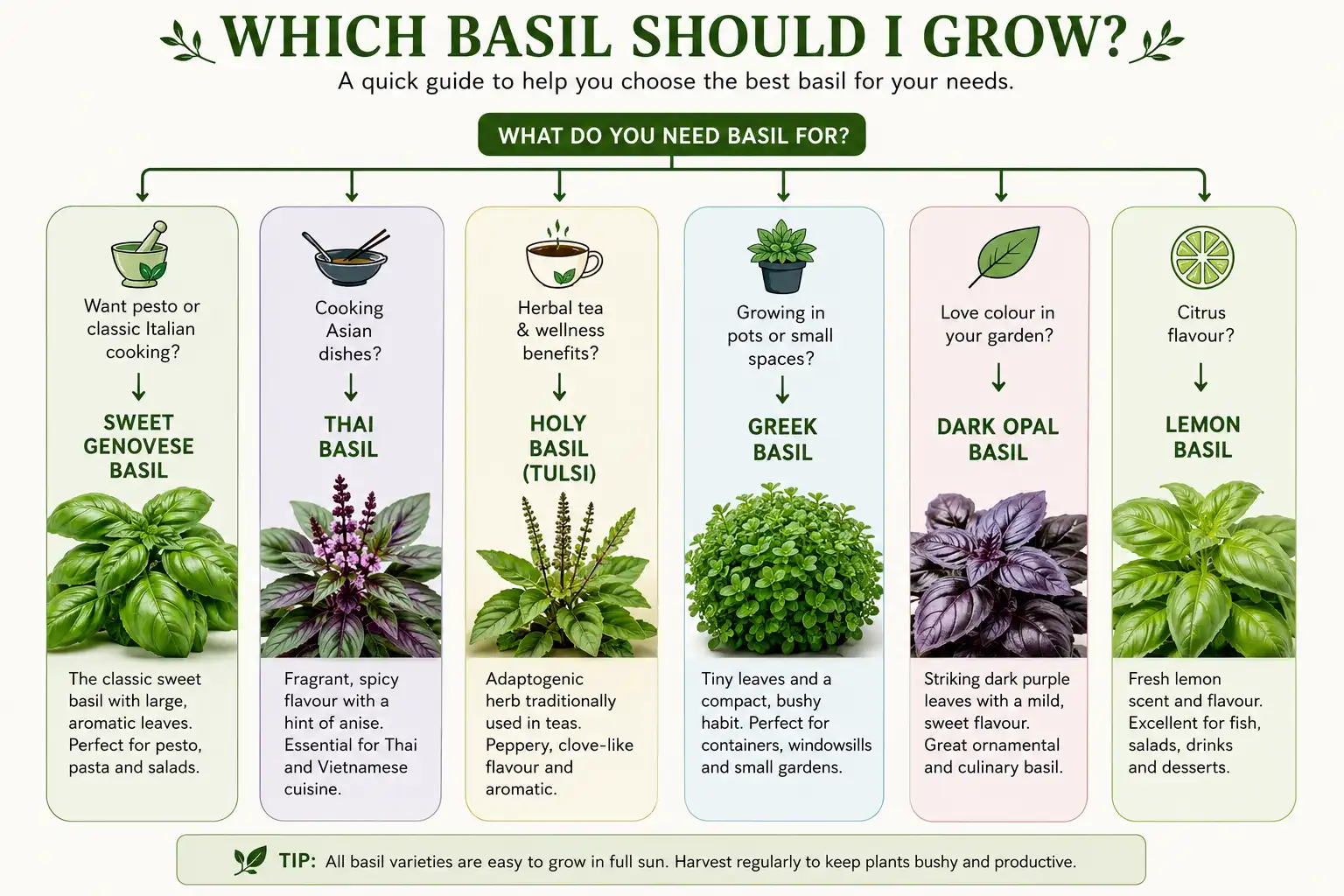
Choosing the right basil variety depends on how you intend to use the leaves, the space available and the growing conditions in your garden. The comparison table below provides a quick guide to some of the most popular basil types grown in Australia.
| Basil Variety | Flavour and Aroma | Plant Characteristics | Best Uses |
|---|---|---|---|
| Sweet Genovese Basil | Sweet, aromatic and traditionally Italian | Large, tender green leaves on vigorous upright plants | Pesto, pasta, pizza, salads and tomato dishes |
| Thai Basil | Sweet, spicy and anise or liquorice-like | Narrow green leaves, often with purple stems and flowers | Curries, stir-fries, noodle soups and fresh garnishes |
| Holy Basil (Tulsi) | Strongly aromatic, peppery and clove-like | Bushy plants with fragrant foliage and slender flower spikes | Herbal infusions, Thai cooking and pollinator gardens |
| Lemon Basil | Fresh citrus fragrance with a light basil flavour | Green foliage with a distinctive lemon aroma | Seafood, salads, teas, desserts and fresh garnishes |
| Dark Opal Basil | Mildly spicy with a traditional sweet basil character | Deep purple foliage with strong ornamental appeal | Salads, garnishes, herb vinegar and decorative planting |
| Cinnamon Basil | Warm, spicy and lightly cinnamon-scented | Narrow green leaves with reddish or purple stems | Teas, desserts, fruit dishes, flowers and potpourri |
| Greek Basil | Concentrated sweet basil flavour | Compact, rounded plants with very small leaves | Pots, edging, balconies and small kitchen gardens |
Not sure which basil to grow?
Choose Sweet Genovese for pesto and Italian cooking, Thai Basil for curries and noodle dishes, Greek Basil for compact pots, Lemon Basil for citrus flavour, Dark Opal for colour, and Holy Basil for strongly aromatic leaves and herbal infusions.
Sweet Basil and Genovese Basil
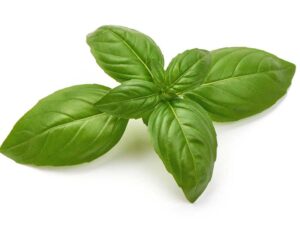
Sweet Basil and Genovese Basil are the classic culinary basil types most closely associated with Italian cooking. Both produce broad, tender green leaves with a rich, sweet fragrance, although Genovese Basil generally has larger leaves and a stronger traditional pesto flavour.
These varieties are excellent for pesto, tomato salads, pasta, pizza and fresh garnishes. The leaves are best used fresh or added near the end of cooking because prolonged heat can reduce their delicate aroma.
Sweet and Genovese Basil plants grow rapidly in warm weather and respond well to frequent harvesting. Pinching the growing tips encourages branching and helps produce a bushier plant with more usable leaves.
Thai Basil
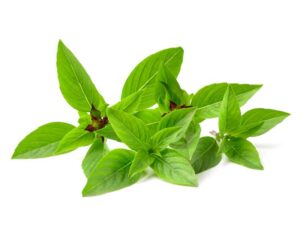
Thai Basil has narrower leaves than Sweet Basil and commonly develops purple stems and flower buds. Its flavour is sweeter and spicier, with noticeable anise or liquorice notes.
Unlike many Italian basil varieties, Thai Basil generally retains more of its flavour during cooking. It is commonly used in curries, stir-fries, noodle soups, salads and fresh herb plates throughout Southeast Asian cuisine.
Thai Basil prefers consistently warm conditions and regular harvesting. Allowing a few stems to flower can add colour to the garden and provide forage for bees, although removing most flower buds will extend leaf production.
Holy Basil (Tulsi)
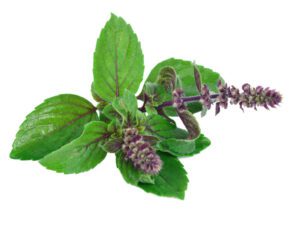
Holy Basil, also known as Tulsi or Sacred Basil, belongs to a related group of aromatic Ocimum species. The leaves are generally smaller and more textured than Sweet Basil, with a stronger peppery, clove-like fragrance.
Different forms of Holy Basil may be selected for herbal infusions, culinary use, pollinator planting or ornamental value. Thai Holy Basil is especially useful in strongly flavoured stir-fries such as pad kra pao, while green Tulsi types are commonly grown in herb gardens and containers.
Holy Basil should not be confused with Thai Sweet Basil. Holy Basil has a sharper, more peppery flavour, while Thai Sweet Basil is generally sweeter and more anise-like.
For more detailed information, see our Thai Holy Basil growing guide for Australia.
Lemon Basil
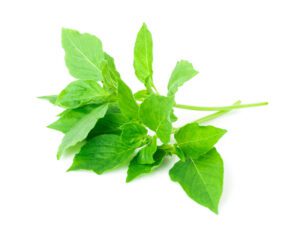
Lemon Basil produces green leaves with a distinctive citrus aroma that becomes particularly noticeable when the foliage is crushed. Its refreshing flavour makes it useful in seafood dishes, salads, marinades, teas and desserts.
The plants grow vigorously in warm, sunny positions and benefit from regular harvesting. Lemon Basil is especially useful for gardeners wanting an unusual culinary herb that still grows with the same general ease as traditional basil.
Dark Opal and Purple Basil
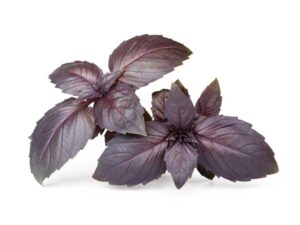
Dark Opal Basil is grown for both culinary use and its striking deep-purple foliage. The leaves have a mild, slightly spicy basil flavour and provide strong colour contrast in salads, garnishes and herb vinegar.
The plants are also highly ornamental and work well in decorative containers, mixed herb beds and edible borders. Leaf colour is usually strongest when plants receive good sunlight, although some green variation may still occur.
Cinnamon Basil
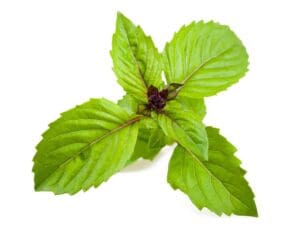
Cinnamon Basil has green leaves, reddish stems and a warm, spicy fragrance reminiscent of cinnamon. Its distinctive aroma makes it suitable for herbal teas, desserts, fruit dishes, edible flowers and dried arrangements.
The plants are generally vigorous and may reach approximately 50–70 cm under favourable conditions. Regular tip pruning keeps them compact and encourages a higher number of leafy branches.
Greek Basil
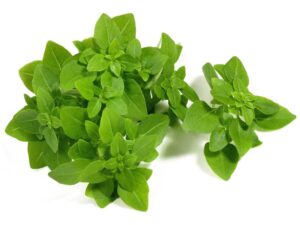
Greek Basil forms naturally compact, rounded plants covered in very small, aromatic leaves. Despite its fine foliage, it has a strong traditional basil flavour and can be used in many of the same dishes as Sweet Basil.
Its tidy growth habit makes it particularly suitable for pots, balconies, edging and small gardens. Greek Basil generally requires less shaping than taller basil varieties and can form a neat dome-shaped plant with regular light harvesting.
Can Different Basil Varieties Be Grown Together?
Yes. Different basil varieties can be grown together in the same herb garden or large container, provided each plant receives adequate space, sunlight, water and airflow.
Growing several varieties together allows you to harvest different flavours for cooking while creating an attractive mix of green, purple and flowering plants. However, basil varieties may cross-pollinate when flowering at the same time. Gardeners planning to save true-to-type seed should separate varieties or use suitable isolation methods.
Browse Seedmart Australia’s complete Basil Seeds collection to compare culinary, aromatic, compact and colourful basil varieties in packet and bulk quantities.
When to Plant Basil in Australia
Basil is a warm-season herb that thrives in warm soil and frost-free conditions. It dislikes cold weather and should not be planted until the danger of frost has passed. Although basil grows well throughout much of Australia, the best sowing time varies depending on your local climate.
In cooler regions, sow basil during spring and summer once the soil has warmed. Gardeners in subtropical and tropical climates can enjoy a much longer growing season, with basil often producing continuously for many months.
| Australian Climate | Best Time to Sow | Growing Notes |
|---|---|---|
| Temperate | September–January | Plant once frost danger has passed. |
| Cool & Alpine | October–December | Start indoors for an earlier harvest. |
| Subtropical | August–April | Avoid prolonged periods of heavy summer rain where possible. |
| Tropical | Year-round (best during the dry season) | Protect young plants from excessive monsoonal rain. |
| Arid | Spring and early autumn | Provide afternoon shade during extreme heat. |
How to Grow Basil from Seed
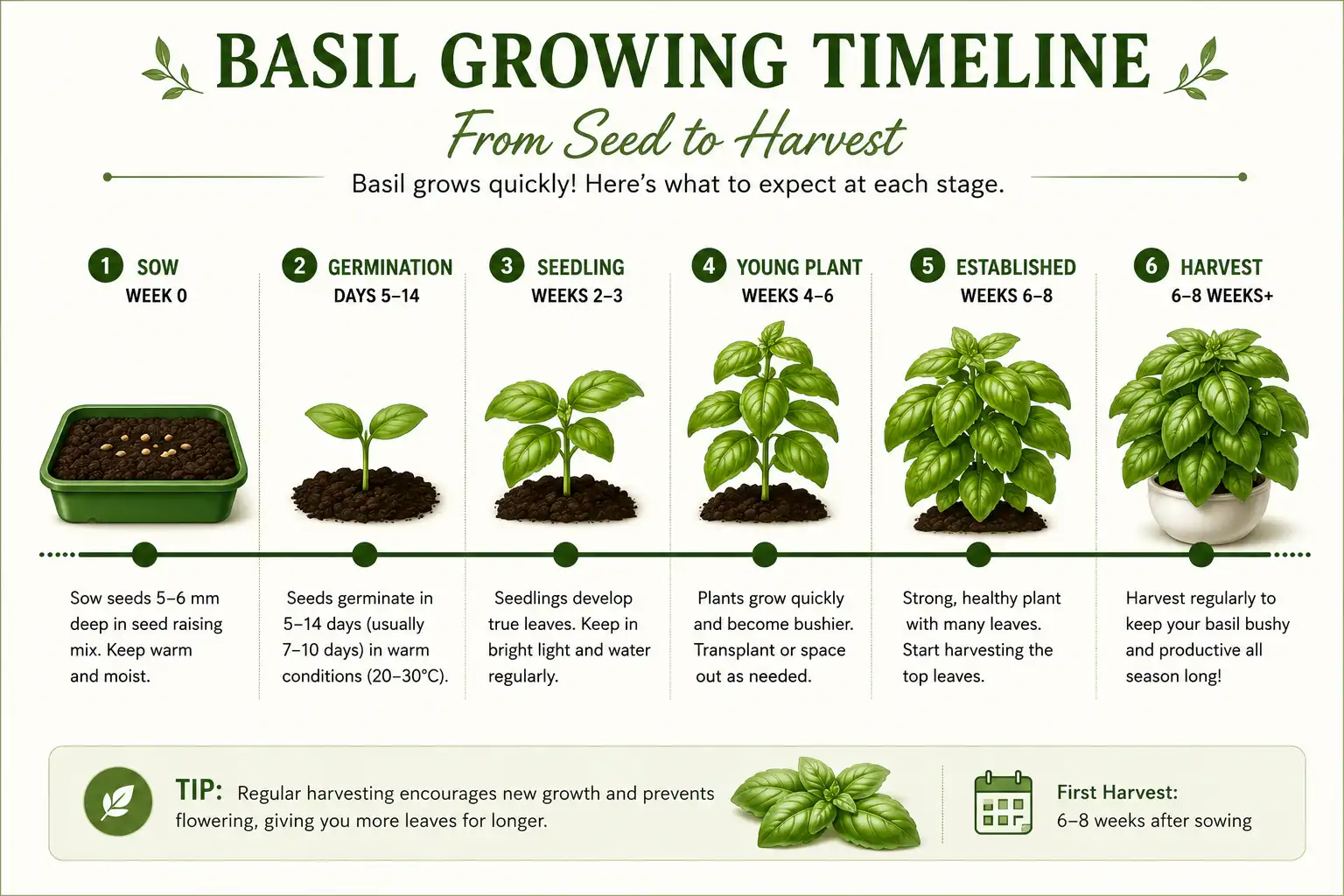
Basil is one of the easiest herbs to grow from seed. Fresh seed germinates readily in warm conditions and seedlings establish quickly with plenty of sunlight and consistent moisture.
Step 1 – Choose the Right Position
Select a position receiving at least 6–8 hours of direct sunlight each day. Basil produces the strongest growth, richest flavour and highest leaf yields in full sun. In extremely hot inland areas, light afternoon shade may help reduce heat stress during summer.
Step 2 – Prepare the Soil
Basil grows best in fertile, moisture-retentive but well-drained soil. Before planting, incorporate compost or well-rotted organic matter to improve soil structure and water-holding capacity.
A slightly acidic to neutral soil (approximately pH 6.0–7.0) is ideal.
Step 3 – Sow the Seeds
- Fill trays or pots with quality seed-raising mix.
- Moisten the mix before sowing.
- Sow seeds approximately 5–6 mm deep.
- Cover lightly with fine seed-raising mix or vermiculite.
- Keep evenly moist but never waterlogged.
- Place in a warm, bright location.
Under ideal conditions, seedlings usually emerge within 5–14 days.
Step 4 – Transplant Seedlings
When seedlings develop two or three pairs of true leaves, transplant them into the garden or larger pots.
- Space plants 25–30 cm apart.
- Allow 40–50 cm between rows.
- Water thoroughly after transplanting.
- Protect young plants from strong winds for the first week.
Basil Growing Requirements
| Requirement | Recommendation |
|---|---|
| Sunlight | 6–8 hours of full sun daily. |
| Soil | Rich, fertile, well-drained soil. |
| Watering | Keep evenly moist without becoming waterlogged. |
| Temperature | 20–30°C for best growth. |
| Plant Spacing | 25–30 cm. |
| Fertiliser | Apply compost before planting and feed lightly every 3–4 weeks during active growth. |
| Difficulty | Easy. |
Watering and Feeding Basil
Basil prefers consistently moist soil but dislikes sitting in water. Deep watering every few days is generally better than frequent light watering, as it encourages deeper root growth and improves drought resilience.
Container-grown basil usually requires more frequent watering than plants growing in garden beds, particularly during hot weather.
Adding compost before planting often provides sufficient nutrients for home gardens. During the growing season, an occasional application of liquid seaweed or a balanced organic fertiliser will help maintain vigorous growth and continual leaf production.
Growing Basil in Pots
Basil is exceptionally well suited to container growing and is one of the easiest herbs to keep on a sunny patio, balcony or kitchen windowsill.
Choose a pot at least 25–30 cm wide with good drainage holes and fill it with premium-quality potting mix. Water regularly, as containers dry out much faster than garden beds, particularly during summer.
Compact varieties such as Greek Basil are especially attractive in decorative pots, while larger containers can accommodate Sweet Basil, Thai Basil or Lemon Basil throughout the growing season.
Companion Planting
Basil is an excellent companion plant for many vegetables. It fits naturally into kitchen gardens where its flowers attract bees and other beneficial pollinating insects while its fragrant foliage makes harvesting convenient for everyday cooking.
| Excellent Companion Plants | Benefits |
|---|---|
| Tomatoes | Popular kitchen garden combination with similar growing requirements. |
| Capsicum & Chillies | Warm-season crops that thrive under similar conditions. |
| Eggplant | Companion planting simplifies watering and maintenance. |
| Parsley | Provides continuous fresh herbs for the kitchen. |
| Oregano | Makes an excellent Mediterranean herb combination. |
Avoid overcrowding basil with taller plants that cast heavy shade, as reduced sunlight can lead to weak, elongated growth and lower leaf production.
Success Tip: Begin harvesting basil as soon as plants reach around 15–20 cm tall. Regular harvesting is one of the best ways to produce bushier plants and maximise leaf production throughout the season.
Harvesting Basil for Maximum Leaf Production
One of the biggest secrets to growing exceptional basil is harvesting it correctly. Unlike many herbs, basil actually becomes bushier and more productive the more often it is harvested. Regular picking encourages the plant to produce new side shoots instead of becoming tall, woody or flowering too early.
Most basil varieties are ready for their first harvest approximately 6–8 weeks after sowing, depending on the weather and growing conditions.
How to Harvest Basil Properly
- Wait until plants are at least 15–20 cm tall.
- Locate a pair of healthy leaves.
- Using clean scissors or your fingers, cut the stem just above that leaf pair.
- Two new shoots will usually develop below the cut, creating a bushier plant.
- Continue harvesting every week throughout the growing season.
Avoid picking individual leaves from the bottom of the plant. Harvesting entire growing tips encourages better branching and significantly increases total leaf production.
Should You Remove Basil Flowers?
Yes. Once basil begins flowering, the plant naturally shifts its energy away from producing leaves and towards seed production. While the flowers are attractive to bees and other beneficial insects, allowing plants to flower too early usually results in fewer leaves and reduced flavour.
Simply pinch out flower buds as soon as they appear to keep the plant producing fresh foliage for as long as possible.
If you intend to save seed, allow one or two healthy plants to flower naturally towards the end of the growing season.
How Long Will Basil Keep Producing?
With regular harvesting and warm growing conditions, basil can continue producing fresh leaves for several months.
| Growth Stage | Approximate Time |
|---|---|
| Seed Germination | 5–14 days |
| Ready for Transplanting | 3–4 weeks |
| First Harvest | 6–8 weeks |
| Peak Production | 2–5 months |
| Seed Production | Late season |
How to Store Fresh Basil
Fresh basil is best harvested immediately before use, but larger harvests can easily be stored for later.
Short-Term Storage
- Place freshly cut stems into a glass of water like a bunch of flowers.
- Keep at room temperature out of direct sunlight.
- Change the water every couple of days.
- Fresh stems often remain usable for up to one week.
Refrigeration
If refrigeration is necessary, wrap basil loosely in slightly damp paper towel before placing it inside a sealed container or reusable produce bag. Avoid exposing basil to very cold temperatures for extended periods, as the leaves may darken.
Freezing Basil
Basil freezes exceptionally well and retains much of its flavour.
- Freeze whole leaves in freezer bags.
- Blend basil with olive oil before freezing into ice cube trays.
- Add frozen cubes directly to soups, sauces and pasta dishes.
Drying Basil
Although drying changes the flavour slightly, it remains an excellent way to preserve larger harvests.
- Tie small bunches together.
- Hang upside down in a warm, dry, well-ventilated room.
- Store dried leaves in airtight containers away from sunlight.
Saving Basil Seed
Basil is one of the easiest herbs to save seed from. Healthy plants produce abundant flower spikes containing hundreds of seeds, allowing gardeners to grow future crops from their own garden.
If you plan to save seed, choose vigorous, disease-free plants and allow several flower spikes to mature naturally.
Collecting Seed
- Allow flowers to dry completely on the plant.
- Wait until the seed heads become brown and brittle.
- Cut entire flower stems.
- Place them inside a paper bag or bucket.
- Rub the dried flower heads gently to release the seed.
- Separate the seed from larger pieces of plant material.
- Store in a cool, dry place inside a labelled envelope or airtight container.
Can Basil Be Grown Indoors?
Yes. Basil adapts very well to indoor growing provided it receives sufficient light. A sunny north-facing window (or the brightest available position in the Southern Hemisphere) is usually ideal, although grow lights can also produce excellent results.
Indoor plants generally require:
- At least six hours of strong light each day.
- Good air circulation.
- Consistent watering.
- Regular harvesting to encourage branching.
Greek Basil is particularly well suited to windowsills and smaller containers because of its naturally compact growth habit.
Can Basil Survive Winter?
Basil is naturally a warm-climate herb and is damaged by frost. In cooler parts of Australia, plants usually complete their life cycle during autumn and die once temperatures fall.
Gardeners living in frost-free tropical or subtropical regions may find basil survives considerably longer, particularly if plants are lightly pruned and protected from prolonged wet weather.
Many gardeners sow fresh basil every spring to enjoy vigorous new plants throughout the warmer months.
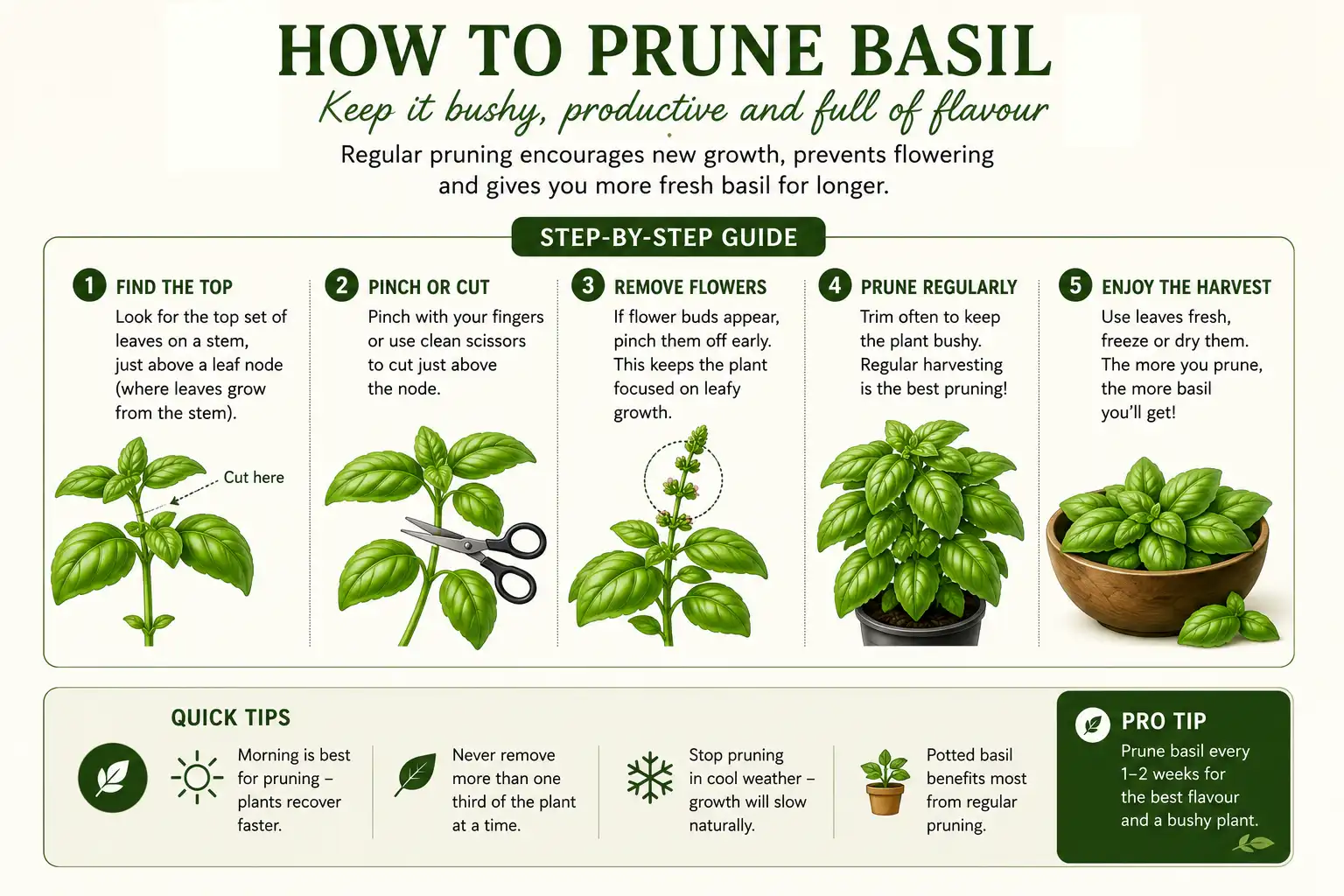
Did you know? A well-maintained basil plant that is harvested regularly often produces significantly more leaves over its lifetime than one that is left untouched. Regular pruning is the key to bigger harvests.
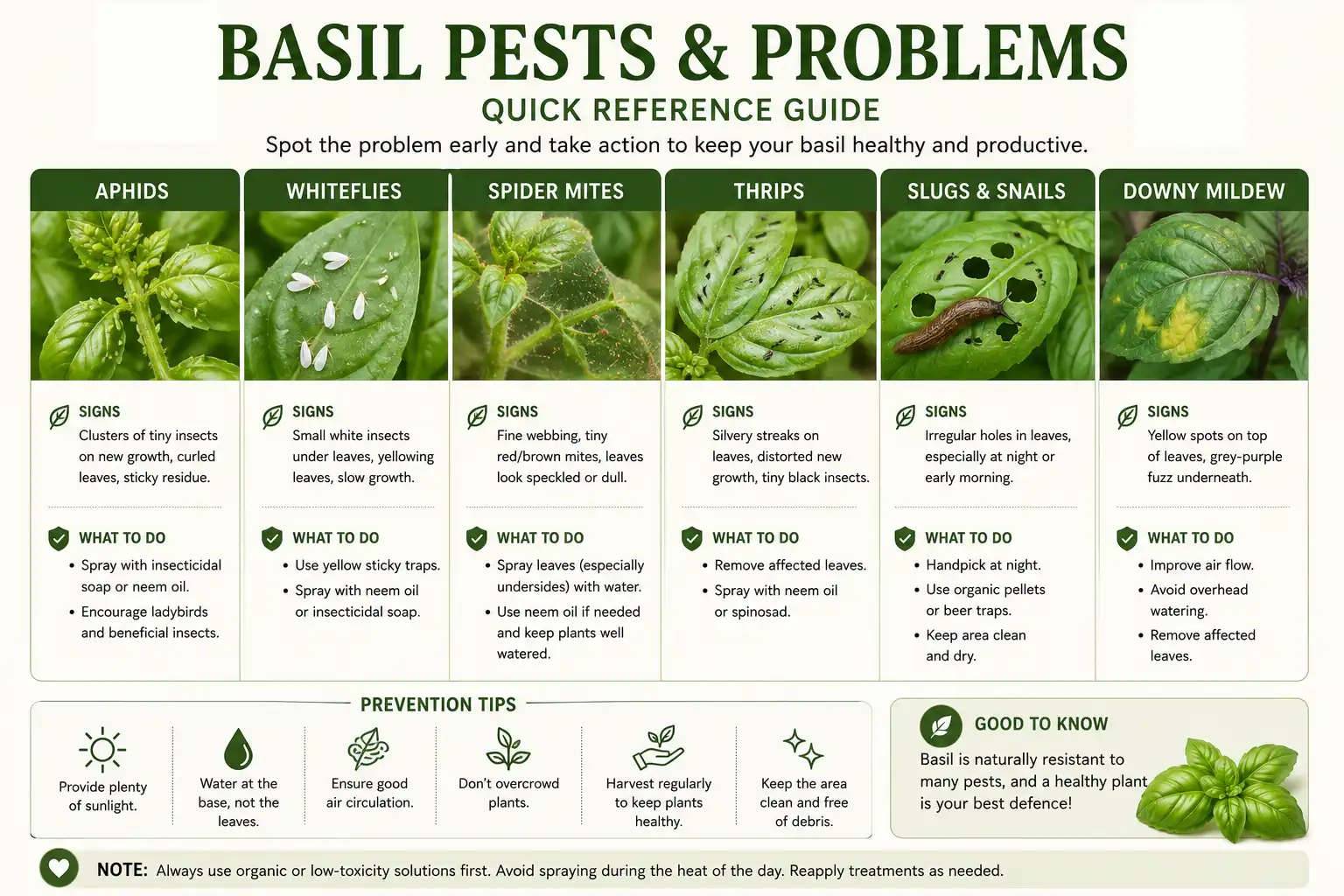
Common Basil Pests, Diseases and Growing Problems
Basil is generally one of the easiest herbs to grow, but like any garden plant it can occasionally suffer from insect pests, fungal diseases or environmental stress. Most problems can be avoided by growing plants in full sun, providing good airflow and avoiding excessive watering.
Regularly inspect your plants for signs of damage so that any issues can be addressed before they become serious.
| Problem | Symptoms | Cause | Solution |
|---|---|---|---|
| Aphids | Curled leaves and sticky residue. | Sap-sucking insects. | Wash off with water or insecticidal soap and encourage ladybirds. |
| Whitefly | Tiny white insects beneath leaves. | Warm, sheltered conditions. | Improve airflow and use yellow sticky traps if necessary. |
| Slugs & Snails | Chewed leaves and seedlings disappearing overnight. | Moist conditions. | Hand-pick after dark or use appropriate control methods. |
| Caterpillars | Large holes in leaves. | Leaf-feeding larvae. | Remove by hand before populations increase. |
| Downy Mildew | Yellow patches with grey-purple growth underneath leaves. | Humid conditions and poor airflow. | Remove affected foliage and avoid overhead watering. |
| Root Rot | Wilting despite wet soil. | Poor drainage. | Improve drainage and reduce watering frequency. |
| Fusarium Wilt | Sudden yellowing and collapse. | Soil-borne fungal disease. | Remove affected plants and avoid replanting basil in the same location immediately. |
Why Are My Basil Leaves Turning Yellow?
Yellow leaves are usually caused by one of four factors:
- Overwatering.
- Poor drainage.
- Cold temperatures.
- Nutrient deficiency in older potting mix.
Allow the soil surface to dry slightly between waterings and ensure excess water drains away freely.
Why Is My Basil Flowering So Early?
Flowering is a natural part of the basil life cycle. Hot weather, plant maturity and irregular harvesting all encourage flowering.
Simply pinch out flower buds as they develop if your goal is to maximise leaf production.
Why Is My Basil Going Woody?
Older stems naturally become woody over time, particularly if plants are not harvested regularly. Frequent pruning encourages fresh leafy shoots and helps maintain compact, productive plants.
Basil Growing Tips for Bigger Harvests
- Plant basil in full sun.
- Use fertile, well-drained soil enriched with compost.
- Water deeply rather than lightly every day.
- Harvest frequently.
- Remove flower buds promptly.
- Feed lightly every few weeks during active growth.
- Replace older plants each season for maximum productivity.
Frequently Asked Questions
How long does basil take to grow from seed?
Seeds usually germinate within 5–14 days, and plants are often ready for their first harvest in approximately 6–8 weeks.
Does basil need full sun?
Yes. Basil performs best with at least six hours of direct sunlight each day.
Can basil grow in pots?
Absolutely. Basil is one of the easiest herbs to grow in containers provided the pot has good drainage and receives plenty of sunlight.
Can basil be grown indoors?
Yes. A bright sunny window or quality grow light will produce healthy indoor plants.
How often should basil be watered?
Water whenever the top few centimetres of soil begin to dry. Avoid leaving the roots sitting in constantly wet soil.
Should basil flowers be removed?
If you’re growing basil for leaves, removing flower buds encourages continued leafy growth and extends the harvest season.
Is basil an annual or perennial?
Most culinary basil varieties are grown as annuals in Australia, although plants may survive longer in frost-free tropical and subtropical climates.
Can I save basil seed?
Yes. Allow flower heads to mature and dry naturally before collecting the seed.
Do different basil varieties cross-pollinate?
Yes. Insects can transfer pollen between flowering basil varieties. Gardeners wishing to save true-to-type seed should isolate varieties or grow only one variety for seed production.
Which basil is best for pesto?
Sweet Genovese Basil is widely regarded as the traditional choice for making pesto because of its large, tender leaves and rich aroma.
Start Growing Basil Today
Basil is one of the most rewarding herbs you can grow. It germinates quickly, thrives in Australia’s warm climate and provides months of fresh, fragrant leaves for cooking, herbal teas and ornamental planting. Whether you’re growing Sweet Genovese for homemade pesto, Thai Basil for authentic Asian dishes, compact Greek Basil for pots or colourful Dark Opal Basil for the vegetable garden, there’s a basil variety to suit every gardener.
With fertile soil, plenty of sunshine and regular harvesting, even a few basil plants can provide an abundant supply of fresh herbs throughout the growing season.
Explore Our Basil Collection
Seedmart Australia stocks a wide range of untreated, non-GMO basil seeds for home gardeners, market growers and commercial producers. Choose from Sweet Genovese, Thai Basil, Holy Basil (Tulsi), Lemon Basil, Greek Basil, Dark Opal, Cinnamon Basil and more.