
Kale Curly Scarlet Vegetable Seeds
Botanical Name: Brassica oleracea var. sabellica
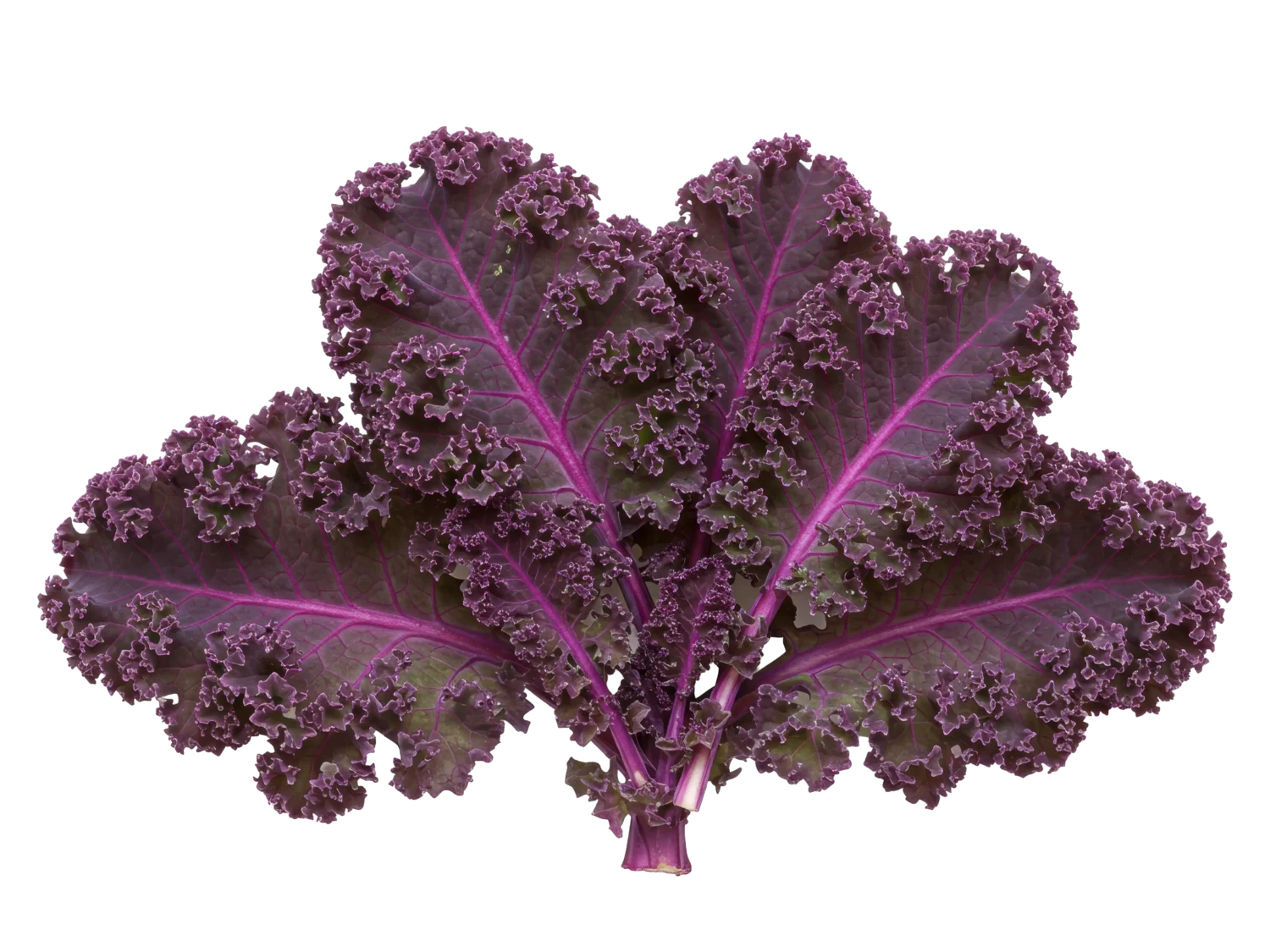
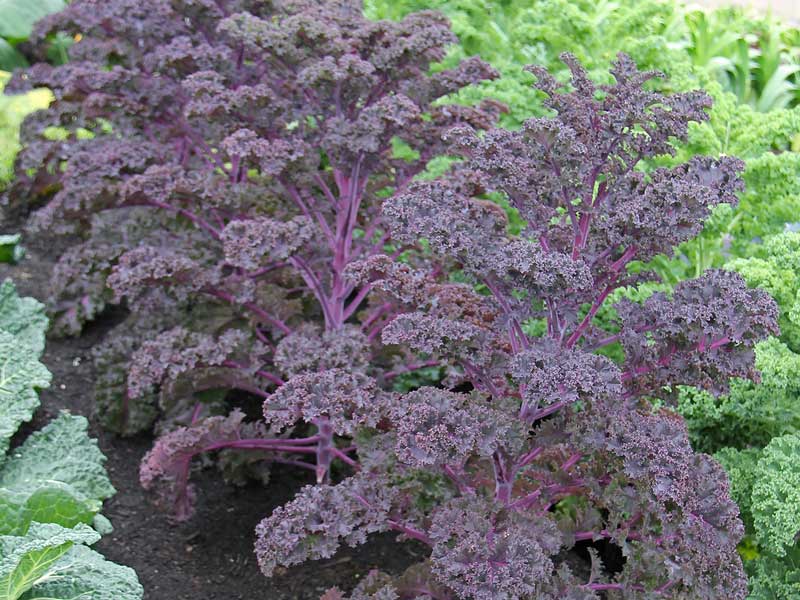
Scarlet Kale is an attractive red-purple curly kale producing deeply curled leaves on vigorous upright plants. The foliage develops rich shades of green, burgundy, red and purple, with colour generally becoming more pronounced as temperatures cool.
A productive cool-season leafy vegetable, Curly Scarlet Kale combines ornamental appeal with excellent culinary versatility. Young leaves can be harvested for salads and baby-leaf mixes, while mature leaves are suitable for steaming, sautéing, soups, stews, stir-fries, kale chips and other cooked dishes.
Hardy and relatively easy to grow, Scarlet Kale is suitable for home vegetable gardens, raised beds, market gardens and containers. Plants can be harvested progressively by removing the lower outer leaves, allowing the central growing point to continue producing fresh foliage over an extended period.
Key Attributes
Rich Red-Purple FoliageProduces attractive deeply coloured foliage in shades of burgundy, red and purple, with colour intensifying under cool growing conditions. |
Deeply Curled LeavesDevelops finely curled and textured leaves that provide excellent visual appeal in the garden and versatility in the kitchen. |
Extended HarvestHarvest individual outer leaves as required while leaving the central growing point intact for continued leaf production. |
Excellent Cool-Season CropWell suited to autumn and winter vegetable gardens, with established plants tolerating cool conditions and light frost. |
Baby Leaf or Mature KaleHarvest young tender leaves for salads and baby-leaf mixes or allow plants to mature for larger leaves suitable for cooking. |
Edible & OrnamentalCombines productive edible foliage with striking colour and texture, making it an attractive addition to edible landscapes and mixed garden beds. |
Product Description
Scarlet Kale is a colourful curly-leaf kale grown for its deeply textured red-purple foliage, cold tolerance and long harvesting period. Botanically classified as Brassica oleracea var. sabellica, kale belongs to the Brassicaceae family alongside cabbage, broccoli, cauliflower and Brussels sprouts.
Unlike heading cabbage, kale produces an open crown of leaves rather than forming a tight central head. This allows individual leaves to be harvested progressively while the plant continues growing.
Curly Scarlet develops strongly curled foliage carried on upright stems. Leaf colour can range from dark green-purple through burgundy and deep red-purple depending on plant maturity, temperature and growing conditions. Cooler weather generally encourages stronger red and purple pigmentation.
The plants are particularly useful in cool-season vegetable gardens. Established kale is tolerant of low temperatures and light frost, and the cooler months generally produce high-quality foliage with good colour and texture.
Scarlet Kale can be harvested at several stages. Young leaves are suitable for baby-leaf salads and fresh mixes, while larger mature leaves can be cooked in a wide range of dishes. Removing the oldest outer leaves first allows younger foliage in the centre of the plant to continue developing.
Its combination of colour, texture and edible foliage also makes Scarlet Kale useful in ornamental vegetable gardens and edible landscapes. The strongly curled purple-red leaves provide contrast when planted alongside green vegetables, herbs and flowering plants.
Why Grow Scarlet Curly Kale?
- Attractive red-purple curly kale variety.
- Produces deeply curled and textured foliage.
- Colour becomes particularly striking during cool weather.
- Excellent autumn and winter vegetable crop.
- Tolerates cool conditions and light frost once established.
- Suitable for baby-leaf and mature-leaf harvesting.
- Harvest individual outer leaves over an extended period.
- Useful for salads, soups, stews and stir-fries.
- Excellent for steaming, sautéing and roasting.
- Suitable for making kale chips.
- Can be grown in vegetable gardens and raised beds.
- Suitable for sufficiently large pots and containers.
- Useful for edible landscapes and ornamental vegetable gardens.
- Suitable for home gardeners and market garden production.
- Productive cool-season leafy vegetable.
Plant Details
| Plant Type | Cool-season leafy vegetable |
| Variety | Curly Scarlet Kale |
| Botanical Name | Brassica oleracea var. sabellica |
| Family | Brassicaceae |
| Growth Habit | Upright, open-leaf growth habit |
| Approximate Height | Approximately 60–90 cm under suitable conditions |
| Leaf Colour | Green-purple to burgundy and deep red-purple |
| Leaf Type | Deeply curled, textured leaves |
| Harvest Type | Baby leaf or mature outer leaves |
| Position | Full sun to light partial shade |
| Life Cycle | Biennial, generally grown as an annual vegetable |
Sowing Information
| Sowing Method | Direct sow or raise seedlings for transplanting |
| Sowing Depth | Approximately 5–10 mm |
| Germination | Usually approximately 5–10 days under suitable conditions |
| Preferred Germination Temperature | Approximately 10–25°C |
| Plant Spacing | Approximately 40–60 cm for mature plants |
| Row Spacing | Approximately 50–75 cm |
| Position | Full sun; light partial shade useful in warmer conditions |
| Soil | Fertile, moisture-retentive and well drained |
| Harvest | Baby leaves may be harvested young; mature leaves generally from approximately 55–75 days depending on conditions |
When to Sow Scarlet Kale in Australia
| Climate Zone | Suggested Sowing Time | Growing Notes |
|---|---|---|
| Cool | Spring – autumn | Excellent cool-climate crop. Autumn sowings can provide productive plants through winter where conditions permit. |
| Temperate | Late summer – winter | Best quality generally develops through the cooler months. Avoid establishing mature crops during periods of extreme heat. |
| Subtropical | Autumn – winter | Grow primarily as a cool-season vegetable. Autumn sowing allows plants to mature during mild winter conditions. |
| Tropical | Cool, dry season | Grow during the coolest months available. Good airflow and drainage are important in humid areas. |
| Arid | Autumn – winter | Avoid extreme summer heat and maintain reliable irrigation throughout active growth. |
These sowing periods are general guides. Local frost patterns, temperature, elevation, seasonal conditions and water availability should also be considered.
How to Grow Scarlet Kale from Seed
Choose a position receiving full sun during the cooler months. In warmer districts, some protection from intense afternoon sun can help maintain leaf quality.
Prepare fertile, well-drained soil before planting. Incorporate well-decomposed compost or another suitable organic soil amendment where required.
Sow seeds approximately 5–10 mm deep.
Scarlet Kale may be direct sown where the plants will mature or raised in seedling trays and transplanted once sufficiently established.
Keep the seedbed consistently moist during germination. Seedlings generally emerge within approximately 5–10 days under favourable conditions.
For mature plants, allow approximately 40–60 cm between plants. Closer spacing can be used where plants are intended primarily for smaller leaf harvesting.
When transplanting seedlings, water thoroughly and maintain reliable moisture until new growth indicates that the plants have established.
Kale is a relatively vigorous leafy crop and benefits from fertile soil with adequate nitrogen. Maintain balanced nutrition throughout active leaf production.
Growing Scarlet Kale in Australian Conditions
Scarlet Kale performs particularly well during Australia’s cooler growing seasons.
In cool districts, kale can be grown over an extended period and established plants tolerate relatively cold conditions.
In temperate areas, late-summer and autumn sowings are particularly useful for producing crops through autumn and winter.
In subtropical regions such as South East Queensland, kale is generally best treated as an autumn and winter crop. Planting as summer heat declines allows the crop to develop through the milder months.
In tropical areas, concentrate production into the coolest and driest period of the year.
Although kale is relatively hardy, prolonged hot weather can reduce leaf quality, encourage pest pressure and cause plants to progress towards flowering more rapidly.
Why Does Scarlet Kale Become More Purple in Cool Weather?
Scarlet Kale naturally produces pigments known as anthocyanins, which contribute to its characteristic red, burgundy and purple colouring.
The intensity of these colours is influenced by genetics as well as environmental conditions.
Cool temperatures commonly enhance visible purple and red pigmentation, which is why Scarlet Kale can become particularly striking during autumn and winter.
Plants grown during warmer conditions may display more green in the foliage while still retaining purple or red tones.
Colour can therefore vary naturally between plants and throughout the growing season.
Watering Scarlet Kale
Consistent soil moisture supports steady leaf development and helps maintain tender foliage.
The most important periods for reliable moisture include:
- Seed germination
- Seedling establishment
- Following transplanting
- Periods of rapid leaf production
- After substantial harvesting
- Dry or windy weather
Water deeply enough to moisten the root zone rather than applying frequent superficial watering.
Mulching around established plants can help conserve moisture, reduce weed competition and moderate soil temperature.
Avoid keeping the root zone permanently saturated, particularly in heavy soils.
Feeding Kale
Kale produces substantial leafy growth and performs best in fertile soil.
Before planting, incorporate well-decomposed compost or another appropriate soil amendment where required.
Additional nitrogen may support continued leaf production during the growing season, particularly where plants are harvested repeatedly.
Use a suitable balanced vegetable fertiliser according to soil conditions and product directions.
Avoid excessive nitrogen applications, which can encourage overly soft growth.
Harvesting Scarlet Kale
Scarlet Kale can be harvested at several stages.
For baby-leaf production, harvest young tender leaves when they reach the desired size.
For mature plants, begin harvesting the lower outer leaves once they have reached useful size.
Use a clean knife or scissors, or carefully snap individual leaves away from the stem.
Leave the central growing point intact. New foliage develops from the centre, allowing the plant to continue producing leaves after the outer foliage has been harvested.
Regular harvesting prevents excessive accumulation of older leaves and encourages a continuing supply of younger foliage.
Cut-and-Come-Again Harvesting
Scarlet Kale is particularly valuable because it does not need to be harvested as a complete plant.
Instead:
- Remove the oldest outer leaves first.
- Leave younger central foliage untouched.
- Avoid damaging the central growing point.
- Harvest only what is required.
- Maintain adequate moisture and fertility to support replacement growth.
This harvesting method can provide fresh kale over an extended period from a relatively small number of plants.
Growing Scarlet Kale for Baby Leaves
Scarlet Kale can also be grown at closer spacing for young leaf production.
Sow seed more densely than for full-sized plants and harvest while the foliage remains small and tender.
Young leaves have a softer texture than mature foliage and are particularly useful in:
- Mixed leaf salads
- Baby-leaf mixes
- Sandwiches and wraps
- Fresh garnishes
Successive sowings can be made during suitable weather to maintain a regular supply of young leaves.
Growing Scarlet Kale in Pots
Scarlet Kale can be grown successfully in containers.
Choose a reasonably large pot with adequate drainage because mature kale develops a substantial root system and can become a sizeable plant.
Fill the container with good-quality potting mix and position it in full sun during cool weather.
Container-grown plants require regular watering because potting mix dries more rapidly than garden soil.
Maintain adequate fertility throughout the growing period, particularly if leaves are being harvested repeatedly.
For decorative edible displays, Scarlet Kale combines particularly well with green leafy vegetables and herbs because its strongly coloured foliage provides excellent contrast.
Using Scarlet Kale in the Kitchen
Scarlet Kale can be used anywhere curly kale is normally used.
Young leaves are tender enough for fresh preparations, while mature foliage responds well to cooking.
Use Scarlet Kale for:
- Fresh salads
- Baby-leaf mixes
- Soups
- Stews
- Stir-fries
- Sautéed greens
- Steamed vegetables
- Pasta dishes
- Grain bowls
- Vegetable bakes
- Smoothies
- Kale chips
For mature leaves, remove the thicker central stem where required before chopping or cooking.
Making Kale Chips
The strongly curled leaves of Scarlet Kale are well suited to oven-baked kale chips.
Wash the leaves thoroughly and dry them well.
Remove tough central stems from larger leaves and tear the foliage into suitable pieces.
Coat lightly with oil and season as preferred.
Spread the leaves in a single layer on a baking tray and bake at a moderate temperature until crisp, checking regularly to prevent burning.
Allow the chips to cool slightly before serving.
Does Frost Affect Kale?
Established kale is one of the more cold-tolerant common vegetable crops and can withstand light frost.
Cool conditions can also intensify the red and purple pigmentation characteristic of Scarlet Kale.
Very young seedlings are generally more vulnerable to severe cold than established plants, so local frost conditions should still be considered when scheduling sowings and transplanting.
Repeated severe freezes may damage foliage even where established plants survive.
Common Kale Pests
Because kale belongs to the brassica family, it can attract several pests commonly associated with cabbage, broccoli and cauliflower.
Potential pests include:
- Cabbage white butterfly caterpillars
- Cabbage moth caterpillars
- Aphids
- Flea beetles
- Slugs and snails
Inspect plants regularly, particularly the undersides of leaves and the central growing point.
Fine insect exclusion netting can provide useful physical protection against adult cabbage butterflies and moths where installed before pest pressure develops.
Maintain good garden hygiene and remove heavily damaged or diseased foliage where required.
Crop Rotation
Avoid repeatedly growing kale and other brassicas in the same garden bed.
Scarlet Kale belongs to the same crop family as:
- Broccoli
- Cauliflower
- Cabbage
- Brussels sprouts
- Kohlrabi
Rotating brassica crops with unrelated vegetable families can help reduce the accumulation of certain soil-borne pests and diseases.
Where possible, keep records of where brassicas have been planted from season to season.
Saving Scarlet Kale Seed
Kale is botanically biennial, although it is generally grown as an annual vegetable.
Plants intended for seed production must be allowed to mature beyond the normal leaf-harvesting stage. After exposure to appropriate seasonal conditions, plants produce tall flowering stems bearing yellow brassica flowers.
Following pollination, elongated seed pods develop.
Allow the pods to mature and dry before harvesting, but collect them before they split naturally and release the seed.
Cut the mature seed stalks and finish drying them in a sheltered, well-ventilated location if necessary.
Thresh the dry pods to release the seed and remove as much plant debris as practical.
Store thoroughly dried seed in cool, dry conditions.
Kale readily cross-pollinates with compatible forms of Brassica oleracea. Maintaining varietal purity therefore requires appropriate isolation from flowering compatible brassica varieties.
Scarlet Kale vs Green Curly Kale
Scarlet Kale and traditional green curly kale are similar in cultivation and culinary use, but differ most noticeably in foliage colour.
Scarlet Kale
- Red-purple to burgundy foliage.
- Deeply curled leaves.
- Colour often intensifies in cool weather.
- Strong ornamental value.
- Suitable for baby and mature leaf harvest.
Green Curly Kale
- Predominantly green foliage.
- Typically strongly curled leaves.
- Traditional appearance for culinary kale.
- Suitable for similar culinary and garden uses.
Scarlet Kale is particularly useful where both edible production and distinctive garden colour are desired.
Perfect For
- Home vegetable gardens
- Autumn and winter gardens
- Cool-season vegetable production
- Raised garden beds
- Large pots and containers
- Market gardens
- Baby-leaf production
- Cut-and-come-again harvesting
- Fresh salads
- Soups and stews
- Stir-fries
- Steamed and sautéed greens
- Kale chips
- Edible landscapes
- Ornamental vegetable gardens
- Colourful winter garden displays
- Growers wanting red-purple curly kale
Frequently Asked Questions
What is Scarlet Kale?
Scarlet Kale is a curly-leaf kale producing strongly textured foliage in shades of green-purple, burgundy, red and deep purple. It is grown as a cool-season leafy vegetable.
What is the botanical name of Scarlet Kale?
Scarlet Kale is a form of Brassica oleracea var. sabellica, commonly known as curly kale.
Is Scarlet Kale edible?
Yes. Scarlet Kale is an edible vegetable variety. Both young and mature leaves can be harvested for culinary use.
What colour is Scarlet Kale?
The foliage ranges from green-purple to burgundy and deep red-purple. Colour varies with plant age and growing conditions and is generally strongest during cool weather.
Why isn’t my Scarlet Kale completely red?
Leaf colour is influenced by temperature, plant maturity, light and other growing conditions. Scarlet Kale may contain considerable green colouring during warmer weather, with stronger red and purple tones developing as conditions cool.
Does Scarlet Kale become more colourful after cold weather?
Cool temperatures commonly increase the expression of red and purple anthocyanin pigments, so plants can develop richer colouring during autumn and winter.
Is Scarlet Kale the same as Red Russian Kale?
No. They are different kale types. Scarlet Kale has strongly curled foliage, while Red Russian Kale typically has flatter, deeply lobed leaves with prominent coloured stems and veins.
Is Scarlet Kale a curly kale?
Yes. Scarlet Kale is characterised by its deeply curled and textured foliage.
How tall does Scarlet Kale grow?
Mature plants commonly reach approximately 60–90 cm under suitable conditions, although final size varies according to spacing, fertility, climate and harvest management.
When should Scarlet Kale be planted in Australia?
Scarlet Kale is primarily a cool-season crop. Autumn and winter are particularly suitable in many Australian climates, while cool districts can have a considerably longer growing season.
Can Scarlet Kale be grown in Brisbane?
Yes. In Brisbane and South East Queensland, Scarlet Kale is best grown primarily through autumn and winter, when temperatures are more favourable for leaf quality and colour.
Can Scarlet Kale be grown in tropical Australia?
Yes, but production should generally be concentrated into the coolest part of the year. Persistent tropical heat and humidity are less favourable for high-quality kale production.
Can kale tolerate frost?
Established kale tolerates light frost well. Very young plants may be more vulnerable, and severe or prolonged freezing conditions can still damage foliage.
Does Scarlet Kale need full sun?
Full sun is preferable during cool weather. In warmer climates, some light afternoon shade can help reduce heat stress.
How deep should Scarlet Kale seeds be planted?
Sow the seeds approximately 5–10 mm deep and keep the soil consistently moist during germination.
How long does Scarlet Kale take to germinate?
Seed commonly germinates in approximately 5–10 days under suitable temperature and moisture conditions.
What temperature is suitable for kale seed germination?
Kale germinates across a relatively broad range of cool to moderate soil temperatures. Approximately 10–25°C is suitable for germination and establishment.
Can Scarlet Kale be direct sown?
Yes. Kale can be direct sown into prepared garden soil or raised in seedling trays for later transplanting.
How far apart should Scarlet Kale plants be?
Allow approximately 40–60 cm between plants when growing them to full size. Closer spacing can be used for young leaf production.
How long does Scarlet Kale take to harvest?
Baby leaves can be harvested relatively early. Mature leaf harvesting commonly begins approximately 55–75 days after sowing under suitable conditions, although climate and cultivation affect timing.
How do I harvest Scarlet Kale?
Remove the mature lower outer leaves while leaving the younger central leaves and growing point intact. This allows the plant to continue producing new foliage.
Does kale grow back after harvesting?
Yes. If the central growing point remains undamaged, the plant continues producing new leaves, allowing repeated harvests.
Can Scarlet Kale be eaten raw?
Yes. Young tender leaves are particularly suitable for salads and fresh leaf mixes. Mature leaves have a firmer texture and are often cooked or finely sliced before use.
Can Scarlet Kale be used for kale chips?
Yes. Its strongly curled leaves are well suited to kale chips and develop a crisp texture when properly prepared and baked.
Can Scarlet Kale be grown as baby leaf?
Yes. Sow more densely and harvest the foliage while young and tender for baby-leaf salads and mixed greens.
Can Scarlet Kale grow in pots?
Yes. Use a sufficiently large container with good drainage and fertile potting mix. Regular watering and feeding are particularly important for container-grown kale.
Does Scarlet Kale need much water?
Kale performs best with consistent soil moisture. Avoid prolonged drought stress, particularly during seedling establishment and periods of active leaf production.
Does kale need fertiliser?
Kale is a productive leafy vegetable and responds well to fertile soil. Compost and appropriate supplementary fertiliser can support sustained leaf production.
Why is my kale bolting?
Kale naturally flowers as part of its biennial life cycle. Plant maturity, seasonal temperature changes and stress can contribute to the transition from leaf production to flowering.
Can Scarlet Kale be grown as an ornamental?
Yes. Its deeply curled burgundy and purple foliage provides strong visual interest, making it suitable for edible landscapes and mixed ornamental vegetable gardens.
What pests attack Scarlet Kale?
Common brassica pests can include cabbage white butterfly caterpillars, cabbage moth caterpillars, aphids, flea beetles, slugs and snails.
Should kale be protected with insect netting?
Fine insect exclusion netting can help protect plants from egg-laying cabbage butterflies and moths. Install the netting securely before pest pressure becomes significant.
Can Scarlet Kale be grown near broccoli and cabbage?
Yes, but they belong to the same plant family and share many pests and diseases. For crop rotation purposes, kale, broccoli, cabbage, cauliflower and Brussels sprouts should be treated as the same crop family.
Can I save seeds from Scarlet Kale?
Yes, provided the seed supplied is an open-pollinated variety. Kale is biennial and generally flowers after experiencing appropriate seasonal conditions. Compatible Brassica oleracea varieties can cross-pollinate, so isolation is required if varietal purity is important.
Is Scarlet Kale an annual or perennial?
Botanically, kale is generally biennial, producing vegetative growth before flowering and setting seed in a later season. In vegetable gardens it is normally grown and harvested as an annual crop.
What can Scarlet Kale be used for?
Scarlet Kale is suitable for salads, soups, stews, stir-fries, steaming, sautéing, pasta dishes, vegetable bakes, smoothies and kale chips. Its colourful foliage also makes it attractive in edible gardens.
Is Scarlet Kale suitable for market gardens?
Yes. It can be grown for mature bunching leaves, individual leaf harvests or younger specialty leaf production, depending on the production system and market.
Why grow Scarlet Kale instead of green kale?
Scarlet Kale provides many of the same culinary uses as green curly kale while adding distinctive burgundy and purple foliage. It is particularly useful where growers want both edible production and strong visual appeal.
Reviews
There are no reviews yet.