
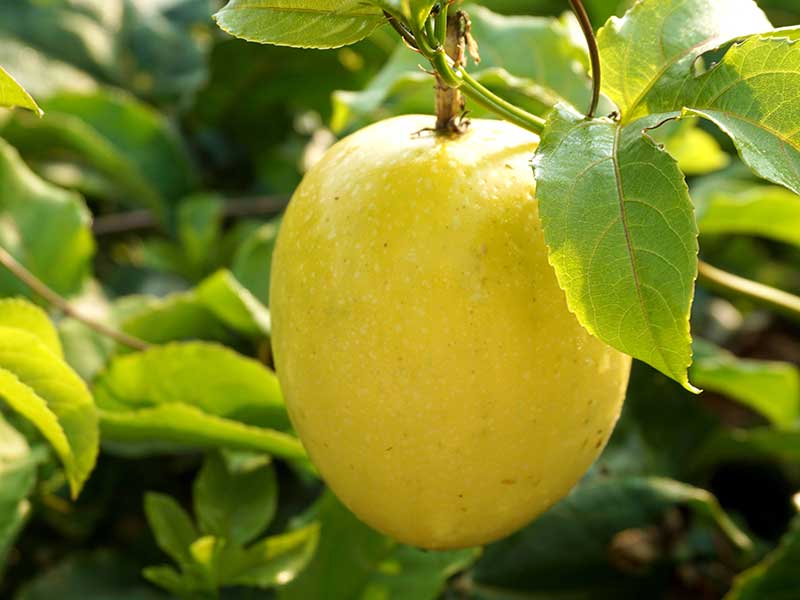


YELLOW PASSIONFRUIT Seeds
Botanical Name: Passiflora edulis f. flavicarpa
Other Names: Yellow Passionfruit, Golden Passionfruit
- Fast-growing tropical vine with lush green foliage and large, bright yellow edible fruits.
- Highly productive, producing aromatic and sweet fruits ideal for fresh eating, juices, and desserts.
- Vigorous climber that adds visual appeal and tropical character to gardens, trellises, and fences.
- Adaptable to a variety of soils and climates, especially tropical and subtropical regions.
- Attractive flowers followed by fruits provide habitat and food for pollinators and birds.
- Can be grown in gardens, orchards, or large containers with proper support.
- Moderately drought-tolerant once established and low-maintenance for home gardeners.
Plant Details
- Plant Type: Tropical climbing vine / fruiting plant
- Plant Height: Climbs 3–5 m or more with support
Sowing Information
- Germination: 2–4 weeks (can be variable)
- Depth: Sow 5 mm below surface
- Position: Full sun to partial shade
- Sow Where: Seed trays, pots, or direct sow in prepared sites
- Soil Type: Well-draining soils; tolerates sandy, loamy, and moderately fertile soils
- Spacing: 2–3 m between plants or trellis support
Growing Tips
- Use a light, well-draining seed mix; avoid waterlogged soils.
- Keep soil lightly moist during germination; reduce watering once established.
- Provide trellis or support for vigorous climbing growth.
- Prune regularly to encourage flowering, fruiting, and manage vine size.
- Fertilise lightly with low-phosphorus fertiliser suitable for fruiting plants.
Flowering & Fruiting
Fragrant white and purple flowers are followed by bright yellow passionfruit, providing edible produce and attracting pollinators and wildlife to the garden.
Traditional & Practical Uses
- Fruits eaten fresh, juiced, or used in desserts, sauces, and preserves.
- Popular in tropical and subtropical edible gardens and orchards.
- Provides habitat and food for native insects and birds.
When to Sow Yellow Passionfruit in Your Climate
| Climate Zone | Best Planting Time | Tips | |
|---|---|---|---|
| Temperate | September–November | Plant in warm spring soils for optimal germination and growth. | |
Reviews
There are no reviews yet.