

WESTERN TEA MYRTLE Seeds
Botanical Name: Melaleuca nesophila
Other Names: Western Tea Myrtle, Showy Honey-myrtle
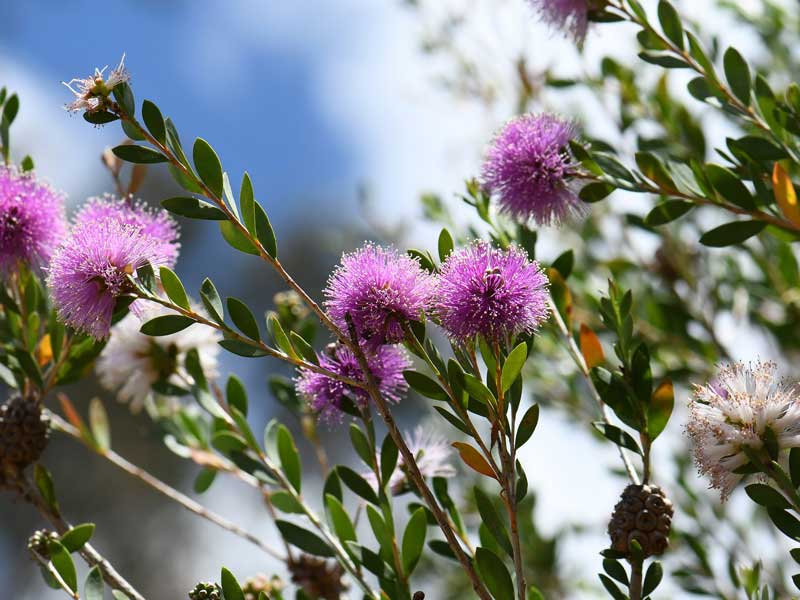
- Hardy Australian native shrub to small tree known for its masses of vibrant pink to purple pom-pom flowers.
- Highly attractive to bees, butterflies, and other pollinators, making it an excellent biodiversity plant.
- Evergreen foliage provides year-round structure, screening, and ornamental value.
- Well adapted to coastal conditions, tolerating wind, salt spray, and sandy soils.
- Drought-tolerant once established and suited to low-maintenance native gardens.
- Long flowering period creates a striking feature plant in landscapes and large gardens.
- Ideal for hedging, windbreaks, and revegetation in suitable climates.
Plant Details
- Plant Type: Evergreen native shrub to small tree
- Plant Height: 2–4 m tall; 2–3 m wide (can be pruned smaller)
Sowing Information
- Germination: 2–6 weeks (can be variable)
- Depth: Surface sow; do not cover seed (light aids germination)
- Position: Full sun to light shade
- Sow Where: Seed trays or tubes; transplant when seedlings are well established
- Soil Type: Free-draining soils; tolerates sandy, coastal, and poor soils
- Spacing: 1.5–3 m between plants
Growing Tips
- Use a fine, free-draining native seed-raising mix and keep evenly moist during germination.
- Avoid fertilisers high in phosphorus; use native fertiliser only if required.
- Water regularly during establishment; minimal watering needed once mature.
- Prune lightly after flowering to maintain shape and encourage bushier growth.
Flowering
Spectacular pink to purple bottlebrush-style flower clusters appear mainly in spring and early summer, often with repeat flowering in favourable conditions, providing an excellent nectar source for pollinators.
Traditional & Practical Uses
- Widely used as an ornamental feature plant and flowering hedge in native landscapes.
- Valued for pollinator support and habitat creation in gardens and revegetation projects.
- Well suited to coastal plantings, streetscapes, and low-water landscapes.
When to Sow Western Tea Myrtle in Your Climate
| Climate Zone | Best Planting Time | Tips |
|---|---|---|
| Temperate | September–November | Spring sowing supports strong establishment before summer. |
| Subtropical | April–June | Cooler months reduce heat stress during germination. |
| Tropical | May–July | Sow in the dry season with good airflow. |
| Cool | October–November | Sow after heavy frosts have passed. |
| Coastal / Arid | August–September | Ideal for sandy soils; protect seedlings from extreme exposure initially. |