
STURT’S DESERT PEA Seeds
Botanical Name: Swainsona formosa
Other Names: Desert Pea, Sturt Pea
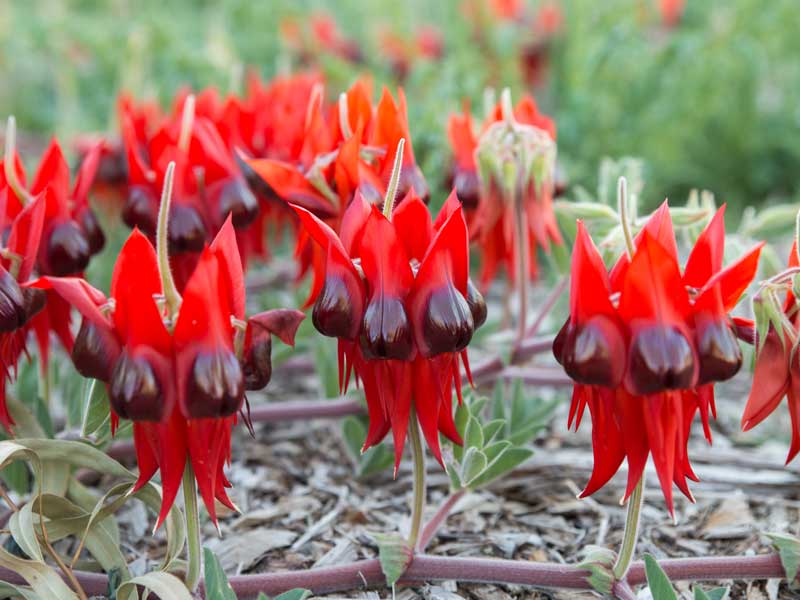
- Iconic Australian native wildflower with bold red flowers featuring a glossy black centre—instantly recognisable and deeply symbolic in Australian culture.
- Low-growing, sprawling plant naturally adapted to arid and semi-arid landscapes; a showstopper in native gardens, tubs, or hanging baskets.
- Highly ornamental and prized for dramatic colour displays from late winter into spring and beyond.
- Drought-tolerant once established and thrives in very free-draining sandy or gritty soils.
- Nitrogen-fixing legume that contributes to soil health in low-fertility conditions.
- Excellent selection for native landscaping, wildflower displays, and restoration plantings in suitable climates.
- South Australia’s floral emblem and one of Australia’s best-loved native plants, celebrated for resilience in harsh climates.
Plant Details
- Plant Type: Prostrate to trailing native perennial, often grown as an annual
- Plant Height: 10–30 cm tall; stems can spread up to about 2 m long in natural habit, giving a low, wide cover.
Sowing Information
- Germination: About 4–10 days under ideal conditions; longer if conditions are cooler.
- Depth: Sow very shallowly—about 5 mm deep is typical, on top of a gritty surface layer.
- Position: Full sun; warm, sunny spots are best.
- Sow Where: Seed trays, tubes, large pots or tubs with excellent drainage, or direct sow in well-prepared beds.
- Soil Type: Extremely free-draining soils—sandy or gritty mixes with minimal organic richness; avoid heavy or waterlogged soils.
- Spacing: Roughly 60 cm–150 cm between plants depending on site and desired coverage; allow space for sprawling stems.
Growing Tips
- Scarify or pre-treat seed: soaking overnight is a reliable method to help break dormancy; sow soon after.
- Use a coarse, low-nutrient mix with added sand or grit; rich fertilisers can be detrimental—native-friendly or very low-phosphorus options only if required.
- Water lightly and from below after germination to minimise root rot risk; keep the surface slightly moist until seedlings emerge, then water sparingly.
- Protect from overwatering and poorly drained soil—root rot is a known issue if soil remains soggy.
- Expect flowering around four months after sowing under favourable conditions, especially in warm, sunny sites.
Flowering
Large, vivid pea-shaped flowers appear from late winter to spring and sometimes beyond, delivering a stunning visual display that celebrates native biodiversity.
Traditional & Practical Uses
- Widely appreciated as a cultural and natural symbol across Australia, and often featured in art, storytelling, and conservation messaging.
- Grown mainly for ornamental display, native-themed gardens, and educational or conservation plantings.
- Useful in arid or low-input landscapes where colourful, low-water plants are desired.
When to Sow Sturt’s Desert Pea in Your Climate
| Climate Zone | Best Planting Time | Tips |
|---|---|---|
| Temperate | Late winter–spring | Spring sowing helps establish plants before the hottest conditions; ensure very good drainage. |
| Subtropical | Autumn to early winter | Cooler, dry months reduce stress; choose a warm, sunny spot. |
| Tropical | Dry season months | Sow when rainfall is low and airflow is good; protect from excessive humidity. |
| Cool | Early spring | Avoid late frosts; consider protected or container growing for warmer microclimates. |
| Arid | Late winter–early spring | Sow with mild temperatures and minimal rainfall; choose open, sunny sites with sandy soils. |