
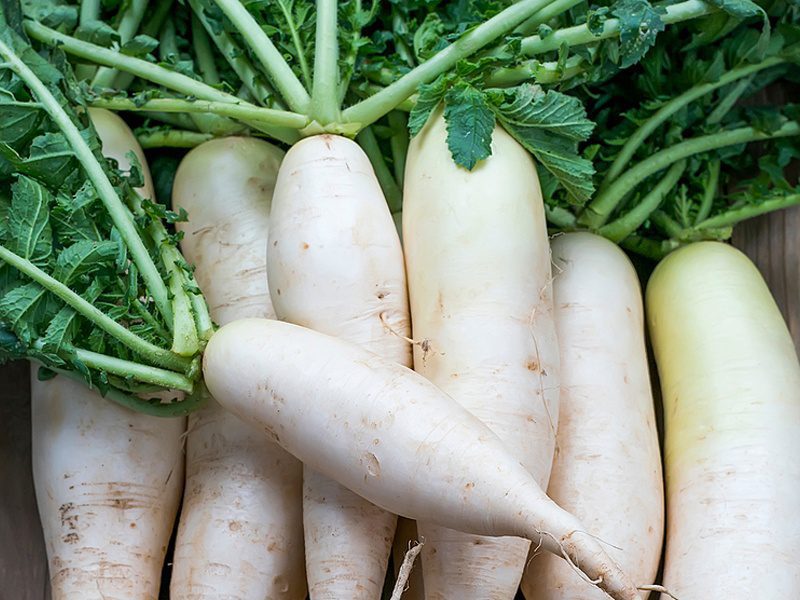


Tillage Radish Seeds – Green Manure & Cover Crop
Botanical Name: Raphanus sativus
Tillage Radish Seeds are used to establish a fast-growing, cool-season brassica cover crop for soil conditioning, nutrient cycling, green manure and weed suppression. Tillage Radish develops a large taproot that can penetrate suitable soil layers, create root channels and contribute to improved soil structure as the roots decompose.
Also known as forage radish or tillage radish cover crop, this deep-rooted annual is particularly useful in vegetable gardens, market gardens, orchards, vineyards and agricultural rotations. Its rapid leafy growth helps protect exposed soil, while the roots capture nutrients from the soil profile and return organic matter as they break down.
- Deep-rooted brassica cover crop for soil conditioning and green manure.
- Develops a substantial taproot that can penetrate suitable compacted soil layers.
- Creates root channels that may improve water infiltration and future root growth.
- Fast-growing foliage provides soil cover and competes with weeds.
- Captures residual soil nutrients and helps reduce nutrient losses between crops.
- Produces organic matter through leafy growth and root decomposition.
- Suitable for no-dig gardens, crop rotations and mixed cover crop plantings.
- Best suited to cool-season growing conditions with adequate moisture.
Plant Details
- Plant Type: Cool-season annual brassica cover crop
- Botanical Name: Raphanus sativus
- Common Name: Tillage Radish
- Other Names: Forage Radish, Cover Crop Radish
- Growth Habit: Fast leafy growth with an enlarged taproot
- Root System: Strong taproot with fine lateral roots
- Root Development: Can penetrate suitable soil layers where moisture, soil conditions and growing time allow
- Frost Tolerance: Tolerates some cold; severe frost may damage or terminate plants
- Best Position: Full sun
- Growing Season: Cool season
- Important Note: Tillage Radish does not fix atmospheric nitrogen.
Best Uses
- Soil conditioning and biological tillage
- Cool-season green manure
- Cover cropping and crop rotations
- Organic matter production
- Nutrient scavenging and recycling
- Weed competition and seasonal soil cover
- No-dig and regenerative growing systems
- Vegetable garden bed preparation
- Orchard and vineyard inter-row plantings
- Mixed cover crop blends with grasses and legumes
How Tillage Radish Improves Soil
Tillage Radish is valued for its large taproot, which can grow into suitable soil layers and help create channels through the soil profile. As roots decay, these channels may improve water movement, aeration and opportunities for subsequent crop roots to explore the soil.
The crop also absorbs available nutrients during growth. When the plant material decomposes, some of those nutrients become available for recycling within the soil system.
Important: Tillage Radish can contribute to soil conditioning but should not be considered a guaranteed solution for severe compaction, waterlogging or poorly structured soil. Root development depends on soil conditions, moisture and establishment.
Sowing Information
- Best Sowing Time: Late summer to autumn, or early spring where conditions are suitable
- Germination Time: Approximately 5–10 days under suitable conditions
- Sowing Depth: 10–20 mm
- Position: Full sun
- Soil Type: Prepared, well-drained soil with adequate moisture
- Watering: Keep soil moist during germination and establishment
- Sowing Method: Broadcast or drill into a prepared seedbed
- Suitable Locations: Garden beds, market gardens, orchards, vineyards, paddocks and crop rotations
- Companion Crops: Oats, annual ryegrass, vetch, clover or field peas where locally suitable
Sowing Rate and Coverage
The appropriate sowing rate depends on seed size, germination, planting method, desired plant population and whether Tillage Radish is grown alone or in a mixture.
The following field sowing guide is based on an indicative rate of 8–15 kg per hectare. Confirm the recommended rate for the supplied seed lot and intended application.
| Application | Indicative Rate | Notes |
|---|---|---|
| Field Cover Crop | 8–15 kg/ha | Adjust for seed quality, establishment and planting method. |
| Garden Beds | 0.8–1.5 g/m² | Equivalent to the indicative field rate; use suitable spacing and avoid overcrowding. |
| Mixed Cover Crops | Reduce the radish component | Adjust each species according to its proportion and desired plant population. |
Seed Quantity Guide
Approximate coverage calculated at 8–15 kg/ha (0.8–1.5 g/m²):
| Seed Pack Size | Approximate Coverage |
|---|---|
| 100 g | 67–125 m² |
| 250 g | 167–313 m² |
| 500 g | 333–625 m² |
| 1 kg | 667–1,250 m² |
| 5 kg | 3,333–6,250 m² |
| 10 kg | 6,667–12,500 m² |
Coverage is indicative only. Actual establishment depends on seed germination, seedbed preparation, moisture, sowing method and field conditions.
When to Sow Tillage Radish in Australia
Tillage Radish is a cool-season cover crop. Planting time varies with climate, rainfall, irrigation and the period available for root development.
| Climate Zone | Best Planting Time | Growing Notes |
|---|---|---|
| Cool | Late summer to autumn or spring | Allow sufficient growing time before severe frost. |
| Temperate | Late summer to autumn | Suitable after summer crops where moisture is available. |
| Mediterranean / Winter Rainfall | Autumn | Establish with autumn rainfall or irrigation. |
| Subtropical | Autumn to winter | Grow during cooler months with adequate moisture. |
| Tropical | Cooler highland or suitable dry-season conditions | Generally less suitable for hot, humid lowland conditions. |
| Arid | Autumn or spring with irrigation | Adequate moisture is essential for establishment and root growth. |
How to Sow Tillage Radish Seeds
- Choose a Suitable Site: Select a sunny growing area with adequate drainage.
- Prepare the Seedbed: Remove existing weeds and prepare a firm, reasonably fine seedbed.
- Sow the Seed: Broadcast evenly or drill at the appropriate rate for the intended planting.
- Cover Lightly: Sow approximately 10–20 mm deep.
- Ensure Seed-to-Soil Contact: Firm the seedbed gently after broadcasting where appropriate.
- Water During Establishment: Maintain sufficient moisture for germination and early growth.
- Allow Root Development: Give plants adequate time to develop roots and leafy biomass before termination.
Management
- Maintain adequate moisture during germination and establishment.
- Allow sufficient growing time for root and biomass development.
- Monitor weed pressure during early establishment.
- Terminate before mature seed develops where volunteer radish plants are undesirable.
- In no-dig systems, cut the tops and leave roots to decompose naturally.
- In cultivated systems, chop and incorporate suitable plant residues.
- Consider mixing with legumes where biological nitrogen fixation is desired.
- Plan brassica rotations to reduce the risk of carrying over relevant pests and diseases.
Harvest and Incorporation
For green manure use, Tillage Radish can be cut or terminated before seed set. The leafy tops may be incorporated into the soil or retained on the surface as mulch.
In no-dig systems, roots can be left in place to decompose naturally. As the enlarged taproots break down, they leave channels within the soil that may assist water movement and subsequent crop root exploration.
Where substantial fresh residues are incorporated, allow approximately 2–4 weeks before establishing the next crop, adjusting for temperature, moisture and the amount of plant material.
Tillage Radish for Soil Compaction
Tillage Radish is sometimes described as a biological tillage crop because of its enlarged taproot. Under favourable conditions, roots may penetrate some compacted layers and contribute to improved soil structure over successive cropping cycles.
However, results vary considerably with soil type, compaction severity, moisture and root development. Tillage Radish should not be considered a replacement for appropriate mechanical remediation where severe compaction or hardpan restricts root penetration.
Important Notes
- Tillage Radish is a brassica and does not fix atmospheric nitrogen.
- Its nutrient-cycling benefits depend on the nutrients already present in the soil.
- Root penetration and soil conditioning vary with growing conditions.
- Avoid inappropriate rotations with other brassica crops where shared pests or diseases are a concern.
- Terminate before seed set to reduce unwanted volunteer plants.
- Large decomposing roots may produce a temporary odour.
- Severe frost may terminate plants, but frost-kill is not guaranteed in all Australian climates.
- Use a supplier-confirmed sowing rate for commercial-scale establishment.
Quick Growing Guide
| Feature | Details |
|---|---|
| Plant Type | Cool-season annual brassica cover crop |
| Best Uses | Green manure, soil conditioning, nutrient cycling and cover cropping |
| Germination | Approximately 5–10 days |
| Sowing Depth | 10–20 mm |
| Sunlight | Full sun |
| Water Needs | Adequate moisture for establishment and root growth |
| Growth Period | Approximately 6–10 weeks for useful growth in favourable conditions |
| Nitrogen Fixation | No |
| Management | Terminate before seed set; retain or incorporate residues as appropriate |
Explore More Cover Crop & Green Manure Seeds
Tillage Radish can be grown alone or combined with suitable grasses and legumes as part of a seasonal soil improvement program.
Explore Seedmart Australia’s Green Manure & Cover Crop Seeds for more options suited to Australian gardens, farms and market gardens.
Reviews
There are no reviews yet.