


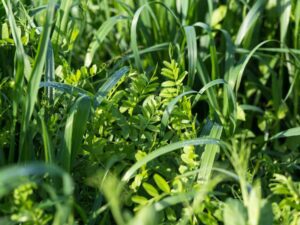
Clay Breaker Green Manure Seed Mix
Botanical Blend: Mixed species blend of grasses, legumes and brassicas
Clay Breaker Mix is an autumn and winter green manure seed blend designed to help improve heavy clay soils, compacted garden beds, poor drainage areas and tired growing spaces. This cool-season cover crop mix combines deep taproot species, fibrous-rooted grasses and nitrogen-fixing legumes to support better soil structure over time.
Tillage radish and forage turnip help open dense soils with strong taproots, while oats and annual ryegrass add fibrous roots and organic matter. Vetch and crimson clover support nitrogen fixation when compatible rhizobia are present. Together, this mix helps protect bare soil, reduce erosion, suppress weeds and build healthier soil before spring planting.
- Autumn green manure mix for heavy clay and compacted soils.
- Deep-rooted radish and turnip help create channels through dense soil.
- Oats and annual ryegrass add fibrous roots, biomass and soil cover.
- Vetch and crimson clover support nitrogen fixation and soil fertility.
- Fast cover helps suppress weeds and protect soil over winter.
- Useful for garden beds, orchards, market gardens, food forests and paddocks.
- Best suited to cool, temperate, Mediterranean and mild subtropical climates.
What’s Inside?
- Deep Root Soil Breakers: Tillage Radish and Forage Turnip for taproot penetration, nutrient cycling and soil structure support.
- Grasses & Biomass Builders: Oats and Annual Ryegrass for fibrous roots, ground cover, erosion control and organic matter.
- Legumes: Vetch and Crimson Clover for nitrogen fixation potential, leafy biomass and soil fertility.
Plant Details
- Mix Type: Cool-season green manure and clay soil improvement cover crop blend
- Plant Types: Annual grasses, legumes, brassicas and taprooted soil-conditioning species
- Main Uses: Clay soil improvement, compaction relief, organic matter, weed suppression, nitrogen fixation and soil cover
- Growth Habit: Mixed fibrous-rooted, taprooted, leafy and trailing species
- Best Position: Full sun to light shade
- Coverage: Approx. 100–250 m² per kg depending on sowing rate and site conditions
Best Uses
- Heavy clay soil improvement
- Compacted garden bed recovery
- Autumn and winter green manure
- Cool-season cover cropping
- Organic matter production
- Weed suppression and erosion control
- Orchard and food forest inter-rows
- Market garden soil preparation
- No-dig chop-and-drop mulch
How This Mix Helps Clay Soil
| Soil Issue | How the Mix Helps |
|---|---|
| Compaction | Taprooted species help create root channels through dense soil. |
| Poor Drainage | Roots and organic matter gradually improve soil aggregation and water movement. |
| Low Organic Matter | Grasses, legumes and brassicas add biomass when cut or incorporated. |
| Bare Soil | Fast ground cover helps protect clay soil from crusting, erosion and weed pressure. |
| Poor Soil Biology | Living roots feed soil microbes and support earthworm activity. |
Sowing Information
- Best Sowing Time: Late summer to autumn, or early spring where conditions are cool and moist
- Germination Time: Approximately 5–14 days depending on species, soil temperature and moisture
- Sowing Depth: 10–20 mm; avoid burying small seeds too deeply
- Position: Full sun to light shade
- Soil Type: Especially useful for heavy clay, compacted, tired or poorly structured soils
- Watering: Keep moist during germination and establishment; avoid letting clay crust over after sowing
- Sow Where: Garden beds, orchards, food forests, paddocks, market gardens, fallow areas and compacted soil zones
- Inoculation: Legume components may benefit from suitable inoculant for stronger nitrogen fixation.
Sowing Rate and Coverage
| Use | Sowing Rate | Approx. Coverage |
|---|---|---|
| Standard Clay Soil Improvement | 4–7 g per m² | 1 kg covers approx. 150–250 m² |
| Dense Cover / Weed Suppression | 7–10 g per m² | 1 kg covers approx. 100–140 m² |
| Large Areas / Inter-Rows | 40–70 kg per hectare | Use higher rates for faster cover and stronger soil protection |
Seed Quantity Guide
| Seed Pack Size | Standard Coverage | Dense Cover Coverage |
|---|---|---|
| 250 g | 37–62 m² | 25–35 m² |
| 500 g | 75–125 m² | 50–70 m² |
| 1 kg | 150–250 m² | 100–140 m² |
| 5 kg | 750–1,250 m² | 500–700 m² |
| 10 kg | 1,500–2,500 m² | 1,000–1,400 m² |
| 20 kg | 0.3–0.5 hectare | 0.2–0.28 hectare |
Coverage is a guide only. Use higher rates for faster cover, exposed clay soils, strong weed pressure, poor seedbeds, slopes or areas with bird pressure.
When to Sow Clay Breaker Mix in Australia
| Climate Zone | Best Planting Time | Suitability | Growing Notes |
|---|---|---|---|
| Cool | Late summer to autumn, or spring | Very good | Sow early enough for roots to establish before severe winter conditions. |
| Temperate | Late summer to autumn, or early spring | Excellent | Ideal after summer crops or before spring vegetable planting. |
| Mediterranean / Winter Rainfall | Autumn | Excellent | Well suited to winter-rainfall regions when sown into moist clay soil. |
| Subtropical | Autumn to winter | Good | Best during cooler months. In SE QLD, autumn sowing is usually ideal. |
| Tropical | Cool highland areas or dry-season sowing only | Limited | Not suited to hot, humid lowland tropical conditions. Use a warm-season mix instead. |
| Arid | Autumn after rain or with irrigation | Moderate with moisture | Requires moisture for establishment and active root growth. |
How to Sow Clay Breaker Mix
- Choose a sunny to lightly shaded area with compacted or heavy clay soil.
- Remove weeds and lightly loosen the soil surface if it is sealed or crusted.
- Broadcast seed evenly at the recommended sowing rate.
- Lightly rake or cover seed with approximately 10–20 mm of soil.
- Press or roll gently for good seed-to-soil contact.
- Water gently and keep moist until seedlings are established.
- Avoid letting the soil surface dry into a hard crust during germination.
Management
- Keep soil moist during germination and early growth.
- Allow the mix to grow long enough to produce strong roots and useful biomass.
- Cut before heavy seed set if volunteer plants are not wanted.
- Slash or mow before flowering for softer material and easier breakdown.
- Leave roots in the soil where possible to maintain channels and feed soil biology.
- Use as chop-and-drop mulch in no-dig systems or incorporate as green manure.
Harvest and Incorporation
For green manure use, mow or chop the crop when useful biomass has formed, usually before heavy flowering or seed set. Incorporate the material into the soil 2–4 weeks before planting the next crop, or leave it on the surface as mulch in no-dig systems. For clay improvement, leaving roots in place is especially useful because root channels help support better soil structure over time.
Soil Benefits and Use
Clay Breaker Mix helps improve heavy soil by combining deep roots, fibrous roots, organic matter and living plant cover. It will not instantly change clay soil, but repeated use can help improve aggregation, drainage, workability and soil life over time. It is especially useful after summer crops, in compacted garden beds, under orchard rows, and before spring vegetable planting.
Important Notes
- Clay improvement takes time and usually improves over repeated seasons.
- Best results come from combining cover crops with compost, mulch, gypsum where appropriate, and reduced soil disturbance.
- Legumes may benefit from suitable inoculant for stronger nitrogen fixation.
- Avoid sowing into waterlogged clay or heavily crusted dry clay without surface preparation.
- Cut before seed set if self-sown plants are not wanted.
- Not all species will perform equally in every climate or sowing window.
Quick Growing Guide
| Feature | Details |
|---|---|
| Product Type | Cool-season clay soil improvement green manure mix |
| Best Uses | Clay soil improvement, compaction relief, green manure, organic matter, weed suppression |
| Germination | Approx. 5–14 days depending on species and conditions |
| Sowing Depth | Approx. 10–20 mm |
| Sunlight | Full sun to light shade |
| Water Needs | Moisture needed for establishment; avoid crusting during germination |
| Growth Period | Approx. 6–12 weeks for useful cover; longer for deeper root activity |
| Coverage | Approx. 100–250 m² per kg depending on sowing rate |
| Management | Cut before seed set, leave roots in soil, incorporate or use as surface mulch |
Reviews
There are no reviews yet.