
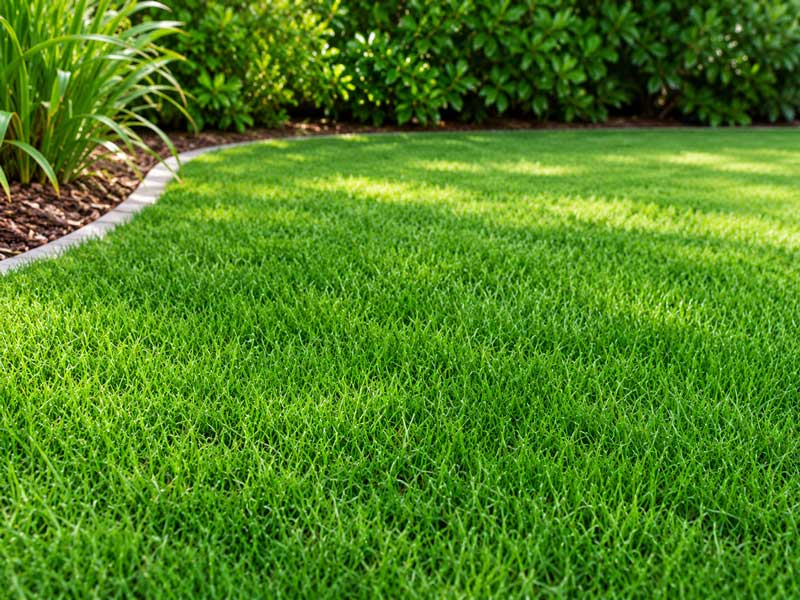
Couch Hulled (Bermuda Grass) Lawn Seeds
Botanical Name: Cynodon dactylon
Common Names: Couch Grass, Bermuda Grass, Common Couch
Couch Grass (Cynodon dactylon), also widely known as Bermuda Grass, is a warm-season perennial lawn and turf grass valued for its excellent heat tolerance, drought resistance and ability to form a dense, hard-wearing surface. Its vigorous runners (stolons) and underground rhizomes allow established Couch to spread rapidly and recover well from wear.
Well suited to Australian conditions, Couch Grass is widely used for home lawns, large lawn areas, parks, sports fields, commercial landscaping and erosion control. It performs particularly well in sunny positions and warm climates, developing a fine-textured, resilient turf when regularly mown.
This is hulled Couch seed, meaning the natural outer husk has been removed to encourage faster and more uniform germination under favourable conditions. Hulled Couch also provides more seeds per kilogram than equivalent unhulled seed, making it an excellent choice for establishing new lawns, repairing existing turf and seeding large landscaped areas.
- Popular warm-season Hulled Couch / Bermuda Grass lawn seed.
- Outer husk removed to encourage faster germination.
- Higher seed count per kilogram compared with equivalent unhulled Couch seed.
- Perennial turf grass suited to warm Australian conditions.
- Forms a dense, fine-textured and hard-wearing lawn.
- Spreads vigorously through stolons (runners) and underground rhizomes.
- Excellent heat and drought tolerance once established.
- Recovers well from wear and regular mowing.
- Ideal for home lawns, large areas, parks, sports grounds and commercial landscaping.
- Extensive root and runner system helps stabilise soil and reduce erosion.
- Best performance in full sun and warm soil conditions.
Plant Details
- Plant Type: Perennial warm-season turf grass
- Botanical Name: Cynodon dactylon
- Common Names: Couch Grass, Bermuda Grass, Common Couch
- Seed Type: Hulled seed
- Growth Habit: Dense, spreading turf produced by stolons and rhizomes
- Sunlight: Full sun preferred
- Heat Tolerance: Excellent
- Drought Tolerance: Excellent once established
- Wear Tolerance: Good to excellent once established
- Frost Tolerance: Limited; may become dormant and lose colour during cold weather
Where to Use Hulled Couch Grass
- Home lawns
- New lawn establishment
- Existing lawn repairs and renovation
- Large lawn areas
- Parks and public open spaces
- Sports fields and recreational areas
- Commercial landscaping
- Amenity turf applications
- Roadside and embankment stabilisation
- Erosion-prone areas requiring permanent groundcover
- Warm, sunny areas requiring a durable perennial turf
Sowing Information
- Best Sowing Time: Sow when soil is consistently warm and there is no risk of frost.
- Germination: Approximately 7–14 days under favourable warm and moist conditions, although germination may take longer in less favourable conditions.
- Soil Temperature: Preferably 20–30°C for reliable germination.
- Sowing Depth: Surface sow or cover very lightly, approximately 0–5 mm.
- Position: Full sun for best density and turf development.
- Sow Where: Broadcast evenly over a finely prepared seedbed and lightly rake or roll for good seed-to-soil contact.
- Soil Type: Adaptable to a range of well-drained sandy, loam and clay soils.
- Watering: Keep the seedbed consistently moist during germination and early establishment.
Sowing Rate
- New Lawns: Approximately 5–10 g per m² as a general guide.
- Repairs / Patch Seeding: Approximately 3–5 g per m², depending on existing coverage.
- High-Density Turf Establishment: Approximately 50–100 kg per hectare, equivalent to 5–10 g per m².
- Large-Scale Groundcover and Erosion Control: Lower sowing rates may be suitable depending on site conditions, seed quality, application method and whether Couch is included in a seed blend.
Seed Quantity & Coverage Guide
| Seed Quantity | Approximate Lawn Coverage |
|---|---|
| 100 g | 10–20 m² |
| 1 kg | 100–200 m² |
| 5 kg | 500–1,000 m² |
| 10 kg | 1,000–2,000 m² |
| 25 kg | 2,500–5,000 m² |
Coverage figures are based on a general lawn sowing rate of 5–10 g per m² and are a guide only. Actual sowing requirements vary according to seed purity, germination percentage, seedbed preparation, establishment conditions, desired turf density and application.
How to Sow Hulled Couch / Bermuda Grass Seed
- Remove existing weeds and unwanted vegetation from the area.
- Prepare a fine, level and well-drained seedbed.
- Broadcast the hulled Couch seed as evenly as possible over the prepared surface.
- For more uniform distribution, divide the seed into two portions and broadcast in opposite directions.
- Lightly rake the seed into the surface or cover with no more than approximately 5 mm of fine soil.
- Gently roll or press the area to improve seed-to-soil contact.
- Water using a fine spray to avoid washing the seed away.
- Keep the surface consistently moist while the seed germinates and establishes.
- Reduce watering frequency gradually as the developing lawn establishes a stronger root system.
When to Sow Couch Grass in Australia
| Climate Zone | Best Planting Time | Growing Notes |
|---|---|---|
| Temperate | Late spring to summer | Wait until the soil has warmed sufficiently for reliable germination. |
| Subtropical | Spring to early autumn | Excellent conditions when warmth and adequate moisture are available. |
| Tropical | Warm periods year-round | Best establishment occurs during warm conditions with reliable moisture. |
| Cool | Summer | A shorter establishment window; Couch may become dormant during cold weather. |
| Arid | Late spring to summer | Reliable irrigation is important during germination and establishment. |
Care and Maintenance
- Maintain consistent surface moisture during germination and early establishment.
- Begin mowing once the young turf is sufficiently established to tolerate cutting.
- Regular mowing encourages lateral growth and helps develop a dense lawn.
- Water deeply as required once established rather than relying on frequent shallow watering.
- Fertilising during active growth can improve turf density and colour where required.
- Couch may become dormant and brown during cold weather before greening again as temperatures rise.
- Its vigorous runners can spread beyond the intended lawn area, so edging may be required around garden beds.
Hulled Couch Grass for Soil Stabilisation
The extensive network of roots, stolons and rhizomes produced by established Couch Grass provides effective permanent groundcover and can help stabilise exposed soil. This makes Couch useful not only for lawns but also for commercial landscaping, embankments, roadside revegetation and areas where erosion control and durable vegetation are required.
Hulled Couch seed is particularly useful where rapid germination is desirable and favourable establishment conditions can be maintained.
Couch is primarily a permanent turf and groundcover species rather than a green manure crop. Once established, its dense living root system protects the soil surface and provides long-term cover in suitable warm climates.
Hulled vs Unhulled Couch Grass Seed
Both hulled and unhulled Bermuda Couch seeds are the same grass species, Cynodon dactylon. The primary difference is whether the natural outer husk has been removed from the seed.
| Feature | Hulled Couch | Unhulled Couch |
|---|---|---|
| Outer Husk | Removed | Retained |
| Germination Speed | Generally faster | Generally slower |
| Seeds per Kilogram | Generally higher | Generally lower |
| Natural Seed Protection | Reduced | Retained |
| Best Applications | Prepared seedbeds, irrigated lawns, turf renovation and rapid germination | Lawns, broadacre applications and situations where delayed germination may be acceptable |
| Established Turf Characteristics | Dense, spreading perennial turf | Dense, spreading perennial turf |
Important Notes About Hulled Couch Seed
- Hulled Couch seed has had its natural outer husk removed.
- Germination is generally faster than unhulled Couch seed under favourable conditions.
- Warm soil temperatures are important for successful germination.
- Hulled seed requires reliable moisture during germination and early establishment.
- Do not bury the seed deeply; good surface contact and a very light covering are preferable.
- Avoid allowing the seedbed to dry out during germination.
- Couch performs best in sunny locations and is less suitable for heavily shaded lawns.
- Established Couch spreads vigorously and may require edging to contain it.
Quick Growing Guide
| Feature | Details |
|---|---|
| Botanical Name | Cynodon dactylon |
| Common Names | Couch Grass, Bermuda Grass, Common Couch |
| Seed Type | Hulled |
| Plant Type | Perennial warm-season turf grass |
| Germination | Approximately 7–14 days in favourable conditions |
| Soil Temperature | Preferably 20–30°C |
| Sowing Depth | Surface sow to approximately 5 mm |
| Position | Full sun |
| Sowing Rate | Approximately 5–10 g per m² for new lawns, subject to seed quality and application |
| Watering | Keep consistently moist during germination and establishment |
| Growth Habit | Dense spreading turf with stolons and rhizomes |
| Best Uses | Lawns, sports areas, amenity turf, commercial landscaping and soil stabilisation |
Reviews
There are no reviews yet.