
Narrow-leaved Ironbark Seeds
Grow an Australian native tree with distinctive dark ironbark, narrow foliage and white flowers, suited to larger landscapes, habitat plantings and appropriate revegetation projects. Narrow-leaved Ironbark (Eucalyptus crebra) develops a substantial trunk and an open canopy that brings lasting structure to woodland and rural landscapes.
This species occurs naturally in Queensland and New South Wales, where it grows in woodland and open forest. Its deeply furrowed bark remains on the trunk and branches, creating the characteristic ironbark appearance.
Narrow-leaved Ironbark Seed Details
| Botanical name | Eucalyptus crebra |
|---|---|
| Common names | Narrow-leaved Ironbark, Narrow-leaved Red Ironbark |
| Family | Myrtaceae |
| Plant type | Australian native evergreen tree |
| Growth habit | Upright tree with an open canopy; form varies with growing conditions |
| Approximate height | Can reach approximately 35 m; mature size varies with site and provenance |
| Foliage | Narrow, lance-shaped adult leaves, green to grey-green |
| Bark | Persistent, hard, deeply furrowed grey to black ironbark |
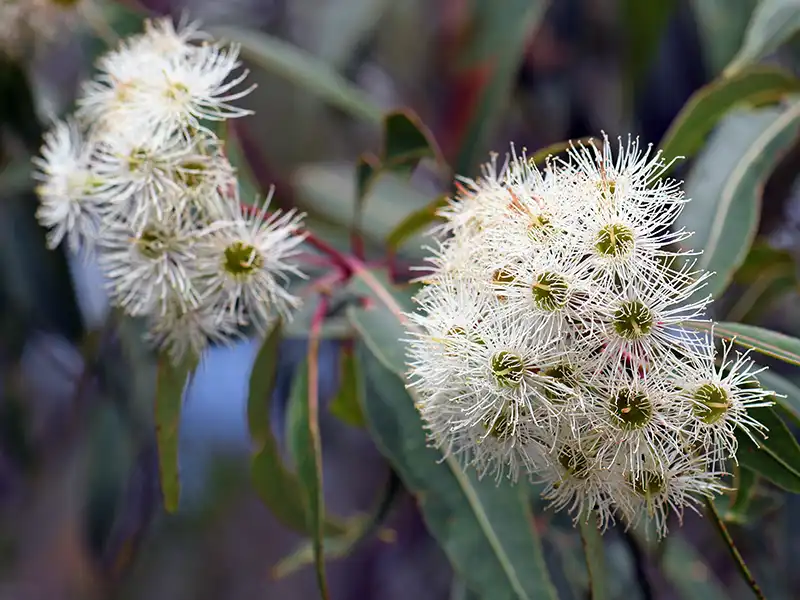
| Flowers | Small white flowers followed by woody capsules |
| Flowering period | Varies with location and conditions; May–August is recorded in central coastal Queensland |
| Position | Full sun, with ample space for mature growth |
| Soil | Suitable well-drained soil; naturally occurs on sandy and shallower woodland soils |
| Seeds per gram | Approximately 469–500; varies with seed lot and preparation |
| Uses | Large native landscapes, rural properties, habitat plantings and suitable woodland rehabilitation projects |
Why Grow Narrow-leaved Ironbark?
- Distinctive dark bark provides a strong landscape feature.
- Evergreen foliage adds lasting structure to larger plantings.
- Flowers provide nectar and pollen for bees and other wildlife.
- Useful in locally appropriate woodland restoration.
- Can be raised from seed for nursery and landscape projects.
How to Grow Narrow-leaved Ironbark from Seed
Eucalyptus crebra is propagated from seed. Hot-water treatment and scarification are not generally required. The following steps provide a practical nursery approach.
- Prepare the growing medium. Fill clean trays, tubes or small pots with a fine, free-draining seed-raising mix.
- Sow shallowly. Scatter seed sparingly over the surface and cover very lightly with fine mix or propagation grit.
- Water gently. Use a fine spray to settle the seed without washing it away.
- Maintain moisture. Keep the sowing surface moist during germination without leaving the containers waterlogged.
- Provide warmth and light. Place containers in a bright, protected position, sheltered from drying winds and intense heat.
- Pot on carefully. Transfer seedlings into individual tubes or pots when large enough to handle, minimising root disturbance.
- Harden before planting. Gradually introduce seedlings to outdoor conditions and plant out before roots become congested.
Narrow-leaved Ironbark for Landscaping
Choose a permanent planting position with room for a large tree. Plan spacing around buildings, services and neighbouring vegetation before planting, allowing for both canopy and root development.
Its mature scale makes it more appropriate for spacious properties and larger landscape projects than compact gardens. Consider the final planting layout while seedlings are still small.
Narrow-leaved Ironbark for Revegetation and Woodland Rehabilitation
Narrow-leaved Ironbark is used in woodland revegetation and suitable rehabilitation projects. For ecological restoration, select seed provenance and planting density according to the site’s vegetation community and project requirements.
Combine tree plantings with appropriate shrubs, grasses and other ground-layer species. Prepare the site, manage competing weeds and arrange establishment watering before planting.
Flowers, Foliage and Bark
White flowers provide food resources for bees and nectar-feeding wildlife. Woody capsules develop after flowering and release seed when mature.
The narrow leaves contrast with the rugged bark. Unlike smooth-barked gums, this ironbark retains its rough outer bark along the trunk and branches.
Where to Grow Narrow-leaved Ironbark
- Spacious Australian native landscapes.
- Rural properties with suitable planting sites.
- Locally appropriate woodland restoration projects.
- Habitat plantings with room for mature trees.
- Rehabilitation projects where the species matches the target vegetation community.
When to Sow Narrow-leaved Ironbark Seeds in Australia
These are general nursery planning guides rather than fixed species-specific dates. Assess local planting suitability and choose conditions that support reliable moisture and seedling establishment.
| Climate Zone | Suitable Sowing Period | Growing Notes |
|---|---|---|
| Cool | Late spring to early summer with protected warmth | Confirm local suitability and protect young seedlings from frost. |
| Temperate | Spring to early summer | Maintain warmth and prevent the sowing surface from drying. |
| Subtropical | Warm periods with manageable temperatures | Shelter trays from intense heat and drying winds. |
| Tropical | Suitable periods under managed nursery conditions | Use suitable provenance and protect trays from heavy rain. |
| Arid / Semi-arid | Mild, warm periods with reliable irrigation, where suitable | Assess site suitability and arrange follow-up watering. |
Tips for Growing Narrow-leaved Ironbark Successfully
- Use clean containers and a free-draining propagation medium.
- Sow sparingly and cover seed only very lightly.
- Maintain surface moisture during germination.
- Avoid overcrowding and prolonged waterlogging.
- Handle young roots carefully when transplanting.
- Water newly planted seedlings while they establish.
- Choose the permanent site with mature tree size in mind.
Frequently Asked Questions
What is the botanical name of Narrow-leaved Ironbark?
The botanical name is Eucalyptus crebra. It belongs to the family Myrtaceae.
Does the seed need hot-water treatment?
No. Hot-water treatment and scarification are not generally required. Sow shallowly and maintain suitable propagation conditions.
Is it suitable for a small garden?
Its potential mature size makes it better suited to larger sites. Consider available space before selecting this species.
Can it be used for revegetation?
Yes, where it is appropriate to the local vegetation community. Check provenance and project specifications before ordering seed.
How many seeds are there per gram?
A supplier-listed guide is approximately 469–500 seeds per gram. Actual counts vary with the seed lot and how the seed has been prepared.
Grow Narrow-leaved Ironbark from Seed
Raise seedlings in clean propagation containers, maintain consistent moisture and prepare their permanent planting site in advance. With suitable spacing and establishment care, Narrow-leaved Ironbark can become a lasting part of a larger native landscape.
Reviews
There are no reviews yet.