
Tetila Annual Ryegrass Lawn Seeds
Create fast, green cool-season cover with Tetila Annual Ryegrass, a vigorous annual ryegrass suited to winter overseeding, temporary lawns and rapid grass establishment.
Tetila Annual Ryegrass (Lolium multiflorum) is a fast-growing, cool-season tetraploid annual ryegrass that establishes quickly during autumn and winter conditions.
It is particularly useful for winter overseeding of warm-season lawns such as Couch and Kikuyu, temporary lawns, rapid green cover, lawn repairs and short-term landscaping.
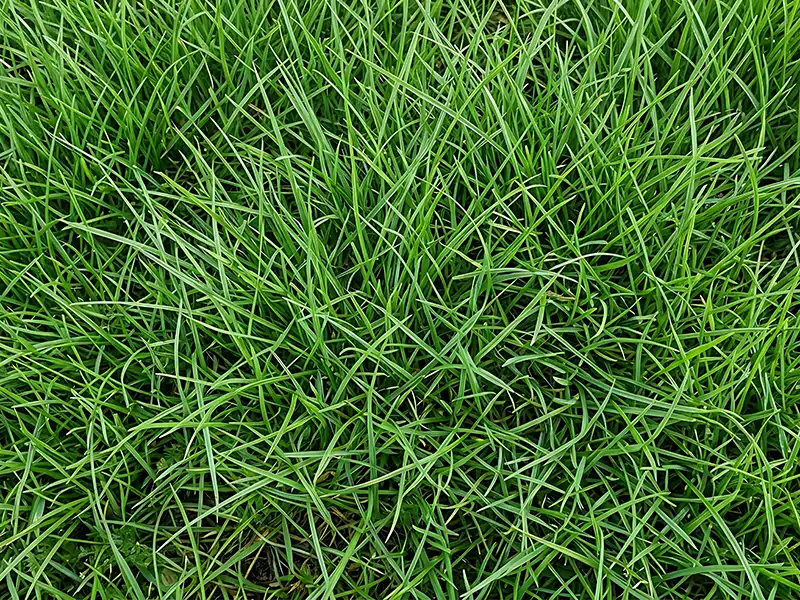
Tetila produces broad, attractive green leaves and vigorous cool-season growth. As an annual ryegrass, however, it is intended for seasonal rather than permanent lawn cover. Plants naturally mature, produce seed heads and decline as temperatures rise toward late spring and summer.
Tetila Annual Ryegrass Seed Details
| Variety | Tetila Annual Ryegrass |
|---|---|
| Botanical name | Lolium multiflorum |
| Plant type | Cool-season annual ryegrass |
| Ryegrass type | Tetraploid annual Italian / Westerwolds ryegrass |
| Best use | Winter overseeding, temporary lawns, rapid green cover and lawn repairs |
| Position | Full sun to light shade |
| Germination | Approximately 5–10 days under favourable cool, moist conditions |
| Sowing depth | Approximately 5–10 mm |
| New lawn rate | Approximately 30 g per m² |
| Overseeding rate | Approximately 20 g per m² |
| Watering | Keep consistently moist during germination and early establishment |
Why Choose Tetila Annual Ryegrass?
- Fast establishment for rapid cool-season green cover.
- Ideal for winter overseeding of dormant or slow-growing warm-season lawns.
- Useful for temporary lawns, lawn repairs and short-term landscaping.
- Vigorous tetraploid seedlings establish readily under suitable conditions.
- Produces attractive green growth through the cooler months.
- Can be broadcast over suitably prepared existing turf.
- Economical option where permanent cool-season turf is not required.
- Also widely used as an annual winter forage and pasture grass.
Where to Use Tetila Annual Ryegrass
| Winter overseeding | Useful for introducing temporary winter colour into suitable Couch, Kikuyu and other warm-season lawns. |
|---|---|
| Temporary lawns | Provides rapid seasonal grass cover where a permanent lawn is not required. |
| Bare-patch repairs | Useful for quickly covering bare or disturbed soil during the cooler growing season. |
| Temporary landscaping | Suitable where quick green cover is needed before permanent landscaping or turf establishment. |
| Pasture & forage | Tetila is also widely grown commercially as a fast-producing annual winter forage grass. |
How to Sow Tetila Annual Ryegrass Lawn Seed
Good seedbed preparation and consistent moisture are important for rapid, even establishment. Annual ryegrass germinates readily in cool conditions but should not be buried too deeply.
- Prepare the lawn area.
Remove weeds, loose debris and excessive thatch. For overseeding an existing lawn, mow the existing grass relatively short before sowing. - Expose some soil surface.
Rake or lightly scarify the area so that the seed can make direct contact with the soil rather than remaining suspended in thick lawn thatch. - Broadcast the seed evenly.
For temporary new lawns, sow approximately 30 g per m². For winter overseeding, approximately 20 g per m² is a useful general rate. - Lightly rake the seed into the surface.
Aim for approximately 5–10 mm sowing depth. Avoid burying annual ryegrass seed more deeply than necessary. - Improve seed-to-soil contact.
Gently roll, press or tread the surface after sowing to help the seed contact moist soil. - Water gently.
Use a fine spray to moisten the seedbed thoroughly without washing seed away. - Maintain consistent moisture.
Keep the upper soil layer moist while the seed germinates and seedlings establish. - Begin mowing once established.
Allow the seedlings to develop adequate root strength before mowing. Regular mowing will help maintain a neater temporary lawn appearance.
Seed Quantity & Lawn Coverage
Coverage will vary according to establishment method, lawn condition and desired density. The following figures are based on approximately 30 g per m² for temporary new lawns and 20 g per m² for overseeding.
| Seed Quantity | Temporary New Lawn | Overseeding |
|---|---|---|
| 250 g | Approximately 8 m² | Approximately 12.5 m² |
| 500 g | Approximately 16–17 m² | Approximately 25 m² |
| 1 kg | Approximately 33 m² | Approximately 50 m² |
| 5 kg | Approximately 165–167 m² | Approximately 250 m² |
| 10 kg | Approximately 330–333 m² | Approximately 500 m² |
Coverage figures are approximate. Actual seed requirements vary according to existing turf density, seedbed preparation, germination conditions and the density of temporary cover required.
When to Sow Tetila Annual Ryegrass in Australia
Tetila Annual Ryegrass is a cool-season annual. It establishes best as temperatures moderate and reliable autumn or winter moisture becomes available.
| Climate | General Sowing Guide |
|---|---|
| Tropical | Generally unsuitable for hot tropical conditions. May have limited use during the coolest months in suitable elevated or mild locations. |
| Subtropical | Autumn is generally the preferred sowing period for winter overseeding of Couch, Kikuyu and other suitable warm-season lawns. |
| Temperate | Autumn through early winter is suitable for winter and early spring growth. Early spring sowing may also be used for short-term cover. |
| Cool / frost-prone | Autumn establishment is generally preferred. Annual ryegrass has useful frost tolerance once established. |
| Mediterranean / winter rainfall | Sow with reliable autumn rainfall for winter and spring green cover. |
For best results, sow when cool conditions and reliable soil moisture coincide. In warmer regions, the objective is usually to establish the ryegrass as the warm-season lawn begins slowing for winter.
For best results, sow when cool conditions and reliable soil moisture coincide. In warmer regions, the objective is usually to establish the ryegrass as the warm-season lawn begins slowing for winter.
Lawn Care & Maintenance
- Maintain consistent moisture during germination and early establishment.
- Avoid heavy foot traffic until seedlings have established a strong root system.
- Begin mowing once the grass is well established and has sufficient height.
- Regular mowing will help maintain a neater, denser temporary lawn.
- Avoid scalping the lawn during establishment.
- Adequate nitrogen and soil fertility support strong green growth.
- Reduce competition from the underlying warm-season lawn during early establishment.
- Expect Tetila to mature and decline naturally as temperatures increase toward late spring and summer.
Is Tetila Annual Ryegrass a Permanent Lawn?
No. Tetila is an annual ryegrass, meaning it completes its life cycle within a single growing season.
Its main advantage is its ability to establish quickly and produce vigorous green growth through the cooler months. This makes it particularly useful for winter overseeding, temporary lawns and rapid seasonal cover.
As spring progresses, Tetila will eventually begin producing seed heads. Growth then becomes less vegetative and the plants naturally decline as warmer summer conditions arrive.
For a permanent cool-season lawn, a perennial turf grass such as Perennial Ryegrass or Turf Fescue is generally more appropriate.
Frequently Asked Questions
What is Tetila Annual Ryegrass?
Tetila is a tetraploid annual Italian or Westerwolds ryegrass (Lolium multiflorum) grown for rapid cool-season growth. It is widely used for winter forage and can also be used for temporary lawns and winter lawn overseeding.
Can Tetila Annual Ryegrass be used for lawns?
Yes. Tetila can provide fast temporary lawn cover during autumn, winter and early spring. It is particularly useful for winter overseeding of suitable warm-season lawns.
Is Tetila a permanent lawn grass?
No. Tetila is an annual variety and normally completes its life cycle within one growing season.
Can I overseed Couch with Tetila?
Yes. Annual ryegrass can be used to provide temporary winter colour while Couch is growing slowly or dormant. Prepare the existing lawn by mowing relatively short and reducing excessive thatch before sowing.
Can I overseed Kikuyu with Tetila?
Yes. Kikuyu can be overseeded with annual ryegrass, although thick Kikuyu thatch should be reduced so the ryegrass seed can contact the soil and receive adequate light during establishment.
How much Tetila seed do I need for a lawn?
For a temporary new lawn, approximately 30 g per m² is a practical general rate. For winter overseeding an existing lawn, approximately 20 g per m² can be used.
How much area will 1 kg cover?
At approximately 30 g per m², 1 kg covers around 33 m² of temporary new lawn. At approximately 20 g per m² for overseeding, 1 kg covers around 50 m².
How quickly does Tetila Ryegrass germinate?
Under favourable cool and moist conditions, seedlings may begin emerging within approximately 5–10 days.
How deep should I sow Tetila?
Sow approximately 5–10 mm deep. Avoid burying ryegrass seed too deeply, as this can reduce successful emergence.
When should I sow Tetila for winter lawn colour?
In subtropical and temperate regions, autumn is generally the preferred time, once temperatures begin cooling and adequate moisture is available.
Will Tetila survive summer?
Tetila is not intended to persist as a permanent summer lawn. It naturally matures and declines toward late spring and summer, particularly as temperatures rise.
Does Tetila tolerate frost?
Annual ryegrass is a cool-season grass and has useful tolerance to cold and frost once established, although growth slows during very cold conditions.
Can Tetila be mown?
Yes. Regular mowing can maintain a neater temporary lawn appearance. Allow seedlings to establish well before the first mow and avoid severe scalping.
Can Tetila also be used for pasture?
Yes. Pasture and winter forage are actually Tetila’s principal agricultural uses. It is widely grown for rapid autumn and winter forage production.
Reviews
There are no reviews yet.