
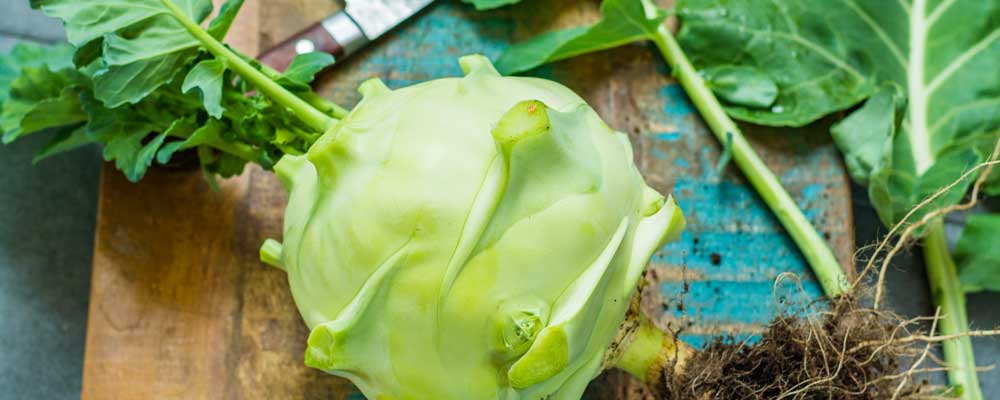
Kohlrabi is a quick, cool-season crop that fits beautifully into raised beds, wicking beds and small backyard patches. With the right timing, spacing and soil preparation, you can enjoy crisp, sweet bulbs in as little as two months.
- Position: Full sun.
- Soil: Fertile, well-drained, rich in organic matter.
- Season: Cool months – autumn, winter, early spring (dry season in the tropics).
- Spacing: 20–25 cm between plants, 30–40 cm between rows.
- Harvest: 8–10 weeks from sowing.
1. Choose the Right Variety
Start with high-quality seed. Some popular options include:
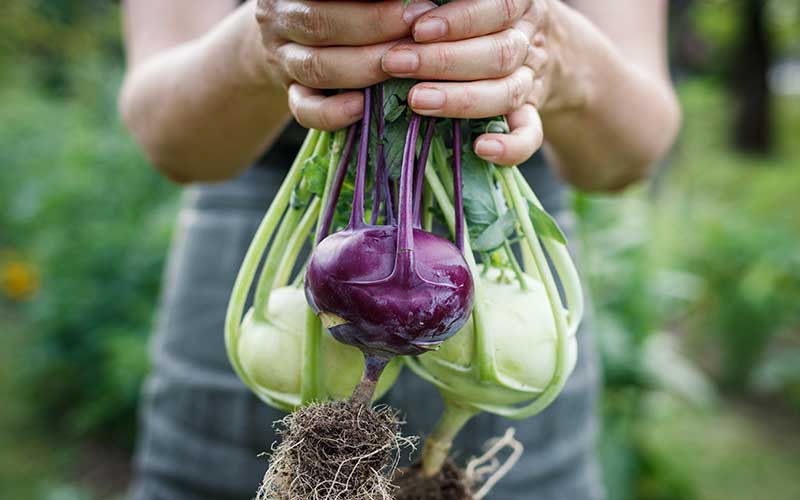
- ‘Purple Vienna’ – eye-catching purple skin and crisp white flesh.
- ‘White Vienna’ – pale green bulbs with a very mild flavour.
Growing both colours adds interest and creates harvests that look like they came from a boutique farmer’s market.
2. Ideal Climate and Planting Time
Kohlrabi is a cool-season crop. It thrives in mild to cold weather and tends to bolt if temperatures get too hot. Consequently:
- Temperate & Mediterranean zones: sow in autumn and early spring.
- Cool / cold zones: sow from late spring through summer once frost risk has passed.
- Subtropical regions (e.g. SEQ): plant in autumn and winter after the worst humidity has eased.
- Tropical regions: sow only in the dry season (typically May–August).
You can sow directly into the bed or start seedlings in trays and transplant once they develop strong roots.
3. Soil Preparation
Kohlrabi grows best in fertile, well-drained soil enriched with organic matter.
- Dig in compost or aged manure before planting.
- Aim for soil that is loose and friable to allow the bulb to swell evenly.
- Avoid very fresh, high-nitrogen manures right before harvest, as they may encourage leafy growth over bulb size.
4. Soil, Spacing and Water
- Choose a spot with full sun for compact, flavourful bulbs.
- Space plants 20–25 cm apart in rows 30–40 cm apart.
- Maintain consistent moisture to encourage even bulb development.
- Use mulch to help retain moisture and reduce weed competition.
5. Kohlrabi in Heavy Clay or Problem Soils
If you garden on heavy clay, you can still grow excellent kohlrabi with a strategic approach:
- Build raised beds or mounds, adding compost and organic matter to lighten the soil.
- Rotate with clovers or green manure crops to improve structure.
- Avoid waterlogged areas to prevent stunted growth and root diseases.
Over time, using green manures and organic matter can transform tough clay into a productive growing space.
6. Feeding and Ongoing Care
- Side-dress with a balanced organic fertiliser when seedlings are established.
- Keep beds weed-free so young plants don’t have to compete for nutrients.
- Use fine insect netting in areas with heavy cabbage moth pressure.
7. Pests and Problems
- Cabbage white butterflies / caterpillars: use insect netting, hand-pick caterpillars, or encourage predators with flowering herbs and pollinator mixes.
- Aphids: blast off with water, or attract ladybirds with dill, fennel and other umbellifer herbs.
- Woody bulbs: usually caused by heat stress, drought or leaving plants too long before harvest.
8. Harvesting and Storage
- Kohlrabi is at its best when bulbs reach 5–7 cm (2–3 inches).
- If harvested too late, they may become woody or fibrous.
- Cut bulbs cleanly at the base with a sharp knife or secateurs.
- Keep the leaves—they cook beautifully like kale or silverbeet.
Store trimmed bulbs in the crisper section of the fridge, ideally in a breathable bag. Fresh garden-grown kohlrabi will usually keep for 1–2 weeks, though it’s at its crispiest in the first few days after harvest.
When to Plant Kohlrabi in Australia
| Australian Climate / Region | Ideal Planting Season | Notes |
|---|---|---|
| Temperate (Sydney, Adelaide, Perth, Coastal NSW/VIC/SA) | Autumn & Early Spring | Avoid mid-summer heat; grows well most of the year. |
| Cool / Cold (Tasmania, Canberra, VIC High Country) | Late Spring, Summer & Early Autumn | Wait for soil to warm; protect from severe frost. |
| Subtropical (Brisbane, Northern NSW, Sunshine Coast) | Autumn & Winter | Plant after humidity decreases; excellent winter crop. |
| Tropical (Darwin, Cairns, Broome) | Dry Season Only | Plant May–August; avoid wet-season humidity. |
| Arid / Semi-Arid (Outback SA/NSW/QLD/WA, Alice Springs) | Autumn & Early Spring | Plant during mild periods; shade young seedlings if hot. |
| Mediterranean (Southwest WA, parts of SA) | Autumn, Winter & Early Spring | Cool, mild winters are ideal for kohlrabi. |
Next Steps
Now that you know how to grow kohlrabi, the next step is to design a productive bed around it.
👉 See the best companion plants for Kohlrabi
👉 Discover how to cook and ferment your harvest
👉 Find comprehensive information on Kohlrabi